For or against an elected Mayor, 2008
In February, 2008, I wrote the following article, largely because of the criticism of the then Mayor Ken Livingstone. Thirteen years later, having experienced the “achievements” of both Mayor Boris Johnson and Mayor Sadiq Khan, I am inclined to think my comments then are just as relevant today. In the intervening period Hartlepool (2013), Stoke-on-Trent (2009) and Torbay (2019) Councils have voted the Mayoral system out. Only Andy Burnham, Mayor of Greater Manchester, gives me cause to wonder whether there can be exceptions.
The Despatches programme of 21st January 2008 and subsequent debate poses a simple question, “Is it Ken Livingstone or the role of the London Mayor that is at fault?”
The programme gave plenty of ammunition to those, who might think that Livingstone is the problem. It raises issues about cronyism at City Hall, about dubious grant decisions, about the Greater London Authority members’ ability to scrutinise Mayor Livingstone’s actions and about Ken Livingstone’s personality.
Livingstone’s reply in the February 4th New Statesman is, however, robust and convincing. Moreover, Livingstone was positive in his defence of the Mayoral role in a recent Today interview. He declared that he had originally opposed the role as proposed by Tony Blair and doubted that it was appropriate for London, or indeed anywhere else in Britain. But he claims to have been converted and to doubt that he, or anyone else, could have introduced anything as radical as the Congestion Charge under the traditional committee structure of British local government.
Leaving to one side whether the Congestion Charge is or is not a sufficient justification for the role as defined, it is surely time to analyse the success or failure of the Mayoral role and the demands it places on individuals. Has Tony Blair’s radical, even revolutionary, change to the British local government system been a vindication of his confident assertion “that we are at our best when we are at our boldest” or has it demonstrated instead the dangers of unconsidered innovation?
The Greater London Act of 1999 established the role and function of the Mayor and the Greater London Authority (GLA) following the overwhelming Referendum result of 1998. In the Referendum, the London public had decided by a 78:22 majority that it wanted to reverse Mrs. Thatcher’s abolition of the Greater London Council. Even Conservative-dominated Bromley voted 57:43 in favour of the reform and in every other Borough the result was more emphatic.
The Act establishing the GLA also became a model for other local government reforms passed by the New Labour Government, especially the Local Government Act of 2000, which was the legislative basis for establishing the Executive Mayors and Cabinets that are now part of English local government. Ken Livingstone was elected Mayor of London in 2000 and two years later in May, 2002, Doncaster, Hartlepool, Watford, Lewisham, Newham, North Tyneside and Middlesborough elected Executive Mayors. They were followed by elections for Mayors in Stoke, Mansfield, Hackney and Bedford in October, 2002, and in Torbay in May, 2005.
But the turnout for the London Referendum was a meagre 34%, whilst for the Mayor and GLA it was an even more anaemic 31%. The equivalent referenda in the Boroughs and cities had a wide range of turnouts. In areas where the Mayoral system was rejected the range was between 9% and 64%. At the Mayoral elections turnouts ranged from 15% to 36%, with 18% at Mansfield and 26% in Hackney, though Mansfield’s turnout rose to 34% in May, 2007.
What had happened to inspire this sudden change in England’s traditional local governance arrangements? And indeed was it such a change? Certainly two of the objectives were clear. It was claimed that electoral turnout needed to be improved and “democratic accountability” needed to be strengthened. The inspiration came from two major sources: one political and the other academia and the media world. English local government had traditionally and universally been considered boring, worthy and probably more efficient and less corrupt than most of its equivalents in the developed world. It was probably most graphically displayed in the opening scenes of the iconic Room at the Top (pub. 1957), which sent a clear message of just how boring and square a job in local government really was. Indeed, it continued to be galling, as a councillor, to read newspaper articles starting with phrases like, “I shall start with the two most boring words in the English language – local government” (Guardian, some time in the 90s).
This began to change when in the 60s Governments of both persuasions used local authorities to achieve national housing targets. In the 70s a new, self-confident graduate generation of mainly London councillors challenged the government’s “right” to lay down not just the framework but many more of the rules of local government. By the 80s, for the first time in post-war history, local government was far from boring. On the left there was Lambeth and Liverpool, but also Islington and Ken Livingstone’s Greater London Council (GLC), challenging the Thatcher government politically and ideologically. On the right Bradford, Westminster and Wandsworth were privatising services and along with Croydon urging the abolition of the GLC, the ILEA and the metropolitan counties.
The Labour Councils, including those caricaturised as the “loony left” Councils, of the 80s were not only battle-grounds for such groups as Militant and their fellow travellers but also a nursery for many aspiring young politicians, who were to get into Parliament on 1st May 1997. At least half a dozen MPs post-1997 had been Leaders of London Labour Groups and many more came from similar positions across the country. Most of them had had a difficult time controlling, or not, their Labour councillor colleagues and were all too ready to go along with a Government scarred by the experience of the 80s and eager to ensure that its own reputation would not be destroyed by irresponsible or naïve local representatives.
The academic world was providing an answer, which fitted very neatly with both their personal experiences and the inclinations of Tony Blair. A key player in this was Professor Gerry Stoker. Stoker was the founding Chair of the New Local Government Network (NLGN), a contributor to influential Labour think tanks like Demos and an author of many books and articles on local governance.
2
Another was Paul Corrigan, husband of Hilary Armstrong, Blair’s first Minister of State at the Department of Environment, Transport and the Regions with responsibility for Local Government. Along with Simon Jenkins, the journalist, they popularised a view that local government was insufficiently accountable and/or interesting and as a consequence it was a prey both to the extremist left and the nimby right.
In an interesting, if later, work (New Localism, Participation and Networked Community Governance, Univ. of Manchester) Stoker etched a sociological history of local government, in which he argued that local government had transmuted from the “traditional public administration” model, the Room at the Top model, through the “New Public Management” model, his description of the minimalist Nicholas Ridley model, to today’s “Networked Local Governance”.
In the first of these models the agreed objectives of local government were simple, even if large and technically complex. The objectives were about providing housing, drainage, roads and schools. The leadership of such authorities could be left to large, mass political parties, whose basic stance was generally understood.
In the second model, where ideally local authorities would meet once a year and award service contracts to service providers, the goal was again simple – the most efficient delivery of services at the lowest cost. Unsurprisingly under Mrs. Thatcher’s administration, Conservative-controlled Councils such as Bradford and Wandsworth were in the vanguard. In this model governance was hardly an issue. Ridley thought that ideally a Council Election would take place annually, or four-yearly depending upon location; the Council would meet and allocate service delivery contracts and then the Leader and Cabinet could simply get on with the job of governing.
The Ridley model had one big advantage over the experience that most Labour councillors (and future MPs) had in the 80s. Because the goals were simple, the model facilitated the rise of powerful and focused Leaders. They may not have had quite the aura of a Livingstone but Dame Shirley Porter of Westminster, Eric Pickles of Bradford and Sir Paul Beresford of Wandsworth had a clear sense of direction and strong united groups behind them.
There was, however, a major disadvantage. What were the other 60 or so councillors on the authority supposed to do? Michael Heseltine came up with his own version of this in the early 90s when, as well as advocating elected executive mayors, he suggested that councillors should concentrate on their casework and become community representatives.
Peculiarly enough this was essentially the same conclusion that New Labour came to under Tony Blair. The process started with the optional introduction of Executive Mayors and Cabinets in 2000 and 2002. In the GLA Act the Blair Government did not quite have the courage to install a Mayor, unconstrained by other members of the authority, but it did the next best thing. A Greater London Authority was created with 25 members performing an overview and scrutiny function.
But from its creation it had less chance of scrutinising the Mayor than any other elected body in the UK, whether Parliament or the humblest local council. Fourteen members were elected to represent mega-constituencies with populations of about 450,000. The other 11 were elected by a form of proportional representation by all Londoners. This structure was designed to ensure that it was impossible for any one party to “win control” and operate as a real check on the Mayor. New Labour reformers had argued, and were to continue to do so, that one fault with local government was that few knew who their councillors were. Ironically, they created the 25 most unknown councillors in history!
That was not, however, the only or even the major weakness with the institution. The ultimate sanction in the British Parliamentary (and Council) system is the potential loss of confidence in the Leader. Less seriously, Parliament and Councils can refuse to vote for policies or pass budgets. The first of these options is not open to GLA members – they can merely scrutinise and comment. The second is almost denied them. Rejection of the Mayor’s budget is only possible with a two thirds majority, which given the 25 members of the GLA means that 17 of the 25 members have to oppose. Quinton Hogg once described British democracy as an ‘elective dictatorship’.
Ironically, New Labour with its emphasis on new localism and democratic participation has managed to create an elected Mayor with all but dictatorial powers. Blair, of course, expected to have a “business-man” Mayor. The last thing he expected was a Mayoral candidate, who knew London, had experience of running it and with the charisma to win. The other Mayors have similar, if slightly less powerful positions. Once given their four year mandate they are secure in their position. In NLGN’s own words, “A mayor is equally responsible to the whole city, borough or council, unlike a council leader who has been directly elected from only one ward amongst many and whose power is derived primarily from an ability to retain the support of other councillors (or, more likely, the dominant political party).”
Accountability “to the whole city, borough or council” may have theoretical advantages but the writer fails to understand that having “ability to retain the support of other councillors (or, more likely, the dominant political party)” is not just a valuable political asset, but a much more immediate and far more effective system of accountability than a once in four years election. It is a crucial “check and balance” in the system.
Recent Government White Papers suggest that the lesson has still not been learnt. For example, it is now suggested that where directly elected Mayors are not introduced then Leaders should be elected by their fellow councillors for four-year terms. There seems to be no recognition of the reality of political life at Council level, which is simply that, if the Leader loses the confidence of the councillors, even if only of “the dominant political party” s/he will last no time at all and if s/he does not lose that confidence then they have no need to be protected by national legislation.
Unfortunately, there appears to be little evidence that other claims for the new governance system have been justified. For example, much of the anguish about the state of local government relates to electoral turnout. But using London Boroughs as an example the evidence from 2006 is not encouraging to the reformers. In Hackney, despite going to the same polling booths on the same day more people actually voted for their councillors than for the Mayor. The Borough-wide turnout was 34.41% and the Mayoral vote just 32.24%. In Newham the turn-out was 34.41%, but in non-Mayoral votes on the same day Bexley managed 42.35%, Greenwich 35.81% and Richmond 51%.
Wandsworth is an interesting example, which suggests a different explanation for differential turnouts. In Wandsworth turnout rose from 34% at its inception in 1964 to 49% in 1978 and then in the following four elections in 1982, 1986, 1990 and 1994 to 54%, 51%, 57% and 51%. However, the 1998, 2002 and 2006 elections have seen turnouts falling again to 40%, 30% and 34%. This exactly mirrors the very tight nature of the political contest in the 80s and the very much less closely fought battles since gentrification took strong hold. In other words, and unsurprisingly, people seem to have a greater tendency to vote when it looks likely to make a difference.
A similar explanation might apply in Hackney. Although the disparity in figures is not very great, surely it is conceivable that the 2.17%, who voted for their councillor in Hackney wards but not for their Mayor, either did not know who the Mayor was or thought it a non-contest with Mayor Pipe certain to be returned to office.
So in practice neither turnout nor accountability has been improved by the introduction of the “Executive” Mayor. Indeed lack of Mayoral accountability is a major platform of the “Bring back democracy” campaign in Lewisham and the move to abolish the Mayor in Doncaster. Indeed on 27th February 2007 Doncaster Council responded to an 11,000 signature petition by voting for an abolition referendum, which is due to take place on 1st May this year.
Interestingly googling “remove mayors” brings up 705,000 results, including Doncaster and Lewisham but also many, many examples of electors trying to remove executive mayors in many of the United States and other places round the globe. The last remaining argument for the Mayoralty, used by Ken Livingstone and his supporters, is the claim that only the new Mayoral power enabled him to introduce the Congestion Charge. The philosophical basis of that argument, “the end justifies the means”, is so shallow as to be unworthy of Livingstone. But it also demeans his previous achievements. As Leader of the Greater London Council, with traditional local government powers, he was capable of introducing the equally radical and challenging Fares Fair policy, which had a similar and possibly greater impact than the Congestion Charge.
None of this is an argument to deny a vote to Ken on 1st May. If you believe, as I do, that Ken’s record has been overwhelmingly positive for London (despite his crazy dalliance with high rise developments!) then voting for him must be the correct move for a Londoner. The Conservative Party’s irresponsibility in putting forward Johnson as an alternative effectively robs the electorate of any real choice.
However, personal power on the scale of the London Mayor’s would be enough to turn the character of a saint. It is, therefore, incumbent upon politicians, of all persuasions, to resist the introduction of any more Executive Mayors, to reform the Greater London Authority’s constitution, to restrain the Mayor’s role and to give real power and influence to its members. Politics is and should be a pluralist process, and emphatically not an elective dictatorship.
(February 2008)
Councillor Tony Belton’s Battersea June 2021, Newsletter (# 144)
- I am having a season of anniversaries! What with
 reaching the dreaded 80 in April, on 13th May I notched up 50 years as a Labour councillor – it must be a drug – or certainly an addiction. The Town Hall put out a press release, which was nice of them. They dredged up a picture of yours truly in 1971. Here it is; as shown in my election leaflet, would you believe? I won Northcote ward that year and subsequently Graveney before settling down in Latchmere in 1982 – but enough of me.
 - On 2nd May, I went canvassing in Bedford ward, just near Tooting Bec station with the Labour candidate in the Bedford ward by-election, which was held along with the GLA election on 6th May. It was a Labour area and it was an enjoyable occasion – canvassing is always much more fun when you do NOT get doors slammed in your face and have no abuse to deal with (I am not suggesting, by the way, that Tory canvassers don’t get the same treatment in reverse). I was impressed with Labour’s candidate, Hannah Stanislaus. Whatever else she brings to the Council – she has a good, bold, confident doorstep manner.
- On 6th May itself, Labour did well in London in general and in Bedford and Wandsworth in particular. The by-election result was strikingly similar to the Bedford result in the 2018 Borough election. The turn-out at just over 51.4% was very slightly higher this year than the 48% turn-out in the Borough election and the Labour and Tory votes were very similar, with Labour on 50% as opposed to 49% and Tories on 24% as opposed to 23%. Interestingly, the Green candidate gained 50% more votes than in 2018 – admittedly from a far lower base but the Greens must feel that they are on the move.
- On the same day, of course, Sadiq Khan was
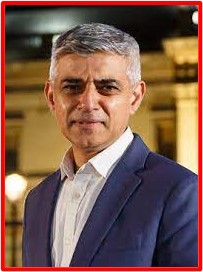 re-elected Mayor of London and Leonie Cooper re-elected as the Assembly Member for Merton and Wandsworth. Congratulations to both of them, who I know well having been a fellow Wandsworth councillor for more than a dozen years. They are part of the story that London has become an overwhelmingly Labour city. But I think that both, Sadiq and Leonie, have questions to answer. In Sadiq’s case, his first term has been defined by disaster, with the Grenfell Tower disaster of 2017, being followed by the Covid crisis of 2019-21 (22, 23?). And in this election he had an admittedly small (1.6%) swing against him achieved by someone universally perceived as one of the weakest Mayoral candidates ever, the Tory Shaun Bailey. The opening of the Elizabeth Line Crossrail might have given him a completely undeserved triumph, but in fact, it has left him with an equally undeserved calamity – “undeserved” in both cases because the decisions, the planning, the construction mostly pre-dated his time as Mayor and triumph or calamity they “merely” happened on his watch. Can he realistically achieve much in the three years left to him, given that Covid remains the significant factor that it is? Does he decide to go for a third term? Does he like Johnson before him, plan to return to the Commons? He will still only be 54 years old, so he still has time to achieve yet more. But if I know Sadiq, and I think I do, then he will have a pretty shrewd idea now of what he is going to do and he will not let on about it to anyone.
 - I think Leonie’s questions are easier, at least to pose. Does she decide
 to be primarily the first Labour Leader of Wandsworth Council since 1978 or the deputy leader of Labour in the London Assembly? I know which I would consider the more important (what after all does being an Assembly member mean apart from getting a massive salary?). But on the other hand, being on the Assembly is arguably a better stepping stone to the Mayoralty (how about being London’s first female Mayor?) or a seat in the Commons. But either way, Leonie does not need to decide, nor will she, until after the May, 2022, Borough election, when she will discover whether she is, or is not, Leader of Wandsworth Council.
 - On the 11th May, Penny and I went for a walk in Nunhead
 Cemetery. It’s well worth a visit in spring, or I guess in autumn for the falling leaves. Wildflowers and generally rampant undergrowth climb over magnificent late 19th and early 20th century statuary, spread across a very large site. A quick rule of thumb comparison on Google Maps suggests that it is about half the size of Battersea Park and almost completely empty – at least of live bodies! It also commands magnificent views of the city, with one view, in particular, focused on St. Paul’s Cathedral. It is actually a “protected” view (in planning terms, i.e. new buildings are not allowed to obstruct the view) as indeed is a similar distant view of the Cathedral from Richmond Park.
 - Talking of which, did you happen to see a recent list produced, by a Wandsworth news blog, of 10 special open-places to visit in South London? Strikingly we, in Wandsworth, are right in the epi-centre, with Richmond Park top of the list and others included Wimbledon Common, Battersea Park, Wandsworth Common (a mistake there I think as the write-up didn’t sound like the common I know), the Crystal Palace dinosaur Park, Nunhead Cemetery, Greenwich Park and a couple of complete strangers near Sidcup, south-east London. With all the travel restrictions we face today, perhaps we will bump into each other at one of these London beauty spots!
- On 25th May I had the Planning Applications Committee. In
 the last couple of months, I have rather down-played the interest in this committee but May was different. As always there were a number of small and locally important applications but only two of major significance and they were both in Nine Elms. I voted against both, though the first vote was almost a gesture of frustration as I knew that it was really a box-ticking exercise at the “details” level of the process. Nonetheless, despite the poor re-production I hope you can see why I should be against such a monolithic construct! The second was a giant hotel next to, and destroying the view of, the American Embassy.
 - You might have seen coverage in the press of the new Nine Elms “Sky Pool”, which was opened in May. My Labour colleague, Aydin Dickerdem, who represents the area
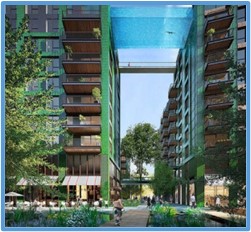 of Nine Elms where the Sky Pool is situated, reminded me of my August 2015 Newsletter when I asked whether people had seen “the fantasy proposal for a swimming pool in the sky? Captioned in the Daily Telegraph as the “Glass-bottomed floating ‘sky pool’ to be unveiled in London”. Now, it is completed, it confirms my worst fears. It is a display of conspicuous consumption by an arrogant affluent class of developers, which reminds me of Marie Antoinette quipping that the starving Parisians of pre-revolutionary France should eat cake. No wonder she was soon to lose her head: I wouldn’t wish quite that on the planning committee and the developers responsible, but with the homeless walking the streets and foodbanks doing a roaring trade, they deserve some telling punishment.
 - On 26th May we had the Council’s Annual Meeting. All 60 of us in the Civic Suite were spaced out like candidates in a major public examination but instead of preventing us from cheating this lay-out was: so that we could socially distance. Of course, the effect was precisely the opposite, as it was clear we were meant to be unsocially distanced. This procedure was rather strange as these annual meetings are meant to be for the new Mayor’s family and friends to share a drink and a chat with everyone who attends. So we had a Mayor-Making when not one person talked to the Mayor. A new experience for all and especially for the Mayor, Richard Field, a councillor in Nightingale ward, Tooting.
- On 30th May Penny and I stayed with Mary Jay in Oxford.
 Some of you, but not many I guess, will know Mary, the widow of Douglas Jay, Battersea’s Labour MP from 1946 to 1983. We were also there to introduce a Brazilian friend to both the city and the Bodleian Library. We took Antonio round Oxford and, in particular, round Magdalen College. Both looked magnificent in the early summer sun and, whilst we were in the Cloisters, this feathered friend popped by for a chat.
 - On 22nd April, I had the Planning Applications Committee (PAC) and, if I said that the March PAC, was uneventful, then the April version made it seem positively momentous. The interest in individual planning applications was still sufficient, however, to inspire the virtual attendance by 52 people – it was very rare for pre-Covid, pre-online PAC ever to have an audience of 50 – so perhaps there will be some benefits from the new post-Covid regime. But councillors and officers will have to learn a few more broadcasting related presentational skills if they expect to be taken seriously!
My Programme for June
- On June 7th I look forward to hearing Diane Hayter talking about the first 29 Labour MPs, who started the PLP, the Parliamentary Labour Party, in 1906.
- On June 10th, I am talking to a group of Croydon trade unionists about the rights and wrongs of having elected Mayors. Croydon is planning to have a referendum on the matter in the autumn and clearly many are undecided about which way to vote. I am very much opposed.
- On June 11th, I am going to give my knees a trial run on an 18-hole golf course for the first time in several years! Fortunately, my partner’s knees are worse than mine so we will be using buggies! Too much football for too many years did for our knees!
- The Planning Applications Committee (PAC) is on the 22nd
Did you Know: Last month I asked, “What was the connection between the famous Sydney Harbour Bridge and Battersea?”
And the answer was simply that the British company, Dorman Long, which won the contract to build the bridge, had a significant part of its London operation in Queenstown ward, Battersea.
And for this month can you tell me:
How many pubs are there in Latchmere ward? Their names? And how many have closed to your knowledge in the recent past and their names? And whilst I will be open to rational debate, I will be the final arbiter on what is, or is not, a pub, etc.
Councillor Tony Belton’s Battersea May 2021, Newsletter (# 143)
- Why is this newsletter so late in the month? Well, would you believe it? To keep well out of the way of breaking electoral law! The law says that anything, which could be construed as party political, and which is distributed in the build up to an election, MUST be counted as electoral expenditure and reported to the authorities. Now I wouldn’t actually go as far as to say that my newsletters are very party political but, unlike our Prime Minister, I am concerned about the legal niceties – hence the late publication of the newsletter. By the time you read this, of course, the election will be all over, which is why I am sending it now.
- I woke up on 6th April to the realisation that I am now 80 years old! I was not sure what I was going to do to mark the occasion. I had talked about parties for friends, family and politico friends, but that was before I realised how long Covid’s shadow was going to be. Actually, I did have a few phone calls and a number of Zoom parties with friends and family in various parts of London, Leamington, Winchester and Billericay. The big surprise, though, was a Zoom party organised for me by Labour colleagues in Battersea. I guess there were about 60 people there – a new and very, very pleasurable experience.
- Some of you will know that I am trying to find energy and time (or is it enthusiasm and drive?), to write a book about politics in Wandsworth, since 1964. The text is currently some 65,000 words long but I am only halfway through. Whilst researching for it, I have interviewed one or two of the main players and on 8th April I had a long chat with Martin Johnson, a Tory councillor for Northcote
 from 1974-2018. During his long career, Martin was the number one (either as Chair or Cabinet Member), at various times, in charge of Wandsworth’s council houses, planning and roads, amongst a host of other council services. As we spoke, I was reminded of the important role he played, at quite some personal cost, in stopping the march of the urban motorway through much of the Borough and especially through, around, under and over Clapham Junction. The London Motorway Box was a threat to inner London posed by government-based traffic engineers, which was defeated locally by the Labour Council in the 70s and by the Tories, actually mainly Martin, in the 80s. If the engineers had won, London would have been turned into a mega-Spaghetti Junction. Martin took a correct and bold stance but, because he had defied the party machine, and most particularly Mrs. Thatcher, he lost popularity with his party colleagues and was effectively ignored by his party, ever afterwards. The picture shows Martin on an occasion marking his 40 years as a councillor.
- On 16th April, I had lunch in a pub garden with three friends. In what other year would one record that as an event? My first pub lunch for over a year! Then I had a hair cut, like millions of us – an event to record! And a few days later I went for a “surge test” – lots of strange, new experiences in a strange.
- I attended an XR (Extinction Rebellion) Wandsworth virtual meeting on 20th There were 50 or 60 people there and the meeting started off with five opening speeches about traffic calming, trees and the Council’s record in planting and growing trees, disinvesting the Council’s pension fund from fossil fuel companies and targeting its investment strategy towards “green” companies. XR’s objective was (and is) to make half a dozen demands of the Council. Their tactics, stated quite publicly, included any obstruction of the Council short of violence. I was not the only councillor attending, as I counted half a dozen others from both Labour and Tory parties. I later discussed it with some councillors from each side and was struck by the fact that I was rather more sympathetic to XR and its demands than many other councillors.
- The trouble is that some of XR’s demands were put in such intemperate terms that they were either impractical or border-line illegal and, in addition, a few of their assertions were inaccurate. Combined with the uncompromising tone of the demands, XR Wandsworth seemed more interested in bullying the Council into submission than in persuading the Council of the need to adopt totally “green” policies. I am afraid that the Council is more constrained by the law than is dreamed of in XR’s philosophy. The Council could not resolve, for example, to refuse any and all planning applications, which included the felling of trees at all – such a “pre-determination” would certainly result in refusals being reversed on appeal. The climate crisis is indeed a crisis but that doesn’t mean that XR have a monopoly of wisdom or the right policies, or that the Council can ignore political or legal realities. Acting together would provide faster and better solutions to what is a real crisis.
- On 22nd April, I had the Planning Applications Committee (PAC) and, if I said that the March PAC, was uneventful, then the April version made it seem positively momentous. The interest in individual planning applications was still sufficient, however, to inspire the virtual attendance by 52 people – it was very rare for pre-Covid, pre-online PAC ever to have an audience of 50.
- However, much to the horror of some councillors and lobbyists, the Government has decided that, as from 6th May, all meetings will have to take place – old-style. Personally, I don’t really believe that a diet of 100% online meetings is sustainable in the long-term. Our current online PAC works well enough, but I think that is because we know each other, and our relative strengths and weaknesses. Somehow, I doubt whether that would be the same with a new committee, a committee, which by definition would have a membership of strangers. But clearly some elements of the new online world will (or rather should) remain; having proved the viability of online committees. How can the Council in future deny the public the right to watch? How could the Council insist on the physical presence of a committee member, suffering from, say, flu when we all now know that an online presence would be perfectly possible? Wandsworth Council should lobby the Government and persuade the relevant Ministers that we cannot, or more properly should not, simply turn back the clock.
- I gave a talk, called “A brief history of Battersea 1800-2021”,
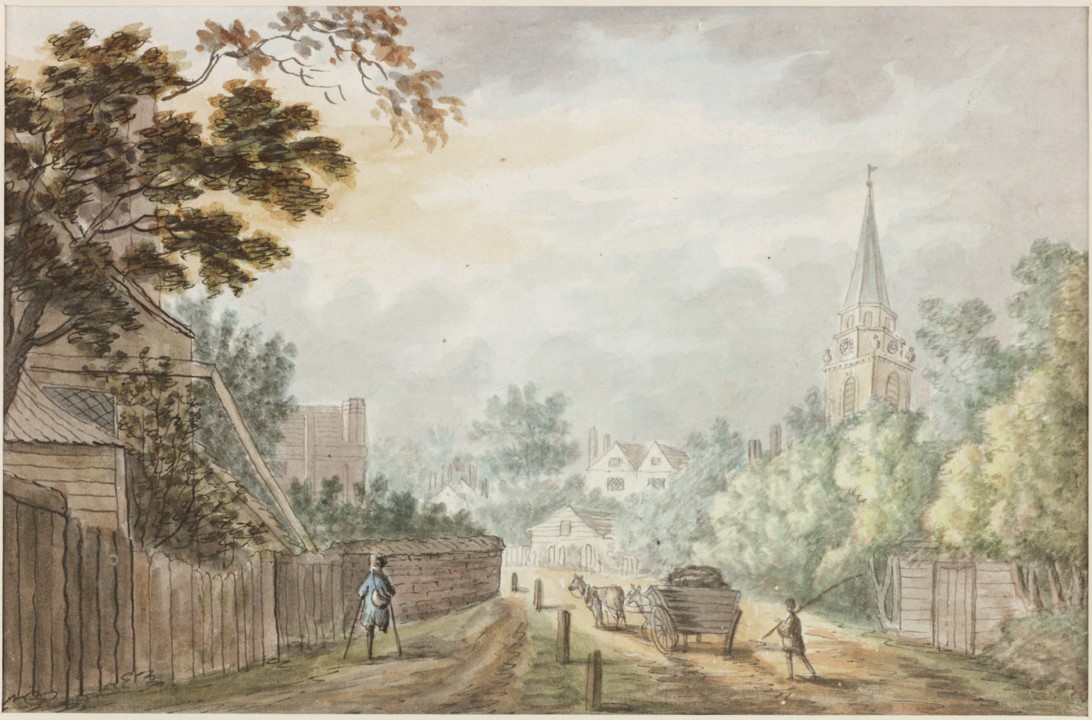 for the Battersea Society on 27th It was done on Zoom and there was an audience of about 70 or 80. Judging by the audience response after the talk, it went quite well. I certainly enjoyed doing it, but it is a strange experience talking to an audience, when you can’t see anyone’s reactions. Are they rolling around laughing or amazed by one’s stupidity or one’s brilliance? Is it going well or are they bored? This picture, by the way, is called “A view in the lanes near Battersea Fields” and was painted by William Bielby in 1788. It was my opening slide and, as you can see, there have been quite a few changes since! The talk can be seen at :
Access Passcode: #%L&&T7A
My Programme for May
- Political activity in May will be dominated by the London Mayoral and London Assembly elections on May 6th and inevitably everything that follows from those elections. This year, Sadiq Khan is the overwhelming favourite to continue as Mayor and the issue is just how are he and the Prime Minister going to get on working terms, because for the good of our city, they need to work together for the next three years.
- On 11th May I have a Wandsworth Conservation Area Advisory Committee.
- The 13th May is exactly 50 years after the first election, which I won as a councillor, then, believe it or not, for Northcote ward, which now, and then, was the safest Tory ward in Battersea! Just maybe that is something of an achievement. I know that there has never been any other councillor, who has “done” 50 years on Wandsworth Council, though I guess there might be one or two elsewhere in the country!
- The Planning Applications Committee is on 25th May and on the following day the Annual Meeting of the Council when we will be electing a new Mayor.
Did you Know: Last month I asked, “Where would you have had to go in 1886 to visit Battersea’s Little Hell?”
The answer was the area between Battersea Church Road and the Thames, which was the home of rapidly growing, very dirty, heavy industry such as Morgan Crucible’s and of many of its workers living in very squalid slum conditions, unimaginable today.
And for this month can you tell me:
The connection between the famous Sydney Harbour Bridge, shown here, and Battersea?
Councillor Tony Belton’s Battersea April 2021, Newsletter (# 142)
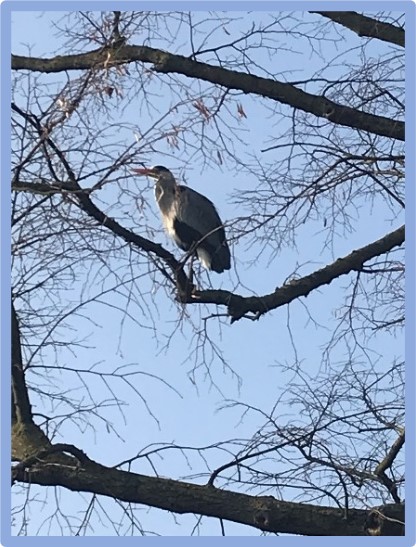
- I was taking my daily exercise
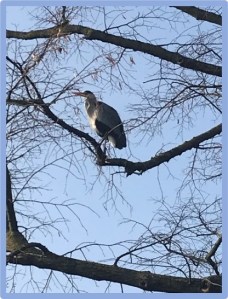 across the Common when I saw the very large, slow and apparently lazy wing beat of a heron making for one of the local ponds. And then it disappeared. I searched around the reeds without success. But something caused me to look up and there was my heron, the silent killer of the reeds. Not of course, unknown on the banks of the ponds but always a surprise to me when seen high in the trees. That sighting was a good start to a turbulent month.
- On 8 March, I attended an event, organised by my partner, Penny to mark International Women’s Day. Our MP, Marsha de Cordova initiated and hosted the well-attended (virtual) public meeting. Marsha also chaired the five presentations of individual Battersea women’s lives. They were chosen to show a range of pioneering female endeavour in politics and protest; aviation and technology; sports; literature; entertainment. The point, for these women, was either to open new doors – or to push further through doors that were already opened. The five women were Charlotte Despard, Hilda Hewlett, Violet Piercy, Penelope Fitzgerald and Elsa Lanchester. A wide-ranging discussion followed, with notable contributions from an international panel – Judy McKnight, former General Secretary of the National Association of Probation Officers (NAPO) and Prof Beverley Bryan, from the University of the West Indies, Jamaica.
- Two days later, March 5th, I took our
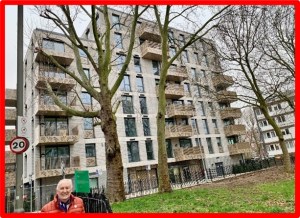 MP, Marsha de Cordova, for a tour of the brand new Mitchell House. I must say Marsha is an excellent companion on such visits. She enthused over the new flats and their fantastic facilities. One particular flat, designed for a tenant with severe disabilities, has a kitchen work-top, which rises or falls at a touch of a switch, depending upon whether the user is in a wheel-chair or not. As the Shadow Secretary of State for Women and Equalities (what an acronym SSSWE!), she was very keen on the adjustable work-top! The first tenants are moving into Mitchell House in early April so that at last the first council tenants will be moving into the regenerated estate!
- On 8 March, I attended an event, organised by my partner, Penny to mark International Women’s Day. Our MP, Marsha de Cordova initiated and hosted the well-attended (virtual) public meeting. Marsha also chaired the five presentations of individual Battersea women’s lives. They were chosen to show a range of pioneering female endeavour in politics and protest; aviation and technology; sports; literature; entertainment. The point, for these women, was either to open new doors – or to push further through doors that were already opened. The five women were Charlotte Despard, Hilda Hewlett, Violet Piercy, Penelope Fitzgerald and Elsa Lanchester. A wide-ranging discussion followed, with notable contributions from an international panel – Judy McKnight, former General Secretary of the National Association of Probation Officers (NAPO) and Prof Beverley Bryan, from the University of the West Indies, Jamaica.
- On the 9th March, I had a meeting of the
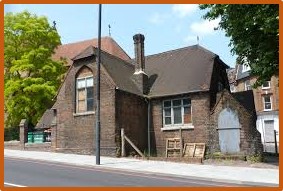 Wandsworth Conservation Area Advisory Committee. I would like to say that there was something of massive significance but there was not – bar ONE, which means a lot to me. Do you know the old St. Mark’s Vestry School on Battersea Rise? You have possibly ignored it, because of its ramshackle state. You may even have said, “Why haven’t they knocked it down and widened the road junction?” Well, they nearly did except that the late Gordon Passmore, a venerable, Tory councillor, and I joined in an alliance in about 1995 to save the school from demolition. It is in fact an historic building of some local (and even national) significance. It was one of the very first schools built at the advent of free and compulsory education in 1870. Well, I am now delighted to say that, after all these years, the relatively wealthy Southwark diocese is bringing plans to give it a future. I will broadcast that future as soon as I know it.
- In the early afternoon of 10th March, there was a meeting of the Wandsworth Design Panel. The panel consists of architects, planners and developers, whose main purpose is to advise the Council on planning and design issues relating to significant developments in the Borough. The panel does not consider the value or utility of any one development – that is clearly a decision for others to take. It is interesting, however, to see and hear the views of practitioners. In my view, they are rather too concerned with design values and too little with social values – but they are advising us on design, so they are doing their job. For example, they tend to love what some might call iconic buildings that make a statement; whereas others might be more concerned about the fit within the community.
- I went directly, almost at the flick of a switch, to a meeting with Grassroots For Europe, which is a Labour-oriented group talking about when and how to encourage and lobby the powers that be to think about rejoining the European Union. Anyone who has read my newsletters will know,
 that I think, leaving the EU was an unmitigated disaster. We will see as events unfold, whether it has or has not been. Either way, it is clearly a live issue. Brexit has definitely not been done yet!
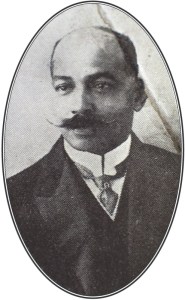
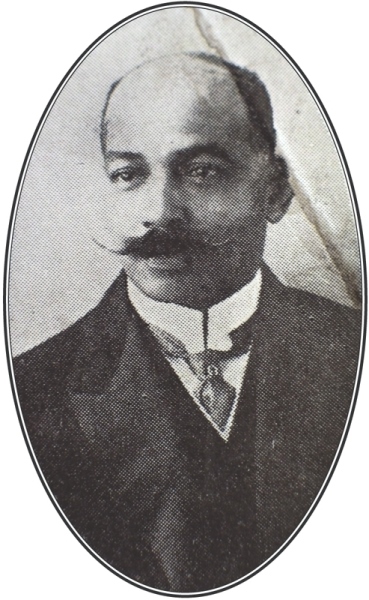
- On 11th March, in the morning, I took part in a group set up to commemorate John Archer, who in 1913 became the first black Mayor of any large local authority in Britain. (interestingly a small town in East Anglia had had a black mayor in the nineteenth century) The general assumption is that the memorial is likely to be a statue in some prominent spot in Battersea. Judging by this picture, to do Archer proud it will need to be a grand statue! The working group included the Leader of Wandsworth Council, Councillor Maurice McLoud and myself.
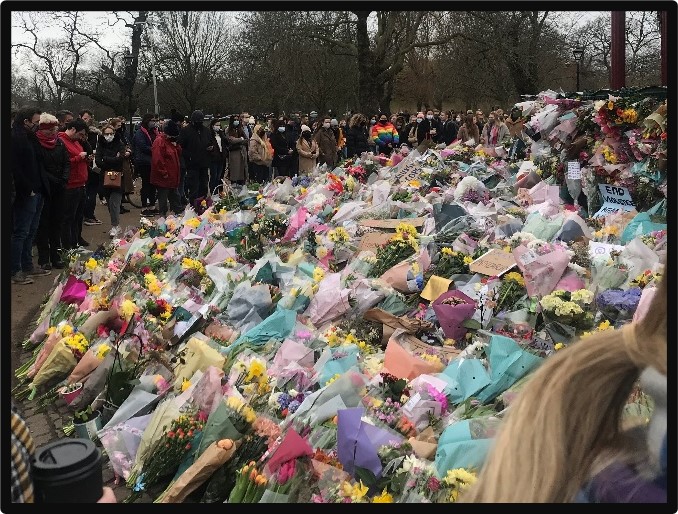
- On 12th March, Sarah Everard was kidnapped, apparently on the A205,
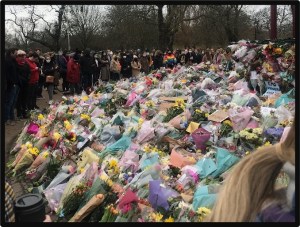 a well-lit section of the South Circular Road, and subsequently murdered. Her murder will always, however inaccurately, be associated with Clapham Common. The local outpouring of grief was unprecedented. I went up on to the Common on both the following days, in a somewhat vain gesture of solidarity. The only thing that I can think of to say is that we do have to do something pretty drastic about men. We need to rethink the education and status of boys, relative not only to girls but to the whole of society. Men are, after all, guilty of most violence whether to young or old, child or adult, female or male.
- Within a couple of days, the tree was cut down. I have made no bones about my support for the regeneration of the York Road estate, commonly (but wrongly) referred to as the Winstanley. I (and more to the point, most of the tenants) do not consider that the living conditions suffered by many who live in Scholey, Pennethorne, and Holcroft Houses to be acceptable in 21st century Britain. And when what follows from that belief are difficult decisions, then I certainly accept the consequences. I have taken some criticism for the cutting down of the tree, for not providing a massive increase in social housing and for not arguing for the perfect solution. As it happens, it is Wandsworth Council with its Tory majority control, which makes the decisions in a context where a Tory Government has set the funding rules. I believe that, in that context, I and my fellow Labour councillors in Latchmere – Wendy Speck (now retired), Kate Stock and Simon Hogg – have negotiated and lobbied for a far better outcome than most regeneration schemes across the capital have achieved. And remember, the plan is to have 40 more trees after the scheme is completed than before!
- A week later, on 19th March, I went to a lecture on Degas at the National Gallery. In pre-Covid days, I loved going to the exhibitions to see great paintings, by Hockney as much as by Leonardo. However, I am disappointed with the lectures that the National Gallery has put on during Covid, which I have attended virtually. Personally, I am not all that interested in Degas’ personal circumstances. He seems to have had a very comfortable and happy life – none of your mythical tales of starving, love-lorn student in a freezing attic. For my taste, the lecture put too much emphasis on the artist and not enough on the techniques or the brilliance of his art. So, very high marks to the Gallery for the idea of publicly accessible lectures, even at a high price, but the Gallery needs to think further about the delivery of the lectures. Perhaps, they need to take advice from the BBC or similar experts.
- On 24th March I had the Planning Applications Committee (PAC). It was, however, one of the most uneventful PAC meetings of recent times. Nevertheless, 80 people joined the virtual public gallery. And, although government permission to hold such meetings in virtual mode runs out at the end of June, there is no doubt that there will be long-term effects on the way that Councils hold their public meetings.
- On 30th March, I went for a virtual walk along Bolingbroke
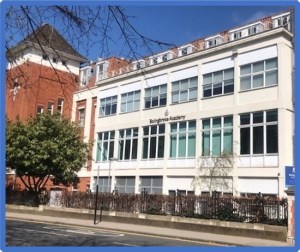 Grove, led and described by Sue Demont of the Battersea Society and organised by the Friends of Wandsworth Common. It was well researched, as Sue’s work always is, but one of her comments, I found especially interesting, related to Bolingbroke School. It was of course, for most of its life, Bolingbroke Hospital, and you can possibly tell that where the large windows dominate the west face of the school, there used to be balconies. They were there so that patients, mostly from the then densely packed industrial slums, north of the railway lines, could recuperate in the fresh air and the sunshine. In a strange way that geographic exchange between the harsher realities of North Battersea and the softer environment of Wandsworth Common is echoed by the daily flow of school-kids from one to the other.
- And finally, I and my partner have just had our second jabs. It obviously does not mean that one can go mad and go to the pub, a restaurant and the cinema. However, it is a weight off the mind. I fully recommend it to anyone having doubts about vaccination. Forget your doubts. Vaccination works – all the evidence proves it – and what is more, it is a collective good, potentially releasing us all from endlessly repeated lockdowns.


My Programme for April
- All normal political activity comes to a halt in April, as the rules forbid meetings, council publicity, etc., etc. in the run-up to the London Mayoral and London Assembly elections on May 6th.
- Life will not exactly stop but, what with Covid, it will seem pretty close to it, except that on April 26th, I am due to give a presentation to the Battersea Society on Battersea History, 1800-2020. That will be a new challenge that I am looking forward to.
Did you Know: Last month I asked about the person, whose name adorns the new Duval House?
The answer is Emily Duval (1861-1924), who  campaigned strongly for women’s rights, as did all her Battersea-based family. She was twice imprisoned for her role in suffragette protests; and in 1919, once women had got the vote, she became a Labour Councillor in Battersea – one of the first women to be elected to such a position. Tragically, Duval’s three suffragette daughters died in the 1918 flu pandemic and never got to vote.
And for this month can you tell me:
Where you would have to go in 1886 to visit Battersea’s Little Hell? And what is there now?
Councillor Tony Belton’s Battersea March 2021, Newsletter (# 141)
- In January, it was politics, which
 were so strange, but in February it was the weather! Starting with one of the longest, coldest hard spells in recent history, the month ended in almost balmy, spring warmth. Dogs and kids of all ages enjoyed the start. I am afraid that I have reached the stage of very much preferring the warmth of the last few days!
- The public political world has been rather quiet, with the one exception of
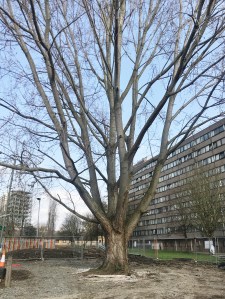 the tree, variously described as a black poplar, a horse chestnut, and a London Plane and photographed the day before it became a cause celebre, a day before it was “occupied” by Extinction Rebellion and other good, worthy causes. You will not be surprised to know that I, and my fellow councillors, have received emails aplenty in defense of the tree claiming that it had stood there a hundred plus years and seen two World Wars and that to bring its life to an end was an act of needless vandalism, which we should resist at all costs. It is undeniably a grand tree and it will be undeniably a sad day when and if the tree does go, but no one should imagine that its loss was an act of needless vandalism, done almost for the fun of it.


- Just look at Pennethorne House, the grey, concrete slab block close behind on the right of the tree. It is one of three slab blocks, the other two being Scholey and Holcroft Houses, which are the main feature of the York Road estate, so often lumped together as part of the Winstanley Estate. They are also the core of a community, which suffers from one of the highest deprivation levels in the UK. An hour or two spent delivering leaflets, something I have done for many years on that estate, will introduce you to a brutalist concrete physical environment. It is no surprise to me that the social problems found here are the greatest in Wandsworth, nor that, most regrettably, it has been the scene of murders and domestic abuse. The 2012 Council plan to regenerate, ok let’s be honest about it, to demolish and rebuild the estate was agreed unanimously. And frankly, I do not see too many of the worthy, green protesters wishing to live in these three blocks.
- Agreed that demolition of the worst blocks does not of itself demand loss of the tree, but government no longer subsidises council house building and hence the council has to pay for the work. To do that it has to raise taxes, i.e. Council Tax, which is not actually a viable option thanks to government legislation, or to borrow money or to sell assets. Indeed, selling assets was and is considered the only feasible option. The assets to be sold are the private flats constructed in the new tall, white Duval House, built opposite the Grant Road entrance to Clapham Junction station, and in the other for sale blocks, yet to be built. These considerations have meant reconfiguring the development programme. In fact, there will be some 40 more new trees after the programme is finished than there are now although, of course, to start with they will be semi-mature trees or saplings and not mature, or aging, trees.
- We, three Latchmere councillors, have asked for a review of the build programme, but just for the record, the high capacity cable that is planned for where the tree now stands is not like your average domestic electric cable that you can wind round the furniture. Nor is the timing a matter of a day or two here and there. Any delay now is holding up the provision of some 150 new council homes and judging by the quality of the newly built Mitchell House, shown here, that would be a grossly unfair penalty to impose on the current inhabitants of the estate.
- I had the Planning Applications Committee (PAC) on 24th
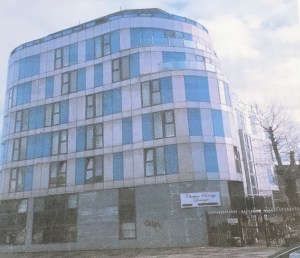 None of the applications was of note to anyone but the immediate neighbours. Unusually, however, people might be interested in an enforcement action that we agreed. It was about this building that you may have noticed at the corner of Prince of Wales Drive and Battersea Park Road, where they meet near the Dogs’ Home. This building, called Creative House, was built with permission for 16 flats and a ground floor shop, but has been used for some time as a “luxury AirBNB” base for London. The Committee decided, on the officers’ recommendation to start enforcement action to have it converted back to residential accommodation.
- I am frankly a little concerned about this decision. As a planning authority, Wandsworth has decided that we need more hotel space so as to accommodate the ever-growing tourist trade, which we recognise is of massve importance to the London economy. As a local authority we must also try to ensure that AirBNB is not simply a cheap, unregulated scam designed to exploit the advantages of the internet and avoid the health and safety controls operataed by hotels and yet we have to acknowledge that it is a “new, cheaper product” designed for the internet age and is enormously popular with younger, less affluent tourists – and frankly this corner site is not that ideal for permanent housing. What do you reckon?
- On 11th February, I went, with Carol Rahn leading, on a virtual
 walk round historical buildings in Battersea. Carol has been advising the Council on various buildings, sites and gardens that should be given some level of historic preservation. None of the buildings were famous – if they were then they would already be preserved but this was a fun tour of Victorian post-boxes, of stink pipes, boundary markers like the two parish boundary markers shown here in Wix Lane, and of oddities and unusual designs. Carol’s walk, given under the auspices of the Battersea Society, was as ever well researched and masterfully presented – very enjoyable.

My Programme for March
- On 3rd March I have a full Council Meeting.
- On 9th March we have a meeting of the Wandsworth Conservation Area Advisory Committee.
- The Planning Applications Committee is due to meet on 24th March – if the traditional purdah for the Mayoral Election on 3rd May does not cause its cancellation.
- Look out at @MarshadeCordova for Marsha de Cordova’s tweets on notable women with connections to Battersea. There will be one each day in March and a special display on 8th March, International Women’s Day. Marsha says log in here:- https://www.eventbrite.co.uk/e/women-in-battersea-options-and-opportunities-tickets-141971750327 and you will receive a Zoom link on the day of the event.
Did you Know:
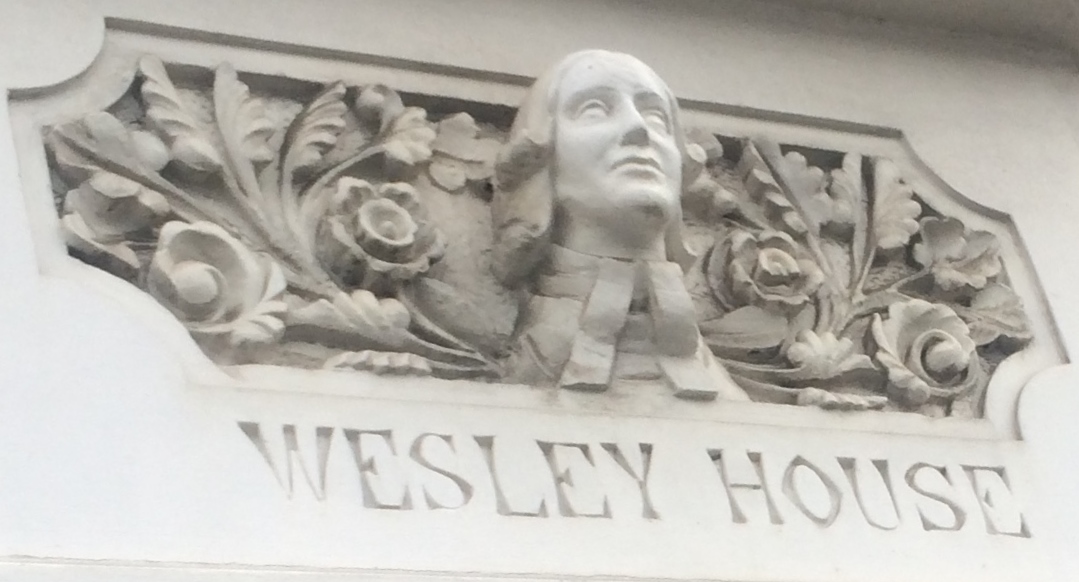
Last month I asked where John Wesley’s bust can be found?
Not very surprisingly, stalwarts of the Battersea Society, such as Carol and Jenny, knew the answer but not many others did. It is in Mallinson Road, on the south side, east of Northcote Road. The neighbour’s house has a bust of Mallinson, of whom I know nothing. But the road name suggests to me that he was the builder responsible for many of these late nineteenth-century terraced houses.
This month’s Question relates to the large Duval House, referred to in paragraph 4 above and pictured here. It stands opposite the Grant Road exit from Clapham Junction station and is the “cash cow” of the redevelopment which makes much of the regeneration economically viable. Do you have any idea about which local personage it was named after and what she did that made her noteworthy?
Councillor Tony Belton’s Battersea February 2021, Newsletter (# 140)
|
1. The strangeness of the times continues to bemuse. The year began with what looked like an attempted coup in the United States, organised by the President himself and yet everybody (?) expects him to get away with a not-guilty verdict in the Senate. We used to lock up people 2. And then, of course, Brexit really started to get 3. Meanwhile back here in “dear old Blighty” global warming appears to place England in danger of becoming completely water-logged – there are more than just scenic advantages to Scottish and Welsh mountains! What with the Thames barrier and raised river walls one would guess that we, in Battersea, are largely safe but there must be hundreds of flooded basements. I usually do my daily exercise on Clapham Common and, to put it mildly, I think the Common is under stress from both the constant downpours and from the very heavy traffic of walkers, joggers and cyclists. Will the grass and the two small woods ever recover? Probably, but how long before they recover properly? 4. At the same time, the UK registers over 100,000 deaths from Covid with general expectation that we might register 5. But at last some relief, at least for me and mine. We both had our vaccinations, first phase in mid-January. Just in case there are any cynics reading this, which of course there aren’t, we are both genuinely in the priority groups and the appointments came completely out of the blue! The experience was great: so many older people all showing delight to have got through to a vaccination; very helpful volunteers shepherding us through the process in such a friendly fashion; so punctual, so social and so efficient. Well done NHS and thank goodness this process was not out-sourced, like “Test and Trace”, to a Tory Party crony. 6. Back at the Town Hall, things seem to have slowed down. The only formal meeting I had all month was the Planning Applications Committee (PAC) on 27th January. Even that had a relatively light agenda, by recent standards, which might explain why only 46 residents logged in to view the discussion on-line. In recent months the audience has averaged over 100. Interestingly enough, the two most significant applications were to change the “mix” of recently approved applications – the mix, that is, of permitted uses. Developers were looking to scale down the amount of retail space in their applications; and also to change the balance of residential to slightly more family-sized units (3 and 4 bedroom flats) and fewer single-person units. I rather suspect that this is not the last time that we will see the impact of Covid on developers and new developments. 7. Could it be that the frantic pace of development in the Nine Elms Lane area will come to, perhaps not a halt, but a slowdown? Could this mark the end of the growth of high-rise London? I hope so, as despite some of the obvious advantages, I don’t come across very many residents who actually want to live high in the sky – especially families with kids. 8. There were other informal Council-centred meetings such as:-
9. So, it has been a quiet month for most of the councillors, at least in formal political terms but many of the younger members are volunteering at the vaccination centres, or working 10. On 6th January, I attended (Zoom, of course) a Battersea Society Twelfth Night Poetry meeting, starring poems written and read by Hilaire. I found some of the poems very moving and the whole evening very innovative. And on 21st the Society organised a talk, by Jeanne Rathbone on the Battersea industrial riverside. As ever, 11. Simon Hogg, Kate Stock and I also attended a few meetings to discuss the plans for the Regeneration of the Winstanley/York Road estates. All was going well until on the 29th January we were warned that the Council’s partner in the Joint Venture project, Taylor Wimpey, is having difficulties raising the necessary finance. As a result, there will need to be a quick review of the project and of the timing of fundamental phases of the building work. The Covid crisis has struck again. Fortunately, I understand that the Council’s element of the project, including the delivery of new council houses and other types of affordable housing, look to be unaffected. I will update on the position next month. My Programme for February
Did you Know: Many of you knew the answer to this one though one reply made me think it was a great piece of inspired detective work. The plaque says “Fossilized remains of a tree trunk from the lower Purbeck Bed, Portland. Moved from Bedford Hill Park by the Balham Antiquarian and Natural History Society and placed here by the permission of London County Council.” The trunk itself is not spectacularly attractive or striking but at an age of 145 million years, I guess it deserves our appreciation.
|
 in the Tower before beheading them for lesser crimes than plotting to bring down the state! What is more, the very same President is generally recognised to have been a tool of the KGB and he is still not going to get beheaded, unlike
  underway with all the ironies that encompassed. The appearance of a virtual trade barrier in the middle of the Irish Sea, despite PM Johnson declaring only months beforehand that no UK Prime Minister could ever agree to that. The ironies continued with fishing interests, previously one of the most vocal pro-Brexit groupings
 in the country, complaining that they have been betrayed. And then there were all the stories of just how much
  150,000 in three months time. Given the general reaction, when at least in theory we understand about disease, it is easy to imagine the fear that the Black Death struck in the medieval world. Then, the population loss was as much as 30% – the equivalent today of about 18 million! Interestingly enough, the mythical golden years of “Merrie England” followed the Black Death, at a time when England’s growing wealth was shared amongst a much smaller population.
 to get IT facilities out to schools, or helping voluntary groups to deliver food to the more vulnerable residents. The Town Hall, itself, is a very curious place right now. I have been there a few times but it is like the Mary, or if you prefer
  Jeanne had researched every site and every nook and cranny of each site’s history. She included lots of pictures and material, which were new to me. I hope that Battersea Society will support efforts to get more notices and photographs along the river of both its historical and industrial past, such as this picture of Price’s Candle Factory.
 And for
 Councillor Tony Belton’s Battersea January 2021, Newsletter (# 139)
- This year (or more accurately “last year”), we can all use the same clichés and understand exactly what we all mean, such as “I have never known a Christmas like this one”, “the world will never be the same again”, “working life/the high street/the entertainment world will never be the same” and my own current, personal favourite “it is what it is”. But the fact that we all know the clichés doesn’t stop them from being true. Covid-19 is a disaster and nothing ever will be quite the same again, though chances are they will not be quite as different as some think.
- No doubt as more and more of us are vaccinated, there will be a return to some semblance of normality, whatever that may be. But that might not be as simple as it may appear thanks to the growth of the “anti-vaxxers” lunacy. It beggars belief that otherwise apparently rational people can campaign against vaccination. That this triumph of immunology, originally of Chinese medicine, brought to Europe through Turkey and developed by the eighteenth-century Englishman, Edward Jenner, and successfully used to conquer smallpox, polio, diptheria and many other diseases, should be challenged by such “know-nothings” is a tragedy of modern life. We all have a duty to deride and defeat such irrationality, even if it is not quite the threat here that it appears to be in the USA.
-
If the anti-vaccination movement becomes a genuine threat to public health, then politicians will have to face questions about compulsion or “liberty”; individual rights and duties; communal values. As we don’t allow people to choose which side of the road they want to drive on, right or left, I don’t really see why we should allow people to choose whether to be vaccinated or not; after all compulsory vaccination against smallpox has been standard since 1853. If compulsion seems harsh to some, then perhaps we should use extreme “nudge theory” like charging an NHS premium on all, who refuse vaccination.
- On 8th December, we had our second monthly Battersea Labour Party meeting. The mechanics of it worked quite well – clearly, a high proportion of members are well used to operating Zoom or Teams in their working lives and virtual meetings are becoming an inevitable, even desirable feature of daily life. Amazing, that an almost unknown technology should become a mundane, everyday event in no more than 10 months: in that sense, 2020 has certainly been different.
- On Wednesday 16th December, we had the Wandsworth Council Meeting – very strange! Council meetings are, in my view, meant to be about policy-making and review, about debating current issues and opinions, and holding the administration, whether political or practical, to account. But Covid has put a stop to all that. What we are left with, rather like in Parliament, is a Tory-controlled administration informing us of what is happening and how well they are handling everything – could they have done anything else? And a Labour opposition replying that the Tories are not doing well – but could Labour have done anything else? It leaves us with a form of politics, a confrontational politics, that gives parties a bad name.
- Personally, I would have liked the Council to have demanded of Government that local authorities should take over the national Covid test-and-trace programme. The Government itself has made “a Horlicks” of the programme, in a display of incredible incompetence, whilst simultaneously playing fast and loose with recognised procurement procedures. The fact that local authorities and the NHS have well-tried, successful test-and-trace programmes for other contagious illnesses seems to have escaped the Government’s notice. This Government’s contempt for local authorities has cost some innocent lives. I trust that the post mortem on this crisis considers all the evidence and really holds those responsible to account!
- The following day 17th December, I was back to the
 very practical discussions of the Planning Applications Committee (PAC). Unusually, this PAC meeting was dominated by relatively small applications, mainly in Tooting. The one exception was an application for 480 residential units in 8-17 storey blocks between Wandsworth Town Station and Swandon Way. The buck had already been effectively sold on this, because it had “prior approval” from Sadiq Khan, Mayor of London. Nonetheless, I and one other councillor voted against the scheme, because of its mass and density, which we thought inappropriate for the location. The proposed
 development also made no concession to the possible or probable post-Covid environment of decreased demand for office space and more particularly for office commuters. Apologies for the poor reproduction but here are graphics of the Swandon Way development from Swandon Way and from Old York Road.
- The run-up to Christmas was, you will recall,
 exceptionally wet. That did, however, have its occasional compensations. On December 23rd, for example, this spectacular rainbow could be seen over Battersea. Meanwhile, on a personal basis it was a challenging month. My partner and I have had Garry installing a new kitchen, at the same time as we have struggled with an ailing boiler and an extremely temperamental shower. But on Christmas Eve the kitchen was superbly finished and a new boiler installed, and everything is now wonderful. We spent Christmas Day cooking and having hot showers!
- Meanwhile, I have been reading a book by my friend, Liam Kennedy, called Who was Responsible for the Troubles? Liam is a historian based in Queen’s Belfast and happens to be from a rural, Catholic, Irish background (Tipperary). He has one thing in common with me. He was for a period a Belfast city councillor – but there the similarity ends. I recall that we were once having dinner with him and his wife when the phone rang. Liam excused himself to return a couple of hours later. He had been called out on that Saturday evening to attend to one of his constituents, who had been the victim of a “knee-capping”. Thankfully being a Latchmere councillor has not, so far, produced such drama.
- The book documents the detail of much of the Troubles; Liam’s personal knowledge of many of the players in Northern Ireland’s troubles gives his book depth and granularity. His conclusions about the events are not conventional but deserve consideration. It has taken courage to write and to have it published. It will be an essential and sombre reference work about the Troubles.
- On December 30th, Parliament voted to accept the deal the Prime Minister made with the European Union on Christmas Eve. In my view, the deal joins the short-list of the greatest self-imposed disasters that any country has ever made – it will be a year or two before that is proved right or wrong but nonetheless on the 30th December Labour had to decide whether to vote for or against the deal, or to abstain. Clearly, this decision was a difficult one for Labour MPs and, I know well, it has pre-occupied Battersea’s MP, Marsha de Cordova.
- Anyone with a passing acquaintance with the real world of politics will know that voting for a poor “Tory” deal, negotiated by a despised Prime Minister, is, as they say, a “big ask”. However, voting against it was never going to be more than a gesture, which would have left Labour open to the accusation that, in effect, it had supported leaving the EU with no deal. I am pleased that Keir Starmer supported the deal, even a bad Tory engineered deal is a better choice than no deal at all.
My Programme for January
- On 4th January I have a Wandsworth Conservation Advisory Committee.
- On Twelfth Night, the Battersea Society is running a Zoom Poetry Reading event – what an inspiration for the depths of this, particularly grim winter.
- The Planning Applications Committee is on 27th January and NOT on 19th as advertised in the Council diary – unsurprisingly, it looks like a quiet month.
Did you Know:
Last month I asked two easy questions but did not get one response!
They were Q1: Can you date the two occasions since WWII, when one party won the UK’s popular vote but lost the election and name the two lucky men who subsequently walked into 10 Downing Street?
Answer 1: The first occasion was 1951 when Labour won the popular vote but not the majority of constituencies and Tory Winston Churchill became Prime Minister for the second time. The other occasion was February 1974, when the Tories won the popular vote but ended up with fewer MPs than Labour. Labour’s Harold Wilson subsequently became PM.
Q2 What is the hidden physical connection between Streatham Hill and Battersea Reach?
Answer 2: The Falconbrook River, which has its source on Streatham Hill and eventually flows under Northcote Road and Falcon Road, and ends in the Thames at Battersea Reach. It is nowadays culverted all, or nearly all, the way.
And for this month:
In December, I went for a walk on Tooting Common, which I don’t know very well. And there I came across what I suggest is the oldest object in Wandsworth – and I mean seriously old, millions of years old. Do you know what it is?
Councillor Tony Belton’s Battersea December, 2020, Newsletter (# 138)
- Like everyone else, my partner and I are getting a tad bored with
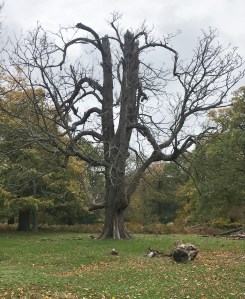 lockdowns and their implications, so on 1st November, we escaped for a beautiful walk in Richmond Park. As often before we headed for Pen Ponds but instead of our normal walks to the ponds, and then s
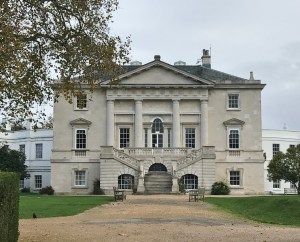 outh or west we went north, where we came across my rather tragic tree of the month – majestic and doleful and rather appropriate for “Lockdown November”. We also discovered the Royal Ballet School and its beautiful home. It isn’t (I don’t think) the same building as in the film, Billy Elliott (2000), but it obviously inspired the set for the film.
- On the 3rd November, the Boundary
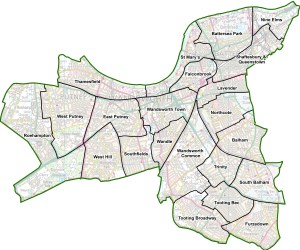 Commissioners produced their latest and last report on the proposed ward boundaries from 2022, which will apply for the next 20 or 30 years. The report was published coincidentally and ironically on the day of the American Presidential election. In the Biden:Trump election, the distribution of the popular vote and the Electoral College vote was so different that Biden’s popular majority of over six million was by no means certain to deliver him victory in the Electoral College. The British Boundary Commissioners’ job is to distribute the vote between constituencies so as to ensure that confusion like that does not happen in the UK.
- On the whole, over the years, the Commission has been fairly successful in that aim BUT not always. (There have been two occasions since the Second World War, when the party that won the most votes lost the Election, once with the Tories losing out and once when Labour did.) Here, in Wandsworth, the Tories have won the last 12 Council elections but not always the popular vote. In both 1986 and 2018, Labour won more votes. The 1986 win gifted the Tories with control for the year of the Zero Council Tax, which created favourable conditions for them for several subsequent elections. It is arguable that their “accidental” victory in 1986 secured for the Tories control of Wandsworth for many years.
- On a day-to-day basis, the ward boundaries make little practical difference, but some old ward names will disappear (Latchmere, Fairfield) and some new ones will appear (Lavender, Battersea Park, Falconbrook). Some will be familiar but in a different format as in Mary’s and not St. Mary Park or the “combined” ward of Shaftesbury and Queenstown. But, from my experience, the worst feature of the review is the change from 20 wards with 3 councillors each making a total Council of 60 councillors to a mix of 14 three-councillor wards and 8 two-councillor wards, making a Council of 58. From my experience, when the Borough last had two-councillor wards prior to 2002, the smaller wards packed less clout than the larger wards and, when it came to the inevitable horse-trading of priorities and budgets, the smaller wards suffered. That problem was solved by making the wards a standard size.
- On 10th November, Battersea Labour Party had a Zoom meeting, where the major item under discussion was Jeremy Corbyn’s position in the party. The debate was calm and considered, which, given the feelings of some members, was in itself quite a good result. Nevertheless, honesty compels me to admit that I was disappointed in our failure to move on to the important issues facing the country as we draw nearer to Brexit, whilst struggling with the consequences of the pandemic!
- On 18th November the Mayor, Sadiq Khan, announced the good news that he has agreed to the Winstanley Regeneration plan. We can now get on with replacing the old, worn-out stock of Council homes, with super, high-quality new homes as well as adding some 150 extra bedrooms for all those families suffering over-crowding on the estate. But in addition, we will add hundreds of new homes, a new library and swimming pool and a re-designed York Gardens. These changes will, of course, take time but at least the decks are now clear. Some tenants will be moving into their new homes in the next couple of months and all will have the promise of better living conditions.
- The Planning Applications Committee (PAC) was on 25th November; on this occasion, it was watched live by 274 viewers,
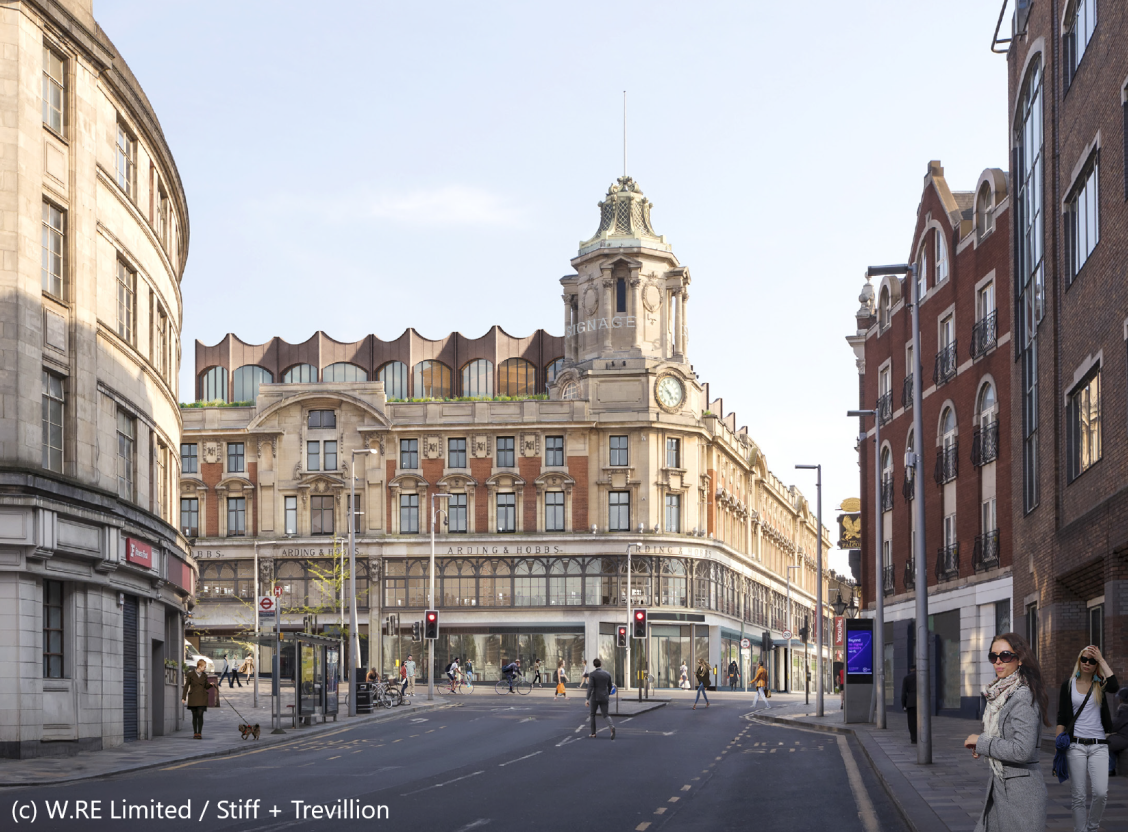
 most of whom I guess were watching progress with the Arding & Hobbs I rather liked the design solution proposed by the architects; it retains the early twentieth century features of the original and adds a slightly Arabic, but restrained roof extension. The contentious element, however, is that the developer obviously does not think that the future of retail in the modern, online world is bright enough to utilise a building the size of the old department store. Instead, he has gone for small, quality office units, arguing essentially that in the post-Covid world, more offices will be located in significant hubs around the city centre – and what hub could be better situated for Gatwick and Heathrow and the UK’s rail system than Clapham Junction? Note that there is no longer a link with Debenham’s or a vulnerability to its bankruptcy.
- There were several other major applications of real interest to Battersea, most of which were approved. One was the development in Battersea Square of Thomas’s Preparatory School with a substantial secondary school addition. Thomas’s is likely to become one of the most expensive and exclusive public schools in Britain – with all that entails. Another was the development of three tower blocks, up to 16 storeys, on the Palmerston Court site, opposite the entrance to the Dogs’ Home. This complex is designed for more than 850 student residents, from King’s College London, along with a substantial volume of offices and a new pub to replace the current Flanagan’s. And a third development is for 50+ flats on the Patmore estate, attached to and very much in tune with Marsh House.
- The fourth application I would like to highlight is on a totally different scale but perhaps just as significant for residents of the Borough. It was an application to build a small bar, ancillary to what is now Clapham Common Westside’s Bowling Green. The intention is to provide a commercial refreshment facility to complement a new Putt in the Park complex in place of the bowling green. There are similar facilities in both Battersea and Wandsworth Parks. Incredibly, to me, there is no “statutory” protection for bowling greens (and I dare say neither crown bowling greens nor croquet lawns). There is protection for other sports pitches, such as soccer, hockey and rugby, which attract younger client groups. So the omission of greens seems discriminatory on both age and gender grounds. Bowls and croquet are energetic, inclusive games, which deserve support and not oblivion. I am pleased to say that the committee rejected this application! It would be such a shame to lose the quiet and gentle sight of the local bowling green on a summer’s afternoon.
- One other “minor” piece of news may have escaped your attention. Because of the state of Hammersmith Bridge
 (seen here in the distance), and NOT because of Covid, the decision has been taken to move The 2021 Boat Race from the Thames to Cambridge. Because there is no sign yet that Hammersmith Bridge will ever be repaired and best estimates are that it would take seven years anyway, one wonders whether this traditional race, now over 160 years old, will ever be seen again. There are all kinds of things that are anachronistic about it – it excludes hundreds of other colleges; it is an oddity, rather like the marathon only not even an Olympic event; it is not metric; it’s very long; it’s on the tideway when almost all other rowing events are on lakes. We may have seen our last ever Boat Race!


My Programme for December
- On 8th December we have a Zoom meeting of Battersea Labour Party members.
- On 10th December there is a virtual meeting of the Labour councillors, the first for what seems like months.
- The Council Meeting is on 16th December, but what exactly that will be like is difficult to say at the moment!
- That is followed the next day by the Planning Applications Committee.
Last month I asked, “Where is the Battersea Welsh Presbyterian Chapel?”
On this occasion, I was surprised at just how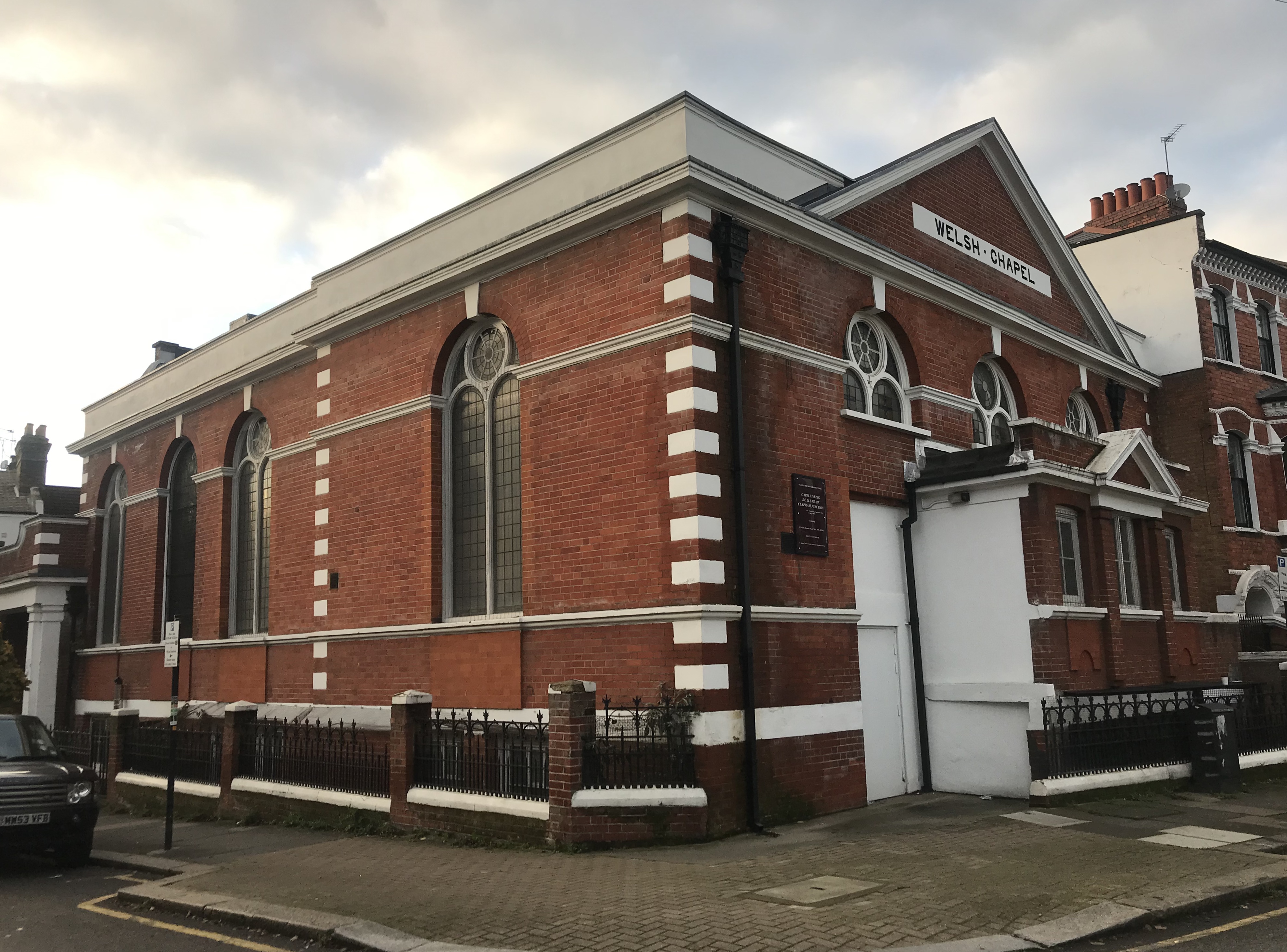 many people did know that the Chapel, pictured here, stands in Beauchamp Road on the right-hand corner halfway along the road. But readers also told me that David Lloyd George worshipped there, when he lived in Routh Road, and that Huw Edwards, the newscaster, is a key figure in the chapel’s life.
The Eglwys Bresbyteraidd Cymru Or the Presbyterian Church of Wales
And this month two easy questions and one notice:
Q1. In Paragraph 3 above I mentioned that, on two occasions since WWII, one party won the UK’s popular vote but lost the election. Can you date these occasions and name the two lucky men who subsequently walked into 10 Downing Street?
Q2. What is the hidden physical connection between Streatham Hill and Battersea Reach?
On December 2nd Clare Graham’s booklet Discovering Battersea’s Open Spaces goes on sale at Waterstones or via the Battersea Society website. The booklet takes you on six delightful walks across and around the old Battersea parish.
Festive Midwinter Greetings
from Tony and Penny

Sails on the Markermeer, the Netherlands, Photograph, Tony, 2013
The 1918 “Spanish flu” and my grandparents: Lessons from a pandemic
I am probably one of the  very few nowadays to have a “direct connection” with the 1918 “Spanish flu” pandemic, in that I had quite long conversations about it with my grandmother. Her husband, Ernest Belton, died of the disease in November, 1918. She was then seven months pregnant with Rose, my aunt. This picture shows my grandparents, with Nen their eldest daughter, in 1911 or 1912.
Gran told me that her husband had woken up one day feeling a bit worse for wear and died in her lap the very same evening – that was how virulent the 1918 pandemic was. At the time of his death, Nen was 7 years old, Ernest 6, and my father Stanley just 4. Rose was born two months later in January, 1919.
The Beltons were a working-class family with no private resources and no Welfare State to support them. My grandfather was a tram driver. They lived in tenement blocks in, variously, the East End and Islington. I don’t recall whether my grandmother had needed to work before Ernest’s death (our chats were in the late 1940s and 1950s), but, after his death, she certainly had to work daytimes as a seamstress in the big Regent Street store Dickins & Jones and in her spare time (with 4 children, aged 0-7!) as a domestic cleaner.
There was no widow’s allowance, indeed the Widows’, Orphans’ and Old Age Contributory Benefits Act did not come into force until 1925, but even then widows had to be over 45 to qualify for ten shillings (50P) per week. But gran was in her late twenties. She used to tell me that she regularly had to pawn her wedding ring for a shilling (literal but meaningless modern comparison is 5P), and, as I recall, redeemed it for a shilling and one farthing (quarter of an old penny, which in modern terms would be an interest rate of just less than 2% per week or 100% p.a.). As a sparky 10 year-old, I recall arguing with her that if only she scrimped and scraped for a week she would save farthing after farthing, but she told me that things didn’t work out like that – I never quite understood that argument then but perhaps I am getting old enough to work it out now!
Clearly, this kind of life was impossible without very strong, informal, community bonds. Women in particular must have shared endless family tasks and, most particularly, childcare duties. The early scenes of working-class life in the East End in Sarah Gavron’s film Suffragette (2015) struck me as having very much the same flavour as my grandmother’s stories. If you’ve not seen the film, I highly recommend it. The leaflet pictured below was produced by Wandsworth Labour Parties, two years ago, to commemorate the first centenary of the women’s suffrage. You can see it includes the picture of my grandparents.
Gran couldn’t afford the farthing bus fare from Islington to Oxford Circus and so walked every day, come rain come shine. The 20s might have been the “Roaring Twenties” for some but not for the British working class. In 1926 came the General Strike and three years later, in 1929, the Wall Street Crash. Just when my grandmother might have expected my aunts and uncles to contribute to the family income, they were finding it difficult to get any job at all.
My father turned out to be a bright lad and in 1929 won a scholarship to Christ’s Hospital, which according to Wikipedia was, and is, unique amongst British “public schools” in that “School fees are paid on a means-tested basis, with substantial subsidies paid by the school or their benefactors, so that pupils from all walks of life are able to have private education that would otherwise be beyond the means of their parents”. But, even with the subsidies, the fees were too much for Nan and so, Stan, aged 14, got a job as a post office messenger boy.
It is no wonder that, for the working-classes, solidarity was, and still is, such an article of faith; it is also no wonder that trade union solidarity, perhaps most explicitly the closed shop, was so important to the labour movement. (The “closed shop” was the name used to describe the practice of enforcing trade union membership on to a workforce; it was “organised labour’s” chief weapon against “the bosses”. The effective abolition of the closed shop was one of the main Thatcher “reforms”, and look, how weak organised labour has been since then!)
My father did quite well for himself and so, thirty plus years later, he could afford to contribute his element of the major county award, which I got when going to Oxford University from a state school. Just enough of Home Counties patina and Oxford rubbed off on me, for me at times to be accused by Tory councillors, of being a class ‘traitor’. They thought me to be sufficient of a toff to have “let the side down” by supporting the Labour Party. How wrong they were and are; and how much I loathe what the Tories collectively have done to working-class life in this country.
To a considerable extent led by Wandsworth Council’s 1978 and 1982 intake of Tories, the Tories, nationally, have systematically coarsened and debased the working classes. Council house sales and the “right to buy” were part of the relentless Tory attacks on subsidised, community-owned housing – attacks which undermined the security and stability of many working-class communities. They followed that up with a policy of compulsory competitive tendering for manual labour; a policy, which cruelly and viciously squeezed the dignity out of so many jobs and coarsened our culture with crude ‘value for money’ measures, usually resulting in worsening pay and conditions, and eventually leading to the gig economy.
What very few people understood, however, was that the systemic changes introduced by the Tories could not be neatly controlled so as to affect only working-class communities and values. The digital revolution has helped to undermine very much more than simply manual jobs; the “loads-of-money” crudities of city slickers began to undermine all kinds of societal and communal values.
At the height of Wandsworth’s service privatisation, I quoted the great seventeenth century Norfolk protest song to Wandsworth’s Chief Executive, Albert Newman,
“The law locks up the man or woman
Who steals the goose from off the common
But leaves the greater villain loose
Who steals the common from off the goose.”
He only half-jokingly responded that Wandsworth Council needed to become more like the man who stole the common. What Albert Newman was doing, however half-heartedly, was recognising the Council’s part in undermining the social and communal solidarity of our society.
If nothing else, this ghastly pandemic could restore our faith in well-funded, community focused services; undermine the status, privilege and arrogance of the super-rich; restore belief in a redistributive tax and social system; re-invigorate community; and provide a springboard for voluntary action.
In the twenty years after the 1918 “flu epidemic”, Europe’s real political battle became one between social democracy and the two very different forms of totalitarianism, Stalinism and Nazism. Today, a hundred years later, we must fight for the victory of a diverse and democratic polity exercised in most of Europe (and elsewhere) against the nationalistic autocracies we see in Moscow, Beijing, much of the Middle East and, frighteningly, maybe, until recently, even Washington. But equally we need to fight to ensure that we win a social democratic democracy, not the aggressive individualistic dog-eat-dog version resulting from neo-liberalism.
Tony Belton, 17th November, 2020
 Tony Belton
 Tony Belton