Councillor Tony Belton’s Battersea March 2021, Newsletter (# 141)
- In January, it was politics, which
 were so strange, but in February it was the weather! Starting with one of the longest, coldest hard spells in recent history, the month ended in almost balmy, spring warmth. Dogs and kids of all ages enjoyed the start. I am afraid that I have reached the stage of very much preferring the warmth of the last few days!
- The public political world has been rather quiet, with the one exception of
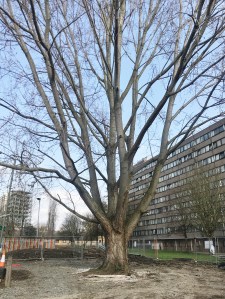 the tree, variously described as a black poplar, a horse chestnut, and a London Plane and photographed the day before it became a cause celebre, a day before it was “occupied” by Extinction Rebellion and other good, worthy causes. You will not be surprised to know that I, and my fellow councillors, have received emails aplenty in defense of the tree claiming that it had stood there a hundred plus years and seen two World Wars and that to bring its life to an end was an act of needless vandalism, which we should resist at all costs. It is undeniably a grand tree and it will be undeniably a sad day when and if the tree does go, but no one should imagine that its loss was an act of needless vandalism, done almost for the fun of it.


- Just look at Pennethorne House, the grey, concrete slab block close behind on the right of the tree. It is one of three slab blocks, the other two being Scholey and Holcroft Houses, which are the main feature of the York Road estate, so often lumped together as part of the Winstanley Estate. They are also the core of a community, which suffers from one of the highest deprivation levels in the UK. An hour or two spent delivering leaflets, something I have done for many years on that estate, will introduce you to a brutalist concrete physical environment. It is no surprise to me that the social problems found here are the greatest in Wandsworth, nor that, most regrettably, it has been the scene of murders and domestic abuse. The 2012 Council plan to regenerate, ok let’s be honest about it, to demolish and rebuild the estate was agreed unanimously. And frankly, I do not see too many of the worthy, green protesters wishing to live in these three blocks.
- Agreed that demolition of the worst blocks does not of itself demand loss of the tree, but government no longer subsidises council house building and hence the council has to pay for the work. To do that it has to raise taxes, i.e. Council Tax, which is not actually a viable option thanks to government legislation, or to borrow money or to sell assets. Indeed, selling assets was and is considered the only feasible option. The assets to be sold are the private flats constructed in the new tall, white Duval House, built opposite the Grant Road entrance to Clapham Junction station, and in the other for sale blocks, yet to be built. These considerations have meant reconfiguring the development programme. In fact, there will be some 40 more new trees after the programme is finished than there are now although, of course, to start with they will be semi-mature trees or saplings and not mature, or aging, trees.
- We, three Latchmere councillors, have asked for a review of the build
 programme, but just for the record, the high capacity cable that is planned for where the tree now stands is not like your average domestic electric cable that you can wind round the furniture. Nor is the timing a matter of a day or two here and there. Any delay now is holding up the provision of some 150 new council homes and judging by the quality of the newly built Mitchell House, shown here, that would be a grossly unfair penalty to impose on the current inhabitants of the estate.
- I had the Planning Applications Committee (PAC) on 24th
 None of the applications was of note to anyone but the immediate neighbours. Unusually, however, people might be interested in an enforcement action that we agreed. It was about this building that you may have noticed at the corner of Prince of Wales Drive and Battersea Park Road, where they meet near the Dogs’ Home. This building, called Creative House, was built with permission for 16 flats and a ground floor shop, but has been used for some time as a “luxury AirBNB” base for London. The Committee decided, on the officers’ recommendation to start enforcement action to have it converted back to residential accommodation.
- I am frankly a little concerned about this decision. As a planning authority, Wandsworth has decided that we need more hotel space so as to accommodate the ever-growing tourist trade, which we recognise is of massve importance to the London economy. As a local authority we must also try to ensure that AirBNB is not simply a cheap, unregulated scam designed to exploit the advantages of the internet and avoid the health and safety controls operataed by hotels and yet we have to acknowledge that it is a “new, cheaper product” designed for the internet age and is enormously popular with younger, less affluent tourists – and frankly this corner site is not that ideal for permanent housing. What do you reckon?
- On 11th February, I went, with Carol Rahn leading, on a virtual
 walk round historical buildings in Battersea. Carol has been advising the Council on various buildings, sites and gardens that should be given some level of historic preservation. None of the buildings were famous – if they were then they would already be preserved but this was a fun tour of Victorian post-boxes, of stink pipes, boundary markers like the two parish boundary markers shown here in Wix Lane, and of oddities and unusual designs. Carol’s walk, given under the auspices of the Battersea Society, was as ever well researched and masterfully presented – very enjoyable.


My Programme for March
- On 3rd March I have a full Council Meeting.
- On 9th March we have a meeting of the Wandsworth Conservation Area Advisory Committee.
- The Planning Applications Committee is due to meet on 24th March – if the traditional purdah for the Mayoral Election on 3rd May does not cause its cancellation.
- Look out at @MarshadeCordova for Marsha de Cordova’s tweets on notable women with connections to Battersea. There will be one each day in March and a special display on 8th March, International Women’s Day. Marsha says log in here:- https://www.eventbrite.co.uk/e/women-in-battersea-options-and-opportunities-tickets-141971750327 and you will receive a Zoom link on the day of the event.
Did you Know:
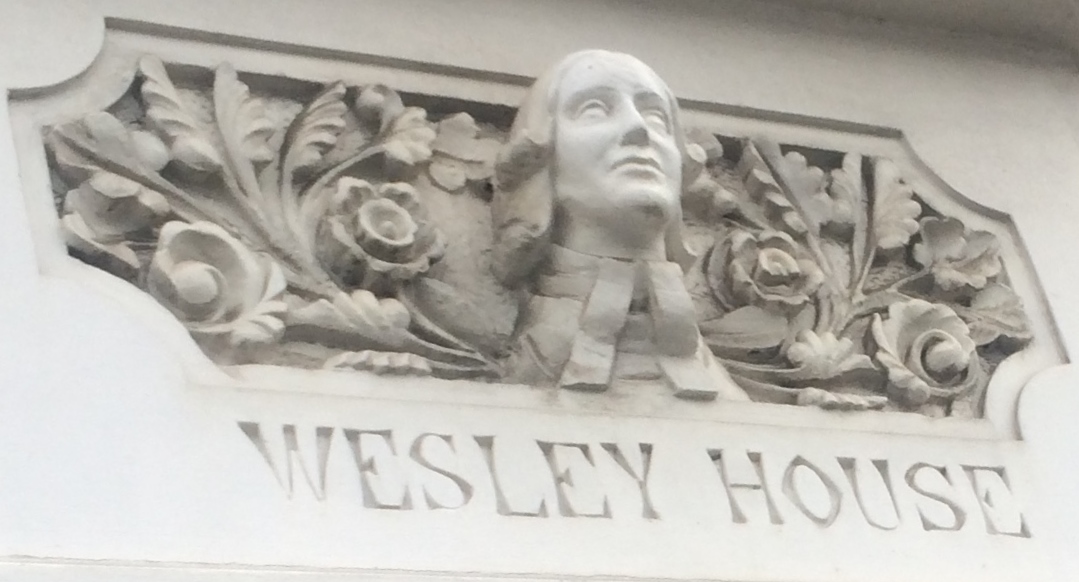
Last month I asked where John Wesley’s bust can be found?
Not very surprisingly, stalwarts of the Battersea Society, such as Carol and Jenny, knew the answer but not many others did. It is in Mallinson Road, on the south side, east of Northcote Road. The neighbour’s house has a bust of Mallinson, of whom I know nothing. But the road name suggests to me that he was the builder responsible for many of these late nineteenth-century terraced houses.
This month’s Question relates to the large Duval House, referred to in paragraph 4 above and pictured here. It stands opposite the Grant Road exit from Clapham Junction station and is the “cash cow” of the redevelopment which makes much of the regeneration economically viable. Do you have any idea about which local personage it was named after and what she did that made her noteworthy?
Councillor Tony Belton’s Battersea February 2021, Newsletter (# 140)
|
1. The strangeness of the times continues to bemuse. The year began with what looked like an attempted coup in the United States, organised by the President himself and yet everybody (?) expects him to get away with a not-guilty verdict in the Senate. We used to lock up people 2. And then, of course, Brexit really started to get 3. Meanwhile back here in “dear old Blighty” global warming appears to place England in danger of becoming completely water-logged – there are more than just scenic advantages to Scottish and Welsh mountains! What with the Thames barrier and raised river walls one would guess that we, in Battersea, are largely safe but there must be hundreds of flooded basements. I usually do my daily exercise on Clapham Common and, to put it mildly, I think the Common is under stress from both the constant downpours and from the very heavy traffic of walkers, joggers and cyclists. Will the grass and the two small woods ever recover? Probably, but how long before they recover properly? 4. At the same time, the UK registers over 100,000 deaths from Covid with general expectation that we might register 5. But at last some relief, at least for me and mine. We both had our vaccinations, first phase in mid-January. Just in case there are any cynics reading this, which of course there aren’t, we are both genuinely in the priority groups and the appointments came completely out of the blue! The experience was great: so many older people all showing delight to have got through to a vaccination; very helpful volunteers shepherding us through the process in such a friendly fashion; so punctual, so social and so efficient. Well done NHS and thank goodness this process was not out-sourced, like “Test and Trace”, to a Tory Party crony. 6. Back at the Town Hall, things seem to have slowed down. The only formal meeting I had all month was the Planning Applications Committee (PAC) on 27th January. Even that had a relatively light agenda, by recent standards, which might explain why only 46 residents logged in to view the discussion on-line. In recent months the audience has averaged over 100. Interestingly enough, the two most significant applications were to change the “mix” of recently approved applications – the mix, that is, of permitted uses. Developers were looking to scale down the amount of retail space in their applications; and also to change the balance of residential to slightly more family-sized units (3 and 4 bedroom flats) and fewer single-person units. I rather suspect that this is not the last time that we will see the impact of Covid on developers and new developments. 7. Could it be that the frantic pace of development in the Nine Elms Lane area will come to, perhaps not a halt, but a slowdown? Could this mark the end of the growth of high-rise London? I hope so, as despite some of the obvious advantages, I don’t come across very many residents who actually want to live high in the sky – especially families with kids. 8. There were other informal Council-centred meetings such as:-
9. So, it has been a quiet month for most of the councillors, at least in formal political terms but many of the younger members are volunteering at the vaccination centres, or working 10. On 6th January, I attended (Zoom, of course) a Battersea Society Twelfth Night Poetry meeting, starring poems written and read by Hilaire. I found some of the poems very moving and the whole evening very innovative. And on 21st the Society organised a talk, by Jeanne Rathbone on the Battersea industrial riverside. As ever, 11. Simon Hogg, Kate Stock and I also attended a few meetings to discuss the plans for the Regeneration of the Winstanley/York Road estates. All was going well until on the 29th January we were warned that the Council’s partner in the Joint Venture project, Taylor Wimpey, is having difficulties raising the necessary finance. As a result, there will need to be a quick review of the project and of the timing of fundamental phases of the building work. The Covid crisis has struck again. Fortunately, I understand that the Council’s element of the project, including the delivery of new council houses and other types of affordable housing, look to be unaffected. I will update on the position next month. My Programme for February
Did you Know: Many of you knew the answer to this one though one reply made me think it was a great piece of inspired detective work. The plaque says “Fossilized remains of a tree trunk from the lower Purbeck Bed, Portland. Moved from Bedford Hill Park by the Balham Antiquarian and Natural History Society and placed here by the permission of London County Council.” The trunk itself is not spectacularly attractive or striking but at an age of 145 million years, I guess it deserves our appreciation.
|
 in the Tower before beheading them for lesser crimes than plotting to bring down the state! What is more, the very same President is generally recognised to have been a tool of the KGB and he is still not going to get beheaded, unlike
  underway with all the ironies that encompassed. The appearance of a virtual trade barrier in the middle of the Irish Sea, despite PM Johnson declaring only months beforehand that no UK Prime Minister could ever agree to that. The ironies continued with fishing interests, previously one of the most vocal pro-Brexit groupings
 in the country, complaining that they have been betrayed. And then there were all the stories of just how much
  150,000 in three months time. Given the general reaction, when at least in theory we understand about disease, it is easy to imagine the fear that the Black Death struck in the medieval world. Then, the population loss was as much as 30% – the equivalent today of about 18 million! Interestingly enough, the mythical golden years of “Merrie England” followed the Black Death, at a time when England’s growing wealth was shared amongst a much smaller population.
 to get IT facilities out to schools, or helping voluntary groups to deliver food to the more vulnerable residents. The Town Hall, itself, is a very curious place right now. I have been there a few times but it is like the Mary, or if you prefer
  Jeanne had researched every site and every nook and cranny of each site’s history. She included lots of pictures and material, which were new to me. I hope that Battersea Society will support efforts to get more notices and photographs along the river of both its historical and industrial past, such as this picture of Price’s Candle Factory.
 And for
 Councillor Tony Belton’s Battersea January 2021, Newsletter (# 139)
- This year (or more accurately “last year”), we can all use the same clichés and understand exactly what we all mean, such as “I have never known a Christmas like this one”, “the world will never be the same again”, “working life/the high street/the entertainment world will never be the same” and my own current, personal favourite “it is what it is”. But the fact that we all know the clichés doesn’t stop them from being true. Covid-19 is a disaster and nothing ever will be quite the same again, though chances are they will not be quite as different as some think.
- No doubt as more and more of us are vaccinated, there will be a return to some semblance of normality, whatever that may be. But that might not be as simple as it may appear thanks to the growth of the “anti-vaxxers” lunacy. It beggars belief that otherwise apparently rational people can campaign against vaccination. That this triumph of immunology, originally of Chinese medicine, brought to Europe through Turkey and developed by the eighteenth-century Englishman, Edward Jenner, and successfully used to conquer smallpox, polio, diptheria and many other diseases, should be challenged by such “know-nothings” is a tragedy of modern life. We all have a duty to deride and defeat such irrationality, even if it is not quite the threat here that it appears to be in the USA.
-
If the anti-vaccination movement becomes a genuine threat to public health, then politicians will have to face questions about compulsion or “liberty”; individual rights and duties; communal values. As we don’t allow people to choose which side of the road they want to drive on, right or left, I don’t really see why we should allow people to choose whether to be vaccinated or not; after all compulsory vaccination against smallpox has been standard since 1853. If compulsion seems harsh to some, then perhaps we should use extreme “nudge theory” like charging an NHS premium on all, who refuse vaccination.
- On 8th December, we had our second monthly Battersea Labour Party meeting. The mechanics of it worked quite well – clearly, a high proportion of members are well used to operating Zoom or Teams in their working lives and virtual meetings are becoming an inevitable, even desirable feature of daily life. Amazing, that an almost unknown technology should become a mundane, everyday event in no more than 10 months: in that sense, 2020 has certainly been different.
- On Wednesday 16th December, we had the Wandsworth Council Meeting – very strange! Council meetings are, in my view, meant to be about policy-making and review, about debating current issues and opinions, and holding the administration, whether political or practical, to account. But Covid has put a stop to all that. What we are left with, rather like in Parliament, is a Tory-controlled administration informing us of what is happening and how well they are handling everything – could they have done anything else? And a Labour opposition replying that the Tories are not doing well – but could Labour have done anything else? It leaves us with a form of politics, a confrontational politics, that gives parties a bad name.
- Personally, I would have liked the Council to have demanded of Government that local authorities should take over the national Covid test-and-trace programme. The Government itself has made “a Horlicks” of the programme, in a display of incredible incompetence, whilst simultaneously playing fast and loose with recognised procurement procedures. The fact that local authorities and the NHS have well-tried, successful test-and-trace programmes for other contagious illnesses seems to have escaped the Government’s notice. This Government’s contempt for local authorities has cost some innocent lives. I trust that the post mortem on this crisis considers all the evidence and really holds those responsible to account!
- The following day 17th December, I was back to the
 very practical discussions of the Planning Applications Committee (PAC). Unusually, this PAC meeting was dominated by relatively small applications, mainly in Tooting. The one exception was an application for 480 residential units in 8-17 storey blocks between Wandsworth Town Station and Swandon Way. The buck had already been effectively sold on this, because it had “prior approval” from Sadiq Khan, Mayor of London. Nonetheless, I and one other councillor voted against the scheme, because of its mass and density, which we thought inappropriate for the location. The proposed
 development also made no concession to the possible or probable post-Covid environment of decreased demand for office space and more particularly for office commuters. Apologies for the poor reproduction but here are graphics of the Swandon Way development from Swandon Way and from Old York Road.
- The run-up to Christmas was, you will recall,
 exceptionally wet. That did, however, have its occasional compensations. On December 23rd, for example, this spectacular rainbow could be seen over Battersea. Meanwhile, on a personal basis it was a challenging month. My partner and I have had Garry installing a new kitchen, at the same time as we have struggled with an ailing boiler and an extremely temperamental shower. But on Christmas Eve the kitchen was superbly finished and a new boiler installed, and everything is now wonderful. We spent Christmas Day cooking and having hot showers!
- Meanwhile, I have been reading a book by my friend, Liam Kennedy, called Who was Responsible for the Troubles? Liam is a historian based in Queen’s Belfast and happens to be from a rural, Catholic, Irish background (Tipperary). He has one thing in common with me. He was for a period a Belfast city councillor – but there the similarity ends. I recall that we were once having dinner with him and his wife when the phone rang. Liam excused himself to return a couple of hours later. He had been called out on that Saturday evening to attend to one of his constituents, who had been the victim of a “knee-capping”. Thankfully being a Latchmere councillor has not, so far, produced such drama.
- The book documents the detail of much of the Troubles; Liam’s personal knowledge of many of the players in Northern Ireland’s troubles gives his book depth and granularity. His conclusions about the events are not conventional but deserve consideration. It has taken courage to write and to have it published. It will be an essential and sombre reference work about the Troubles.
- On December 30th, Parliament voted to accept the deal the Prime Minister made with the European Union on Christmas Eve. In my view, the deal joins the short-list of the greatest self-imposed disasters that any country has ever made – it will be a year or two before that is proved right or wrong but nonetheless on the 30th December Labour had to decide whether to vote for or against the deal, or to abstain. Clearly, this decision was a difficult one for Labour MPs and, I know well, it has pre-occupied Battersea’s MP, Marsha de Cordova.
- Anyone with a passing acquaintance with the real world of politics will know that voting for a poor “Tory” deal, negotiated by a despised Prime Minister, is, as they say, a “big ask”. However, voting against it was never going to be more than a gesture, which would have left Labour open to the accusation that, in effect, it had supported leaving the EU with no deal. I am pleased that Keir Starmer supported the deal, even a bad Tory engineered deal is a better choice than no deal at all.
My Programme for January
- On 4th January I have a Wandsworth Conservation Advisory Committee.
- On Twelfth Night, the Battersea Society is running a Zoom Poetry Reading event – what an inspiration for the depths of this, particularly grim winter.
- The Planning Applications Committee is on 27th January and NOT on 19th as advertised in the Council diary – unsurprisingly, it looks like a quiet month.
Did you Know:
Last month I asked two easy questions but did not get one response!
They were Q1: Can you date the two occasions since WWII, when one party won the UK’s popular vote but lost the election and name the two lucky men who subsequently walked into 10 Downing Street?
Answer 1: The first occasion was 1951 when Labour won the popular vote but not the majority of constituencies and Tory Winston Churchill became Prime Minister for the second time. The other occasion was February 1974, when the Tories won the popular vote but ended up with fewer MPs than Labour. Labour’s Harold Wilson subsequently became PM.
Q2 What is the hidden physical connection between Streatham Hill and Battersea Reach?
Answer 2: The Falconbrook River, which has its source on Streatham Hill and eventually flows under Northcote Road and Falcon Road, and ends in the Thames at Battersea Reach. It is nowadays culverted all, or nearly all, the way.
And for this month:
In December, I went for a walk on Tooting Common, which I don’t know very well. And there I came across what I suggest is the oldest object in Wandsworth – and I mean seriously old, millions of years old. Do you know what it is?
Councillor Tony Belton’s Battersea December, 2020, Newsletter (# 138)
- Like everyone else, my partner and I are getting a tad bored with
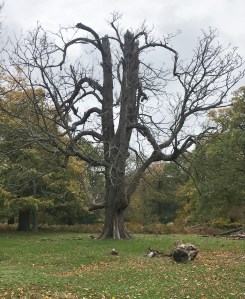 lockdowns and their implications, so on 1st November, we escaped for a beautiful walk in Richmond Park. As often before we headed for Pen Ponds but instead of our normal walks to the ponds, and then s
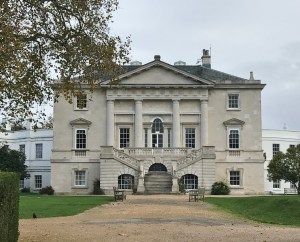 outh or west we went north, where we came across my rather tragic tree of the month – majestic and doleful and rather appropriate for “Lockdown November”. We also discovered the Royal Ballet School and its beautiful home. It isn’t (I don’t think) the same building as in the film, Billy Elliott (2000), but it obviously inspired the set for the film.
- On the 3rd November, the Boundary
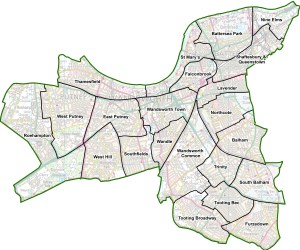 Commissioners produced their latest and last report on the proposed ward boundaries from 2022, which will apply for the next 20 or 30 years. The report was published coincidentally and ironically on the day of the American Presidential election. In the Biden:Trump election, the distribution of the popular vote and the Electoral College vote was so different that Biden’s popular majority of over six million was by no means certain to deliver him victory in the Electoral College. The British Boundary Commissioners’ job is to distribute the vote between constituencies so as to ensure that confusion like that does not happen in the UK.
- On the whole, over the years, the Commission has been fairly successful in that aim BUT not always. (There have been two occasions since the Second World War, when the party that won the most votes lost the Election, once with the Tories losing out and once when Labour did.) Here, in Wandsworth, the Tories have won the last 12 Council elections but not always the popular vote. In both 1986 and 2018, Labour won more votes. The 1986 win gifted the Tories with control for the year of the Zero Council Tax, which created favourable conditions for them for several subsequent elections. It is arguable that their “accidental” victory in 1986 secured for the Tories control of Wandsworth for many years.
- On a day-to-day basis, the ward boundaries make little practical difference, but some old ward names will disappear (Latchmere, Fairfield) and some new ones will appear (Lavender, Battersea Park, Falconbrook). Some will be familiar but in a different format as in Mary’s and not St. Mary Park or the “combined” ward of Shaftesbury and Queenstown. But, from my experience, the worst feature of the review is the change from 20 wards with 3 councillors each making a total Council of 60 councillors to a mix of 14 three-councillor wards and 8 two-councillor wards, making a Council of 58. From my experience, when the Borough last had two-councillor wards prior to 2002, the smaller wards packed less clout than the larger wards and, when it came to the inevitable horse-trading of priorities and budgets, the smaller wards suffered. That problem was solved by making the wards a standard size.
- On 10th November, Battersea Labour Party had a Zoom meeting, where the major item under discussion was Jeremy Corbyn’s position in the party. The debate was calm and considered, which, given the feelings of some members, was in itself quite a good result. Nevertheless, honesty compels me to admit that I was disappointed in our failure to move on to the important issues facing the country as we draw nearer to Brexit, whilst struggling with the consequences of the pandemic!
- On 18th November the Mayor, Sadiq Khan, announced the good news that he has agreed to the Winstanley Regeneration plan. We can now get on with replacing the old, worn-out stock of Council homes, with super, high-quality new homes as well as adding some 150 extra bedrooms for all those families suffering over-crowding on the estate. But in addition, we will add hundreds of new homes, a new library and swimming pool and a re-designed York Gardens. These changes will, of course, take time but at least the decks are now clear. Some tenants will be moving into their new homes in the next couple of months and all will have the promise of better living conditions.
- The Planning Applications Committee (PAC) was on 25th November; on this occasion, it was watched live by 274 viewers,
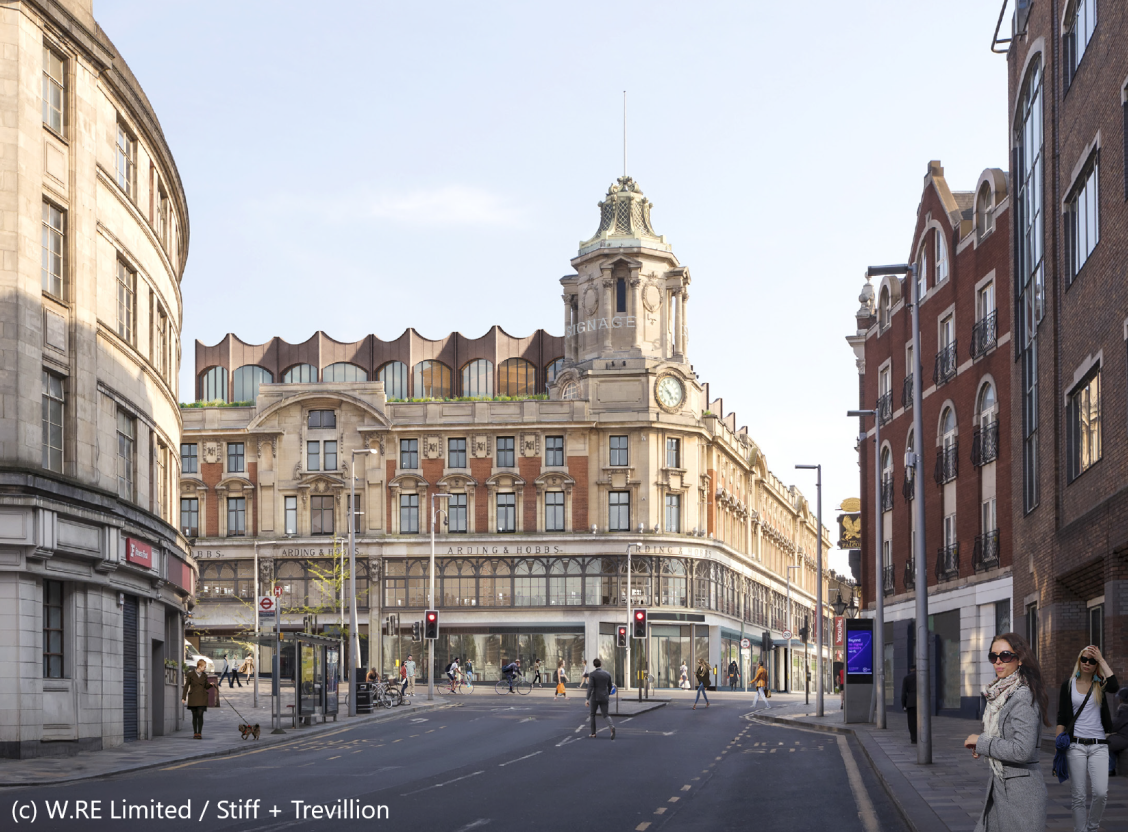
 most of whom I guess were watching progress with the Arding & Hobbs I rather liked the design solution proposed by the architects; it retains the early twentieth century features of the original and adds a slightly Arabic, but restrained roof extension. The contentious element, however, is that the developer obviously does not think that the future of retail in the modern, online world is bright enough to utilise a building the size of the old department store. Instead, he has gone for small, quality office units, arguing essentially that in the post-Covid world, more offices will be located in significant hubs around the city centre – and what hub could be better situated for Gatwick and Heathrow and the UK’s rail system than Clapham Junction? Note that there is no longer a link with Debenham’s or a vulnerability to its bankruptcy.
- There were several other major applications of real interest to Battersea, most of which were approved. One was the development in Battersea Square of Thomas’s Preparatory School with a substantial secondary school addition. Thomas’s is likely to become one of the most expensive and exclusive public schools in Britain – with all that entails. Another was the development of three tower blocks, up to 16 storeys, on the Palmerston Court site, opposite the entrance to the Dogs’ Home. This complex is designed for more than 850 student residents, from King’s College London, along with a substantial volume of offices and a new pub to replace the current Flanagan’s. And a third development is for 50+ flats on the Patmore estate, attached to and very much in tune with Marsh House.
- The fourth application I would like to highlight is on a totally different scale but perhaps just as significant for residents of the Borough. It was an application to build a small bar, ancillary to what is now Clapham Common Westside’s Bowling Green. The intention is to provide a commercial refreshment facility to complement a new Putt in the Park complex in place of the bowling green. There are similar facilities in both Battersea and Wandsworth Parks. Incredibly, to me, there is no “statutory” protection for bowling greens (and I dare say neither crown bowling greens nor croquet lawns). There is protection for other sports pitches, such as soccer, hockey and rugby, which attract younger client groups. So the omission of greens seems discriminatory on both age and gender grounds. Bowls and croquet are energetic, inclusive games, which deserve support and not oblivion. I am pleased to say that the committee rejected this application! It would be such a shame to lose the quiet and gentle sight of the local bowling green on a summer’s afternoon.
- One other “minor” piece of news may have escaped your attention. Because of the state of Hammersmith Bridge
 (seen here in the distance), and NOT because of Covid, the decision has been taken to move The 2021 Boat Race from the Thames to Cambridge. Because there is no sign yet that Hammersmith Bridge will ever be repaired and best estimates are that it would take seven years anyway, one wonders whether this traditional race, now over 160 years old, will ever be seen again. There are all kinds of things that are anachronistic about it – it excludes hundreds of other colleges; it is an oddity, rather like the marathon only not even an Olympic event; it is not metric; it’s very long; it’s on the tideway when almost all other rowing events are on lakes. We may have seen our last ever Boat Race!


My Programme for December
- On 8th December we have a Zoom meeting of Battersea Labour Party members.
- On 10th December there is a virtual meeting of the Labour councillors, the first for what seems like months.
- The Council Meeting is on 16th December, but what exactly that will be like is difficult to say at the moment!
- That is followed the next day by the Planning Applications Committee.
Last month I asked, “Where is the Battersea Welsh Presbyterian Chapel?”
On this occasion, I was surprised at just how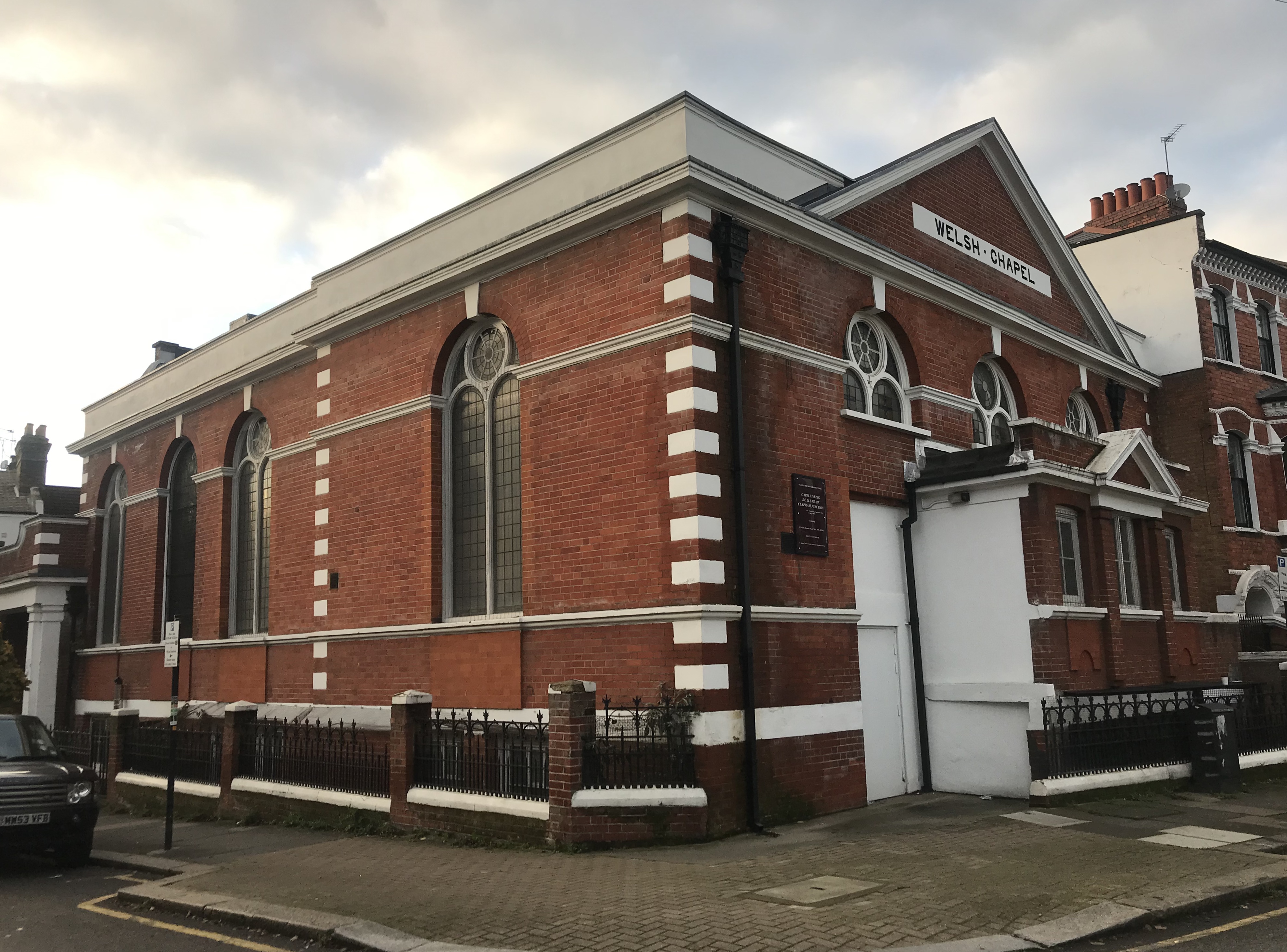 many people did know that the Chapel, pictured here, stands in Beauchamp Road on the right-hand corner halfway along the road. But readers also told me that David Lloyd George worshipped there, when he lived in Routh Road, and that Huw Edwards, the newscaster, is a key figure in the chapel’s life.
The Eglwys Bresbyteraidd Cymru Or the Presbyterian Church of Wales
And this month two easy questions and one notice:
Q1. In Paragraph 3 above I mentioned that, on two occasions since WWII, one party won the UK’s popular vote but lost the election. Can you date these occasions and name the two lucky men who subsequently walked into 10 Downing Street?
Q2. What is the hidden physical connection between Streatham Hill and Battersea Reach?
On December 2nd Clare Graham’s booklet Discovering Battersea’s Open Spaces goes on sale at Waterstones or via the Battersea Society website. The booklet takes you on six delightful walks across and around the old Battersea parish.
Festive Midwinter Greetings
from Tony and Penny

Sails on the Markermeer, the Netherlands, Photograph, Tony, 2013
The 1918 “Spanish flu” and my grandparents: Lessons from a pandemic
I am probably one of the  very few nowadays to have a “direct connection” with the 1918 “Spanish flu” pandemic, in that I had quite long conversations about it with my grandmother. Her husband, Ernest Belton, died of the disease in November, 1918. She was then seven months pregnant with Rose, my aunt. This picture shows my grandparents, with Nen their eldest daughter, in 1911 or 1912.
Gran told me that her husband had woken up one day feeling a bit worse for wear and died in her lap the very same evening – that was how virulent the 1918 pandemic was. At the time of his death, Nen was 7 years old, Ernest 6, and my father Stanley just 4. Rose was born two months later in January, 1919.
The Beltons were a working-class family with no private resources and no Welfare State to support them. My grandfather was a tram driver. They lived in tenement blocks in, variously, the East End and Islington. I don’t recall whether my grandmother had needed to work before Ernest’s death (our chats were in the late 1940s and 1950s), but, after his death, she certainly had to work daytimes as a seamstress in the big Regent Street store Dickins & Jones and in her spare time (with 4 children, aged 0-7!) as a domestic cleaner.
There was no widow’s allowance, indeed the Widows’, Orphans’ and Old Age Contributory Benefits Act did not come into force until 1925, but even then widows had to be over 45 to qualify for ten shillings (50P) per week. But gran was in her late twenties. She used to tell me that she regularly had to pawn her wedding ring for a shilling (literal but meaningless modern comparison is 5P), and, as I recall, redeemed it for a shilling and one farthing (quarter of an old penny, which in modern terms would be an interest rate of just less than 2% per week or 100% p.a.). As a sparky 10 year-old, I recall arguing with her that if only she scrimped and scraped for a week she would save farthing after farthing, but she told me that things didn’t work out like that – I never quite understood that argument then but perhaps I am getting old enough to work it out now!
Clearly, this kind of life was impossible without very strong, informal, community bonds. Women in particular must have shared endless family tasks and, most particularly, childcare duties. The early scenes of working-class life in the East End in Sarah Gavron’s film Suffragette (2015) struck me as having very much the same flavour as my grandmother’s stories. If you’ve not seen the film, I highly recommend it. The leaflet pictured below was produced by Wandsworth Labour Parties, two years ago, to commemorate the first centenary of the women’s suffrage. You can see it includes the picture of my grandparents.
Gran couldn’t afford the farthing bus fare from Islington to Oxford Circus and so walked every day, come rain come shine. The 20s might have been the “Roaring Twenties” for some but not for the British working class. In 1926 came the General Strike and three years later, in 1929, the Wall Street Crash. Just when my grandmother might have expected my aunts and uncles to contribute to the family income, they were finding it difficult to get any job at all.
My father turned out to be a bright lad and in 1929 won a scholarship to Christ’s Hospital, which according to Wikipedia was, and is, unique amongst British “public schools” in that “School fees are paid on a means-tested basis, with substantial subsidies paid by the school or their benefactors, so that pupils from all walks of life are able to have private education that would otherwise be beyond the means of their parents”. But, even with the subsidies, the fees were too much for Nan and so, Stan, aged 14, got a job as a post office messenger boy.
It is no wonder that, for the working-classes, solidarity was, and still is, such an article of faith; it is also no wonder that trade union solidarity, perhaps most explicitly the closed shop, was so important to the labour movement. (The “closed shop” was the name used to describe the practice of enforcing trade union membership on to a workforce; it was “organised labour’s” chief weapon against “the bosses”. The effective abolition of the closed shop was one of the main Thatcher “reforms”, and look, how weak organised labour has been since then!)
My father did quite well for himself and so, thirty plus years later, he could afford to contribute his element of the major county award, which I got when going to Oxford University from a state school. Just enough of Home Counties patina and Oxford rubbed off on me, for me at times to be accused by Tory councillors, of being a class ‘traitor’. They thought me to be sufficient of a toff to have “let the side down” by supporting the Labour Party. How wrong they were and are; and how much I loathe what the Tories collectively have done to working-class life in this country.
To a considerable extent led by Wandsworth Council’s 1978 and 1982 intake of Tories, the Tories, nationally, have systematically coarsened and debased the working classes. Council house sales and the “right to buy” were part of the relentless Tory attacks on subsidised, community-owned housing – attacks which undermined the security and stability of many working-class communities. They followed that up with a policy of compulsory competitive tendering for manual labour; a policy, which cruelly and viciously squeezed the dignity out of so many jobs and coarsened our culture with crude ‘value for money’ measures, usually resulting in worsening pay and conditions, and eventually leading to the gig economy.
What very few people understood, however, was that the systemic changes introduced by the Tories could not be neatly controlled so as to affect only working-class communities and values. The digital revolution has helped to undermine very much more than simply manual jobs; the “loads-of-money” crudities of city slickers began to undermine all kinds of societal and communal values.
At the height of Wandsworth’s service privatisation, I quoted the great seventeenth century Norfolk protest song to Wandsworth’s Chief Executive, Albert Newman,
“The law locks up the man or woman
Who steals the goose from off the common
But leaves the greater villain loose
Who steals the common from off the goose.”
He only half-jokingly responded that Wandsworth Council needed to become more like the man who stole the common. What Albert Newman was doing, however half-heartedly, was recognising the Council’s part in undermining the social and communal solidarity of our society.
If nothing else, this ghastly pandemic could restore our faith in well-funded, community focused services; undermine the status, privilege and arrogance of the super-rich; restore belief in a redistributive tax and social system; re-invigorate community; and provide a springboard for voluntary action.
In the twenty years after the 1918 “flu epidemic”, Europe’s real political battle became one between social democracy and the two very different forms of totalitarianism, Stalinism and Nazism. Today, a hundred years later, we must fight for the victory of a diverse and democratic polity exercised in most of Europe (and elsewhere) against the nationalistic autocracies we see in Moscow, Beijing, much of the Middle East and, frighteningly, maybe, until recently, even Washington. But equally we need to fight to ensure that we win a social democratic democracy, not the aggressive individualistic dog-eat-dog version resulting from neo-liberalism.
Tony Belton, 17th November, 2020
Councillor Tony Belton’s Battersea November, 2020, Newsletter (# 137)
- For me, all the days are merging into one amorphous whole. I work from home, I meet at home on Zoom, I eat at home, entertainment (TV, the internet and books) is at home. My partner and I get on well together so lockdown, or whatever we call the state we’re in now, is not particularly unpleasant as we both have protected incomes and own our house; but it’s not wildly exciting either. It must be so tough for those, who are on piecework, or who are on their own and don’t like it; or for younger people who want to get out there and explore people, places and experiences, or perhaps worst of all for those dependent upon others for care and services. Covid is dividing our community in a way and on a scale that Britain has not seen since at least the end of World War Two.
- One of the annoying features of this crisis, at least for me, is the complacency and self-satisfaction of the “fortunate”. It’s so easy to object to, say, the noisy activity of construction sites or refuse collection or even play-spaces; it’s so easy to disparage the “other”. It’s apparently not so easy to be a little tolerant, understanding and patient.
- And as for the news from the USA! I have been to both the East and West Coasts and quite a bit of the bit in the middle and love so much of it; I think it’s hard not to be swept away by some features of the States. But in the build-up to the Presidential election, thankfully over in a week’s time, bar legal challenges, it seems as though some Americans are intent on destroying their reputation, their primacy in the world and perhaps even the world, as we know it.
- Enough of this global moan! What has been going on in the Council? And what about my part in it? In formal terms the centre-piece was a Council Meeting on 14th October, which by the way was watched by 148 people online. But actually a “virtual Council Meeting” is a pretty tepid affair. The cut and thrust of debate, even at its best, loses so much flavour when delivered from one spare room to another. The reality during this pandemic is that the Council is, even more than usual, being run by the paid staff – the Council’s equivalent of the civil service, with very occasional steers from the Tory-controlled cabinet. As for the councillors, some are immersing themselves with volunteers, delivering vital domestic services, such as helping with food delivery through organisations like Kambala Cares and Waste Not Want Not, whilst others are helping set up “school streets”. And of course, depending upon personal and family circumstances all of us are, just like everyone else, pre-occupied with keeping alive and well.
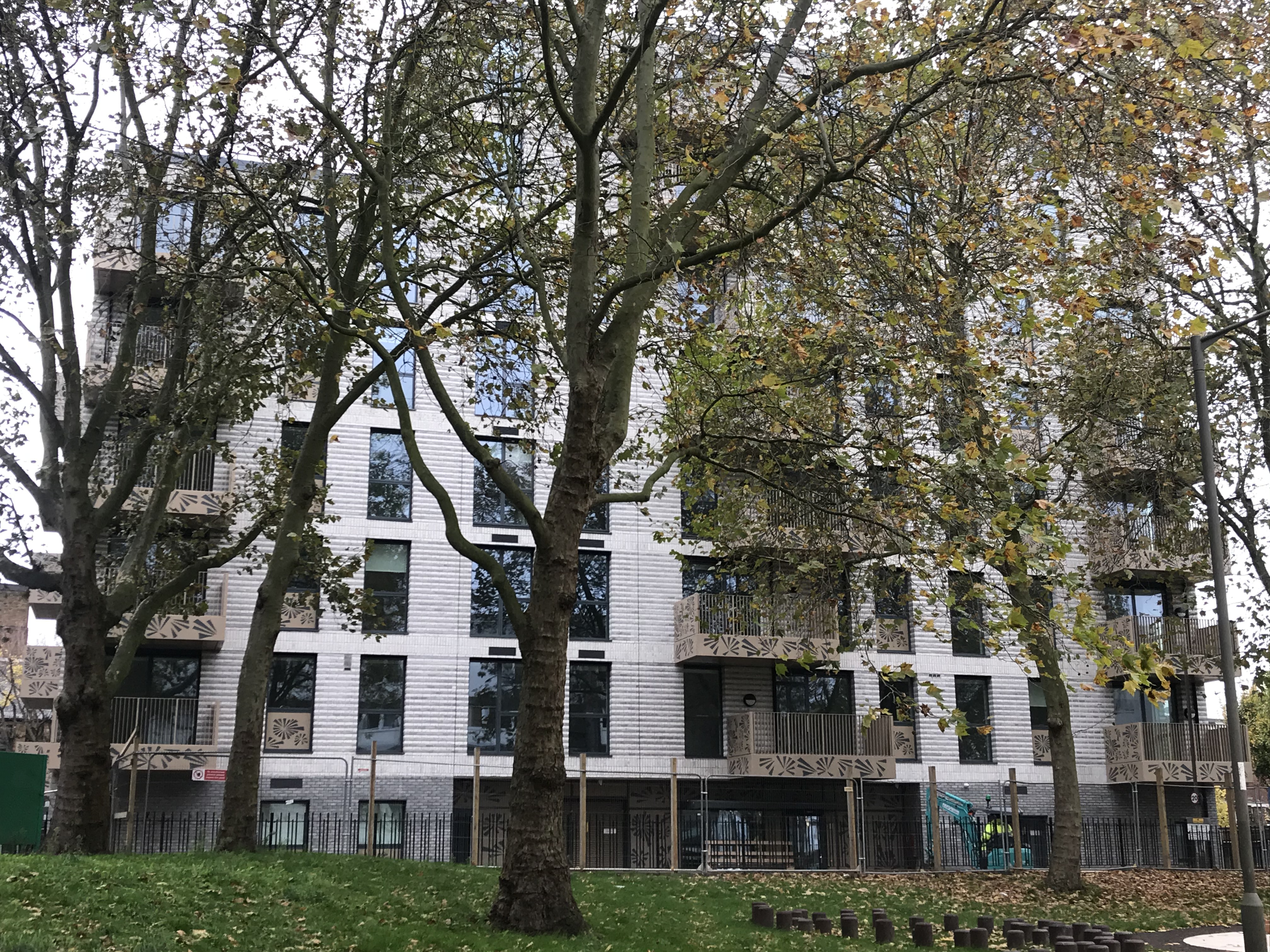
- Meanwhile, I had a couple of meetings with fellow Latchmere councillors and officers about progress on the Winstanley Regeneration. The good news is that 50 or so residents will, by the New Year, be moving into the excellent new flats at Mitchell House
 in the new block on Plough Road. The large block, Duval, next to Sendall Court and at the junction of Winstanley and Grant Roads, will also be occupied about then. Those units have been sold – not as a little maliciously rumoured to millionaires with vast incomes – but at prices ranging from £300,000 to £700,000. I know some of you hate the thought of Wandsworth Council, or any Council, building homes for sale at a time of great housing shortage BUT, with Government subsidies for housing construction a thing of the past, there is no other known way for the Council to pay for the modernisation or construction of houses available at Council rent levels. Frankly, the choice is to sell land, houses or other properties or not to build or re-furbish any new homes at all. As for raising the funds through Council Tax increases, in the first place even doubling Council Tax would not approach the sums required, and secondly, the Government wouldn’t allow it.
- I had a Planning Applications Committee (PAC) on 22nd Interestingly, it was watched live by 145 viewers, with another 58 later watching the recording. This total does not exactly match “Strictly” ratings, but indicates that this technology opens up the possibility for public involvement in a way that Town Hall meetings, as long as they are not broadcast, do not. The main reason for the audience interest was, I suspect, the great local (and political) interest in the planning application covering Roehampton’s giant Alton Estate.
- The main issue on the Alton regeneration, much as with the Winstanley, was the balance, taking into account the current formula for assessing financial viability, between the quantum of so-called affordable and private housing units. A majority of us, including me, thought that this application provided as much “Council housing” as the developer, the Council, could financially provide. Others argue that the Council could and should provide more Council housing. Either way, Mayor Sadiq Khan will now need to decide on the question of viability. If he presses further than the Council believes viable, then logically it will abandon the project. It’s a process of negotiation, where my guess is that the Council will be forced to concede a little. The question is how much.
- Most of the other important and large applications were, on this occasion, in either Putney or Tooting, the largest being one for more than 800 housing units, amongst other things, on the massive Springfield Hospital site. There was, however, one smallish application that will interest Battersea residents and that was for the site of Blacks store in St. John’s Road. As most Battersea people must have noticed Blacks has had a closing down sale there for what seems like years – it’s certainly more than 12 months. After the PAC meeting, the developers now have permission to concentrate the retail store on the ground floor and to convert the upper stories into six custom-built residential flats.
- On 24th October Radio 4 ran a Profile
 of ex-councillor Edward Lister, now the Prime Minister’s No 10 adviser. The programme director interviewed a number of Wandsworth councillors, including me as I had been the Leader of the Opposition to Lister for 15 years. The interview lasted at least 30 minutes but, of course, my comments were drastically, but not unreasonably, cut to make the final 15 minute programme. If you are interested, you can hear it on iPlayer, Radio 4 at 19.00 on 24th October.
- Away from the Council I, like everyone else, have had a quiet month. My only
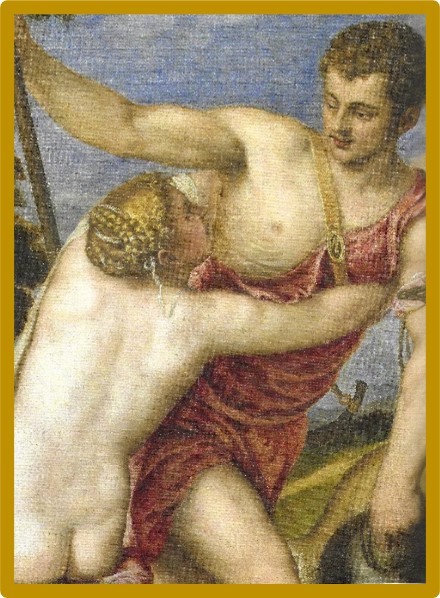
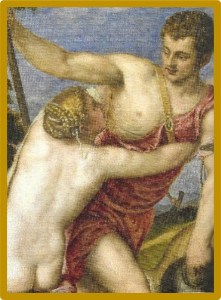 memorable trip outside Battersea was to go to the National Gallery on October 5th to see the Titian I went with Marcy, wife of fellow councillor Peter Carpenter. She has recently completed a degree in Italian Renaissance Art. I was looking forward to being tutored through the visit, because I’d never really appreciated Italian religious art. That was my first mistake; these paintings were all about classical mythology. Gods yes, but capricious, malicious gods of the kind that the ancients seemed to revel in! Here, for example, the goddess, Venus, is pleading with the beautiful Adonis not to go hunting the wild boar, which inevitably turns on him and goars him to death. However, I am afraid that, despite Marcy’s fascinating tuition, I still don’t find Titian to my taste.
My Programme for November
- On 10th November we have a Zoom meeting of Battersea Labour Party members. That would have been interesting enough, just involving a membership of over 1,000, in a Zoom meeting, but after the 29th October decision about Jeremy Corbyn, it’s possible that “interesting” will prove to be an understatement!
- The November Planning Applications Committee (PAC) is on the 25th.
- As I said last month, with so few official meetings since Covid, it might appear as though we councillors have very little to do, but there are plenty of site meetings and discussions with officers as well as dealing with constituents’ queries and issues.
- On 26th November at 5.45, I have Latchmere Ward’s Safer Neighbourhood Team (SNT) SNTs were established across London some years ago in order to sustain and improve relations between the police and the local community. We (both police and Council) are keen to encourage broader community participation and just possibly the enforced migration onto an online platform will encourage YOU to join us. If you are interested (and I hope you are) then please email Roger Lyddon, at the Town Hall for details. Roger is at Roger.Lyddon@richmondandwandsworth.gov.uk.You can join us by telephone or online. PC Gavin Gilliam, Latchmere’s dedicated Ward Officer will be in attendance. We look forward to welcoming you on Thursday 26 November but, even if you cannot attend, please let Roger know your details so that he can contact you about future meetings. But do join us on Thursday 26 November at 5.45 and get involved.
Last month I asked about this impressive building?
I must confess to a little disappointment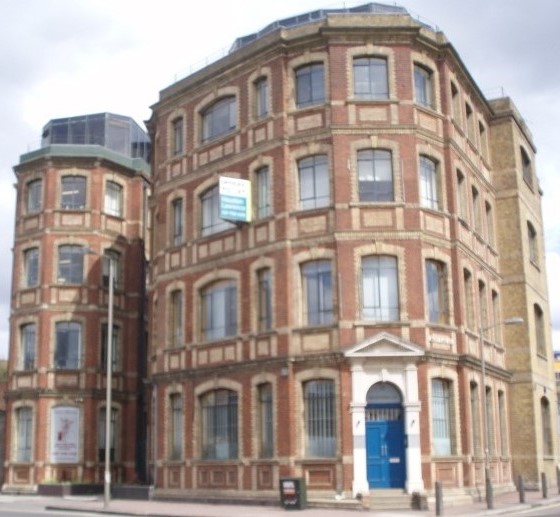 that no one else either knew or appeared to be interested. No matter: the answer is 220 Queenstown Road. It is about 20 yards/metres south of the main Waterloo lines and, when I first came to Battersea in 1966, it was black with soot. When the last steam train services stopped in 1967, its owner decided to give it a clean. For most locals its sudden yellow and redbrick appearance was a great surprise.
Hopefully this month’s Did You Know inspires rather more interest!
Anyone from the Valleys will know that Eglwys Bresbyteraidd Cymru translates literally into Church Presbyterian Wales. My question is simply “Where is the Battersea Welsh Presbyterian Chapel?”
PS about the picture of a boxing match in Culvert Road
Rita, who now lives in Wimbledon, wrote to me in October saying “if you went under the Arch on the left-hand side there used to be offices situated there, rented by Battersea Council, one of which was my Dad’s office. The Council offices were there, I think before World War II, my Dad worked there during the 40’s, and even possibly before the War, until his death in 1958.
“I come from a Family of fourth generation, who were born in Battersea and Wandsworth. I was brought up in Battersea. My late husband was also fourth generation from Battersea. There was also a permanent caravan sited there, where a disabled lady lived. The caravan was always spotlessly clean.
Rita, thank you for that personal history. I am pleased that it brought back happy memories. By the way, there is still a caravan encampment there, which can be seen from the Victoria line.
PPS. In the last moments of October, the Prime Minister announced the Lockdown starting on November 5th (Talk about the old rhyme “Remember, remember the fifth of November, gunpowder, treason and plot” – it will be difficult to forget this one!) and hopefully ending on 2nd December. Wishing everyone a healthy November and I look forward to writing to you all again in December.
Councillor Tony Belton’s Battersea October, 2020, Newsletter (# 136)
- September was marked by the convergence of at least three crises, namely Covid, the UK’s economic troubles and London traffic chaos. Politicians, on the whole, did not come out of it well. The Prime Minister’s reputation has sunk to a new low with only his most purblind supporters not recognising it. But enough of him, this is a local newsletter and we are all equally affected by the general mis-handling of the crisis, with exhortations to go out and eat out followed by instructions to stay at home, to work from home if possible, to go back to work but go by car, then not to go to work but work from home if possible, to have eye tests in Barnard Castle and then not to leave your home.
- As for the traffic chaos, 1: the problems with Tower, Vauxhall and Hammersmith Bridges are being blamed by some on Sadiq Khan, Labour Mayor of London, and on Labour’s Hammersmith & Fulham Council. However, nearly all of London’s bridges are between 150 and 200 years old and it is unsurprising that they are running into maintenance problems. Actually the responsibility for maintenance of the bridges is shared out on a geographic basis between the boroughs – it is almost historical luck as to which are in the best and worst condition. Clearly London’s Thames crossings, tunnels as well as bridges, should all be under the one authority and not split between a dozen or so public bodies. That way there could and should be a properly co-ordinated programme of repair and maintenance.
- As for the traffic chaos, 2: Low Traffic Neighbourhoods (LTNs) have been introduced all over London, including Wandsworth, in the time since Covid struck. The emergency gave authorities a great opportunity to introduce LTNs to coincide with a time of low traffic volumes, using considerable Government time=limited grants. Unfortunately, at the same time a series of major road works to Nine Elms Lane, Putney High Street and Bedford Hill were also timetabled. Consultation was limited and the end result disastrous. Again, the lesson is that changes need to be introduced with ample consultation.
- On the 2nd September I attended the Wandsworth Conservation Area Advisory Committee. The agenda was dominated by debate about the plans for the renovenation of the Arding & Hobbs building
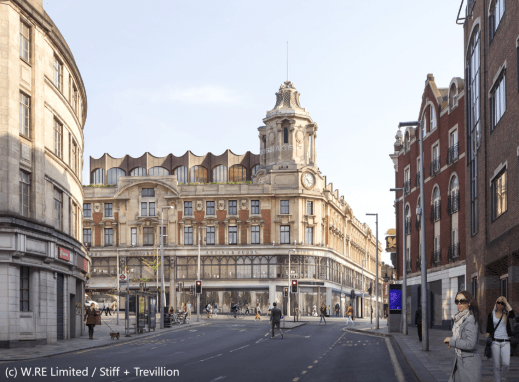
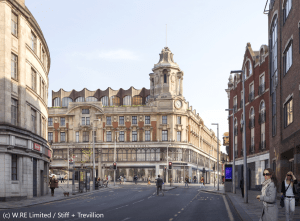 , at the heart of Clapham Junction. The developer’s architect/planner expressed pride and enthusiasm for his role in restoring the grandeur of the early twentieth-century building. The picture shows the building as planned with new roof extensions and without the rain canopy, currently between the first and ground floors. The developer hopes that it will work with retail on the ground floor and high-quality offices on the upper floors. Many Battersea people would like to see the whole building restored for retail use, but with the explosion of online shopping in the last five years, it is not surprising that the developer doubts that would work. The problem is, of course, that post-Covid it is equally not at all clear that there will be a demand for new offices either. My friend Cyril Richert has done an in-depth analysis of the project at https://cjag.org/2020/07/28/revealed-the-proposed-future-of-arding-hobbs-debenhams/. It is well worth the read if you are really interested in the future of the Arding & Hobbs building. The site is so central and important to Battersea that we have to get these plans right.
 - On the morning of 3rd September, my fellow Labour councillor, Simon Hogg and I went for a tour of the three new buildings nearing completion on Grant Road. Mitchell House, on the corner of Grant and Plough Roads, is solely for council housing and was designed specifically for current
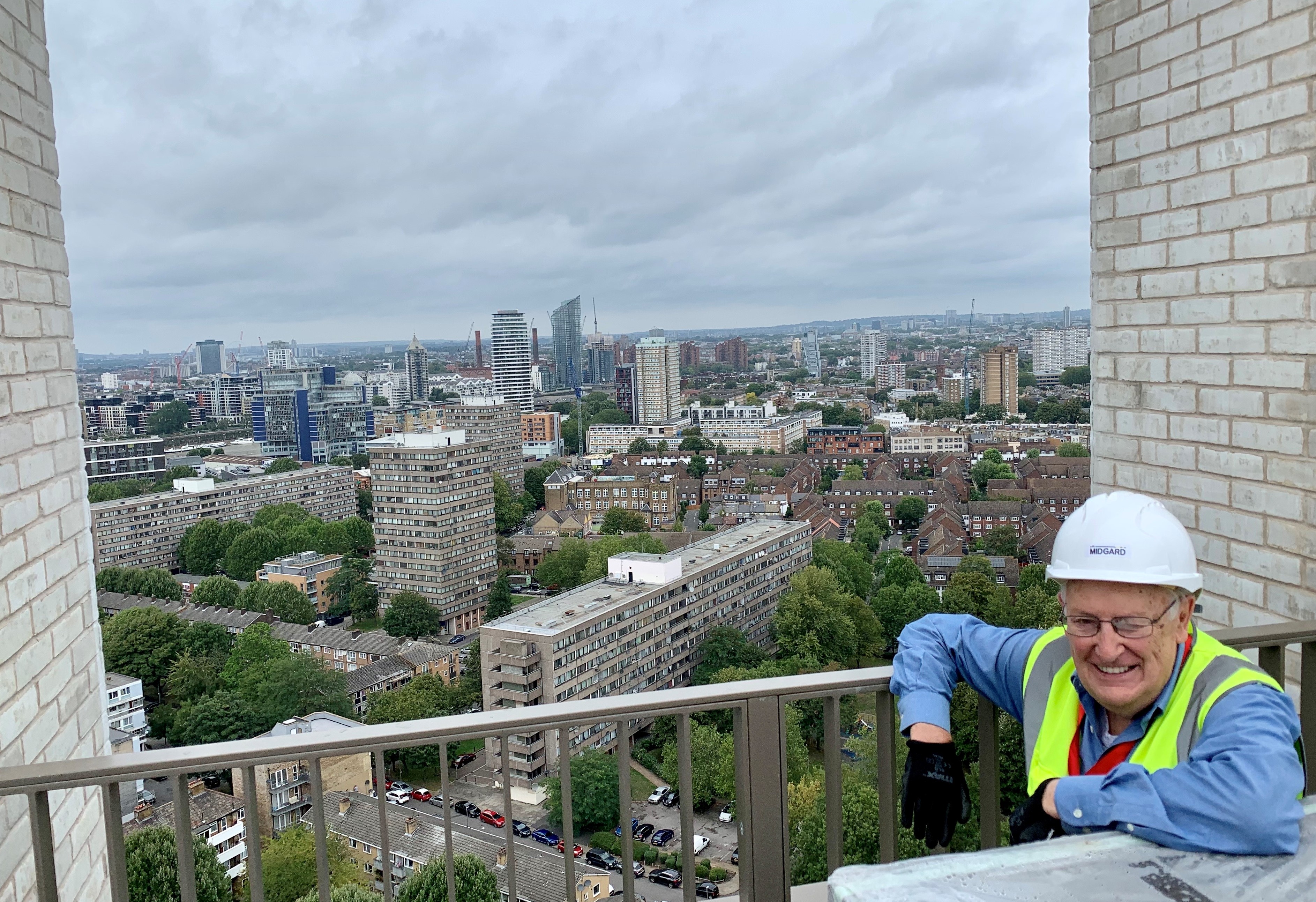
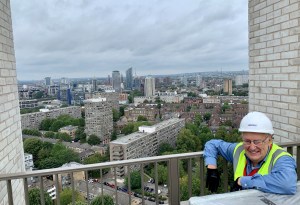 council tenants of the Winstanley Estate. Duval House is the tall one, on the corner of Winstanley and Grant Roads, and will be sold for private occupation. Duval House is the “cash cow”, which enables the Council to proceed with the regeneration. The third building will house the combined Thames Christian College and Battersea Baptist Church, both now located in Pennethorne Square. We were both very impressed by the quality of the buildings and the high ecological standards to which they are being built. Here is Simon’s picture of me, taken from the “viewing” platform at the top of Duval House.
 - That afternoon, I went to a webinar (a seminar conducted on the web), where the principal, but not sole, contributor was economist, author and one-time editor of The Observer, Will Hutton. He was not very optimistic about the future. He also argued that fundamental constitutional reform, protecting the rights of Scotland, Wales and Northern Ireland, will be an essential pre-condition to the continued existence of the UK. However, I did not find the discussion overall very engaging. The format is remote and my main concern is to feel sympathy for this year’s university students: for whom learning online will be both the norm and very difficult.
- Special Neighbourhood Team (SNT police) meeting. The SNTs were originally an attempt by the Met Police to help the process of bringing the community and policing together. Personally, I don’t think that the SNT has worked particularly well, at least not in Latchmere (I am told that there are more successful models elsewhere). It has, of course, been a very difficult year for all kinds of organisations, not least the SNT. But we need to re-energise these consultations and we are now looking for drive and enthusiasm from more locals. So if you are interested in policing issues in the Borough, then please do let me know on cllr.t.belton@richmondandwandsworth.gov.uk. The SNT does not meet very frequently but it is potentially a key sounding board for local issues relating to law and order.
- The Planning Applications Committee (PAC) was on 15th September. This month there were several interesting and important applications. The first for Roehampton was a “Council Own” application to build 14 dwellings as part of the Roehampton Estate regeneration – perhaps not of direct significance to Battersea but an essential, small part of the Council’s estate regeneration plans.
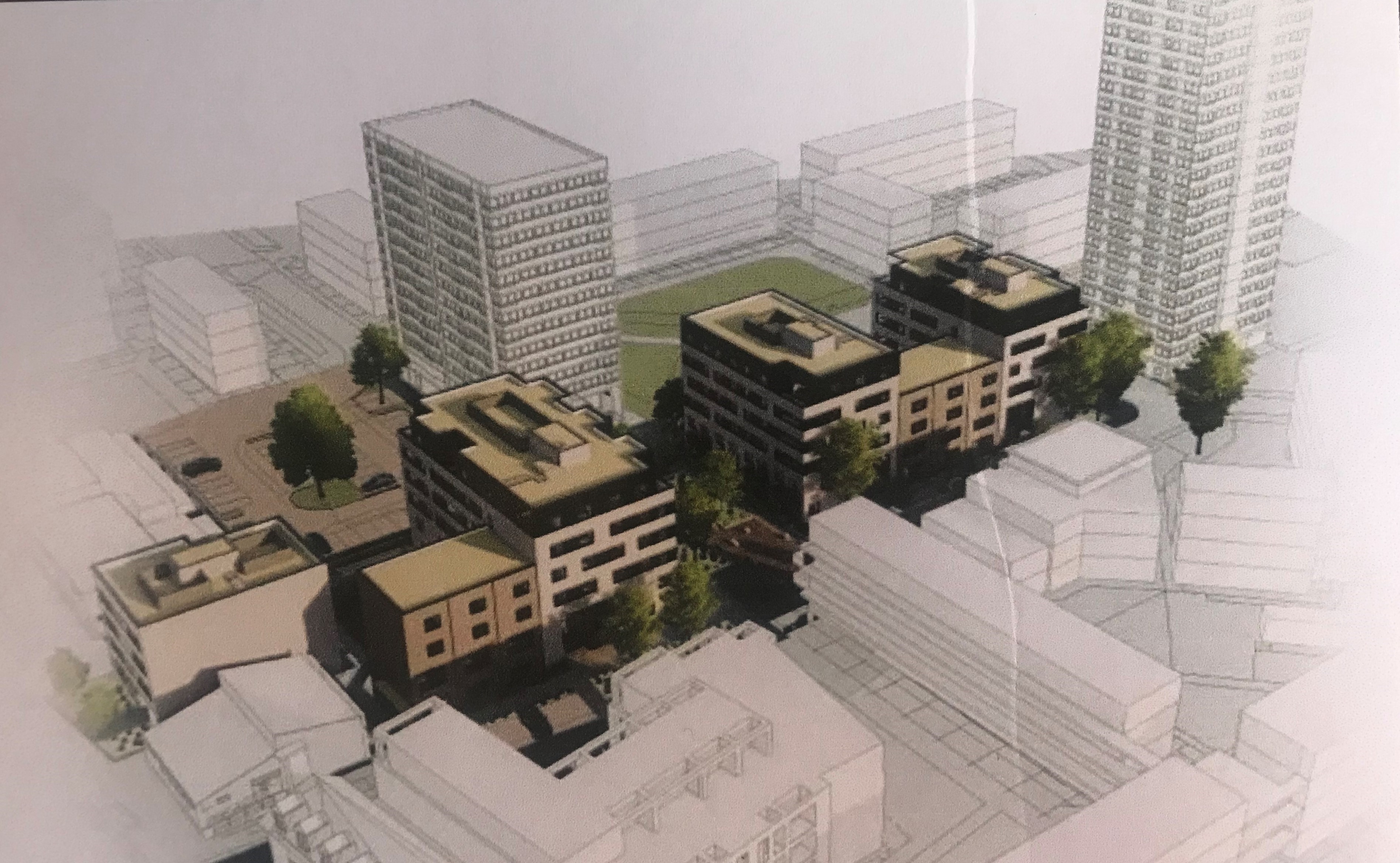
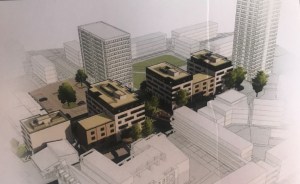 And there were several other Putney applications, one particularly important for Putney High Street. But there was also one major Battersea application. This applied to a potential Randall Close development on the Surrey Lane Estate. This application for 106 new housing units was contentious. Some argued that consultation with local residents had been truncated because of Covid and that assigning only 27 units as council houses was insufficient. No one objected to the basic design although some did not like the “gated” element of the development. Nevertheless, it was approved by the majority. This (not very good picture) has Whitgift House, the tall block, on the right.
 - On 17th September, I went to the Housing and Regeneration OSC to talk about the Winstanley Estate Regeneration and broadly to sing its praises. Inevitability, there were criticisms of the regeneration and of its “failure” to gain more than some 150 bedrooms of social housing. However, much of our housing need is related to serious over-crowding, and I don’t think that a gain of 150 bedrooms (equivalent to about 75 new units) is insignificant. What I do care about is that the worst of our social housing, amongst which I include Pennethorne, Scholey and Holcroft Houses are at last really on their way out. And as a bonus, it now appears as though the Council might get an extra, unexpected bonus of 65 more new units of social housing.
- Penny and I went to the National Gallery on 18th September to see the
 Nicholaes Maes exhibition. We had a great day. First, the weather was perfect; the train was, of course, empty; the streets were nearly empty; London looked perfect from Hungerford Bridge; and Trafalgar Square looked terrific, as this picture of St. Martin’s Church demonstrates. Afterwards we had a nice Chinese meal in a peaceful Gerrard Street, and walked
 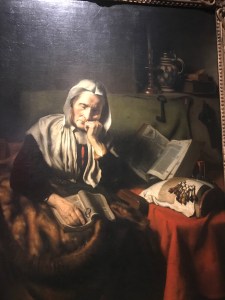 back to Victoria Station via the Mall and St. James’ Park. Our first trip “up West” since February. But the star of the day was the Nicholaes Maes Exhibition at the National Gallery. Maes was a Dutch wealthy man, having spent the last half of his life painting marketable portraits of rich sponsors and their families. Maes was a Dutch painter of the early seventeenth century, when Dutch wealth and influence was at their greatest, a contemporary of Jan Vermeer. He died a wealthy man, having spent the last half of his life painting marketable portraits of rich sponsors and their families. And in his youth, religious painting was the fashion which he followed, but his best paintings are very much in the domestic, Dutch style. Domestic scenes clearly often feature women and, hence unsurprisingly, so do his paintings. This image is a tender portrait of an elderly lace-maker, her bobbins carefully arranged on her lacework (front right).
 - On 19th September, my partner and I had our flu jab. Why tell you that? Well as a reminder to you all not to put yours off any longer.
- On 22nd September I went to Ransome’s Dock, just off Parkgate Road, where I met Nicholas Symes and Dominic O’Riordan, who have the job of keeping the dock
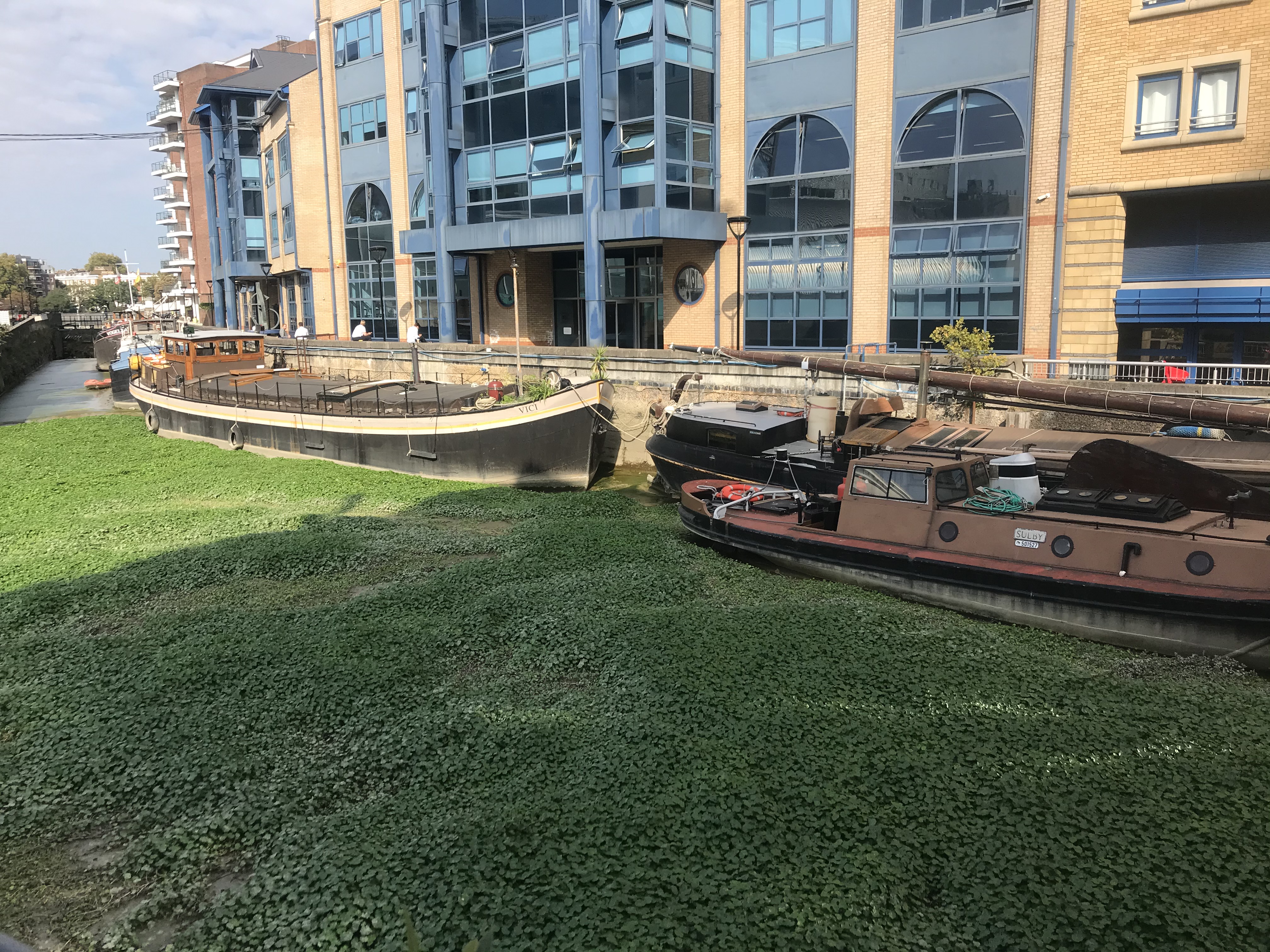
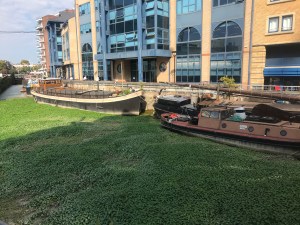 functional. They are concerned that some of the commercial interests around the dock would not mind too much if it ceased to function, freeing more of the site for further commercial development. Through contact with the Wandsworth Planning Department, I think I was able to re-assure them. However, the dock, judging by this picture, is not in a very healthy state. The weed is apparently a South American import, which has gone rampant in British conditions and is apparently very difficult to control! I hope that those interested in the health of the river and its docks can find a solution to the problem. The dock, by the way, is on the site of an old river creek and was excavated in 1884.
 - On 23rd September I had an online meeting of the Battersea Labour Party when we were due to vote for membership of the Labour Party’s National Executive Committee. I was very keen to support Keir Starmer’s leadership, but somehow, I managed to botch the connections and so was disenfranchised! Infuriating!
- Finally, I have just upgraded my computer and this is the first job of any size I have done on it. It looks like a great upgrade but everything is in the wrong place, and I can’t find files, and Oh, why do IT companies upgrade things so often?

My Programme for October
- On 8th October we have a meeting of Wandsworth Labour councillors.
- On 14th October, we will have our second Wandsworth Council Meeting of the Covid era. I must say that it is difficult to see how it can possibly provide a forum for real debate – worse than sport without the fans!
- I have another virtual Planning Applications Committee (PAC) on the 22nd October and little else. The prospect of a Covid Halloween, Bonfire Night and Christmas looms closer and closer!
- With so few official meetings since Covid, it might appear as though councillors have very little to do, but I do have plenty of other site meetings and discussions with officers as well as dealing with many constituent problems.
Last month I asked, “Can you place (and approximately date) this picture?”
Half a dozen of you got this right. (The first was Kimberley, so congratulations.) It is, of course, the Culvert Road underpass from the south-side. I guess the houses on the left confused people as they have now been replaced by corrugated iron and sheds. But I remember in the late 60s that there were terraced houses on both sides of the road, which can also be reached by a footbridge over the tracks from the Shaftesbury Estate. One can imagine, given the gloved appearance of these two lads, the presence of a referee, in a measured and drawn ring, and the attendant crowd, right just what a tight, little community it made. I would date the picture in the mid-fifties.
This month?
Almost everyone reading this newsletter has passed the impressive building picture here many times. Where and what is it?
PS Thanks to my Tory readership, who have reminded me that Edward Lister has decided to take the name Lord Wandsworth.
Councillor Tony Belton’s Battersea September, 2020, Newsletter (# 135)
- At the end of my August Newsletter, I announced two pieces of Stop Press news: the first was that Vauxhall Bridge was to be closed from 10.00 pm on Sunday, 2nd August, until the end of November, because it had been discovered that the internal ironwork was deteriorating dangerously and remedial work had to start immediately. The second was that Edward Lister, ex-Leader of Wandsworth Council, was to “receive” a peerage. Both items deserve updates!
- As you may have noticed, Vauxhall Bridge was not actually closed until the following weekend. What had happened, as I understand it, was that TfL (Transport for London) engineers had discovered a dangerous deterioration in the bridge, in the last week of July, and so decided unilaterally to close the bridge without informing the Mayor of London, or the leaders and traffic managers of Lambeth, Wandsworth, Ken & Chelsea or Westminster Borough Councils.
- Unsurprisingly, something of a fuss occurred
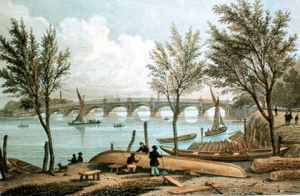 and TfL decided/was forced to postpone the closure for a week. As it happened the “quiet, holiday month of August”, had already been chosen by some Councils, certainly including Wandsworth, for installing traffic calming schemes AND, to pile misery on misery, Tower Bridge decided at some point to get stuck half-open. The picture of Vauxhall Bridge in quieter times (1829) is by Thomas Hosmer Shepherd. The bridge had been opened in 1816 and it was the first in London to be substantially constructed with iron.
 - It has been a bad month on the roads in inner south London, but it has also been a disastrous time for TfL. Its handling of the Vauxhall Bridge closure was inept, to put it mildly. Add that to the managerial, political and engineering disaster that is Crossrail, then it is inevitable that questions have to be asked: questions about the current management of TfL and/or was it ever a sustainable model for running London’s public transport system. Given that the trains are run by several operators, the roads by 33 separate London authorities, the bridges by individual riparian boroughs and the Government has the final say on its budget, the nominal boss of TfL, that is the Mayor, has an uphill task!
- Unfortunately, at the same time as the Vauxhall Bridge closure, Wandsworth Council has been installing many so-called traffic calming measures, which are designed to improve conditions for pedestrians and cyclists, whilst inevitably reducing the amount of road space available for drivers. Enthusiastic cyclists, and of course, many or all environmentalists want us all to use sustainable means of transport and they definitely do not include petrol or diesel-powered vehicles. However, it did not help this hoped-for change to have the Prime Minister asking people to return to work and to use our cars to do so. To say that the public is receiving mixed messages is an under-statement.
- The end result has been difficult, and perhaps dangerous, conditions for emergency vehicles as well as furious motorists, and general inconvenience. There should, of course, have been more consultation but no one could have guessed the combination of events that made August such a difficult month especially in Tooting and in the Nine Elms Lane area. From my experience, I guess that there will be some tweaking of the schemes as they stand today and a few months of re-adjustment to circumstances. But in the long run, I expect to see a substantial lessening of London’s reliance on the car.
- Attentive readers will recall that in the Queen’s Birthday
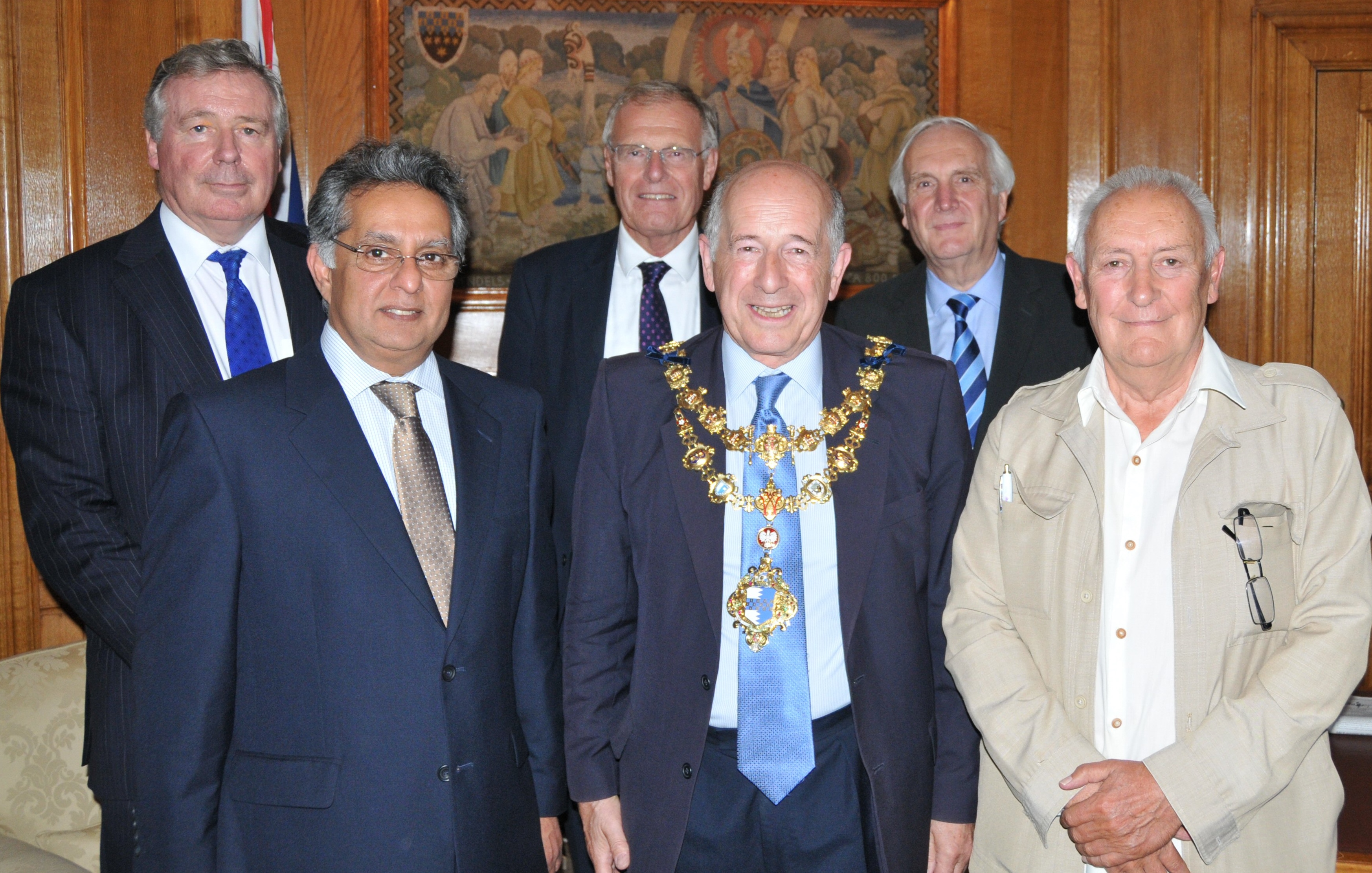
 Honours List it was announced that Wandsworth Council’s ex-Leader, Edward Lister, was to be made a peer. He was Leader of the Council from 1992-2011 at a time when I was the Opposition Leader, so we faced each other across the Council Chamber, as Leader to Leader, for the best part of 20 years and I estimate some 120 Council meetings. As a result, I know him a bit (and vice versa) and I promised some readers that I would write a bit about him this month. The picture is of the last five Leaders of the Council and the Mayor. From the right we are me, Lord Lister, Wandsworth’s Mayor Stuart Thom, Sir Christopher Chope, Ravi Govindia and Sir Paul Beresford at a lunch given by the Mayor in 2014.
 - First of all, we have to acknowledge Lister’s achievements. He became a Wandsworth Councillor in a by-election in Southfields in March, 1975. At the time there were 48 Labour councillors to 12 Tories, but the real difficulties facing Jim Callaghan’s Labour Government and some serious political mis-judgements made by the Labour Council resulted in the Tories winning the Borough in 1978 by 36 councillors to 25. The Tories have been in control of Wandsworth Council for the 42 years since, with Lister as Leader for 19 years and as a major player for 14 years before becoming Leader. Whatever one thinks of the Tory “achievements” during that period, they happened on his watch and he must share much of the praise or the blame for them.
- Lister was never a great speaker, or a dominant
 personality in the Council Chamber, which possibly explains why, despite many attempts, he never became an M.P. He certainly expressed some frustration as many far less significant Tory councillors won safe Tory Parliamentary seats. Lister also lacked much knowledge of British political history. I remember one particularly enjoyable Council meeting, when the Council was debating education and he attempted to goad Labour councillors by threatening to rename Tooting’s Ernest Bevin school the Winston Churchill school. As he spoke, I realised that he (and they – most of the Tory councillors) did not know their Ernest Bevin, Churchill’s trusted, even if Labour, wartime Minister of Labour, from their Nye Bevan, the left-wing Welsh firebrand, founder of the NHS. Unusually, I had great fun that evening both lampooning Lister and winning the debate. Lister, however, got his revenge some 20 years later when I mistakenly bet him £10 that a buffoon, called
  Boris Johnson, would never be elected Mayor of London.
 - Lister was, however, a very effective political operator. In June, 1979, he moved in Wandsworth Council that the ILEA (the Inner London Education Authority) should be side-lined as far as Wandsworth was concerned (abolition came later). This move was a startlingly bold one. The ILEA was responsible for London’s schools, adult education, some 40-50 Further Education colleges, the Careers Service, evening classes and many other functions. It had a world-wide reputation as a beacon of state education services. The thought that a relatively junior councillor should initiate a move, which questioned its authority was considered to be a joke. Eleven years later, the ILEA was no more.
- Meanwhile, his colleagues were pressing forward with Wandsworth Council’s Right to Buy (council homes) policies and Lister became a major player in the move to test public services competitively in the market-place. Mrs Thatcher later added compulsion to the policy and made it Compulsory Competitive Testing or CCT. Both RTB and CCT had major short-term political benefits for the Tory Party in Wandsworth. From my perspective, the main disadvantages were that RTB enabled the Council to sell off public assets cheaply, more than halving the stock of social housing, and helping to create today’s housing crisis, whilst CCT undermined the bargaining position of the less-skilled sectors of the workforce, creating conditions conducive to the growth of today’s gig economy.
- In the spring of 2011, a vacancy arose for the role of Deputy Mayor of London, deputy to Boris Johnson. Lister was appointed. One of his first duties was to address a London Conference of councillors and senior officers. I was there, as Lister articulated right-wing mantra that the public sector played too great a part not only in the British economy, but also in British life. I am sure, for example, that he would wish to slim down the BBC; introduce greater business involvement in running the universities, just as he has done in schools; and apply greater commercial disciplines in the NHS, amongst other horrors.
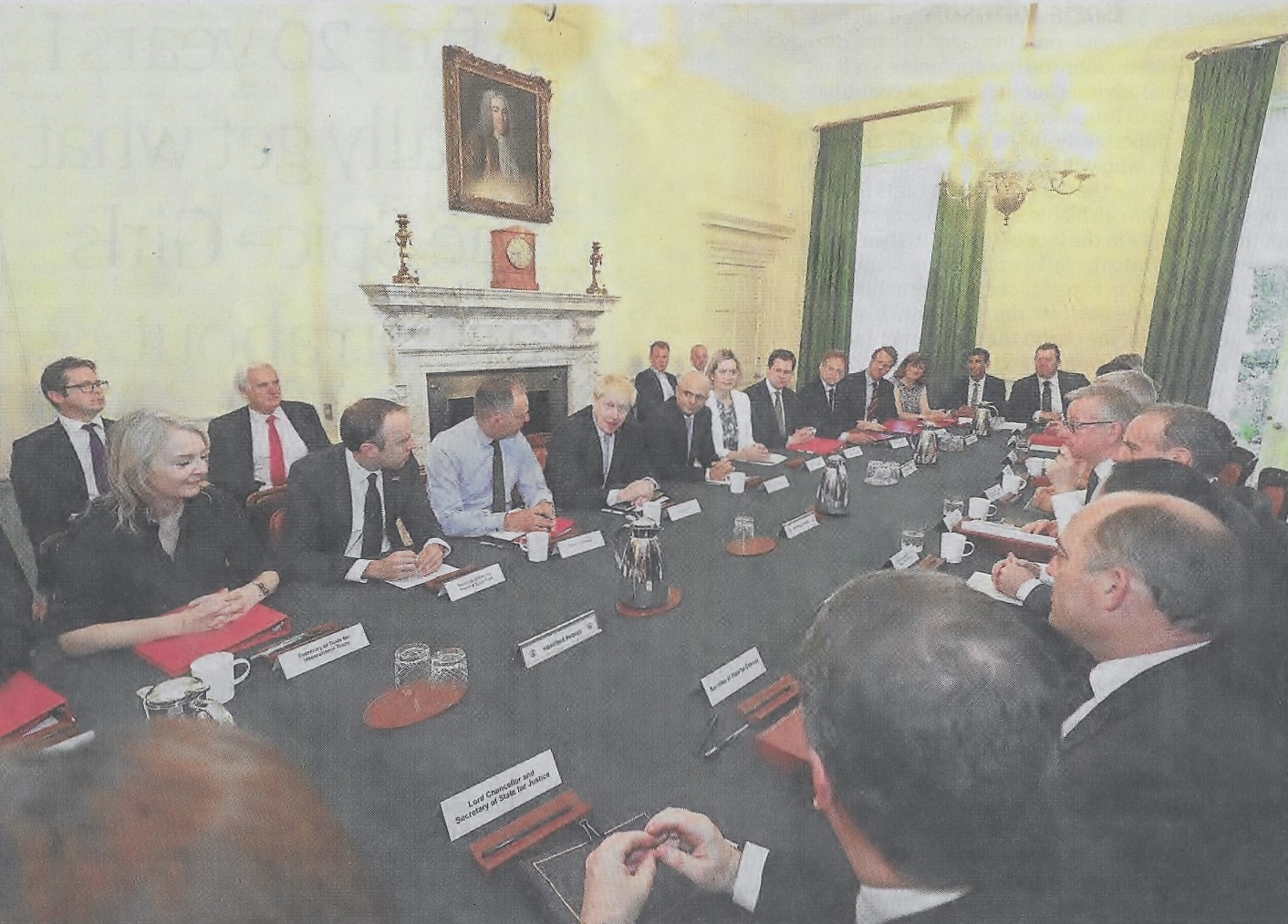
- Sir Edward Lister, soon to be Lord Lister
 (surely not of Southfields), has until recently been a senior adviser to Boris Johnson (in this press photo of Johnson’s first cabinet, Lister is the man at the back with the red tie, second from the left) and certainly a constant presence at early Cabinet meetings where no doubt he continues to advocate and press for the implementation of his simplistic neo-liberal views. It is ironic that he has become an important player in the government just as circumstances have conspired to put the public sector at the heart of the economy and the centre of all decision making.
 - Finally, I should recall that many Labour Leaders, such as Robin Wales, Jules Pipe and Toby Harris, Leaders of Newham, Hackney and Haringey Council, were far more appreciative of Lister’s political skills than were the average Wandsworth Labour councillor. That was because his skills were about negotiation and arranging deals and not about debate. Consistent with those characteristics, Lister is a secretive and reserved character, not a deep thinker, but a straight-forward,
 highly competent machine politician.
 - On August 19th my partner and I stayed the night with friends at their house in the South Downs, immediately behind Hastings. This view from their dining room window certainly includes my tree of the month. The next morning was beautiful and we went for a walk in the so-called Garden of England, but I had to dash back to take part in my fifth virtual Planning Applications Committee (PAC). I really can’t think of anything interesting to say about it other than that it was important for all people directly concerned but mundane in the big scheme of things.
- On August 26th I went for an annual family
 walk from the Birling Gap to Beachy Head. We had planned to do the walk on 12th August but that turned out to be Britain’s hottest-ever day. In contrast, the 26th was cool and very blowy. Fortunately, we were walking with the wind. The view is looking west over the Gap and at the Seven Sisters.



My Programme for September
- One day last month, one of my readers sent me his spy thriller, the latest in a trilogy. He included nice words about this newsletter and an invitation to drinks one evening in early September. He obviously knows a great deal about espionage, especially in Italy and Sicily. I look forward to meeting him, and will ask him to sign my copy of his book. Amazingly, of my 2,500 or so newsletter readers, more than a dozen are published authors – Battersea certainly has talent.
- On 2nd September, I have a virtual Wandsworth Conservation Area Committee. I have a feeling that this will be a difficult meeting – for technical reasons. The attenders have not previously worked together using Microsoft Teams, so I expect a host of technical incompatibilities and misunderstandings!
- On 3rd I am looking forward to a tour of Mitchell House, the first and most advanced of the new Winstanley Estate blocks, the one on Plough Road opposite Time House. And then in the evening, I am going to a webinar led by academic and journalist, Will Hutton. The subject, no apology, is how the UK manages to stay close to the EU and avoid many of the catastrophes forecast to follow a “hard Brexit”.
- On 15th September, there will be another virtual Planning Applications Committee (PAC).
- Once again September will be a quiet month. Even the traditional major Party Political Conferences will have to take place virtually this year.
Can you place (and approximately date) this picture?
I’d like to thank fellow Latchmere ward councillor, Simon Hogg, for this little gem. Any other comments about the picture would be welcome. I have a couple of observations to share about the picture that I will share next month but in the meantime do you think you could write a paragraph or two about it?
Councillor Tony Belton’s Battersea August, 2020, Newsletter (# 134)
- For 100 or so of my readers, this will be your first sight of this monthly newsletter. You can see from the heading that this is the 134th edition of my monthly newsletter, which means that I have been writing it for just over 11 years. Every month, I send the newsletter to just over 3,300 recipients and according to “the system” I get approximately 1,000 opens. I hope that you find it an interesting read. You can also see past editions on this blog site.
- I add to the readership every month, by meeting as many new residents as possible, whilst delivering a letter of welcome from your three local Labour councillors, Kate Stock, Simon Hogg and me. Because of lockdown I have had a backlog to “catch up”, in June and July, hence the extra 100 or so new readers all in this one month. By delivering these letters I also keep up-to-date with what is going on locally. This month, for example, I delivered to one address in Shepard House, on the Winstanley Estate and, as I pressed against the letterbox, the door swung open to reveal an empty cob-webbed flat. The “new Council tenant” had failed to turn up. Wandsworth Council has now re-let the flat and so my visit, happily, has resulted in a family being re-housed.
- Last month, I wrote about Kambala Cares and Waste Not Want Not (WNWN), volunteer organisations who deliver cooked meals and food packs to “shielded” residents, such as the
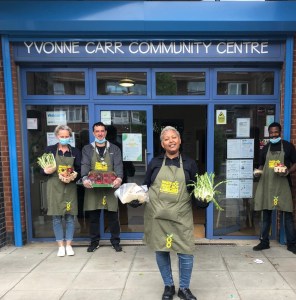 elderly and the sick. Both groups are run by lively, dynamic, impressive community activists, namely Donna Barham and Hadas Hagos (the picture is of Hadas, in party mood, at the Yvonne Carr Centre). They have faced the challenge of the crisis by cooking and delivering 100s of meals each and every week. So, I was pleased to be able to write a grant application to the Council for Kambala Cares and to introduce WNWN to Battersea United Charities (BUC). And now, I am even more pleased to report that the Council has granted Kambala Cares £7,000 and that BUC granted £2,000 to WNWN.
- On the 8th July I joined my fellow councillors, Simon and Kate,
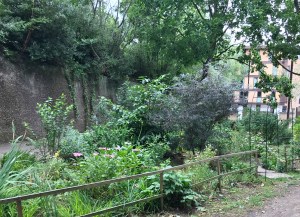 on a visit to the Falcon Park play area. We were invited there by local resident, Doris and a friend, to review the state of the play facilities, especially those designed for toddlers. I am confident that we will be submitting a bid for a small area improvement grant. In similar style at the railway end of Petergate, there is a small area of common ground, which until recently had been a simple, uninteresting piece of open grassland – great for dogs and not necessarily much else. Now it is a one woman’s attempt to “prettify” her part of Battersea, see picture, and I am going to try and get the Council to fund a couple of hundred to put in a decent railing and a gate – if my constituent will let me!
- In mid-July the Council started an ambitious programme to
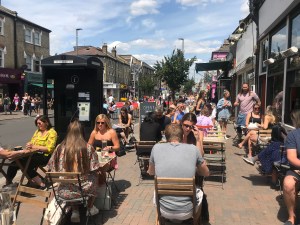 help local hospitality businesses counter the impact of Covid 19. The most obvious sign of this has been the pedestrianisation of Old York and Northcote Roads, and now Bedford Hill and maybe before long Battersea High Street. I have had constituents writing to me telling me just how much they have enjoyed the atmosphere this has developed in Old York Road and I am sure the feeling is true elsewhere. The picture shows the impact in part of Northcote Road.
- You may remember that last month I featured a street concert given on the last day of the “clapathons” by 11 talented young women musicians. Well, on the 12th July the violinist, the cellist, and their mother gave a three-women street concert. Forty to fifty neighbours turned out to hear them play in a fund raiser for the South London Youth Orchestra. I will put one of the numbers in this month’s entry on my website at https://tonybelton.wordpress.com/.
- On the 15th July we had the Council’s Annual Meeting in virtual mode – very unsatisfactory. If it was meant to be political, then it wasn’t. How can you have the vibrancy of a political meeting in virtual mode? If it was meant to be ceremonial, then it wasn’t. What is the point of a virtual ceremony without an audience? Too much more of this and local government will truly become what it has threatened to become for some years: local administration, not local government.
- Last month I mentioned acting the part of “the wise old man”
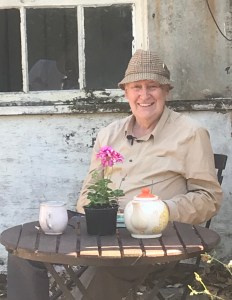 (couldn’t possibly be me, surely?) in Julia Donaldson’s children’s stories. If you want to see the series, you can on Wandsworth Council’s website and searching for A Squash and a Squeeze, or you can look-up https://www.youtube.com/watch?v=pgx8wkDEAd4. I hope you enjoy it just half as much as we, councillors, enjoyed making it! There is a series of six made-for-children films!
- On the 22nd July I, and perhaps 20 others, had a webinar (trendy word for an online seminar or public meeting) with the public relations consultants acting for the Arding & Hobbs/Debenham’s site, in the heart of Clapham Junction. Many residents are no doubt concerned about what is going to happen to the grand old department store: and this was our first chance to see a first draft of the developer’s plans. It turns out that the plans are restrained, even modest and some might say “conservative”. The architects are clearly keen to keep and improve the old Arding & Hobbs building, most of its fabric and many of its features. There will be a roof-top addition, which would stay subservient to the cupola and the whole building would be re-engineered to the highest “green” standards. The end result is undoubtedly an improvement on the present much altered and abused frontage.
- But the real problem is that the development of digital, electronic technologies has completely changed the market for traditional shopping and offices, which raises the question of whether there is still a market for up-graded retail units and a small core of relatively up-market office units. Unfortunately, a problem with the webinar format was that there was no time or space to allow for any vigorous cross-questionning of the proposals or for discussion about the project’s viability – not at all satisfactory! (As it happens, on 29th July, my attention was drawn to the Clapham Junction Action Group’s analysis of the Arding & Hobbs development. Run by my friend Cyril Richert, I must say that his overview is a much more thorough job than my analysis and anyone who wants to take a really well-informed view of the site should look at Cyril’s CJAG website).
- On July 23rd I had my fourth virtual Planning Applications Committee (PAC). It was not a particularly demanding agenda, with a few domestic extensions and some minor amendments to larger developments. It is possible that this was merely a quiet summer planning committee, but it could be that it is an indication of a post-Covid economic recession.
- But this relative pause in the flow of applications gives me time to reflect on a couple of longer-term trends affecting planning and development, which concern me. First is the Government’s announcement that it intends to remove what it sees as the shackles, which planning control puts on businesses and economic vibrancy. The chosen vehicle for this greater “freedom” is the use of Permitted Development Rights.
- Permitted Development Rights is short-hand for allowing owners and/or developers to extend already agreed developments. So, to take an example, if a change in the rules meant an owner of a four-storey block of flats could build a fifth storey without asking the planning authority’s permission, then that would be called an extension of permitted development rights. Those who argue against planning controls argue that it is unnecessary bureaucracy to have to get planning permission for such developments when the overall principle has already been accepted. But the trouble is in the detail. So, if one extra storey is accepted without question, why not two or ten or twenty extra storeys? In my experience, those who want to limit the powers of local government to control development often win the argument, in principle, even though in practice local residents nearly always wish the planning authority had more control over developers. In my view, the planning process allows all interested parties to negotiate. Without that process, local residents will find that their interests are harmed without consultation or the opportunity to express reasoned protest.
- A second long-term trend is for Government to limit local authority control of classes of development: the most obvious examples being the restriction of local authority powers over changes of use, say from a greengrocer or a newsagent to a betting or sex shop. It used to be that local authorities could restrict or stop the opening of such shops, or protect the diversity of their main streets by preventing the growth of supermarkets in their area. But large vested interests in the retail industry lobbied governments, and persuaded national government that local government was “restraining” trade. Our powers were limited and now betting shops dominate the high streets of the UK’s most deprived areas and supermarkets have driven family grocers, fishmongers, greengrocers, etc., out of business. This trend is particularly noticeable away from the biggest cities, where country towns and villages have been almost totally hollowed out.
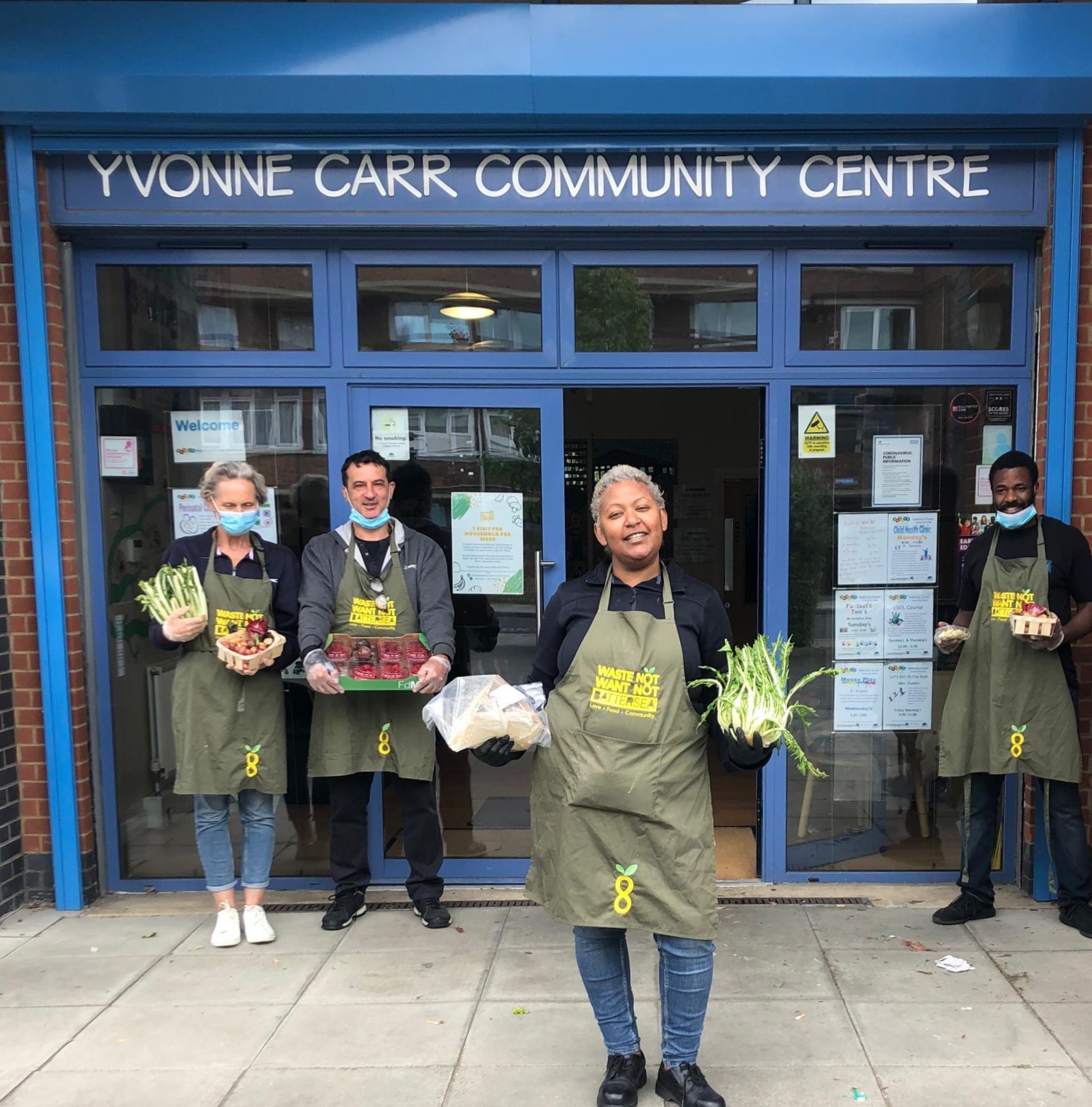


My Programme for August
- I was meant to be in Berlin in the first week of August, supporting Penelope, who was due to be at a German historical conference – but now, in these Covid-blighted days, listening to the Test Series between England and Pakistan might be the highlight of the week!
- Except, as attentive readers will recall, I recently lost a tooth (Upper Left 3 apparently) but now I am having to have two implants – a painful and expensive holiday!
- On 20th August, there will be another virtual Planning Applications Committee (PAC).
- August will be a quiet month.
Last month I asked whether anyone knew where in Latchmere

this weeping willow stands?
I was a little disappointed to get only one correct response.
And, my respondent having informed me that the two willows were in Latchmere Recreation Ground, Burns Road, told me that if you look up into the tree, that it is not in good health – sad, if true.
This month I am simply going to announce two very late items of:-
STOP PRESS
- Vauxhall Bridge is to be almost totally closed to traffic from 10.00 pm on Sunday, 2nd August, until the end of November. It has been discovered that the internal ironwork is deteriorating dangerously and remedial work will start immediately.
All northbound traffic including general traffic, private vehicles, buses, coaches, taxi and private hire will be directed via Nine Elms Lane, Chelsea Bridge and Grosvenor Road. A bus lane will be created on Vauxhall Bridge throughout the work to allow southbound buses to operate. All other general traffic (including private vehicles, coaches, taxi and private hire) travelling southbound will be diverted via Millbank, Lambeth Bridge and Albert Embankment.
Cyclists and pedestrians will be able to cross the bridge in both directions.
SO, AVOID VAUXHALL BRIDGE FOR THE NEXT FOUR MONTHS AT LEAST BUT WHAT OF THE LIKELY IMPACT ON BOTH CHELSEA & BATTERSEA BRIDGES.
- The latest list of peerages has just been announced including Wandsworth’s ex-Leader, Edward Lister. He was Leader of the Council and I, Opposition Leader, for the best part of 20 years. I will say a little more on this matter next month.
 Tony Belton
