Councillor Tony Belton’s Latchmere October Newsletter (# 53)
August & September highlights (or was it lowlights?)
1. Funny that in August I should have written about the 65th birthday of the NHS, because for the last two months the NHS has been at the centre of my life! At the beginning of September I was in Holland just about to come home and write up my September newsletter when I got streptococcal poisoning! A month later having spent much of the time in St. George’s, I am on the path to recovery!
Streptococcus is a form of bacteria, which we all apparently have, usually lying around dormant in various parts of the body. Streptococcal infections are also fairly common and usually pass without much comment, especially in babies. However, when it gets infectious and rampant, as it did with me then the quacks (and me) get really worried. As soon as they diagnosed it, I was under the knife faster than you can say Jack Robinson.
In my case it was the left knee that was infected and, let me tell you, I can’t use the proper adjectives in a family newsletter to describe the pain! Anyway I am now on 6 painkillers, 3 anti-inflammatories and 6 antibiotics a day and will be for another month – I am also hobbling round on a pair of crutches!
How did it happen? I don’t know and the medics don’t seem to know either. It could be an external infection but there was no break in the skin or anything like that. It could have been a jolt – well I did jolt to a halt on one occasion. But it’s not true (contrary to some reports) that I was knocked off my bike or hit by a car or lorry.
Anyway that is my excuse for breaking my sequence of monthly newsletters and not producing one in September!
2. Oh, and the holiday? Well it was great and I attach a photograph of me cycling in Delft main square (and most of the time the weather was better than that day) but there was one other unfortunate incident! Two days before the streptococcal started my partner and I had our bicycles stolen in Amsterdam! OK, sounds like a holiday from hell, but it wasn’t really and if anyone fancies cycling in Holland it is terrific! There are miles of cycle routes along the coast, where you do not see cars at all. On roundabouts bicycles have priority and so you don’t have to stop peddling and losing all that energy and except in Amsterdam it appears largely theft and vandal free! I thoroughly recommend it for an active but not over-taxing holiday.
3. Meanwhile back to the day job! Battersea Park School, as you may have heard by now, had exceptionally good results this year. But neither Ofsted nor Gove’s people look like changing their mind and the odds on the school being made an Academy sponsored by Harris (the carpet people, owned by a personal friend and sponsor of both the Tory Party and David Cameron) are shortening. In my view Harris intend to take over the site from the Council and then make many millions (well over £10 million) by building flats on much of the site, and, to be fair, using some of the money to re-build a modern school.
It goes without saying that all parties in the debate claim to be doing what is best for the students. But some parties, and specifically the Tories, believe that means taking schools out of local democratic control and making them sponsored academies or free schools or whatever Mr. Gove’s fad this week happens to be. I, on the other hand, believe that local education authority run schools have served us pretty well since instituted in 1944. If Battersea Park is handed over to Harris carpets I rather doubt that they will have me as a governor!
4. There were two Planning Applications Committees on August 6th and September 10th. There were quite a number of interesting applications at these meetings although you will understand I was not at the second and would have been drugged to the eyeballs if I had been! Not that any were specific to Latchmere, but nearby the Committee gave approval for the redevelopment of Salesian College and the now nearly completed Caius youth club and residential development just across York Road behind Badric Court. There were also quite a few approvals related to the Battersea Power Station development, which looks very likely really to go ahead after goodness knows how many false starts.
5. At an important but much less grand scale I am told by friends and constituents that the bus-stop at the junction of Beechmore and Battersea Park Road, which I incorrectly trumpeted ahead of time is now, at last, really in place!
6. Meanwhile there has been the usual array of Committee meetings but as I missed them all and have not really caught up with them I won’t bore you with details EXCEPT to say that on October 3rd there was a special Finance Committee, where the Tories hacked several £millions out of the budget. The damage to services is now becoming so great that in this week’s South London Press, even high-ranking Tory Councillor Guy Senior is quoted attacking the Government for the severity of the cuts.
7. These cuts will be considered further at the 16th October Council meeting by which time I hope to be able to make a fuller contribution and report back next month.
8. On 5th October I looked in on the public consultation at York Gardens Library about the £100 million regeneration. I didn’t feel so good and didn’t stay long but I think we need many more before any real decisions can be taken about which blocks might be demolished, which refurbished, etc.
My Programme for October
1. Primarily I hope to get back to normal! That means as ever the Planning Applications Committee on the 8th, but also the Council Meeting on 16th and the usual round of other committees and visits – however, I have a sneaking feeling that I might miss rather more than usual. I hope you forgive me!
Did you know that 100 years ago London’s biggest transport problem was where to keep the horses?
And what to do with the manure? It was a particular problem in North Battersea because of the scale of the Mansion blocks built round Battersea Park. There was a huge demand for horses both for pleasure (riding in the Park) and for work and they had to be kept somewhere. The answer was the development of Mews, hundreds of them all over London. And now only 100 years later there are almost none left.
Kersley Mews, pictured here and very little known but only 100 yards from the Latchmere pub, is the only traditional mews left in Battersea – at least to my knowledge. Do you know any others? There are a couple in Lambeth/Clapham off Cedar’s Road behind the large mansion flats on the edge of the Common but are there any others in Battersea?
Hope you all keep well, or at least better than me!
The Housing Crisis – Is a massive building programme sufficient to resolve the housing crisis?
It is a common-place that a massive building programme is the way, even the only way, to resolve the housing crisis facing the young, those on low and middle incomes and the homeless. Well if my Borough of Wandsworth is any indication the answer is definitely NO.
In Nine Elms, less than a mile from Westminster a development of 20,000+ flats, home to maybe 60,000 people, has begun and will be largely completed in ten years time. But no one imagines that this development will have any affect whatsoever on the housing crisis in London. It is not a problem we have with the construction industry, nor with the planning system. The problem is distribution!
Nine Elms and Battersea Power Station, with first sales going to rich Malaysians but also rich Europeans (including Brits) may not be absolutely typical but what if the higher earners continue to trade up and use their market power to invest in the housing market and use rental income as an alternative to final salary pensions? What if they act as the mortgage lenders for their children – the so-called Bank of Mum and Dad? What if the massive growth of the buy-to-rent mortgage industry is clear evidence of a long-term trend to yet more exploitive rents.
The Tory mantra about the market clearly just doesn’t work – at least not in the UK in housing. We have to take back control of the market; as a society we have to resolve the issue of distribution. The Tories recognise this to an extent and are trying to tackle the issue in the socially rented sector with the mean-spirited Bedroom Tax, but it only tackles a small sector of the market and it only tackles an easy defenceless target – the poor, social tenants. Meanwhile the social sector gets smaller and smaller and the better off collar more and more of the market.
There are three interesting and dramatic examples of this process apparent in my analysis of how “right-to-buy” has operated in Tory Wandsworth. Firstly let’s look at the overall impact. Of the 18,000 Wandsworth Council properties sold nearly 6,000, 1 in 3, are now privately rented. (see my blog of December, 2012) Some of these rental properties are part of quite large portfolios. Several millionaires have been created. Their millions have, of course, been created out of the increased rents imposed on private tenants, rents ironically frequently paid by the state in the form of housing benefits. Many examples exist in Battersea’s Doddington estate, where Council flats being let at £200 per week to families classified by the Council as being “in need”, sit side by side with others being rented out at over £500 per week using landlord practises not far short of what fifty years ago would have been known as Rachmanism (Google Peter Rachman for a brief history).
Another completely different example is where small council blocks have been bought up by developers and redeveloped as very expensive town houses. One example is in Sisters’ Avenue (see March, 2013, Blog), where six modest post-war family flats were sold to sitting tenants in the 1980s at an average price of £17,500. In the late 1990s and early 2000s they were sold on to a developer at about £300,000 each. Now the six replacement town houses are being bought at £1.95 million a time. The end result has no doubt been a major improvement in the quality and scale of the housing stock and certainly the relative enrichment of six working class Battersea families but also a complete loss of affordable housing. The effect, unintentional of course, has been of some lucky people pulling up the ladder behind themselves.
Whatever the rationale, the benefits for the original purchaser, the enormous political gain for the Tory Party, there can be little doubt that “right-to-buy” has been disastrous for the future of affordable housing in Wandsworth and by extension much of London.
To counter this situation the London Labour Housing Group (LLHG) has produced a powerful and useful manifesto for the London Borough Elections of 2014 but it admits that as long as the Government and the London Mayor are under Tory control there are limits to what can be done. Typical of the dilemma facing Labour is the comment of Councillor Peter John, Leader of London Borough of Southwark at a recent Battersea Labour Party meeting, where he asked, “Just what are the prospects for social housing in Southwark, when the new council housing we are building now is subject to government subsidised right-to-buy schemes”?
The LLHG understands the problem but it is beyond its competence or political power to challenge the real issue, which in my view is the way that much of politics in general and property taxation in particular is so warped in favour of higher income groups. There is clear evidence of the former in George Osborne’s introduction of the “Help to Buy” incentive aimed at encouraging house price rises but doing very little for housing construction – a plan many economists clearly believe to be about creating a feelgood factor and not a sustainable housing boom. As to the latter the inequity of property taxation in the UK hardly needs mention – in Wandsworth for example the Council Tax on the many expensive £1 million+ properties in the Borough is currently £1,357 per year, exactly double that on the average property (serious comparisons difficult as no revaluations since 1991 – another example of the moneyed classes, scaring Governments off re-distributive taxation).
Unfortunately, the only policy remedies that I see are to take control of the market, to close the market in social housing and to control the private rented sector. But the politics of controlling the market (subsidising large scale construction for the social sector), abolishing “right-to-buy” and controlling rents is beyond the Labour Party as at present and, to be fair, beyond political reality unless the political mood can be changed in the same radical way that the Tories managed in the 1980s.
Trade Unions – more power to their elbows
There can be little doubt that in the battle between capital and labour, the shift of power from capital to labour which characterised early post-war Britain, has gone into reverse. The apogee of union power was the moment of the collapse of the Ted Heath Government in February, 1974.
The unions had exercised great power in the fifties, when they did much to raise worker standards of living to unparalleled heights in a far more equal society than we see today. This also happened in the United States and in the rest of the English speaking world, especially Canada, Australia and New Zealand.
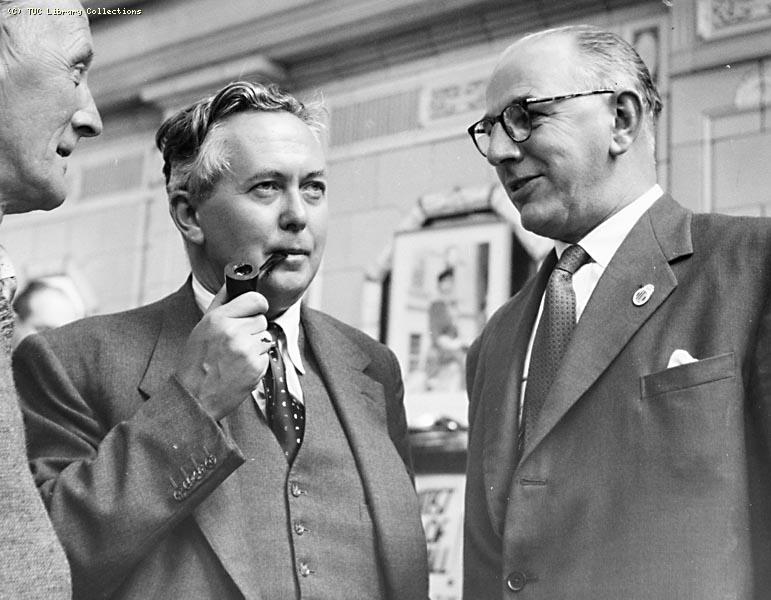 The unions did not get much credit for this achievement especially from the overwhelmingly hostile press, but they were generally recognised as a pillar of British society. One dramatic symbol of this rise was Harold Wilson’s promotion in 1964 of Frank Cousins, General Secretary of TGWU (Transport and General Workers’ Union), to be Minister for Technology, a post of high importance to the Government, focused as it was on the “White Heat of Technology”. (pictured right)
It was reasonable to expect that the unions were likely to become a long-term, central element of the corporate state – rather as they are in modern Germany, their historic role being to a considerable extent a product of British advisors in the immediate aftermath of World War II. Unfortunately the unions over-reached themselves and missed this historic opportunity, perhaps for all time.
Even in the sixties, Hugh Scanlon (AEU – Amalgamated Engineering Union) and Jack Jones (TGWU) were the media’s “Terrible twins”, as they exercised union power in many a disruptive industrial dispute. But more damagingly they also took on the politicians and thwarted Barbara Castle’s attempt to draw them into the corporate state through the mechanism of her policy white paper In Place of Strife.
There was little doubt that the trade union movement was a powerful voice in the land. So much so that one opinion poll in 1977 showed that 54% thought Jack Jones was the most powerful man in the country. But many others thought that unions should keep to “their proper role” of defending and strengthening workers’ rights and pay and conditions and not indulge in political activities. The battle over the trade union role in society was to be joined in earnest in the 1980s.
In 1973-74 the miners’ leader, Jo Gormley, had led the miners in a successful campaign for higher pay, which had ended with Labour’s General Election victory of February 28th. Ted Heath had gone to the country asking, “Who rules?” The country replied, “Not you mate” (The Tory Election Manifesto was called “Who Governs Britain?”). But an apparently great miners’ victory sowed the seeds of the unions’ downfall, most especially the NUM (National Union of Mineworkers). The unions arguably became complacent and expected favours from the incoming Labour administration. But by the time Thatcher became PM, the Tories were adamant that they would never be subject to union power again.
So when Thatcher decided to close mines and reduce the size of the mining industry, she set up quite deliberately the battlefield for a war against the miners. Unfortunately for the left, and I would argue for the country, the miners were now led by Arthur Scargill. He was keen to exercise power but had neither the native cunning nor the considered approach of Gormley. Scargill went into battle when British coal stocks were at a record high and British dependence on coal was declining as North Sea oil and gas was coming on stream. (It was ironic that at the same time as she was condemning trade unions in the UK, Mrs. Thatcher considered them to be a bulwark of freedom in communist Poland!)
The decline of union power had begun and has continued ever since, with New Labour almost as keen not to go back to the days of union ascendancy as the Tories.
But now we can see what a long-term disaster that decline has been for the majority of the workforce and for the country. Now neo-liberalism is in command. We have millions on zero hours contracts – not just working for exploitative private employers but also for local authorities, the NHS and the civil service. As a country, we “compete” for having the most flexible work-force, for having the weakest labour protection laws and for paying the lowest wages.
As a Councillor I know only too well the pressures on local authorities to put every task out to competitive testing or rather to the ruthless exploitation of labour. Once we had women, and they usually were women, providing home help and meals on wheels to pensioners, and working regular hours at trade union negotiated rates. Now we have temporary part-time workers, possibly paid at lower than legal minimum wages – many of whom are not paid for travel time between jobs. Just imagine what the salaried middle classes would make of not being paid for travel time between clients.
My colleagues are so beaten down by standard clichés such as “the users do not care who delivers the service, they only care about the quality of the service” that they just do not see that the logical end of this process is a low paid, low skilled, low spending labour force. Not many years ago Wandsworth’s Tory Leader provoked derision on the Labour benches when he claimed that the workers’ pay and conditions were no concern of his. Now his remark would pass without comment or criticism; it would be the statement of the obvious.
The Tories used to say that Labour only cared about the providers and not the consumers. If it was ever true, it is no longer, at least for the workers by hand – workers by brain, such as doctors, airline pilots, lawyers, still have their unions (and the Labour Party), or professional associations to look after them. But the workers by hand are left helpless against the neo-liberals. And they get little help from Labour, hence the party’s weakness amongst its traditional supporters.
But now – at last – the public at large are becoming more aware of the imbalance between labour and capital with large and growing campaigns for the “the living wage” and against zero hours contracts. The Labour party is in danger of being way behind public opinion.
The brightest of the capitalist class knows well that a low paid and low spending workforce is not of much benefit to them; they recognise, even if Tory politicians don’t, that the demand element of the economy cannot be ignored. Labour must campaign for higher wages, a doubling of the minimum wage, the end of internships, the death of zero hours’ contracts and a closer and healthier relationship with a vibrant trade union movement.
The trade unions in general are weaker today than they have been for a hundred years. We need them to be more powerful and to take a more active role in the guidance and direction of business in this country. We need works councils and trade union involvement in management, defined in law as it is in Germany. We also need fair but restrictive legislation on the right to strike – again Germany would be a good model. We need a workers’ movement, which is stronger than it is today. We need more power to their elbows.
Councillor Tony Belton’s Latchmere August Newsletter (# 52)
July highlights
1. On the 5th July I attended my favourite Latchmere (or anywhere) street party, the Triangle Party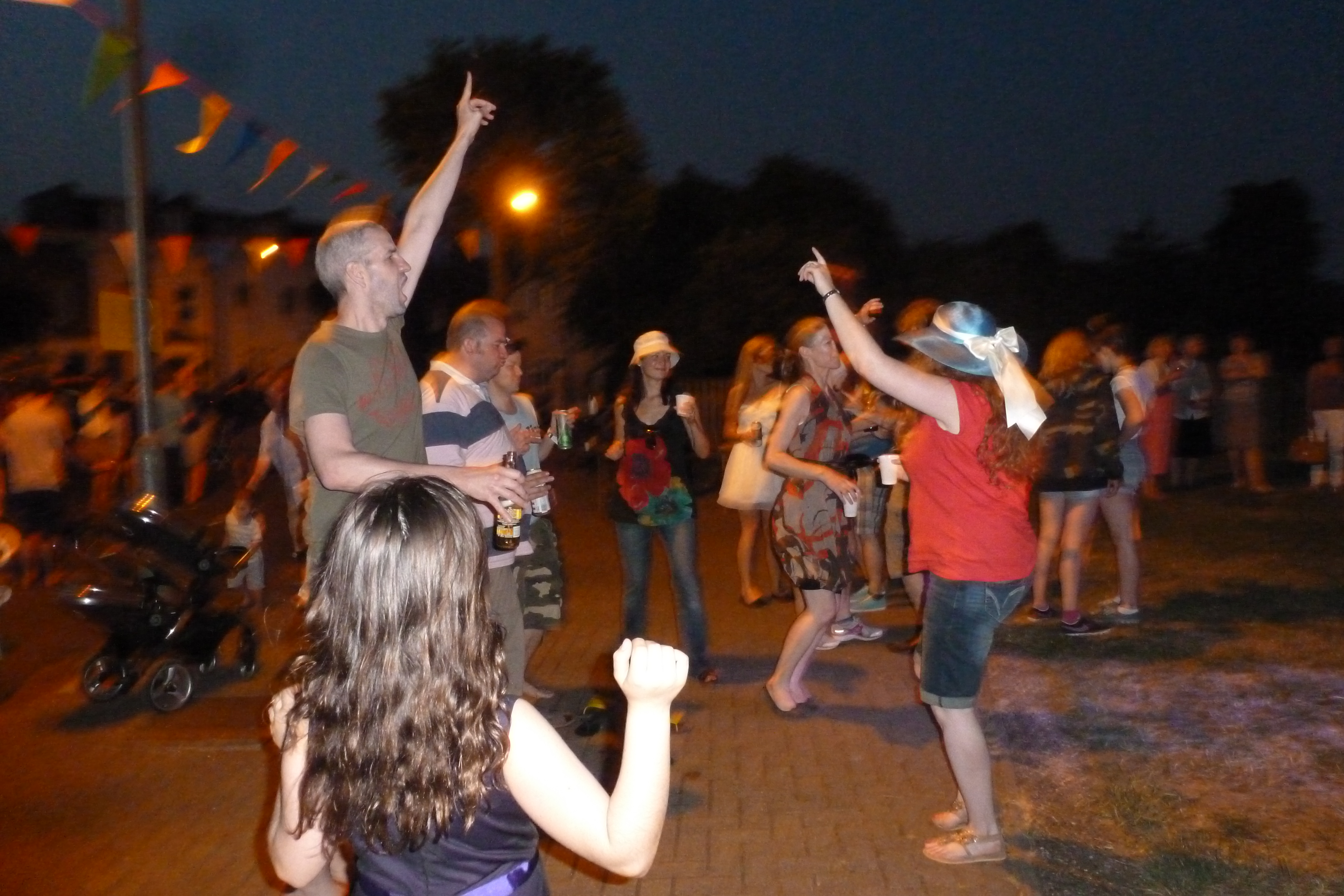 (Poyntz, Shellwood and Knowsley Road Roads triangle). The triangle is a natural cul-de-sac and makes for the best of parties. Last year the weather was pretty miserable but this year it was fantastic and everyone seemed to be having a great time. I certainly did and what is more I won the prize lottery ticket. I know councillors are supposed to give those prizes back but having bought a few raffle tickets in my time I thought at last I was entitled to accept this one. As you can see there was dancing in the streets..
The next day Andy Murray won Wimbledon, England won the first two Tests, Chris Froome won the Tour de France and the month ended with Lewis Hamilton winning the Hungarian Grand Prix. 2013 looks like competing with 2012 as one of the UK’s greatest year of sporting triumph –we are a nation of winners after all!
2. Battersea Park School Governors met on 8th July to hear the bad 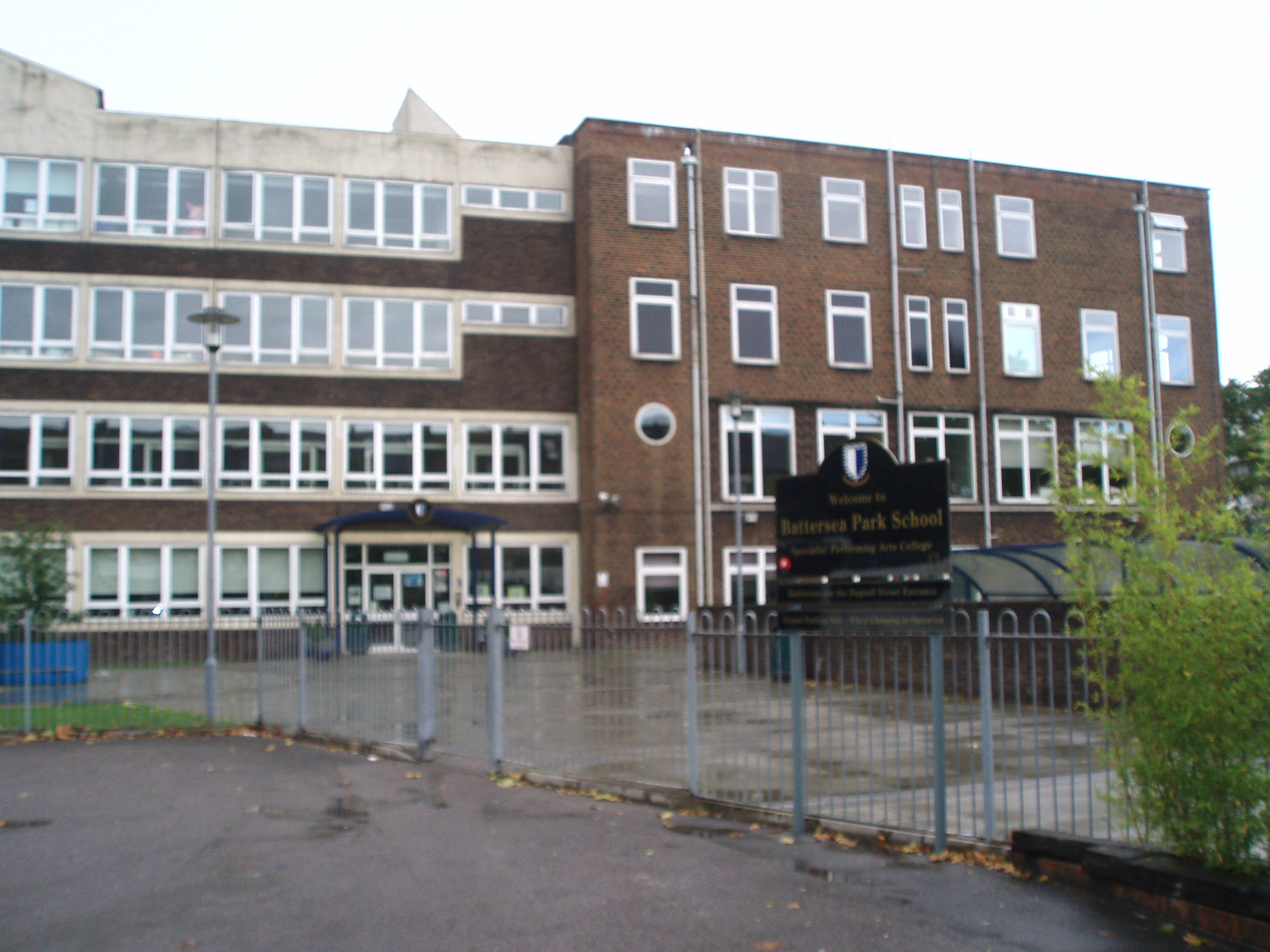 news that the school had failed its June Ofsted inspection. As Governors we were shocked. Two years ago we passed with flying colours and in 2011 we also achieved good exam results, but we knew that the 2012 cohort of kids were going to do rather poorly. Not that it was the pupils fault, they included a very high number of kids whose first language is not English. Ironically we expect this year’s results to be as good or better than 2011’s.
Last year the school applied to be an independent Academy (like Graveney and others in Wandsworth) but we were turned down because the school was considered to be too good. After that shattering experience the Governors had resolved to continue to be a local authority school. But now we have been told that we have no alternative but to become a sponsored Academy, that is sponsored by people like Harris (the carpet company) or Oasis, whose website says “the work of Oasis Community Learning is motivated and inspired by the life, message and example of Christ”.
I would like to make three comments about this situation. First that it is odd to be forced into Academy status a mere couple of weeks before this year’s results are due – especially given that the school expects them to be good, and perhaps even very good. Second that the Ofsted Report was produced by an outsourced team of inspectors from an organisation called Tribal Inspections. It does not seem to be a very accountable organisation and those teachers and governors who were interviewed by them were not impressed by their methodology or their objectivity. Third, the refusal to accept our request to become an Academy last year and yet to force it upon us this year suggests a distinct uncertainty of purpose on the Government’s part! What will happen next? See this space but one thing I am fairly certain of, lots of money will be spent on the building – it needs it. The Government cannot afford to get its education policies wrong!
3. There were two Planning Applications Committees in July, one on the 3rd and the other on the 23rd. As far as Latchmere residents were concerned the most interesting application on the 3rd was the approval of the plan to demolish the current Crown pub in Battersea High Street and replace it with a pub and 9 flats. This was not a popular application with many local residents opposing it, and I voted against it. But in all honesty it was difficult to argue against an application to re-build a pub and add 9 flats above it – at least under present planning laws.
The 23rd Committee was dominated by the major application for the redevelopment Ram Brewery in Wandsworth Town Centre. It may not be in Latchmere but it will affect all Wandsworth. The previous application, which included two 42 storey tower blocks, was “called in” for decision by the then Labour Secretary of State as a result of a request from the then Battersea M.P., Martin Linton. This next application was, as all Committee members, Labour and Tory, agreed, very much better. It includes 661 residential units, a small brewery, plenty of shopping and entertainment uses, improved settings for the many historical elements of the old Brewery and a gym. But it also included a 36 storey tower block and this was very contentious. It is opposed by the Wandsworth and Battersea Societies and many local residents.
I voted against. I am not happy with a tower block almost twice as high as any other building in Wandsworth, except those giants going up in Vauxhall. But I have to accept that most of the application looked quite good. My hope was that we could negotiate something even better but the application went through. As a result, I suspect that the long-overdue redevelopment of Wandsworth Town Centre will start soon and much of it I think will be rather good.
4. On the 10th July we had the final Council meeting before the summer break. The main debate was about education and the Council’s now desperate search for more school places. You may remember that the Council sold and/or demolished 10 schools in the 1990’s and the early years of this century. Joseph Tritton school in Latchmere was one, but were many others elsewhere. But now the Council is having to build class-rooms in playgrounds and build new schools. It’s been a very expensive mistake and many parents are worried about exactly where their children will find a school place.
5. On 11th July I attended a briefing about the £100 million regeneration plan for Latchmere, covering the Winstanley and York Road estates. There is nothing definite to report yet but the planning consultants, engaged by the Council, to come up with a “grand plan” gave us an indication of their first, very outline thoughts. They intend to produce a plan for consultation in early 2014. Later that same evening I went to the Battersea Society Annual summer party at St. Mary’s Church
6. Sadly, I missed the Big Local party in York Gardens on 18th July but I am told that everyone had a good time and that it went very well. The York Gardens area does not always enjoy the greatest reputation outside the immediate area but there are real signs of a much improved community spirit developing here.
 7. On Saturday, 20th July, Battersea Labour Party took over the York Gardens Library to hear from our candidates to oppose Jane Ellison at the 2015 General Election. We heard from former Latchmere Cllr Sam Heath, Cllr Sheila Boswell, Dr Sundar Thavapalasundaram and Martin Linton’s election organiser in 2005, Will Martindale. We were pleased with the qualities and abilities displayed by all candidates but Will Martindale won by a clear and handsome majority. He therefore becomes, in the jargon, our PPC or Prospective Parliamentary Candidate – Will is pictured here after the selection.
Will currently works for Oxfam, engaging the financial sector on their responsibilities to the developing world. He used to work in finance for JPMorgan in London and New York. Given the economy will dominate the next election, and that many Battersea residents work in the financial service industries, he is an excellent choice for Battersea. Will also volunteered for Rwanda Aid, a charity based on the Rwanda Congo border, where he worked with the families of genocide victims to rebuild homes and schools.
8. On the 3rd July I had the pleasure of taking about 30 kids to meet Wandsworth’s Mayor, visit the Council Chamber and talk with the Chief Executive. They were under the leadership of Victoria Rodney of the Mercy Foundation, which is in Falcon Road just behind the Prince’s Head. It was a great couple of hours and the kids really enjoyed themselves. Here is a picture of them all on the steps in the so-called marble hall at the Town Hall. I am the mature one in the back row! And the Mercy Foundation organiser, Victoria Rodney, is on the Mayor’s left.
9. The latest update on Grant Road exit from Clapham Junction station and the temporary bus-stop opposite Battersea Park School is that:-
“South West Trains say that the Grant Road entrance is officially open until 1am, although it is thought that in practice it stays open until after the last train at 01.20. The original opening times are shown on the wall of Falcon Road railway bridge” and
“TfL say that they are obtaining a traffic management order for a new bus stop for Beechmore Road, and the road markings should be installed by 10th August”, implying that the stop will be reopened around this time. We will see!
My Programme for August
1. Is not a lot – it is after all August but as ever the Planning Applications Committee takes place on the 6th.
2. My fellow councillors and I are considering what we can do to safeguard the future of Wandsworth’s pubs. This is because the Wheatsheaf at Tooting Bec is under threat as is also the Trafalgar. Meanwhile here in Latchmere apart from the London, Chatham and Dover Railway Tavern that I wrote about last month, we have recently lost the Havelock Arms on the corner of Dagnall Street. Indeed I was talking to an old-timer (well sorry Ted but you lived in Culvert Road during the war, so I guess you qualify) and he tells me that what with the two on the corner of Battersea Park Road there were then 5 in Culvert Road alone! Indeed can I ask readers with a long memory in Battersea to help me start a list of the lost pubs of Battersea! There’s also the British Flag, of course!
3. And later in the month my partner and I depart for a, wait for it, cycling trip round Holland! Yes, I know it’s mad but there it is. One thing I plan to do is drop into Schiedam, a working class suburb of Rotterdam, which is incredibly twinned with Wandsworth. But it is far too Labour, well Social Democrat in Dutch terms, for Wandsworth ever to note, but as a Labour councillor I thought I would drop in and visit it!
Did you know that last month was the NHS’s 65th birthday?
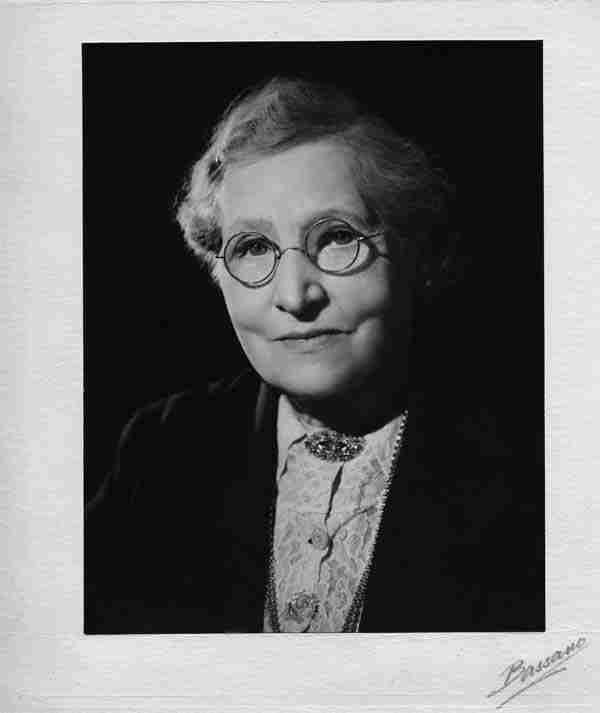 This piece is about one of its founders – Caroline Ganley. It is a re-print from the September, 2009 newsletter but as it is about a hero of mine and the NHS’s birthday I thought it worth another outing.
Modest Ganley Court, immediately behind Sporle Court, was named after equally modest Caroline Selina Blumfield. Caroline was born in 1879 in Devon and died in 1966. She was an only child and her father died before she was born. Her mother, who was in service, put Caroline into an orphanage. In 1901 Caroline met and married James Ganley, a tailor cutter. They had a daughter and two sons and the family lived in lodgings in Meath Street, near Battersea Park station. Like most places in Battersea then, there was no bathroom, and so they moved to 5 Thirsk Road in 1910, where she lived for the rest of her life.
Caroline used to listen to speakers on Clapham Common, when it had its own Speakers’ Corner. She decided to join the Social Democratic Federation, a league of London Working Men’s Clubs and also became a member of Battersea Women’s Socialist Circle. In 1909 Caroline was catapulted into speaking publicly for the first time, when as the only member and chair at a meeting where Charlotte Despard was the invited speaker, Caroline found herself replying to questions when Despard had to leave. One Sunday a few years later James returned from Trafalgar Square to tell her that he had volunteered her as the only women speaker on the platform at a demonstration against the visit of the Czar!
During the war Caroline wrote a strong letter to the Sunday Chronicle proposing that Servicemen’s wives allowance should be paid through the Post Office and thanks to her this was duly accepted and became the practice. By 1918 Caroline had become a member of the Labour Party. In 1919 Caroline Ganley, along with Mrs. Duval and Mrs. Hockley, was elected as one of the very first female councillors in Battersea. As chair of the Health and Child Welfare Committee she was instrumental in getting a Maternity Home established in Bolingbroke Grove. It was her proudest legacy.
She was among the first 131 women appointed as JPs (Justice of the Peace or a magistrate) in 1920. She was elected to represent north Battersea on the London County Council which Labour came to control in 1934. After 8 years as the prospective parliamentary candidate in Battersea South she won the seat in 1945 aged 65 alongside Douglas Jay in North Battersea. She was one of the 24 women elected, 21 of whom were Labour. She and James were the first couple to celebrate their Golden Jubilee in the House of Commons in 1951 not long before she lost the seat by 494 votes.
She was elected on to Battersea Council after an absence of 28 years in 1953, and re-elected in 56, 59, and 62 and was awarded a CBE. When Battersea was incorporated with Wandsworth she wrote a poem lamenting the passing of Battersea as a Borough. When Clem Attlee died she paid a moving tribute to him at an election meeting in support of Ernie Perry who became her successor in Battersea South. She was then 85 – a formidable woman. When she died in 1966 one tribute to her in the South Western Star remarked ‘Her mind was very acute and her ability to draw together the threads of the most rambling discussion was legendary. She was a great pioneer – the most outstanding woman the co-op has produced at a time when few women took part in public life.’
Noel Coward’s Private Lives
“Strange how potent cheap music can be”, says Elyot Chase in the opening scene of Noël Coward’s Private Lives, currently playing at the Gielgud Theatre, Shaftesbury Avenue. It could equally apply to the comedy of manners that so often is represented in plays about love-besotted relationships between strong characters. In that sense this play is part of a tradition in the English theatre, which stretches back to The Taming of the Shrew and forward to Who’s Afraid of Virginia Woolf, with references to Sheridan, Wilde and Shaw.
Beautifully staged and directed by Jonathan Kent and his team it is also wonderfully acted by Anna Chancellor as Amanda Prynne (Chancellor was “Duckface” from Four Weddings and a Funeral) and Toby Stephens as Elyot Chase, with great support from Anthony Calf, as Victor Prynne, and Anna-Louise Plowman, as Sibyl Chase.
The drama opens with a scene of two hotel balconies at the oh-so British resort of Deauville in Normandy, with one balcony linked to the Chase honeymoon suite and the other to the Prynne honeymoon suite. Unfortunately but surely not coincidentally one of the suites had also been Elyot’s and Amanda’s honeymoon suite five years previously before their marriage broke up in vicious quarrels and perhaps not quite criminal violence. We can only imagine how the two were drawn back to the same hotel and the same room for their second honeymoon.
There follow ludicrous scenes of embarrassment and forbidden titillation, with Coward using the story set in the present as an illumination of the five intervening years of passionate but turbulent marriage between Elyot and Amanda. It reaches a head as they come to the realisation that the very dull and uninspiring spouses that they are now linked to are completely unsuitable soulmates, for either of them and that the worst mistake that they had ever made was to divorce.
The scene moves to an expensive but bohemian flat in Paris and farcical scenes of love and confusion, of misunderstandings and of humour. Elyot can neither live with Amanda or without her, nor she with him. They are tracked down by their new spouses, who are beginning to find their mutual dullness more re-assuring than their legal spouse.
The play ends without any question answered. Are Elyot and Amanda going to get together? Probably yes but for how long? Can Sybil and Victor ever have enough passion to get it together? The play hints Yes, perhaps. Do any of the four of them have a job or work for a living? Clearly not a consideration for Coward.
So what is the point? These are the lives of the effortlessly rich. They are the jet-set of the age – a kind of decadent ocean-going liner class at the end of the Swinging Twenties, whilst most around them are sinking into the economic and political storms of the thirties.
Amidst the wit and humour of the play, and it is full of laughs both of the belly and the brain, this comedy uses the desperate difficulty of finding a life partner as a tragic plea to find purpose in a world not so dis-similar to our own. Why should we care? A legitimate question for today just as it was in the thirties but let’s hope we do not have to go through the same horrors to find the answer as that generation did.
Councillor Tony Belton’s Latchmere July Newsletter (# 51)
June highlights
1. The latest update on Grant Road exit from Clapham Junction station and the temporary bus-stop opposite Battersea Park School is that:-
“South West Trains say that the Grant Road entrance is officially open until 1am, although it is thought that in practice it stays open until after the last train at 01.20. The original opening times are shown on the wall of Falcon Road railway bridge” and
“TfL say that they are obtaining a traffic management order for a new bus stop for Beechmore Road, and the road markings should be installed by 10th August, implying that the stop will be reopened around this time.
I may be away around 10th August but it would helpful if any reader of this email affected by this bus stop issue would let me know when it is up and running again. But how long does it take to get something, anything done!
2 As stated last month I did lead a Battersea (at least 50% in Latchmere) history walk on 1st June as part of the Wandsworth Heritage Festival. It went very well and was appreciated by all who went on it. My mention of it in the newsletter meant two of you asked about the next one. Well I need interest from just a few more people but I would be willing to do another, if you are interested, probably in October. It costs £10 per head, kids free, takes about 2 hours at a gentle stroll, and I guarantee that I will teach you something about the neighbourhood that you don’t know. Kids are welcome and, of course, free. We start on the corner of Albert Bridge Road and Battersea Park Road right opposite the Latchmere pub. If you are interested then please email me.
3 I mentioned that we, three councillors, were going to hold a councillors’ surgery in the Falcon Road mosque. We did on Friday, 7th June. It brought us into contact with many “hard cases” who perhaps we wouldn’t normally see at the standard surgeries. One major problem was/is language; particularly for one very elderly couple I had a great deal of difficulty understanding. Their children had got them out of civil war and horrendous barbarism in Mogadishu, Somalia, but they were clearly far too old to adjust to a completely different climate, culture and life. But for most, the problems were just like everyone else’s – mainly about housing.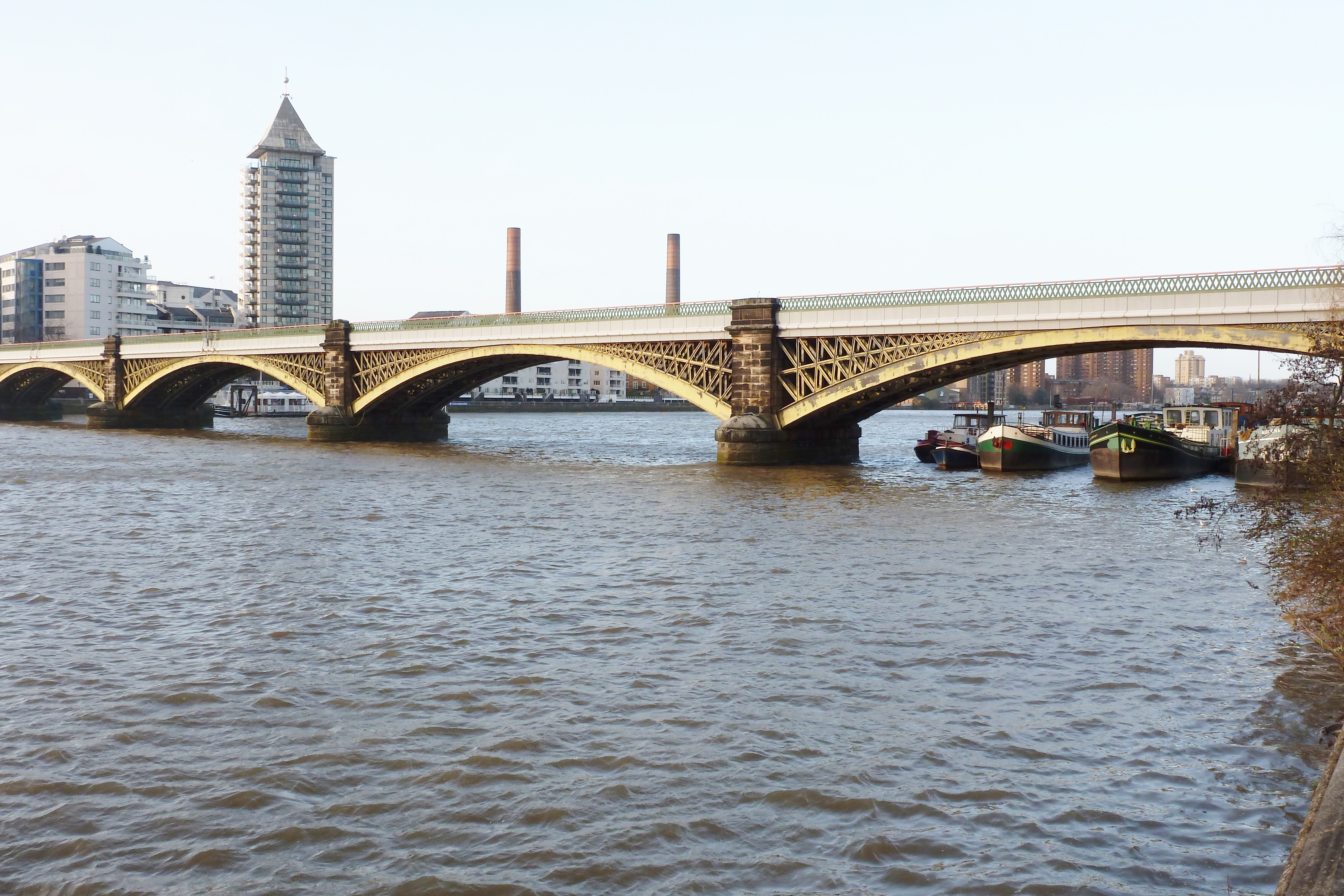
4 Again there was not a lot to talk about in June’sPlanning Applications Committee on June 6th, though one application was interesting and especially perhaps for Latchmere residents and the area to the north of us. There was an application to build a bicycle and footbridge across the Thames from Lombard Road to Chelsea Harbour. This would run parallel and 50 yards upstream of the railway bridge (the Cremorne Bridge pictured here) and certainly be a fun route to Stamford Bridge! The real problem is though that it might cost £20 million and no one has promised any funding. But the applicants are quite bullish about getting some – watch this space.
5 On Tuesday 12th Wendy Speck and I had a coffee morning with the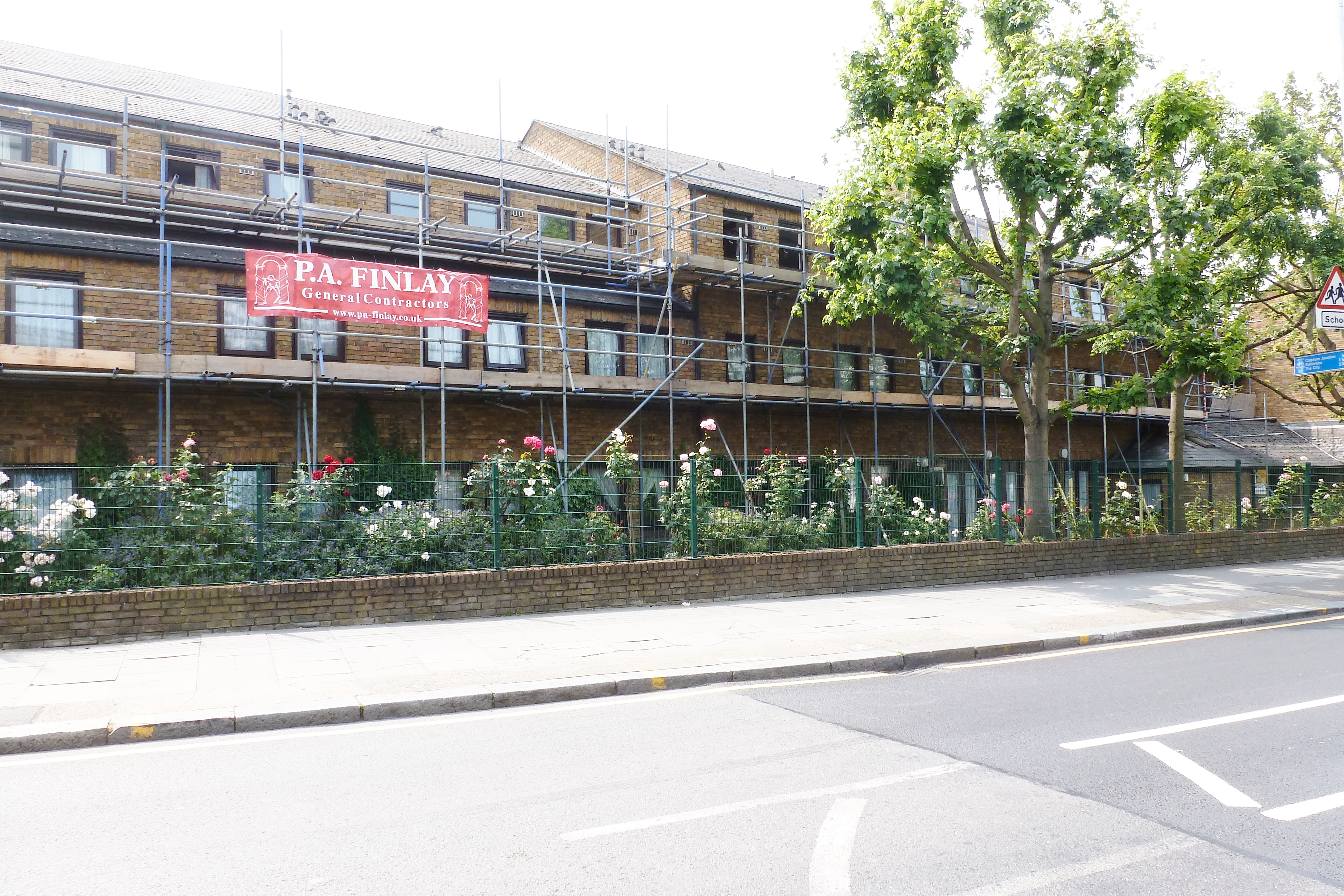 residents of Holmleigh Court in Plough Road and on the 20th the residents of the Carey Gardens Pensioners’ Centre. On each occasion we spent a pleasant couple of hours discussing everything under the sun, including the refurbishment of Holmleigh Court’s windows, which are currently being worked on as you can see from this photograph.
6 On 16th June Battersea Labour Party members were at a barbecue to meet the 17 potential candidates to take on Jane Ellison at the next General Election. As you know I don’t talk political party matters in this newsletter but I thought it would be of general interest to everyone, including Jane who I know reads my words with keen interest (Hello Jane), to know that Battersea Labour Party will be making its choice in July. Candidates that many of you will know include Sheila Boswell, currently a Tooting councillor, Sam Heath, formerly a Latchmere councillor and GLA member, and Will Martindale, Martin Linton’s agent in the 2005 General Election.
7 The Housing Committee on the 19th June was packed with long and rather technical papers, which were largely of interest to those who love the minutiae of Committee life. But there were a couple of interesting changes. First the Council is trying to redress the balance in the housing waiting list between “need” and length of time on the list. This is not a simple question – ask yourself whether you think length of time on the waiting list is more important than needing a ground floor flat, say, because you can’t manage the stairs and there is no lift in your block. Well, for good or ill, we decided to give slightly more points than we have done previously for time on the list.
Secondly the Council is looking to increase the supply of private rented accommodation by helping to fund housing associations to build and provide properties to rent. Not sure exactly what I think about that. Before Mrs Thatcher more or less put a stop to building council houses it would have been unthinkable for Councils to pay others to do it instead of doing it themselves. However, “the times they are a-changing” and this long overdue initiative is better than doing nothing.
8 The main items of interest on the Strategic Planning and Transportation Committee on the 24th were:-
the adoption of a 20 mph speed zone in West Putney, which I suspect is going to lead to similar zones in the rest of the Borough with Little India being a prime candidate;
further added momentum to the now certain development of the Northern Line to Battersea Park – but not yet to Clapham Junction; and
the planned Crossrail2 plans to link Clapham Junction through to North East London via a high gauge underground rail-line – but that will only come in 2030!
9 I was chastised last month for not mentioning the one o’clock clubs, for which a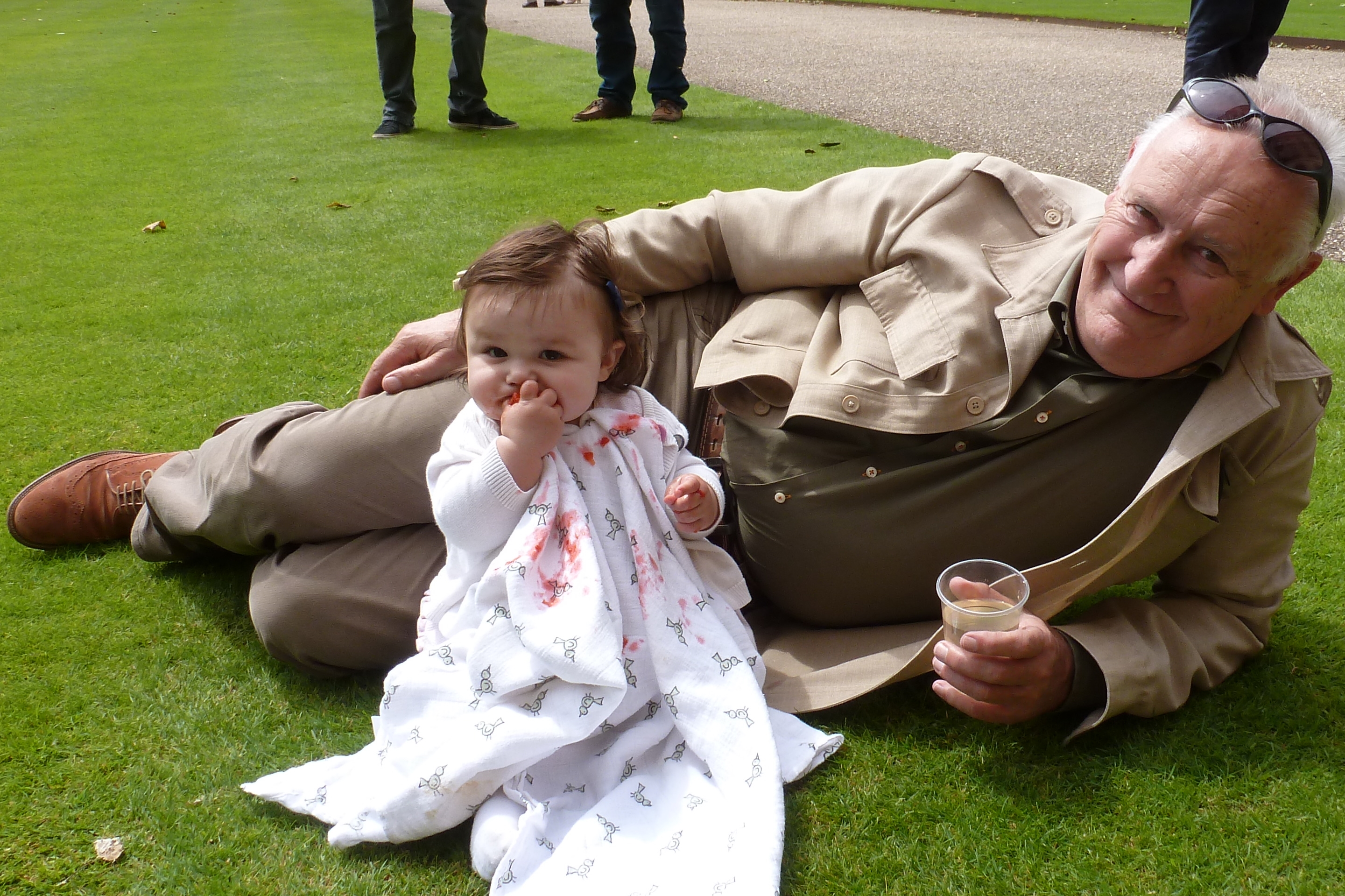 pologies. I should point out, however, that I am writing “my” monthly diary as a Latchmere councillor, in which Council events feature highly but I am not writing a complete authorised news coverage of the Council. However, I am sure that you will be pleased to hear that, thanks to the campaigning of many parents, mainly mums of course, with some little support from Labour councillors, much of the one o’clock club service has been saved – but unfortunately not the one in Battersea Park.
10 And finally I went to a friend’s garden party and thought I’d just put in this picture of me and my “grand-daughter” Scarlett.
My Programme for July
1. The Planning Applications Committee on the 3rd July has some interesting items on the agenda but that’s for next month.
2. I have an important Battersea Park School Governors meeting on the 8th of which again much more next month.
3. On the 10th July we have the final Council meeting before the summer break..
4. On 20th July Battersea Labour Party members will be at the York Gardens Library to choose our champion (Prospective Parliamentary Candidate or PCC as they are called in the trade) to oppose Jane Ellison in May, 2015. Do we need a female candidate to oppose a female MP? Or is it actually better to have a man? Or is this old fashioned gender politics and it doesn’t matter just as long as we have the best candidate – that is my position. Well by the end of the month we will know what the local Labour party has decided – Oh, and by the way, just in case you are captivated by the news stories about Falkirk let me assure you that it will be our members and not some outside party (trade union) who will decide.
5. Oh, and I might be away on hols by the end of the month!.
Have you heard of the London, Chatham and Dover Railway Tavern?
This pub was popularly believed to have the longest pub name in Britain and it was here in Latchmere ward until quite recently. This picture of shows it as it is today, simply 43 Cabul Road, opposite the back entrance to the Sacred Heart Primary School. But it was a pub well into the 1970s and maybe much later than that.
You may well ask how did we get a pub with a name like that. Well as the expansion of the railways grew apace around about the middle of the nineteenth century, the towns of north and east Kent, places like Ramsgate and Margate, between Chatham and Dover, were concerned that they were being left out of the rail revolution that was linking Brighton, Eastbourne, Folkestone and Hastings to London. They got Parliamentary approval to start building in the late 50s, the London, Chatham and Dover Railway (LCDR) company became a public entity in 1858, the link to Victoria came in 1860 and Wandsworth Town station was opened in 1861.
Why all the railways bound for the south west should terminate at Waterloo, in south east London, and all the trains for eastern Kent come into Victoria in the south west (though some do go to London Bridge) is I am sure a fascinating study. But in summary, many private railway companies competed for access to London and instead of the tracks being part of a nation-wide plan, they were a random chance of land deals and the availability of sites. The end result was known as the “Battersea Tangle”, a nineteenth century version of our modern Spaghetti Junction on the motorway system, just north of Birmingham.
Although not originally planned, it became necessary to build a junction at the heart of the “Battersea Tangle” and hence we have Battersea Junction, incorrectly known as Clapham Junction, the biggest junction railway station in Europe (it used to be the biggest and busiest in the world but I suspect some Tokyo stations now rival it).
Unsurprisingly Battersea became very much a railway town. Indeed the Chatham, as the LCDR was known, not only ran through Battersea but later developed their major engineering works at Longhedge, near the current Stewart’s Lane Depot. Most of the railway workers lived very close to their jobs and hence it was perhaps not surprising that when a new pub was opened in the late nineteenth century it called itself the London, Chatham and Dover Railway Tavern.
Councillor Tony Belton’s Latchmere June Newsletter (# 50)
May highlights
1. You will recall that last month I wrote about Grant Road exit from Clapham Junction station being kept open and the installation of a temporary bus-stop opposite Battersea Park School. Well I am afraid that one reader tells me that the Grant Road exit has been open until 1 am for years and TfL have completely failed to install the temporary bus-stop. So much for boasting of achievements before they are delivered! But more seriously TfL is extremely unresponsive to us the public and our demands. I must continue to chase them up.
2. I did not mention it last month because it would have been tempting fate but on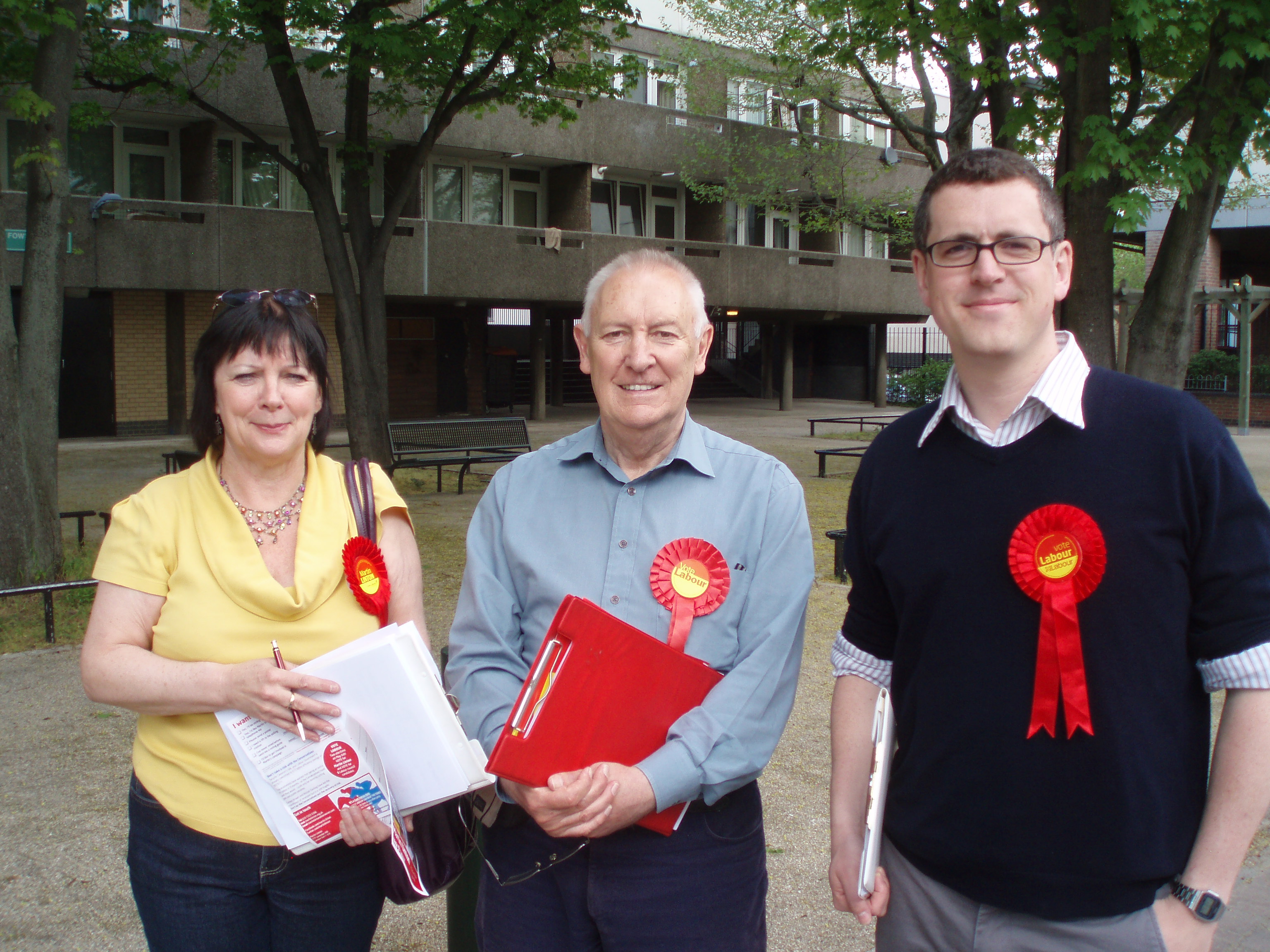 May 11th the Labour Party selected its candidates for next year’s Council election. I hope that you are as pleased as I am that we three, Simon Hogg, Wendy Speck and I were re-selected and will be standing as your Labour candidates next May 22nd. Here we are outside Fowler Court in May, 2010.
3. Do you know the Mercy Foundation? It is a newish charity, maybe two years old, established by and paid for by Victoria Rodney. It is situated behind the Prince’s Head on Falcon Road. It was established to provide IT classes for local people, who have not had the benefit of further and higher education. But it has also become a kind of drop-in centre for plenty of “difficult to reach” locals. Well on the last few Tuesday mornings I have been there and taught English to a class of largely Somali women. And last Tuesday two more volunteers dropped in. There are far worse things to do if you have any spare time!
4. I went to a guest lecture from the poet laureate at Roehampton University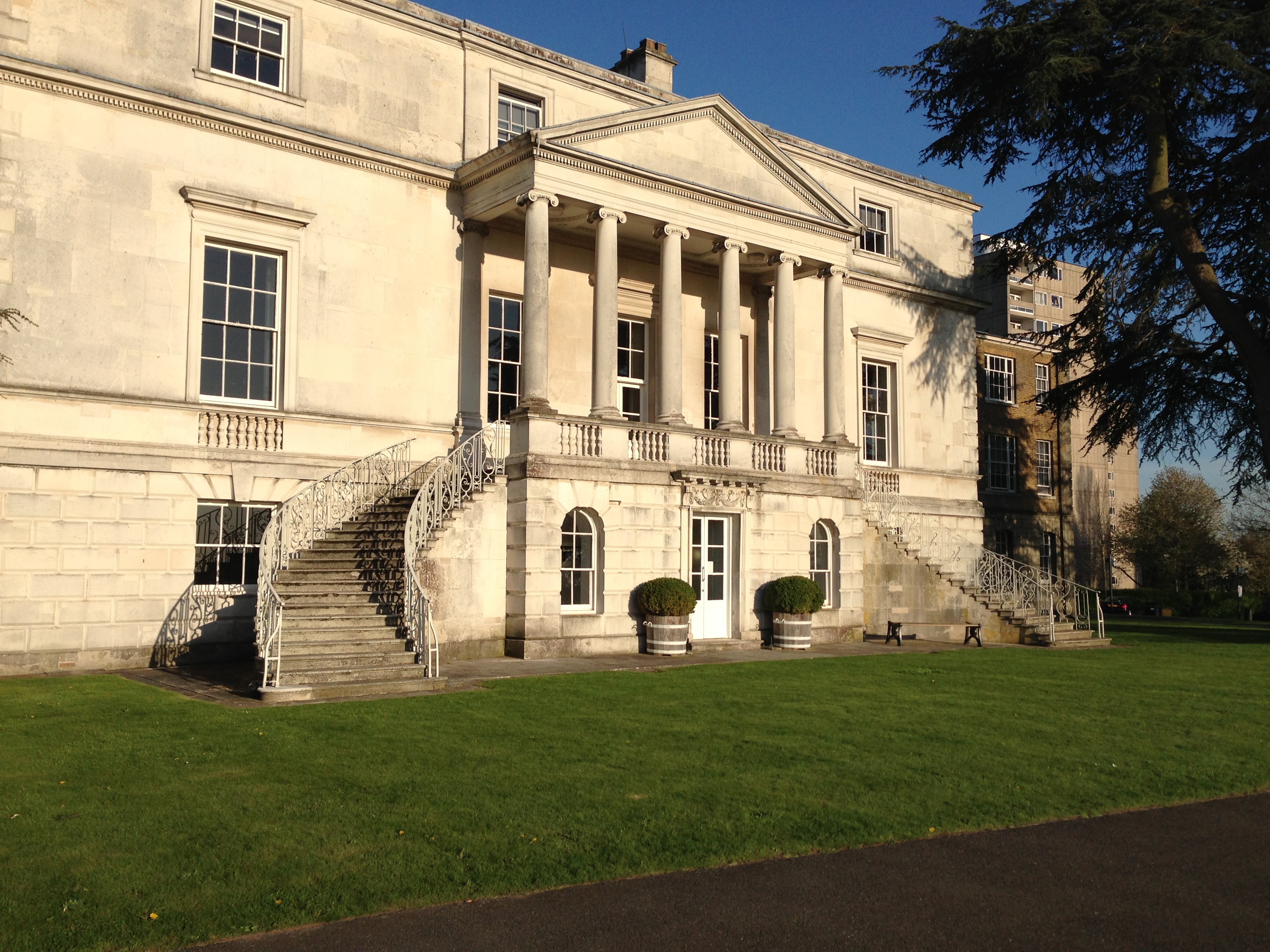 on 1st May. It was a wonderful evening in this terrible spring and the lecture was in a grand eighteenth century mansion, called Parkstead House, with a simply beautiful view over Richmond Park, even if the lecture was not quite my cup of tea. But what I did not know was that Parkstead House, pictured right, was where Gerard Manley Hopkins, the nineteenth century poet worked and studied.
5. To be honest there was not a lot to talk about in May indeed even May’s Planning Applications Committee on May 8th was low key. There were no Latchmere applications and indeed very few of anything other than very local significance.
My Programme for June
1. I am leading a history walk on 1st June at 11pm (not 2 pm as stated last month) as part of the Wandsworth Heritage Festival. It costs £10 per head and I guarantee that I will teach you something about the neighbourhood that you don’t know. Kids are welcome and, of course, free. We start on the corner of Albert Bridge Road and Battersea Park Road right opposite the Latchmere pub. If you are thinking of coming then please email me – nice to know the numbers to expect.
2. There is a Planning Applications Committee on the 6th June, which unfortunately is the same evening as the Police’s SNT (Special Neighbourhood Team) – so I will have to miss that.
3. We are going to try and hold a councillors’ surgery in the mosque next Friday or Saturday.
4. The Big Local Group is meeting on 10th June at the Wilditch.
5. I have the Housing Committee on the 19th June and Strategic Planning and Transportation Committee on the 24th.
Did you know?
About Elizabeth Braund, who died on 20th May at East Shallowford Farm. I didn’t know much about her either but I know a bit more now. In this picture Elizabeth is welcoming a visiting group of Battersea boys.
In May I paid a hurried visit to the Providence House prize winning. Providence House Youth Club is right next to the busy Falcon Road/Este Road bus-stop. It was started by Elizabeth in the early sixties at the time when the old north Battersea was being demolished and replaced by the many tall blocks so well known to us in Latchmere today.
Elizabeth knew that the wholesale demolition of communities, as well as old, bombed out slums, was likely to be very disruptive to society. This is why she put so much effort into developing the Club. Then she bought East Shallowford Farm on the edge of Dartmoor as a place to take Battersea kids down on the farm. It had to be Dartmoor because the Home Counties were she thought too tame and the youngsters needed just a bit of adventure and Dartmoor was the nearest wild place to London. In this rather indistinct picture she is welcoming some of the youth club members on a visit to the farm. You can read about it by looking up her name, or the farm’s, on the web.
And here are four club members admiring her picture at a recent event at the club.
Robert Musgrave of Providence House writes: “It is the end of an era for Providence House. Around 1960, Elizabeth Braund first started the youth work in the old Providence Chapel before today’s housing estates were built.
In 1970 she opened the present building on Falcon Road to consolidate the work with young people and families. In 1975 the new adventure to Dartmoor began, with the opening of East Shallowford Farm in 1976.
On Monday 20th May 2013, Elizabeth passed away at her home, East Shallowford, just 3 weeks short of 92 years. Her legacy is in the lives of countless Battersea and Wandsworth families.
It is the end of an era. A new era begins.”
Peter Ackhurst
- Peter by Brenda Holtam, 2011
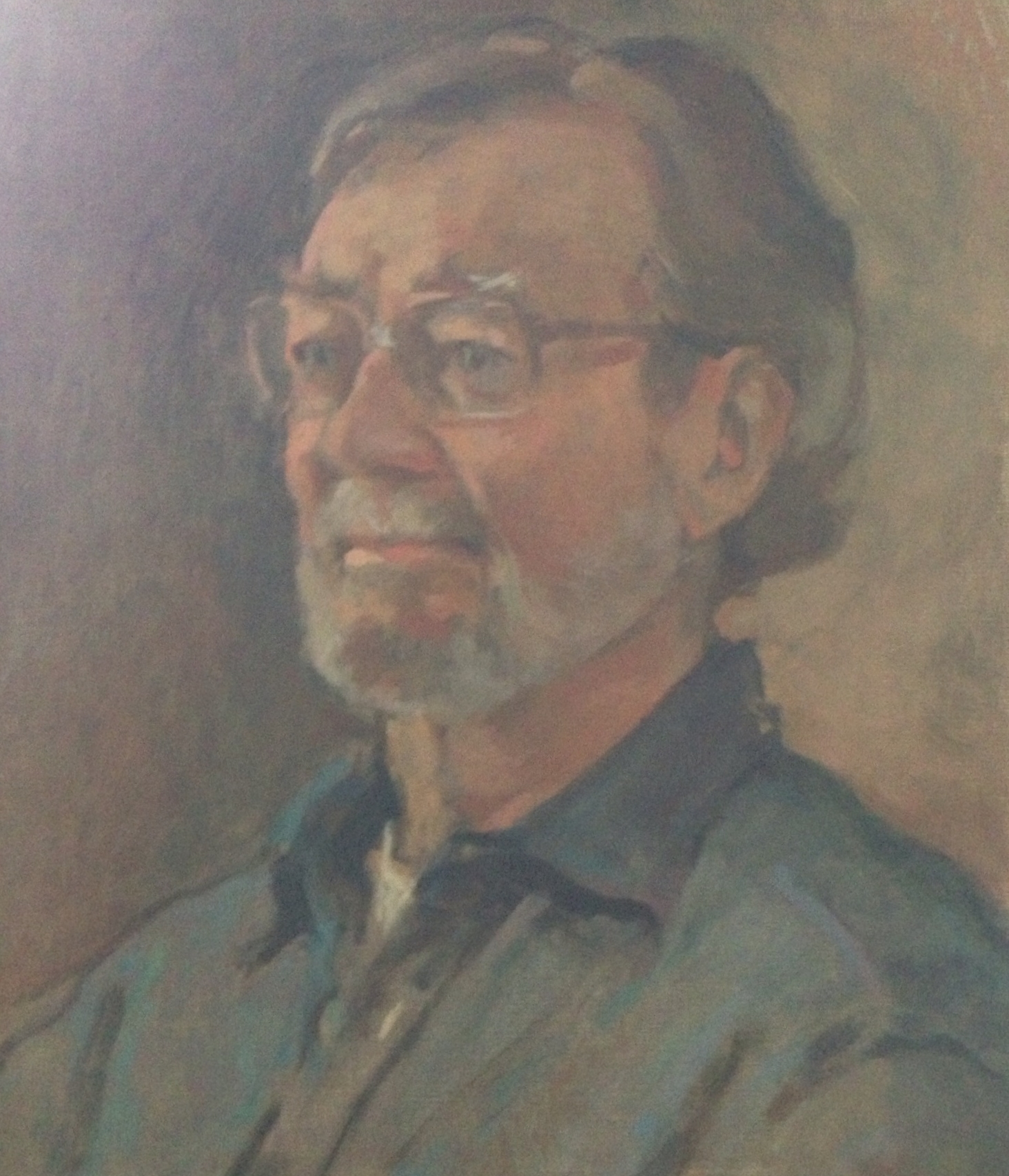
Peter Ackhurst (7th March 1935 – 4th June 2013) died peacefully in his sleep on 4th June. Peter was born in Louis Trichardt township, Limpopo, South Africa on 7th March 1935. His early life was spent in the more hard-line Apartheid provinces of South Africa, the Orange Free State and the Transvaal but when he went to Rhodes University in the Eastern Cape his rather more liberal tendencies came to the fore, so that by the end of his student days he was the national secretary of NUSAS, the National Union of South African Students. This was not like being the Secretary of GB’s NUS. NUSAS was in conflict with Boss, the Bureau of State Security, the powerful, one might say thuggish paramilitary wing of state apparatus. Peter as the General Secretary of a students’ union was under suspicion and observation; he felt he had to get out but for a time he could not get a passport, but eventually the regime relented and Peter came to UK in 1955.
I knew a couple of white, anglophile SA students, who escaped from South Africa at about this time. Some had seen enough of politics and never raised another political fight of any kind but not Peter (or his near contemporary, also Putney resident, Peter Hain). He joined the Putney Labour Party (PLP) in 1963. It was good timing. The constituency had been Conservative since it was created in 1918 and it was part of the old Metropolitan Borough of Wandsworth, which had again been Conservative since its creation in 1900.
But then Hugh Jenkins won the Parliamentary seat in 1964 and a year later the Borough was merged with industrial, working class Battersea and for the first time Putney had both a Labour MP and a Labour Council. Seven years later Peter stood for the Council in the then fairly safe Labour ward of Fairfield. He was part of a team of young Labour Party activists, led by Putney agent and sitting councillor Ian McGarry, who not only worked to find seats for themselves in winnable wards, but together as a team to make sure that their friends and political allies were equally likely to get elected.
In May, 1971, Labour had a massive victory winning 54 of the 60 Council seats. And so began a very exciting and turbulent seven years, when the Motorway Box was defeated, a massive programme of housing construction was maintained, Wandsworth got a modern social services system and some semblance of a planning system. The Thames and Wandle walkways were begun; parks were built; the Battersea Arts Centre was created and many other bold initiatives taken.
But there was also the battle over Ted Heath’s Housing Finance Act, when Labour councils took on the Government over the ultimate control of council housing. The Government was bound to win. Labour Councils made the great mistake of taking on superior forces on a battlefield of the Government’s choosing. The radicals lost, resigned their posts, took them back again within a year, but had lost their enthusiastic innocence – and the balance between local and national government was destroyed, possibly never to be regained.
During this time Peter was Deputy Leader of the Council, 1972-75, Chair of the Highways Committee 1971-72 and Chair of Policy and Finance 1975-78. Putney parking schemes were for ever etched on his mind as an unwinnable fight.
Peter was a man of great charm with a lovely voice – he was always a delight at any social gathering, with a story or an argument for every occasion. He could be irascible and bad tempered but had the wit never to remember an argument the following day. His deafness became a bit of a social handicap in later life. He was a terrific and inventive cook and never seemed so much at home as when cooking for friends and an extended family in a Lake District cottage or his large kitchen diner in Holmbush Road.
One of his greatest gifts was his extended family. His wife’s first husband is as concerned about Peter’s kids as he, Peter, is for Annie’s children by her first husband. They all play and occasionally work together and there is no doubt that Peter has been the pivot of that family network.
Peter was a keen and gifted amateur artist; professionally an architect; a much loved boss who finished his career as a Director of (was it?) the Housing and Development Department of Hammersmith and Fulham Borough Council. He was full of plans, but usually found life too absorbing and full of diversions to give him enough time to convert them into reality.
He was a personal friend, and a holiday companion a dozen times when we played appallingly bad golf together and fought over bird sightings and then talked of the day over bibulous suppers and a cigar – or two.
I will miss him as will his wife Annie and children, Stephen and Gillian, and all of Annie’s family – and many others.
Faith, Fools’ gold – a modern disaster?
In today’s paper (The Observer, 26/5/13) a front page story shows a majority of Britons believe that we are bound for a clash of civilisations between the Moslem minority and the majority British indigenous population. One “civilisation” is characterised by faith and the other by a kind of secular broad Anglicanism.
A simplified historical analysis suggests that Europe was riven by religious wars in the sixteenth and seventeenth centuries, until they learnt better and slaughtered each other for nationalist and imperialist reasons instead. In Britain religious strife was the underlying cause of executions, conspiracies and murder let alone Civil War and regicide. Then in 1689 the Act of Toleration, allowing freedom of religious worship – even if at first only for most Protestants of whichever denomination, started a process of freedom for all religions, leading to the largely secular and tolerant society of late twentieth century Britain.
But even these islands suffered a little from religious intolerance. In twentieth century Ireland, the south saw the largely peaceful but very damaging emigration of the relatively affluent Protestant population; and much more notoriously in the north the so-called “Troubles” have destroyed lives and communities. And religious conflicts have often surfaced in cities such as Liverpool and Glasgow.
In Britain, one of the curious by-products of religious interests and a conservative society was, and is, the existence of so many C of E and Catholic schools, especially at the primary level. Originally a messy typically British compromise, to buy off church opposition to compulsory state education, it was a compromise never seriously questioned except by some of us on the left in the sixties.
Church schools remained a curious feature of this very secular society. They are even more of a curiosity when compared to the overwhelmingly secular, state schools and schooling system that reigns in far more religious countries, such as USA, France and Germany.
As it turns out the failure to resolve this clearly illogical policy left secularists, like me, in a weak position when faith resurfaced as an important feature in post-Thatcher years. The argument that C of E schools didn’t really matter as all they taught was a very secular kind of bible study and good manners was pathetic against the demand for equality from other religions.
Suddenly local education authorities had to create SACREs (Standing Advisory Council for Religious Education, Education Act, 1988). I was one of the members of Wandsworth’s first Sacre as a “protesting” humanist! And then came Tony Blair!
Under him, we got faith schools and now with the arrival of Govite free schools, a mechanism designed to create a thousand different types of school – what a Maoist Government we have! Suddenly just as religious strife hits our streets in more and more dramatic fashion, with bombs, knifings and vandalised mosques, we are creating separatist education. In Wandsworth, we have an Islamic primary school, a new Catholic secondary school on the drawing board, a new Anglican secondary school now a decade old, and just approved a new Jewish school.
Surely it is one thing to celebrate difference but quite another to cement separate development worthy of Ireland, South Africa or Palestine. It is surely time for us humanists to gang together with tolerant and sensible members of other faiths to defend and fight for secular education for all.
Social Media, Blogs and political parties
Ever since the 2008 Obama campaign it’s been a sine qua non of English speaking politicians that parties and individuals must have excellent social media skills. Go canvassing, run a street stall, kiss a baby but make sure you get the story on Twitter and the picture on Facebook. I hear plenty of rationalisations for this behaviour with my favourite being that it scares the Tories witless – we seem to have a low opinion of our opponents’ nerve and intelligence and a high opinion of just how newsworthy our stories are.
Which is not to say that I don’t think that social media has its role, but just as Facebook seems to have peaked already and lost some of its appeal, I suspect that Tweeting is going to calm down – after all admirer of Danny Blanchflower, the footballer as well as the economist, as I am I get fed up with his thoughts on sport, the weather and everything else tweeted 10 and 20 times a day.
Tweets seem to me to be superb campaigning and rallying cries designed for elections, announcements and dramatic events – not for everyday stuff like haircuts or canvassing. 99.9% of the tweets I have ever been responsible for announce that I have published another blog entry and that seems to me to be an ideal use.
But the Blog is, I think, of a different order. I am told, repeatedly that my blogs are too long, that people just won’t read them, that they are sometimes boring, but that isn’t the point. They are the modern version of the old essay, as written by essayists. Mine are for my benefit not primarily the readers. If you, dear reader, find one or two of them interesting then that’s great but primarily they provide a vehicle for my thoughts.
But whilst writing this, it occured to me that for a party politician this opens up a hatful of opportunities, and for parties a complex new problem.
For a century democratic politics has struggled with the problem of communicating with the electorate. This struggle has largely been “avoided” by the use of party labels. It has been impossible to speak to all the electorate, so we use short-hand. I am Labour, therefore, nice and caring. You are a Tory and, therefore, nasty but better at making decisions.
It is this facet that has led me to justify the party whip and party discipline. Indeed the most frequent use of the argument is in justifying party politics in local democracy. In local elections it is surprising to the professional politicians just how many voters think that there should not be any party politics at all.
And then along comes the blog. No longer is it possible for the party to control what the candidate says to the electorate; or really the whip to control the elected politiican and enforce the party line; or the Electoral Commissioner to monitor expenditure on elections.
Now I can publish my own maybe maverick views and get a level of support for them based purely and simply on my own persuasiveness and the extent of my readership; but so can all my councillor colleagues. What kind of challenge does this pose for party politics. That is, of course, difficult to say right now, but it is almost certainly going to be very profound.
In the States it appears as though the major parties virtually cease to exist for the four years between the national conventions with social media used by the leading candidates to grab funding and then encourage volunteer canvassers. The Tea Party appeared for a time to be the only active force between elections: a strange parallel with UKIP perhaps. Given the still falling membership of British political parties are we going to go the same way?
 Tony Belton
 Tony Belton