Councillor Tony Belton’s Latchmere April Newsletter (# 59)
March highlights
1. Of course it was not until March that the formal Council Tax decision was taken, that is agreed by full Council. But it was a formality and everyone knew what the result would be – a frozen Council Tax. That was pretty much what March was like – a slow wind down in the build up to the Council Election on May 22nd. Indeed the Council has what is known as a purdah when virtually no “political” business takes place until after the election – except of course the Planning Applications Committee, which like “Ole Man River just keeps rolling along”.
2. There wasn’t much on at the Planning Applications Committee either, except for 69-71 Falcon Road. This Halal restaurant is clearly very popular with its customers but is not as popular with its neighbours, who complain about the timing (and therefore noise) of its operations and its waste clearance record. Some of the neighbours are angry about the Committee giving the restaurant permission but the Council was in a bit of a jam. The application included improved waste procedures and a better smell extraction duct. The Committee could hardly refuse improved storage and effective extraction units when they were the main causes of previous complaints.
The Committee insisted, for what it was worth, and I know some neighbours do not think it worth much, that the restaurant will be closely watched by planning inspectors.
3. The other day, walking along Falcon Road, I looked, truly looked rather than just glanced, at the entrance to the Falcon Road Estate. The one right down by the railway bridge, next to the bus stop and opposite the bus garage entrance. Here is a picture of it. I think it’s truly spectacular and a mark of what residents can do given the right kind of project. Have a really close look next time you pass by and feel inspired to do the same to your garden, or estate.
4. A number of constituents have asked me about the piece I wrote on the Bike docking stations and whether I could provide an update – well, I can. The Town Hall provides them to me, if I ask, on a monthly basis and I now have both January’s and February’s figures and can draw a few comparisons and conclusions. January is, of course, 6% longer than February and this year they were both about as wet and cold (or not so cold) as each other and so they are quite good comparators. Overall, the February usage of the bikes at 22,979 was 7% higher than January’s. The range of usage is quite large with over 1,000 usages at Falcon Road, Albert Bridge Road and Queen’s Circus and less than 100 usages in Stewart’s Road (Nine Elms) and Manfred Road, Putney. Although these figures appear quite high to me when you divide them by the numbers of days in the month, then one can wonder at the cost of this scheme.
So for example the usage at Manfred Road is just over 3 a day, which given the cost of the installation means it will be years before there is any real pay-back. We know that the docking installation costs were over £2 million. We also know that Barclay’s Bank has NOT sponsored the scheme to anywhere near the extent that Mayor Johnson (I’m not calling him B…s!) hoped. And we also know that TfL is being very secretive about the running costs. But the truth will out over time and although, I think the bikes are a great idea, I do suspect that TfL has gone over the top a bit on implementation.
As far as Latchmere is concerned, I think it is fairly obvious with a total usage of 759 in February that the Grant Road triple station is far too large for the demand. The contentious station in Fawcett Close with 206 had a large 57% increase in usage over January figures; the equally contentious station in Usk Road had a 52% increase from 162 to 246. Will demand continue to rise or will familiarity breed contempt? Interestingly, with the exception of Falcon Road, the really large usages are very near to Battersea Park. Is this because people want to “give it a go” with a ride round the park or does it demonstrate a substantial commute to Chelsea?
5. From my canvassing for the Council Election, it is clear that the regeneration of the Winstanley and York Road estates is causing considerable concern, not to say distress. One lady, living on her own, told me that she had moved in when the flat was new, in 1956 I think she said. She hated the idea that her flat might be demolished. As far as she was concerned it was her home and she loves it; it was where she had brought up her family and lived with her husband. Now her husband is dead and the kids have fled the coop but this was and is her life and the Council wants to demolish it. It is pretty important that we, the Council, get this one right.
The general strategy has been agreed by the Council, and the Housing Department staff are now on the estates consulting about it. And it is quite right that they should be advising and consulting with residents about the Council’s intention to demolish some of the York Road Estate and replace it with new build. But what I would like to make clear is that NO final decision has been taken yet on any single issue, and indeed there are powerful arguments against some of the suggestions. So if residents want to fight and campaign against the Council’s plans, they should not give up but they should make their voices heard loud and clear.
It is strange that, given the general distrust of the word of anyone in “authority”, that when it comes to one relatively junior officer saying that the Council has a plan to demolish this block, that comment is taken as a definite fact. Let me repeat, it is a plan and plans change as circumstances change, as opposition or support strengthens and weakens and as opinion is clarified. Some or even most of the Council’s plan will happen but I could almost guarantee that it will not happen exactly as is planned. If you can get all your neighbours to oppose one element of the plan then you will probably win the argument. If you can’t get anywhere near 50% to agree with you, then you won’t win and you won’t deserve to win.
6. Last month I wrote about the worrying report from London Sustainability Exchange (LSx) about air pollution in Battersea at levels 5 and 6 times higher than European Union targets. I said that the worst pollution of all is under the Falcon Road railway bridge. Well following publication of this report the Battersea Society organised a morning of action on the 28th March. Some of us were sent off to interview shop workers to see if they were concerned and others looked for lichens and other plant-life that flourished in clean and/or dirty air.
Others of us attached measuring devices to various road sings so that we can measure levels of air pollution more accurately. Here I am fixing one of LSx’s measuring devices to the bus-stop just by the railway bridge – Yes they do have permission to fix measuring devices to bus-stops. As I said in March, I will be using this research to press for early improvements to the environment under the Bridge!
My Programme for April
1. Of course there is, as ever, the Planning Applications Committee on the 14th. However, for me and my colleagues there will simply be more and more election campaigning. So give us a wave if you see us about – it’s just part of the process! Oh, and as you swear and curse at having your TV viewing disturbed and exclaim that we are all the same, oh and in it only for the money, just give a thought. Would you rather live in a country where the only way to change a government was by war or revolution.
Did you know about Christ Church, Battersea?
Last month I wrote of the modest, modern church in  Christ Church Gardens. I also wrote that its very different Victorian predecessor, consecrated on 27 July 1849, was full of all the confidence I associate with Victorian times. I also said that there is a rather splendid photograph of it in a Wandsworth Town Hall Committee Room. Well, here it is!
Well, the church certainly is very different from its current namesake but the picture certainly isn’t as I then said from the 1930s. A quick glance demonstrates that it is earlier than that. Does anyone know, or can anyone work out just when this might have been taken and let me know. I have my own idea, which I will share with you next month. Oh, and can you suggest who the photographer might have been? I have an idea about that too!
A Taste of Honey
A Play By Shelagh Delaney
I saw the film, starring Dora Bryan and Rita Tushingham, when it was first released in the early 60s. It was yet another story of working class, northern Britain to go along with Look Back in Anger, Saturday Night and Sunday Morning, Room at the Top and This Sporting Life, a healthy antidote to Terence Rattigan and Noel Coward.
But fifty years later the striking feature of A Taste of Honey turns out to be its feminine, perhaps rather than feminist, outlook. On reflection the Angry Young Men were at least as angry with their unfortunate girl-friends as they were with being chippy, working class heroes. Jimmy Porter is callous towards his wife as he looks back in anger; Arthur Seaton is casually chauvinist both on Saturday night and Sunday morning; Joe Lampton is carelessly dismissive of girlfriend and mistress when searching for room at the top; and Fred Machin finds his landlady more complex to manage than the rawness of life as a rugby league footballer.
But in A Taste of Honey Shelagh Delaney’s men are at the same time both sideshows and more varied than the angry young men. There is the gentle, charming but transient black man – Josephine’s lover; Peter, mother Helen’s feckless, drunken, debauched husband/lover and the more interesting gay Geoffrey, who shows an inclination to stay the course as Joe’s friend but does not have either the toughness or courage to manage it.
No, the women are the heroes. They are unsentimental, tough as old boots, far from totally admirable, but they are the stuff of life and continuity. They will bear and manage the child to come. They are what makes working-class Salford work, in this rather grim portrayal of 1950s Lancashire. They reminded me of Ma Joad in The Grapes of Wrath, the epitome of tough women in a tough world.
That Delaney could write such a play, her first, at the age of 20 having seen a Rattigan play at the age of 18 in her first experience of the theatre and concluding that she could do better makes her exceptional. That she could write it in 10 days having left school at 15 makes her a phenomenon.
With two leading female parts, Joe as the pregnant teenager and Helen, her licentious, irresponsible mother, and its handling of racial and sexual diversities, Delaney’s play was certainly not the standard fare of the British kitchen sink drama of the 1950s. It was rather a precursor of a more diverse society shaped by industrial decline and a search for new values. I thought, with only my memories of the film, that it was probably not going to be very relevant to today – I was wrong. It is of a different age but it is relevant and well worth a visit to the National’s Lyttelton Theatre.
The production itself was not, however, quite up to the play. The staging and the direction were up to the National’s normal high standard even if the revolving stage of miserable working-class Salford, interior and exterior, was predictable. The acting, however, did not quite ring true. Lesley Sharp was more arch than I would expect the feckless Helen to be, and whilst her Mancunian accent did not need to be perfect, it sounded a bit mid-Atlantic to me. Kate O’Flynn’s Josephine was certainly not self-pitying but somehow not engrossing either.
The male parts were relatively minor but Harry Hepple as the gay Geoffrey stole the acting honours. His was no caricature but a sensitive account of what it might be like to be a gay, would-be father and caring confidant in a brutally macho world. That Geoffrey could not stand the pressure did not come as a surprise.
Overall, Shelagh Delaney brought a new voice to the theatre and to the interpretation of women’s role. She deserves to be re-instated as a star of the theatre and given a larger, very working-class part in the feminist pantheon.
Councillor Tony Belton’s Latchmere March Newsletter (# 58)
February highlights
1. For many of you, February’s Council Tax decision will be the most important news of the month. It will not be officially confirmed until the Council Meeting on 5th March but the decision has been taken to freeze it at the current level. Actually many of you will know that this is the third year in a row that it has been frozen. Actually this is no great surprise as Government nowadays gives a grant of the equivalent of 1% of Council Tax receipts, if your Tax is frozen, whilst, if it were increased by 2%, then the Council would have to go to a referendum to levy it! I don’t think that many will do that although Brighton Borough Council is debating increasing it by 4.75% and triggering a referendum – bet they don’t! But good luck if they try it!
2. Of course freezing Council Tax comes at a price! With Government grant falling by £18.5 million this coming year and, according to the Director of Finances estimates, over £20 million next we are going to see plenty of cuts, a continuing increase in Council fees (the ones that many will be familiar with are parking fees and fines) and redundancies at the Town Hall. In February, for example, over 60 Town Hall staff have been made redundant. Clearly some services are likely to suffer and we will no doubt see by how much.
3. One thing that will not be affected, however, is progress on the so-called regeneration of the Winstanley and York Road estates. The general strategy was agreed at the Housing Committee on 25th February. In the coming months the Council’s housing people will be talking to everyone in the main blocks due for demolition, namely Pennethorne, Scholey and Holcroft about their re-housing requirements. But don’t expect immediate signs of demolition! The residents need to be re-housed in new flats designed to be built around York Gardens itself and along Grant Road, but they are not yet on the drawing board, let alone started, so it will be quite a while yet. If you are one of these residents and are concerned about your prospects then do get in touch with me and I’ll see what I can do to help.
The news is better for Penge and Inkster Houses. These two blocks all needed re-furbishment, which had been put on hold until the overall plan had been agreed. Now that can go ahead but, again, don’t expect work on site tomorrow. Specifications have to be drawn up and tenders received before that happens.
The future of Gagarin and Sheppard Houses, and of Ganley Court, along with many of the smaller blocks on the estates is still to be resolved.
4. Many of you will have seen the scaffolding up on Sporle Court, previous page After many years of campaigning and lobbying by residents the Council has at last got round to double glazing the whole block (along with some external decorations and new floor coverings) and not before time. If any of you think that is a big luxury, then let me tell you that life in the top floors of Sporle Court was very noisy and amazingly draughty before – I know I have experienced it. The work is due for completion in June, 2014.
5. On a very different but equally important scale Harling Court, opposite the Latchmere Baths, had security doors fitted some months back. Unusually this work was paid for by Barratt’s the builders of the new Rutherford on the left and Chadwick Houses, which have just been completed on the Travis Perkins site opposite Dovedale 
 Cottages. New residents have moved in and I have written a welcome letter to them. I know some of the Harling Court residents were very unhappy about the building of these new blocks. If you were one of them, then I’d be interested to know what you think now that the work has been completed.
6. I went to the WoW (Women of Wandsworth) organised inter-generational launch and dinner marking the Chinese New Year at Haven Lodge. The point of this lunch was to encourage the meeting and being together of children, mothers and the much older generation of pensioners living in Haven Lodge sheltered accommodation. Here am I with a Chinese resident of the Winstanley.
7. Simon Hogg, Wendy Speck and I, your three Labour councillors, held a surgery in Battersea Fields residents’ hall and if you have any particular issues you would like to talk about then I am doing the regular Council surgery in Battersea Library on 22nd March. But if you are reading this then why bother to wait until then – send me an email now.
8. Moving on to other matters, some of you may have been surprised by the demolition and construction work starting to take place at the Falcon Road Mosque. You may have remembered that the mosque’s last application for extension and growth was refused but forgotten that the mosque had already an approval for a different extension. It is the scheme, as earlier approved, that is now being built.
9. The Strategic Planning & Transport Committee on 18th February was really dull and there wasn’t much on at the Planning Committee, certainly as far as Latchmere was concerned, although some of you will be able to see one scheme, which was approved and that was adding a storey to Falcon Wharf development.
10. Last month I talked about GCSE Success. Well this month I am delighted to announce that this great scheme is getting a £1,885 Big Society Grant and meanwhile the Mercy Foundation at 64 Falcon Road is receiving £2,780. Led by Ella Spencer, GCSE Success is designed to improve Maths and English results at GCSE level for students at secondary school in the Latchmere area. Victoria Rodney’s Mercy Foundation grant is aimed at increasing digital literacy (i.e. IT and internet skills) amongst the residents on the York Road and surrounding estates.
11. And finally a worrying report from London Sustainability Exchange (LSx) shows that air pollution in parts of Latchmere is at levels 5 and 6 times higher than European Union targets. The worst spots are at Battersea Park Road junctions with Albert and Battersea Bridge Roads and, worst of all, under the Falcon Road railway bridge. The levels of pollution are of course also high just outside the boundaries of the ward in, for example, Clapham Junction. I will be using this research to press for early improvements to the Bridge! LSx is, by the way, run by Samantha Heath, who many of you will remember was a Latchmere councillor 1994-98.
My Programme for March
1. There is a Council meeting on 5th March and the Planning Applications Committee on the 18th. However, Council activity is winding down in the period prior to the May 22nd Council and European Elections. The theory is that all of us councillors will be out on the doorstep pestering you residents with personal questions about your political tastes. Actually given my health situation I will be doing it mostly on the phone. Don’t be too hard on us and please don’t slam the door in our face or put the phone back on the receiver. If we do canvass you we will, of course, arrive at an inconvenient time and if we don’t, then we get accused of never talking to anyone. We canvassers can never win! Oh, and most of all don’t tell us we are all the same. To be likened to one of “them” is the biggest insult of them all. So if I call on you remember, that it is just part of the job!
Did you know about Christ Church, Battersea?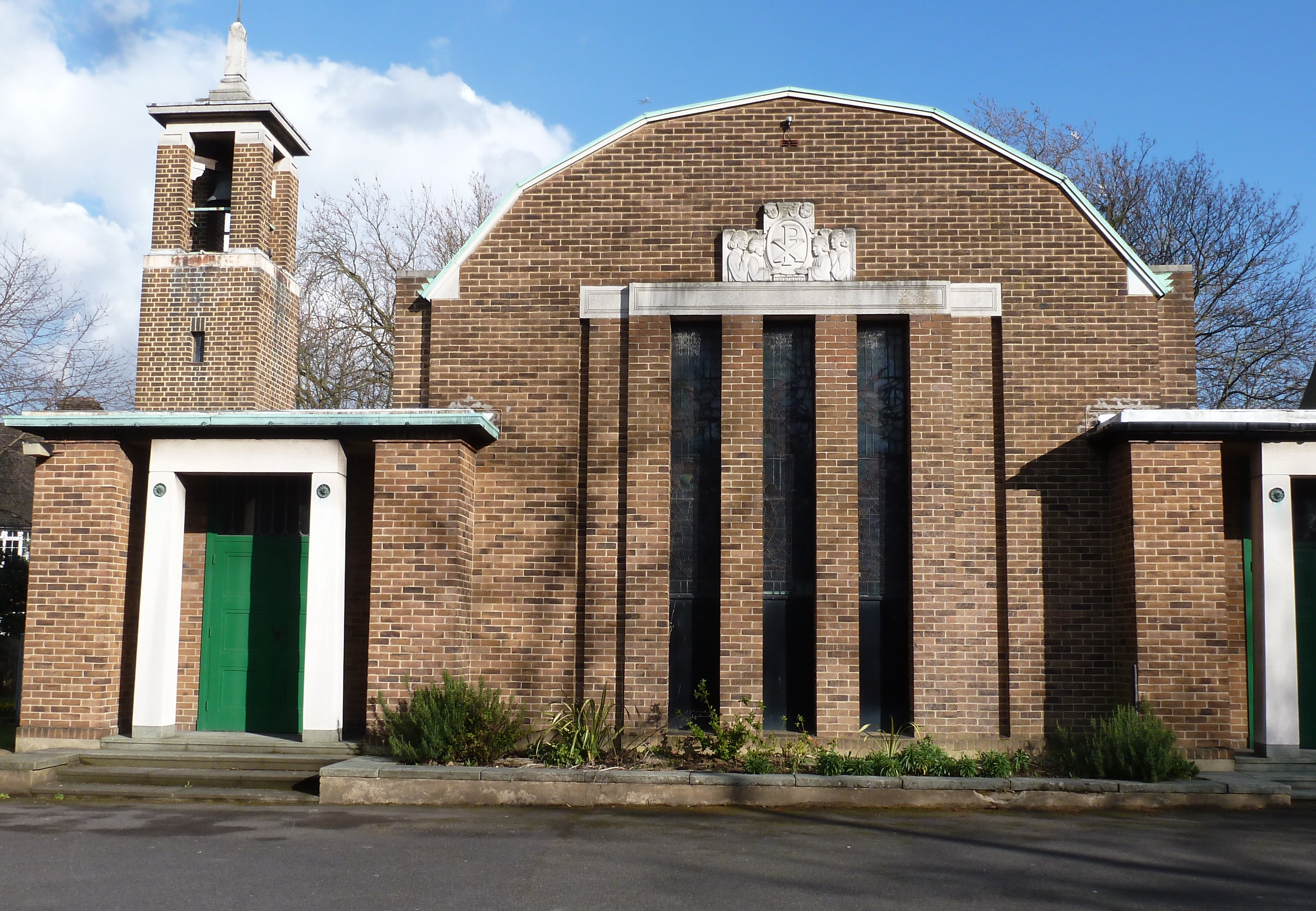
The picture on the right is of the modern church in Christ Church Gardens, which was consecrated in 1959. I wouldn’t mind betting that most of you have never noticed this modest self-effacing 1950s building in its very prominent place at the junction of Battersea Park Road and Candahar Road. Indeed given its prime setting it really is rather too modest.
Well its Victorian predecessor, which was consecrated on 27 July 1849, was very different and full of all the confidence I associate with Victorian times. According to ‘Parish Churches of London’, Basil
F L Clarke, Batsford, 1966, it was a cruciform
Middle-Pointed building with a spire.
There is actually a rather splendid photograph of it and the hustle and bustle of Battersea Park Road in the 1930s in a Wandsworth Town Hall Committee Room, which I will try to get a reproduction of for next month. But in the meantime here is an artist’s representation of it sometime in the late Victorian years.
Unfortunately, the old Christ Church was a casualty of war being obliterated on 21 November 1944 by a V2 rocket, which destroyed both it and the neighbouring vicarage. Christ Church Gardens alongside it now has a little known memorial to the dead of the Second World War and note the magnificent London Pplane tree by the Cabul Road entrance to the church, which must have had a very close escape from the bomb!
Yours sincerely
Tony Belton, Latchmere Labour Councillor
Tony Belton
99 Salcott Road | Battersea | London SW11 6DF
Home +44 20 7223 1736 | Mobile +44 7778 405235 | Skype (TBC)
Blog: https://tonybelton.wordpress.com/
Councillor Tony Belton’s Latchmere January Newsletter (# 56)
 December and 2013 highlights
1. There really wasn’t much to say about December except that I went to the Xmas socials/parties/fairs of the Falcon Road and Kambala residents, the Big Local organisation, Battersea Arts Centre and of constituents Vicky and Jacob – thanks to all. There was also nothing of any great interest at the December Planning Applications Committee, and so with nothing much to say about December I thought I’d pull out my highlights of 2013 as recorded in the newsletters. And here they are.
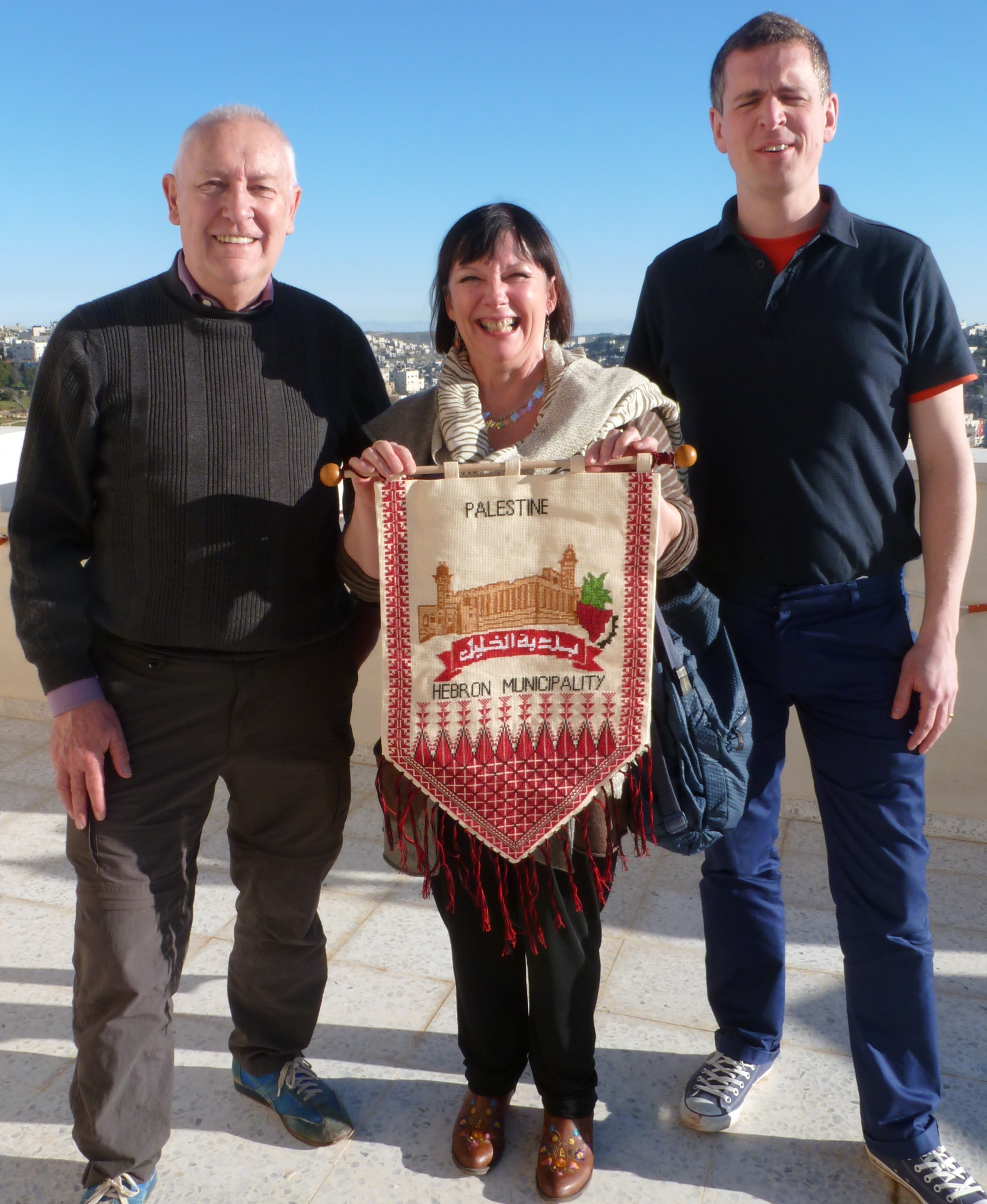
2. No. 1 for me has to be the trip that we three Latchmere councillors, Wendy Speck, Simon Hogg and myself, made to Palestine in February. This, of course, had nothing to do with Latchmere, Battersea or Wandsworth (!) but your three Labour councillors went on this fact-finding trip, purely for interest – and it was certainly packed with interest. Here is a picture of the three of us with a banner given to us by the Mayor of Hebron. (As I said then, before any cynics out there think otherwise, it was all paid for out of our own pockets and had nothing to do with the Cou ncil!).
The trip did give me a chance to take my picture of the year, and here it is – a cactus caught by the flash-light in the Judean desert at sunset, high above Bethlehem – and my was it cold.
3. The most significant ward issues of the year were the Council’s decision to spend up to £100 million on the regeneration of Latchmere and Roehampton wards, of which our share could be about £60 million, the development of the Big Local project in the Winstanley Estate area and the Mosque planning application. The regeneration project is at the stage where major decisions are soon to be taken about the extent of demolition and new build and the Big Local is also at a crucial consultation 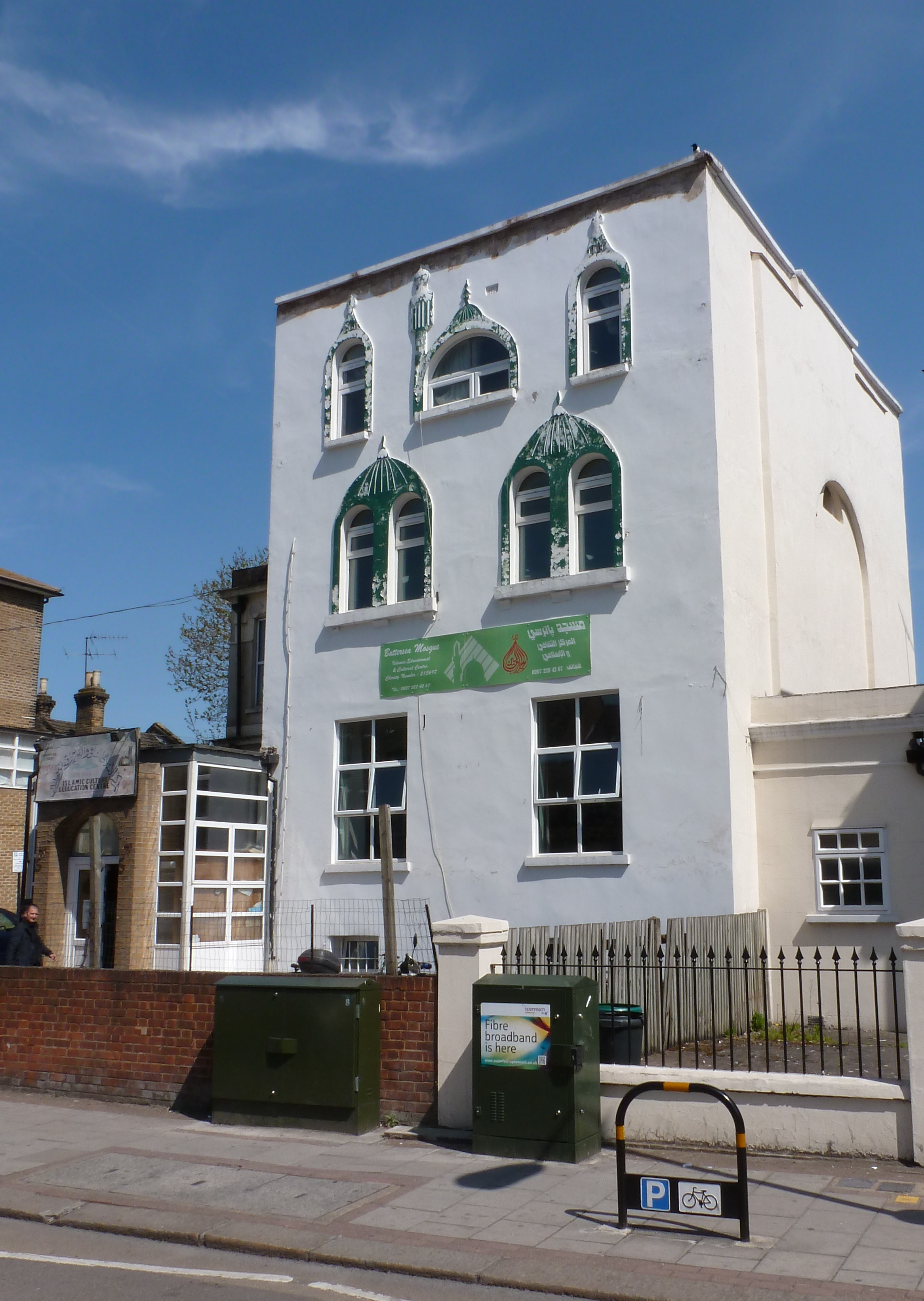 stage. I think we will know much more about the regeneration programme later in January. For some of the problems as well as the potential in the regeneration project, see Tony Belton, ‘All Change North of the Junction’, Battersea Matters: Newsletter of the Battersea Society (Winter, 2013), pp. 4-5.
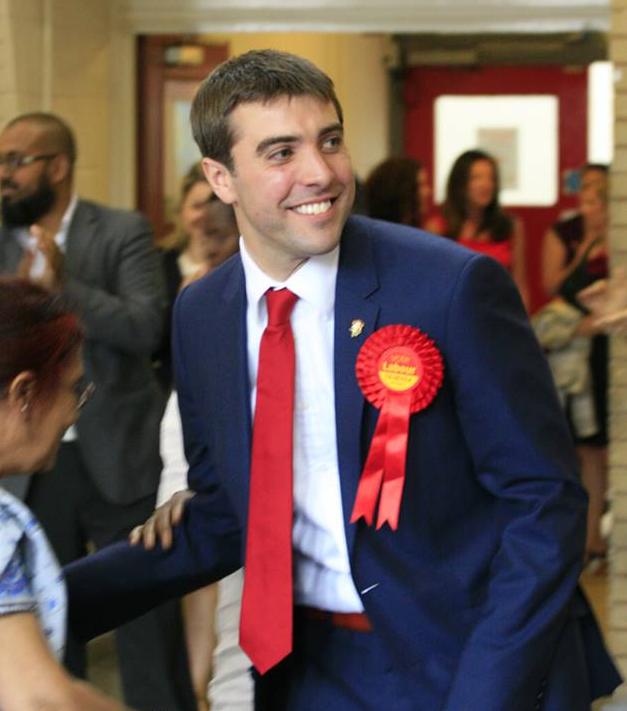
4. In May I was delighted to report that Wendy Speck, Simon Hogg and I were re-selected as Labour’s candidates for the Council elections this coming May 22nd. Two months later my friend and colleague, Will Martindale, was also selected as Labour’s Parliamentary candidate at the General Election in 2015. Here he is pictured after the selection.
5. I was very pleased to take 30 or so local kids to meet the Mayor and to learn something about the Council and its functions. Here they are with the Mayor, and their mentor Victoria Rodney of the Mercy Foundation, on the “marble staircase” in the Town Hall.
6. A sad feature of the year – for me at any rate was the Government’s decision to take Battersea Park School out of the Borough’s control and make it a Harris Academy. As a consequence of this decision I resigned as Vice-Chair of the Governors after more than a dozen years. Rather more important the Head, Gale Keller, also decided to resign as of 31st December.
7. On a very practical level, with considerable support from many of you, I have fought off an idea from Network Rail to close the Grant Road exit from CJ at an earlier time of night; I have got the bus-stop replaced opposite the end of Culvert Road; addressed the Ahmadiyya Muslim Community Eid Celebration in York Gardens Library; dealt with pr obably a couple of hundred cases to do with housing, planning, transport and jobs. I also attended probably about 40 Council and Committee meetings and another 20/30 resident meetings. Wendy Speck and Simon Hogg are equally active in different and complementary ways. Wendy is the Chair of Chesterton Governors and does a tremendous amount in and about the school as well as being a very conscientious councillor. Simon is a policy man and very active in the Committees as well as being very involved in the Winstanley Estate regeneration.
8. And of course my review of 2013 would not be complete without a brief mention of the dreaded streptococcal G poisoning; what a pain, literally, but it is at last showing mild signs of recovery!
9. Finally my Did You Know sections last year were about the Katherine Low Settlement, the Latchmere Estate, Maureen Larkin, Senia Dedic, Darius Knight, Elizabeth Braund, the London, Chatham and Dover Railway Tavern, London’s major transport problem 100 years ago – horse manure; Caius House, Caroline Ganley and John Archer.
My Programme for January
1. On the 9th January I had the Borough Residents Forum, which is actually a bit of a misnomer as by residents is meant Council tenants and leaseholders, and in the week beginning 13th January I have the Passenger Transport Liaison Committee, a Winstanley Estate Steering Group and the Met Police’s Special Neighbourhood Team.
2. The Planning Applications Committee this month is on the 20th and that is followed by the Strategic Planning and Transport and Housing Committees on the 22nd and 23rd.
3. There is also an important Big Local consultation meeting on the 25th at the Wilditch Centre.
Did you know the connection between Maysoule Road and the Victoria Embankment Gardens?
You may remember that in my December Newsletter I had a picture of 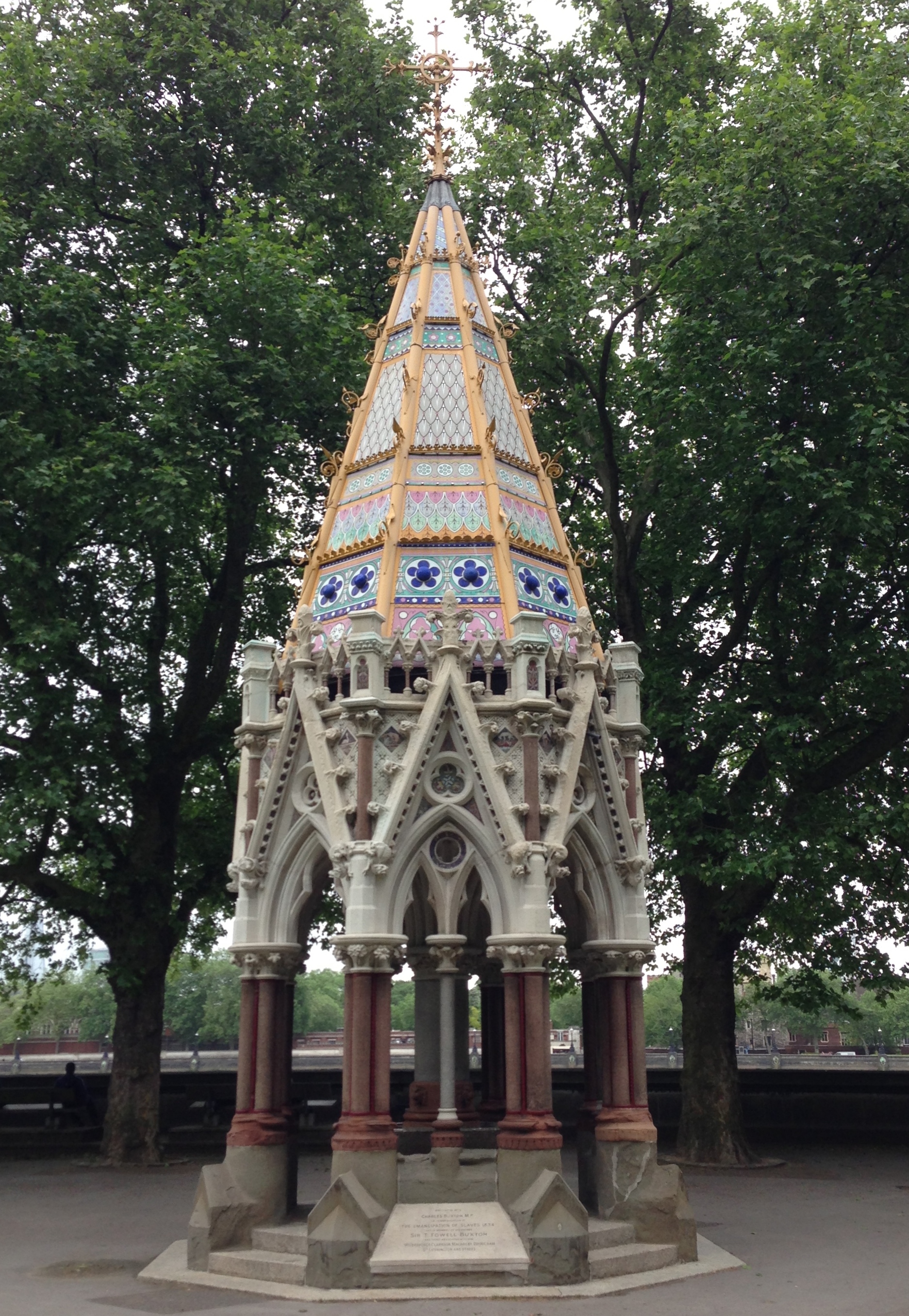 Hyacinth Stone of Buxton House at the John Archer plaque unveiling and that I promised that I would tell her about the connection between Buxton House, Maysoule Road, and Victoria Embankment Gardens. Well here it is.
Not long ago I was early for a meeting in Westminster and so I went for a short walk in Victoria Embankment Gardens. When there I had a look at a monument I had seen before but never particularly noted. Here it is with its inscription. Imagine my surprise to discover that it was a monument to one of the early campaigners against the slavery and below is the inscription.
And of course all the blocks in Maysoule Road are named after many of the men responsible for the abolition of slavery in the British Empire, as it was then. Buxton House is almost certainly named after T Fowell Buxton, who took over the leadership of the anti-slavery cause in the House of Commons in 1825 after Wilberforce retired. Wilberforce, who of course has another Council block on York Road named after him, had succeeded in getting the slave trade abolished in 1807.
But that was the trade in slaves from Africa to the New World. The abolition of slavery in the  British Empire had to wait until 1834 and was achieved under Buxton’s leadership. Charles Buxton was his Liberal (i.e. radical, as there was no Labour Party then) MP son, who had the monument built.
The monument is in easy view for any passenger on the 87 bus into Westminster, on the right immediately after Lambeth Bridge. And you will note the names include Clarkson, after whom another block in Maysoule Road is named.
Twelve Angry Men – The Garrick Theatre
Why would you wish to see this very faithful production of a classic film? Partly, of course, for the bravura ensemble acting, but also, in this cynical age, for its statement of faith in the American (and hence the British) legal system and the implicit trust and belief in the democratic system. The play, an undoubted minor masterpiece by Reginald Rose, a journeyman 1950s TV writer, is a beautifully crafted story of a jury’s deliberations on the guilt or otherwise of an 18 year-old accused of killing his father in a fit of rage and impotence.
For those of us, who have been fortunate enough to have been jurymen (or women) in interesting cases, there will be references, which relate to our own experiences. Some of us may even have felt that we played the part of Juror 8, played exquisitely at the West End’s Garrick Theatre by Martin Shaw and in the film by Henry Fonda. For me Fonda’s film character comes over as a rather pompous, almost saintly figure. Shaw is a much more convincing and far less sanctified and hence a more human character.
The play is, of course, dated. There are no women or ethnic minorities in the jury. The closest approximation is an Eastern European, probably a Jewish emigrant from 1930s fascism, who is both a vehicle for the most explicit pro-democracy speeches and the butt of the most virulently bigoted and prejudiced comments from the “know-nothing”, hard-liner “hang ’em and flog ’em” brigade.
The dominance of white men expresses a truth about the time. Rose wrote the play following his own experience in a 1954 New York jury. But in his play, originally called Thunder on Sycamore Street, the story was about a black family. However, to appease the powers that were on 1950s Broadway, it was changed to what I guess was meant to be a Puerto Rican family (the play is not explicit on this point).
The scene is set in the sweltering heat of a New York summer afternoon. The claustrophobic atmosphere is heightened by the coming storm, after which the play was first named.A big baseball game is dues to start in a couple of hours. At least one juryman has a ticket and so there are time pressures to add to the climatic ones.
The action unfolds with the bigotry and indolence of some jurors, plus a fair amount of apathy, slowly but surely losing out to the voice of reason expressed by others “led” by the Shaw/Fonda character. But it is a close struggle. The message is not exactly hidden, or perhaps even subtle, but it is a peaon of praise for democratic values, whilst at the same time sharply observing how dependent they are upon the importance of “taking part”, of standing up for individual rights and for defending individual liberties. It should be compulsory viewing for anyone intending to take part in political or civil processes – my fellow councillors (not to mention MPs), please take note and go.
Rose is rightly dismissive of one juror, who wants a quick decision so that he can get to the game, and of another, who gets bored with the argument and will go whichever way brings a quick result regardless of whether an innocent man gets sent to the electric chair or a murderer goes free. Rose is not, however, without compassion for the troubled juror 3, who has covered up his own inadequate parenting, by holding out to the last for a guilty verdict. And, for my money, Lee J Cobb in the film and Jeff Fahey at the Garrick take the acting prize. In towering performances they display arrogant prejudice, gradually collapsing and leading to personal, political and moral disintegration.
Finally, it was interesting to note that this classic film, known and seen by millions, had by West End standards a relatively young audience, who gave it a storming curtain call. Rose clearly has a message which many of today’s audience believe still to be highly relevant. And they are right.
30/12/13
The Duck House – a comedy of modern politics, Vaudeville Theatre, 20/12/13
Sir Peter Viggers’ Duck House was almost certain to star in a comedy at some point and here it is in the eponymous play by Dan Patterson and Colin Swash. It appears on the Vaudeville stage along with hanging baskets (Margaret Beckett), wisteria (David Cameron), elephant lamps (Michael Gove), a glitter toilet seat (John Reid) and a massage chair (Shahid Malik).
The star of the show is Labour MP, Robert Houston, played enthusiastically and manically by Ben Miller. The story centres on his attempt to jump the Labour ship as the June, 2010, election approaches, hopefully to become a Tory Cabinet Minister under David Cameron. To do this he has, of course, to appear squeaky clean to Tory grandee, Sir Norman Cavendish.
Houston’s desire for a more sophisticated lifestyle compares the cultivation of his ambitions with the pathetically low aesthetic tastes of so much of the expenses saga – a glitter toilet seat – really! And it therefore becomes a beautiful target for farce especially when Sir Norman’s bizarre sexual habits are revealed.
It’s great slapstick stuff and well worth a visit, especially to see how many of today’s news stories appear in the script. We had amusing references to Nigella’s problems as a witness and to the current “recommendation” to raise MP salaries by 11% and the audience did have fun working out how many particular references they got. But how the German tourists sitting in the seats behind us were doing I couldn’t quite imagine.
But the amount of custard pie thrown at Sir Norman smacked a little of desperation. Both the play and the players found it difficult to keep a consistently high volume of laughs. I rather wonder whether this displayed a difficulty between the two authors. That obviously works well on occasions – see Frank Muir and Dennis Norden but the Duck House left me feeling that sometimes we were watching a not completely happy compromise between a subtle political satire and an uproarious Whitehall farce.
At the heart of the saga is the belief, of course, amongst many MPs (and residents of what Washington would call the Beltway – not exactly the metropolitan elite more the M25 Ringway) that they are under-paid and, since they deserve to get paid more, then clearly it is perfectly acceptable to buck the system. Indeed, as the curtain falls, Miller as the hapless Houston, his career falling apart, makes a very explicit plea for some decent objectivity from the audience.
But surely the problem is that most people do not think of £70K being a very low salary. Moreover, there is no evidence that the pay levels are seriously detracting from the numbers wishing to become MPs. And the script did not look at both sides of what is surely a valid debate. As a result, the audience was left feeling that, if anything, MPs as venal and incompetent as those on stage are over-paid and not under-paid.
Councillor Tony Belton’s Latchmere December Newsletter (# 55)
November highlights
1. Thanks again to everyone asking about the streptococcal G poisoning – slow improvement but not brilliant prognosis is all I can say at present. Maybe a knee replacement is called for!
2. I never like to resign. I always think it better to stay in the battle fighting away for one’s corner. But I am afraid that the saga of Battersea Park School (BPS) just became too much! When the Board of Governors are, in effect, ordered to vote for the school to be made a Harris sponsored Academy despite being overwhelmingly opposed in principle and told that they will be replaced by Harris appointed placemen then it is time to stand up, as they say, and be counted. Not, I am afraid, that my resignation in mid-November will be seen as any more than a gesture but given that I think Michael Gove is destroying our educational system, I didn’t have much choice. STOP PRESS since the end of November the Chair of Governors has resigned and the Head, Gale Keller, who has been main man behind the resuscitation of the school over recent years 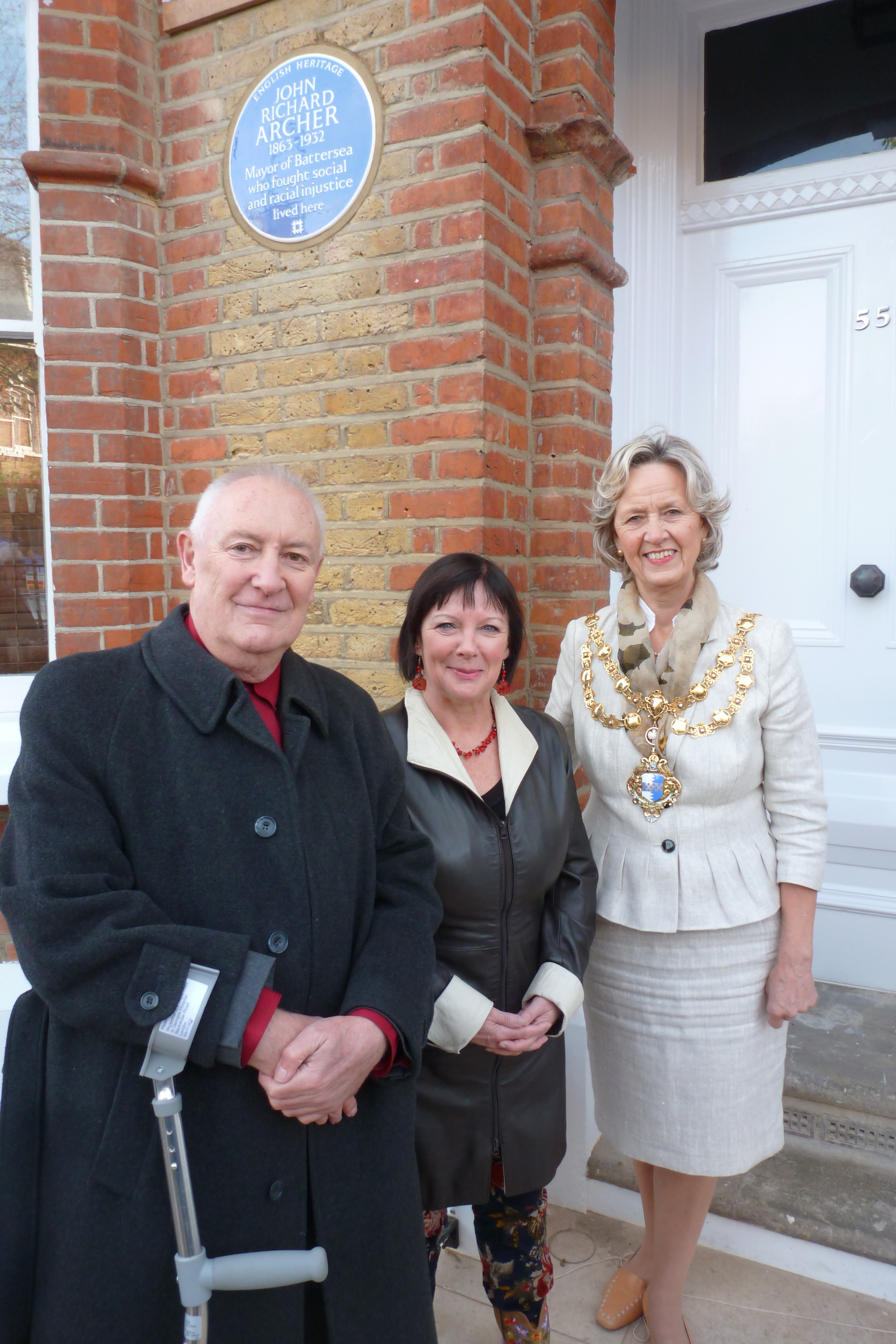 has also resigned. There is now an eight month hiatus until Harris take over – this does not look good for the students and all thanks to the Government’s cavalier attitude towards our schools!
3. On the 13th November I attended the unveiling of the John Archer plaque at 55 Brynmaer Gardens, which despite being on the “wrong side” of Battersea Park Road is in fact in a small enclave of Latchmere ward. Here is a picture of the plaque itself, the Mayor, Wendy Speck, my fellow councillor, and me.
John Archer was the first black mayor in the UK (actually not true as there was a little known black mayor of the small Norfolk town of Thetford, but people conveniently forget that one!) and I have covered him before in one of my Did You Know sections. I have never done this before but since November was the centenary of his election by 30 votes to 29 to be Mayor of Battersea I thought it was fair enough to do a repeat – see below.
Oh and by the way here is another picture of me with Hyacinth Stone, a Latchmere resident and constituent who was at the unveiling. Hyacinth lives in Buxton House and in her honour I am goi ng to do a “Did you know” next month which links Buxton House directly to Victoria Tower Gardens, Westminster.
4. The November Planning Applications Committees really was very thin, at least from the point of view of any Latchmere resident and hence unusually I will not even report back from it.
5. The Survey of London’s long awaited volumes on Battersea were produced in November. They are truly massive books and tell you all that there is to tell about the buildings past and present of Battersea. They do not come cheap, indeed the pair sell at £100+ and are clearly meant for libraries, but if you want to find out anything about your street or block then here is the place to start looking. However, I must say it is le ss good on the council estates than it is on anything else and so Latchmere misses out a bit! I attach one of the illustrations from the book – a watercolour of the Battersea river front by Cecil Hands painted in the early 1930s. Note that the Power Station only had two chimneys and stayed that way until after the War.
6. BAC (Battersea Arts Centre) had the 120th anniversary of the opening of Battersea Town Hall on 15th November. In many ways it was a launch for a big fund raising effort for the Town Hall and its re-furbishment but it was also a launch of a small booklet produced by BAC of the “Great Hundred”, who had contributed to the Town Hall over the 120 years. At the moment the list has about 76 names categorised under headings such as social, architectural, political and artistic. They are looking for another 44 to make the 100 actually 120. There are some odd omissions such as Douglas Jay, Battersea’s MP from 1946-79, but if you think someone you know should be on the list then let me know and I will see if I can get them included.
7. I went to the SERA annual general meeting in Manchester on 23rd November. This green lobby group, of which I am the Treasurer, is concerned with all kinds of green issues but a growing area of concern is the quality of the air we breathe. Did you know, for example, that Putney High Street regularly has the worst air pollution ion the country. Cleaning up our roads is a major aim for SERA.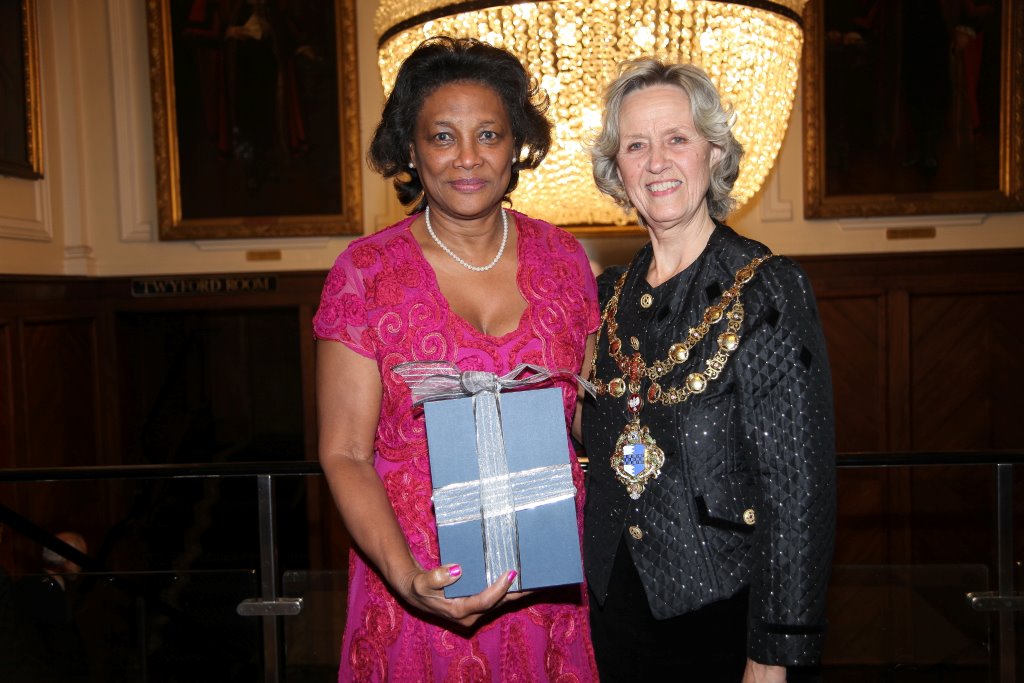
8. And on the 27th I attended the Civic Awards dinner at the Town Hall, where fellow constituent and resident of Scholey House, Marlene Price was presented with an award. Marlene has been involved with the York Road Estate Residents Association for over 30 years and has been the Chair of the Police Special Neighbourhood Team (SNT) for well over ten years. The photograph shows her being presented the award by Mayor Graham.
9. I had a Strategic Planning & Transportation Committee on 19th November and a Housing Committee on the 21st. I realise that most of you will think these meetings are dull although I usually enjoy them, but I must confess these two were really dull. You would not think it possible, would you, for us to be facing a real housing crisis in this country with a desperate shortage of affordable housing and for the Housing Committee to be dull but it was. Governments have done so much to strip local councils of power and/or money that we seem unable to re-act and I am afraid that this Council actually doesn’t want to act. After saying something like “It is all up to the market” they have nothing to say – pathetic?
10. But on a much more cheery note I went to the GCSE – Success organisation’s Annual General Meeting in York Gardens Library on Saturday 30th. Not heard of them, understandable but they are great. Led by Ella Spencer, they are a group of young professionals and/or post-graduates, who live or work in and around Winstanley and York Road estates, and have set up a “homework club” running out of the library on Saturday mornings. They started with an aim of lifting up the average GCSE grades for local kids. Their main areas of study are English and Maths. Last year GCSE – Success provided over 800 hours of free one:one tuition.
My Programme for December
1. On the 4th December we had the Council Meeting itself followed on 10th by the Planning Applications Committee.
2. I also met the Chief Executive of St. George’s Hospital on the 10th.
3. Unsurprisingly perhaps there are many Christmas events from the Falcon Road and Kambala Estate residents’ Xmas events, from the Big Local Xmas lunch to the BAC (Battersea Arts Centre) show. Needless to say, like for you I hope, December is not a good month for the waist-line.
4. Finally a Merry Xmas and a Happy New Year to you all or in modern twitter speak MX&HNY2U.
What do you know about John Archer?
John Archer came to Battersea in the late nineteenth century, when he became a friend and ally of John Burns, the charismatic working class leader of the Metropolitan Borough of Battersea. What was unusual about Archer was that he was from Barbados and in 1914 he was elected the first Black Mayor in the UK. He is pictured on the left and appears in the mural on what used to be the Haberdasher’s Arms in Dagnall Street.
Archer, and his Bajan wife, lived and worked in Latchmere ward. He had a photographic studio at 220 Battersea Park Road, where there is today a small plaque of commemoration. The building is not very interesting, being a 1950s infill of a bomb site, but it was well located for Archer’s business as the tram from town terminated at the junction of Albert Bridge and Battersea Park Road and his business clientele could come in on the way back from work.
Archer had humour and charm, which I think shows in the photograph, and is commemorated in a couple of other places in Battersea. There is John Archer Way, the new bridge over the railway, which leads to what used to be John Archer school, before it was demolished 20 odd years back, and Archer House, the ex-Council block in Battersea village.
Councillor Tony Belton’s Latchmere November Newsletter (# 54)
October highlights
1. First of all a big thank you to all those who sent me good wishes for a speedy recovery from streptococcal G poisoning. I am making reasonable but not exactly speedy progress as some of you will have seen as I struggle around, but now on one and not two crutches!
2. Second an even bigger thank you to all those who responded about the possible closure of the CJ Grant Road exits at an earlier time than currently. I got 40 responses between when I put the message out at about 11.30 am and 5 pm on Day 1. I immediately sent those responses off to the Town Hall and then onto the railway companies. I have heard nothing since – hopefully we have nipped that one in the bud.
3. The Battersea Park School (BPS) saga rolls on. You may remember that I suggested that the Government was intending to make the school into an Academy sponsored by Harris (the carpet people). Well this month the Governors were invited on a trip to see two Harris academies in Merton. I am afraid that I thought that I could hardly manage to stumble around a couple of schools in one day and so I did not go. But nothing definite has happened since then and indeed the Government has sent a relatively “soft letter” about the school’s reactions to the original Ofsted Report – perhaps the rather good GCSE results announced in August have resulted in a couple of second thoughts.
I would still bet on the Government pressing on with their dogmatic policy of moving BPS out of local democratic control and making it a sponsored academy. But given the pressures on the Government and the very public failures of their policies in a couple of recently well-publicised cases, there is just a little chance that they might back down.
4. The 8th October Planning Applications Committees had a number of interesting applications, most particularly for the Prince’s Head and the one-time Chopper or @Battersea pubs/clubs. Both of these pubs have been the centre of considerable local concern over the years but now it seems as though both are going to be re-developed. There have been a number of applications, which have reached an advanced stage of consideration on both sites but finally applications came to Committee and were approved.
The Prince’s Head application was for 19 flats (16 two-bed and 3 three-bed), of which 5 would be of a shared ownership type, and therefore classified as “affordable”. These would be built above commercial lettings on the ground floor. Given the nature of the Falcon Road shopping frontage I am not absolutely certain that the shopping units will work – for a start most of the shops in Falcon Road are on the opposite side of the road. But I guess it rather depends upon the nature of the shopping. If it is one of those Tesco/Sainsbury locals then I am sure that it will be a success – but we will have to see. I know that for some of the residents almost anything would be a plus when compared with the Prince’s Head at its worst!
The Chopper application was similar but slightly larger with 29 flats being built above commercial properties, including a new pub. 6 of these flats would be of a shared ownership style tenure. Hopefully the pub will replace the rather belligerent character of the old pub with a pleasant recreational but modernised pub. Both applications were accepted.
I thought three other applications were particularly interesting. One was for 157 flats and houses to be built round the old Elliott School site just off Putney Hill. I mention it because I know lots of kids from Battersea went to Elliott. I couldn’t help noticing the outraged protests of Putney residents. The sale of the land and the use for private residential housing was to pay for the Council’s costs in building the new Ark Academy to replace Elliott. The point was that these were luxury housing built to low densities and costing, well we will have to wait and see, but my guess is north of £2 million – and the locals were protesting!
Another application for a 7 storey building, providing 12 flats, on a miniscule site opposite the Battersea Dogs’ Home provided an interesting contrast. Seven storeys squeezed in on the space of a tennis court as opposed to spacious large properties, two contrasting sites, one in Battersea and the other In Putney – I hardly need to say more!
But I was surprised that the one application that was refused was for a large (13 storey) commercial and residential development on the Upper Richmond Road near to East Putney station. Surprised because the Council has appeared to allow applications of almost any scale in “town centre” sites but on this occasion the recommendation was for refusal and refuse it we did. Was it because it was in the Council Leader’s own ward and his own constituents were protesting?
5. On Thursday, 17th October, I managed to drag myself around the Caius House (Caius is a latinised word for keys and is actually pronounced KEYS) development just behind Badric Cour![647293_f644bcdc[1]](https://tonybelton.blog/wp-content/uploads/2013/12/647293_f644bcdc1.jpg) t. Caius House will mean nothing to many of you because the “old” Caius House youth club was demolished in about 2008. (See below for the history of Caius) The new youth club, and the residential properties above, which are paying for the development, are due to be handed over in spring, 2014. I and several other councillors went round the site and although it is difficult to tell from this photograph it is obvious that we are soon going to have a splendid new club right next to York Gardens, the Kambala and the Winstanley. We were told that it will be the largest youth club in the UK. Let’s hope that it is also the best. The top picture is of the new sports hall at the club and the bottom one is of the old building demolished in 2007/8.
t. Caius House will mean nothing to many of you because the “old” Caius House youth club was demolished in about 2008. (See below for the history of Caius) The new youth club, and the residential properties above, which are paying for the development, are due to be handed over in spring, 2014. I and several other councillors went round the site and although it is difficult to tell from this photograph it is obvious that we are soon going to have a splendid new club right next to York Gardens, the Kambala and the Winstanley. We were told that it will be the largest youth club in the UK. Let’s hope that it is also the best. The top picture is of the new sports hall at the club and the bottom one is of the old building demolished in 2007/8.
6. The 16th October Council meeting did consider the cuts that the Council is going to make in the housing department (and others). Currently the Housing Department is taking the brunt of the cuts, but we will see many more. It is a little difficult to describe all the arguments for those of you who wonder what Council meetings are like look at this link http://www.wandsworth.gov.uk/info/200318/decision_making/1606/council_meetings_online_16_october_2013/4. showing a U-Tube stream of the housing cuts debate. If you don’t want to watch it all – which I could well understand then Cllr Hogg’s speech is 12 minutes into the stream and mine is at 21.20 minutes!
7. On Sunday, 27th October, I attended the Ahmadiyya Muslim Community Eid Celebration in York Gardens Library, where I was asked to give a speech on peace!. I am hardly an expert but I did to an audience of about 50 Battersea residents. The Ahmadiyya mosque in Putney is the first in London and was built in 1913 and their Merton mosque is the largest in western Europe. Some of the local organisers live on the Winstanley estate.
8. Finally a grudging congratulations to Jane Ellison, our MP, who has just been made Parliamentary Under Secretary of State (Public Health). Despite our pretended enmity across the party divide, Jane and I get on quite well and if this appointment is recognition for her work opposing female genital mutilation then it is well deserved even if I hope she loses the job at the next General Election!
My Programme for November
1. Once the clocks go back we are in to the busiest time for councillors, especially in the winter before the next Council Elections – Yes, they are next May and so the rounds of canvassing and leafleting will be starting up soon. I do hope you accept me knocking on your door with patience and humour!
2. On 7th November I have as ever the Planning Applications Committee. On the 19th I have the Strategic Planning and Transport Committee, followed on the 21st by the Housing Committee.
3. The Borough Residents’ Forum, a committee of Council tenants and leaseholders, meets on 13th and I am the Labour Party’s representative on that.
4. The 15th November marks the 120th anniversary of the opening of what was Battersea Town Hall, now Battersea Arts Centre (BAC). BAC is laying on some kind of an event, which I will be attending. I look forward to seeing what exactly they are going to do – fireworks? A theatrical review? An exhibition? I will report back!
5. For my pains I am also the Treasurer of an organisation called SERA, which is a “green lobby” group with the Labour Party. SERA has its annual general meeting in Manchester on 23rd November and so on that Saturday I will be in Manchester.
Do you know anything about Caius House? I guess not.
Caius House is a charity and youth club which has been serving the community of Batt![collegehistory-loganprint_0[1]](https://tonybelton.blog/wp-content/uploads/2013/12/collegehistory-loganprint_01.jpg) ersea for over a century.
ersea for over a century.
Gonville and Caius (see picture and pronounced Keys) College, Cambridge, is a 14th century foundation created by Edmund Gonville, a Norfolk cleric, and refounded two centuries later by John Caius, a successful and very wealthy student from the college. In 1887 some undergraduates and fellows from the College rented a house in what was then the very poor London industrial suburb of Battersea. They started a College “settlement” where former undergraduates from the College lived and ran a range of clubs for local residents. Shortly afterwards they started a boys club (and later a girls club) and found that it attracted members from the poorest and least educated young people in the area.
By 2008 the Caius House youth club building (located on Holman Road) had served the local the young people of Battersea well for about a century but was badly in need of renovation; however the layout was thought to be totally unsuitable for a modern youth club. The Trustees decided to sell the plot of land to a developer who would build residential accommodation with space for a modern youth club on the first two floors. After consultation with youth members, the community and the Council, the derelict old building was demolished and the process of re-building a modern state of the art youth club began.
The #Wheatsheaf, Tooting Bec
I cannot reply in 140 characters for Twitter lobbyists but here is the longer version that I sent to email lobbyists campaigning to save the #Wheatsheaf this afternoon.
“Can I make a friendly comment? When sending lobbying letters it is usually better to change the opening sentence from the standard one. Councillors tend not to rate lobbying letters, which have simply been copied, anywhere near as highly as ones that are individually crafted! Plus one of your stereo-typed letters contains a typo, repeated ad nauseam. You were surely contacting me and not “contracting” me – implies that you hadn’t even read the lobbying letter that you are expecting councillors to read – not convincing.
But enough of the pompous lessons in lobbying and down to the meat. If you have read the Council paper 13-733 (and for those who are really keen then see link http://ww3.wandsworth.gov.uk/moderngov/documents/s29843/13-733%20THE%20WHEATSHEAF.pdf ), you will see several interesting features. I will particularly pick on two:-
1. There is considerable emphasis on Government policies designed to get the local economy moving and that includes allowing permitted development rights in all kinds of locations (NB I am not agreeing with this so don’t argue please but like it or like it not it is the Government’s position). As it happens both parties in the Council are almost equally opposed to these policies, especially as regards permitted development. The Tory Council is no more keen than the Labour Opposition to have planning controls taken away from us. We have to deal with the consequences of un-neighbourly development far too often to be as cavalier as Government Ministers! BUT to help Tory councillors to stand against their own Government it would be very helpful if one or two of you could come up with a contradictory Government policy, apart from “localism”, which seeks to protect the fabric of the existing townscape – short of listing.
2. Paragraph 31 is the key. Members are “asked whether or not they wish to pursue making any Article 4” etc. That is very unusual. Officers usually come to a conclusion and make a definite recommendation to do or not do something. This means they do not really know and/or they have not yet been given political direction by the Tory majority. (the only equivalents that I can think of are when the Council is operating in a semi-judicial way such as licencing committee and occasionally planning applications, when they legally cannot predict what the members may decide.) That could mean that there is still everything to play for on this matter, which means to say that you have to get at more Tory councillors than just those on the Committee and to whom you have sent this email to. For starters you need to email the Leader rgovindia@, the relevant Cabinet member rking@, and the ward members for Nightingale and Bedford, namely adunn@,ajacob@, ihart@, smcdermott@, and swilkie@wandsworth.gov.uk.
I didn’t notice any comments re the Trafalgar Arms? Not worth making a point?
I will do my best, as I am sure my colleague Peter Carpenter will do, to protect the pub, partly because we both would like to extend the precedent to other places such as the Falcon at Clapham Junction, the Spread Eagle in Wandsworth High Street, etc. Oh, and I know it’s a pain but members really are a little frit of a massed public gallery quietly making their point – a simple placard saying Save the Wheatsheaf will do. Heckling does NOT go down well with members.”
Grangemouth – The Deal
Most news media billed this as a “good day” for Scotland with many commentators criticising Unite and by implication the trade union movement. There is little doubt that Unite’s tactics were flawed and they had not thought of how to re-act to Ineos’s counter-attack or the strength of the employer’s position. Rather reminiscent of the NUM in the 1980’s!
But surely we are blinded by the immediacy of the good news. I suggest that the more significant feature of the deal, in the long-term, was the total and effortless victory of international capitalism over the interests of the workforce. Ineos threatened to transfer production, at the stroke of a pen, to the cheapest source of supply, interestingly the USA because of the cost of energy and nothing to do with wage costs.
Add to that the “unaccountable” nature of management decisions made by multi-national billionaires and surely we are faced with a sea change in the centuries old battle between capital and labour. This plays out on an international stage but also at a very local level as we can see from this week’s other headline claiming that Council Compulsory Competitive Tendering (#CCT) is forcing many big out-sourcing suppliers to pay below the legal National Minimum Wage.
The implication is surely that labour is now fatally weak and international capitalism so powerful that the divide between the world’s mega-rich and the rest of us is bound to grow. Faced with this prospect the majority of us – the People – will either resort to national and international legislative control of the market or to violence.
Am I being too alarmist? Commentary from Greece or Spain suggests perhaps not. Politicians have to re-act.
 Tony Belton
 Tony Belton