Councillor Tony Belton’s Latchmere November Newsletter (# 66)
October highlights
- I went to a Covent Garden Market Authority reception at Brunswick House on 2nd October. I wouldn’t norma
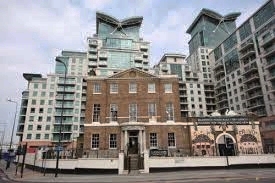
 lly comment on such an occasion, which was a wine and canapés reception designed to keep corporate Wandsworth happy with the Market’s plans for development but for two things. First because Brunswick House is that rather grand, isolated house on the corner of Nine Elms Lane and Wandsworth Road, which, although in Lambeth, must be well known to many Wandsworth residents. It was built for the Duke of Brunswick in 1759 and is a posh restaurant and reception facility. If you recognise the picture here then you know that it sticks out like a sore thumb in the traffic and architectural hell of Vauxhall.The second reason that I mention it is because of the massive planning application going forward to the Planning Applications Committee on 12th November, of which more next month. However, the essence is a very large scale reconstruction of the market, which will not in the market traders’ view be to their benefit. Many of them come from generations of old traditional traders, who operated out of the (real) old Covent Garden of My Fair Lady days. The proposals also include very large scale residential developments – watch this space next month.
 - I visited a couple of schools in October. I went to Holy Ghost RC primary school, Nightingale Square, on 14th and Westbridge primary school, Bolingbroke Walk, on 15th October – what an interesting contrast! Holy
 Ghost is in the heart of rich South Battersea, where every house is worth a million, well that’s the image anyway. The school is very pleasant and very rich, and Ofsted says outstanding. The parents were asked to fund a £100,000+ adaptation of a classroom and they did it – no sweat – and here is a picture of the end result. Westbridge, previously known as Bolingbroke, however, did not get a good Ofsted report. So Michael Gove insisted on it becoming part of the Chapel Street Academy Trust. At the Education Standards Group on 22nd October we met with Chapel Street. I am afraid that I was not convinced that Chapel Street Academy Trust had any record in achieving success with its schools. If you want to read my views on this process then have a look here in my blog.
 - Early in October, Labour councillors got hold of a confidential discussion paper produced by Town Hall officers for the Tory majority party in control in Wandsworth. Essentially the paper says that, if the Government goes ahead with the expected scale of cuts in local government expenditure, then Wandsworth is going to have to cut lots of services in order to make ends meet. Here are some of the cuts (or as the Council will say “savings”) the paper suggests amongst others:-
- access to parking permits, benefits, council tax queries, etc. online only – NO paper, post or counter service (just imagine, even if you do not agree with me about the scale of benefits, telling the poorest in our community that they can only get benefits if they go online!);
- closure of one of the Battersea day centres for the elderly, Randall Close or the Gwyneth Morgan centre;
- closure of Tooting Bec athletic track and Hope Street’s Battersea Sports Centre;
- closure of York Gardens, Northcote Road and Battersea Park libraries; reduced frequency of street cleaning.
- This is NOT to say that these cuts will ALL take place but there is a very high probability that most of them willI think the Government is pursuing a disastrous policy and that austerity will not work. It is not working in the EU and I don’t see why anyone should expect it to work here. From my point of view what is even worse is that the Labour Party is not really challenging this Tory view. We are prepared to bail out bankers at enormous public expense. It would cost far less to increase the minimum wage, not by measly 20P an hour but, by several pounds an hour. We need the public to have pounds in their pocket and to start spending in the high street.
- One of the big stories of the year, and next year, must surely be the possible arrival of Formula E motor racing in Battersea Park. The race would be round the perimeter road of the Park. The road would need some slight re-shaping and re-surfacing, which would be paid for by the race organisers. In future years the Council would get a large injection of funds, probably several £millions. Given the scale of cuts the Council is facing this is clearly a plan which a responsible Council must consider. However, there is much to be said also against the scheme and the inevitable disruption it would cause to the Park at the height of summer. It is expected to attract roughly the same number of punters as does the Fireworks Display, which, by the way, is on 8th November this year. It is, however, interesting that Formula 1 racing is aware that the sport must face up to a wide range of environmental issues – e-cars will be very quiet and fuel efficient and there is little doubt that it is likely to appeal to many in Battersea’s very young population.English Heritage, which funded much of the Park’s refurbishment, will be consulted and will have to agree and so will the Council. There is going to be a public meeting at All Saint’s Church, Prince of Wales Drive, on 6th Novem
 ber when we will see to some extent what the Battersea public think about it.
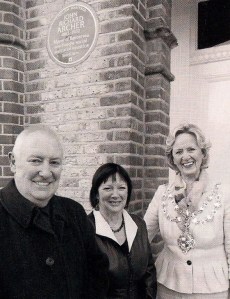
 - Talking of English Heritage imagine my surprise when I saw a copy of their members’ magazine for October. It includes a picture of last year’s Mayor unveiling Latchmere’s blue plaque to John Archer, accompanied by me and Wendy Speck!
- Talking of Mayors, just a quick update on the Boris bikes. In summary use of the bikes in Wandsworth has increased from approximately 10,000 a month in January to 44,000 in July. Unsurprisingly usage is down from July but still much higher than earlier in the year (January-July statistics are attached). We will be able to make serious comparisons when we have a full year’s statistics.
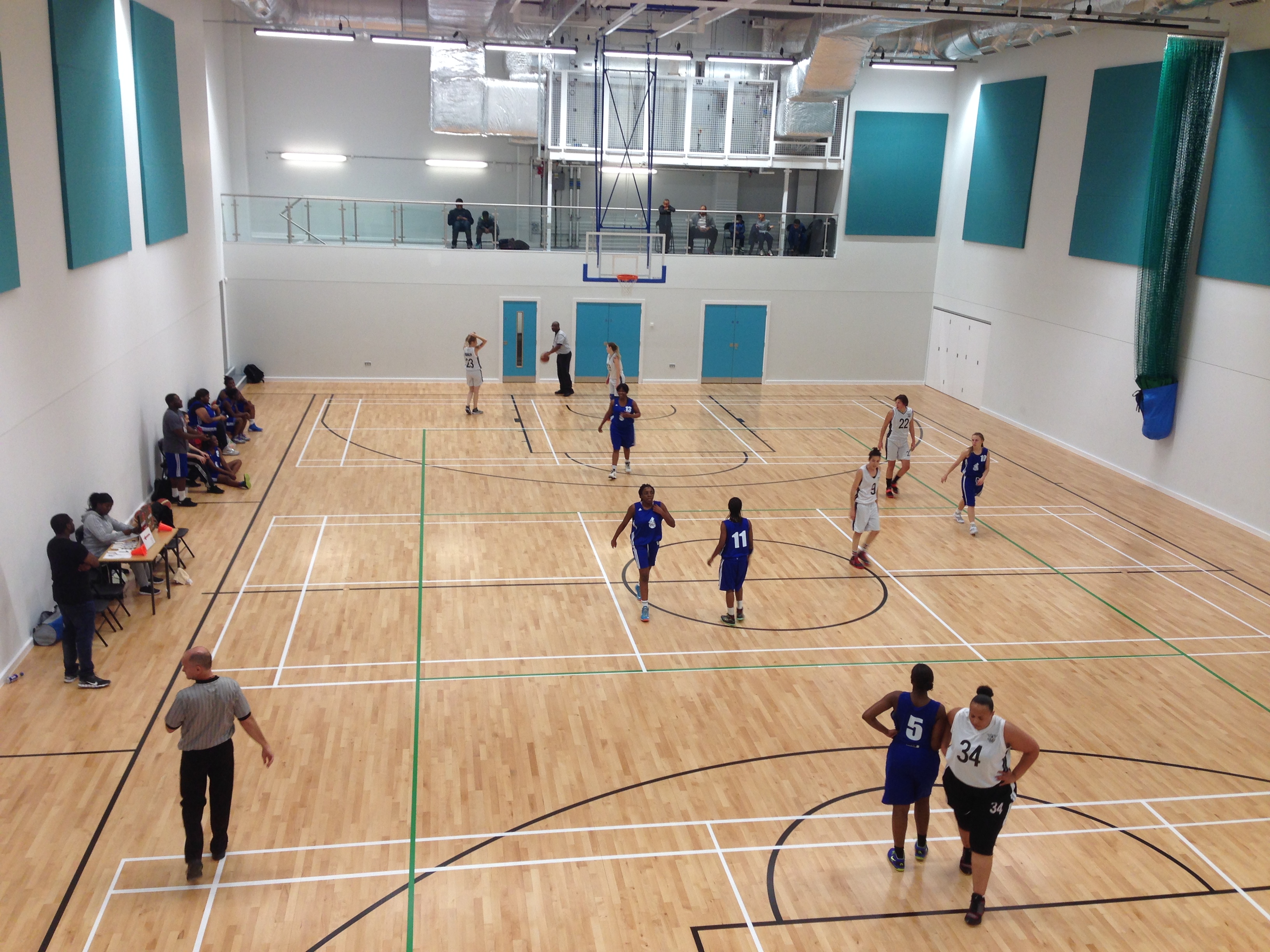
- On 27th October I, and several other councillors, visited the newly opened Caius House Youth Centre in Holman Road, which has many Latchmere users. You may remember I went there a few months ago before it was finished. It’s a superb facility with an excellent sports hall, a recording studio, a well equipped kitchen and plenty of other facilities. This women’s’ basketball game illustrates the quality of the facilities.

- On the 15th there was the full Council Meeting, but I am afraid that there is not much to say about that. It was all very predictable and, if I am honest, we have allowed the Tory councillors to take all the meat out of Council Meetings. Prime Minister’s Question-time is not the great stage for the House of Commons that MPs like to think it is but Wandsworth Council meetings have become bloodless, uncontroversial, uninteresting occasions, which is evidenced by the absence of the press and almost any members of the public.
- The day after I attended the Planning Applications Committee. There were
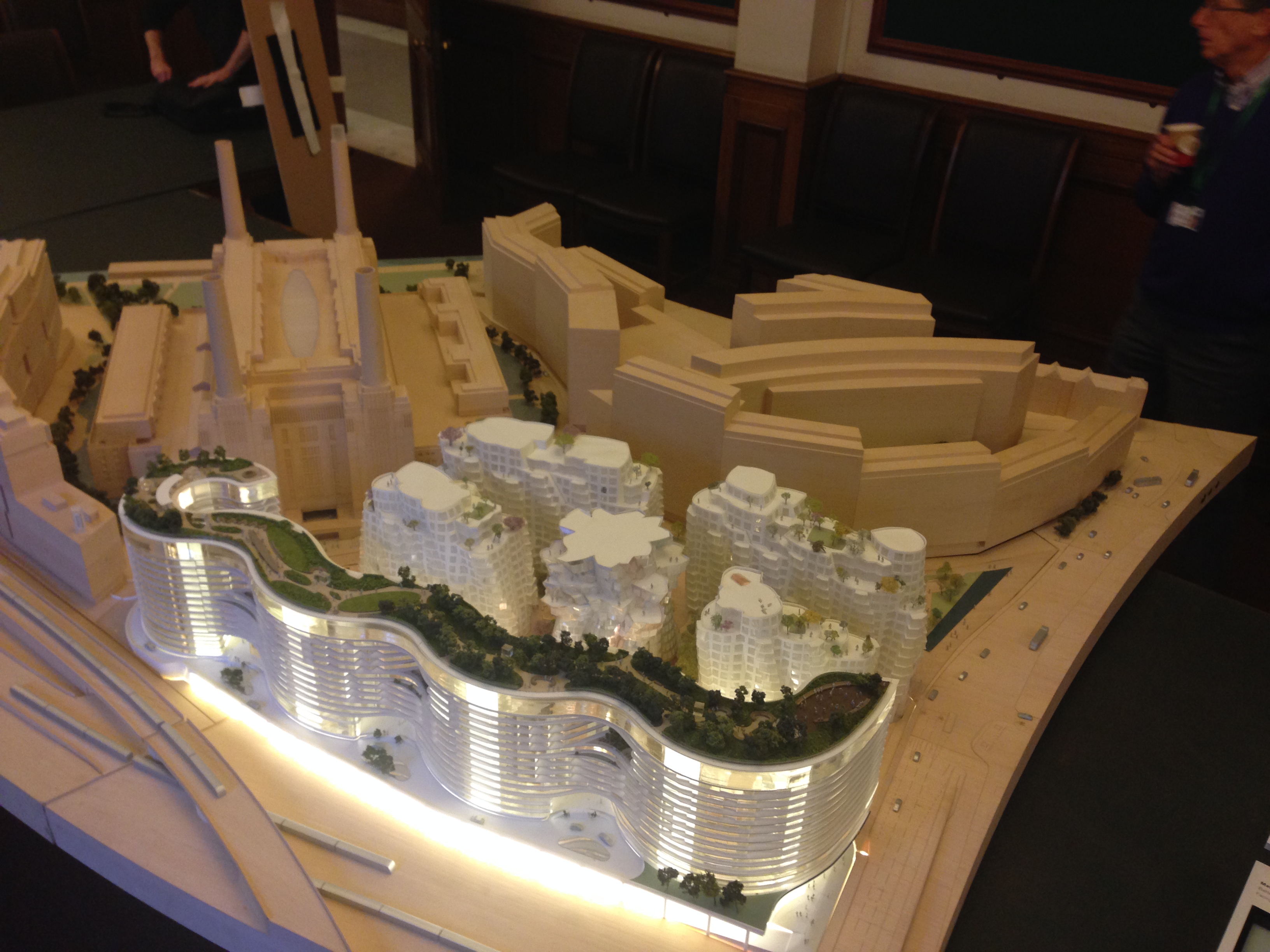
 two major decisions with Borough-wide implications. One was approval for a new residential and shopping development in Parkgate Road but the really massive application was the “final” approval for the Battersea Power Station site. The picture is of a model that displayed the final scheme.I am unhappy with these developments and voted against both of them. It is not that I do not want development – I have been pressing for action on the Power Station for 30 years! However, I am unhappy that all of these developments and the residential accommodation that comes with them is targeted at the super-rich and will do nothing to help the crisis of affordable housing facing the average Londoner. Indeed these developments will continue to force up the price of all other housing in Battersea and make it more and more an enclave for the super-rich.
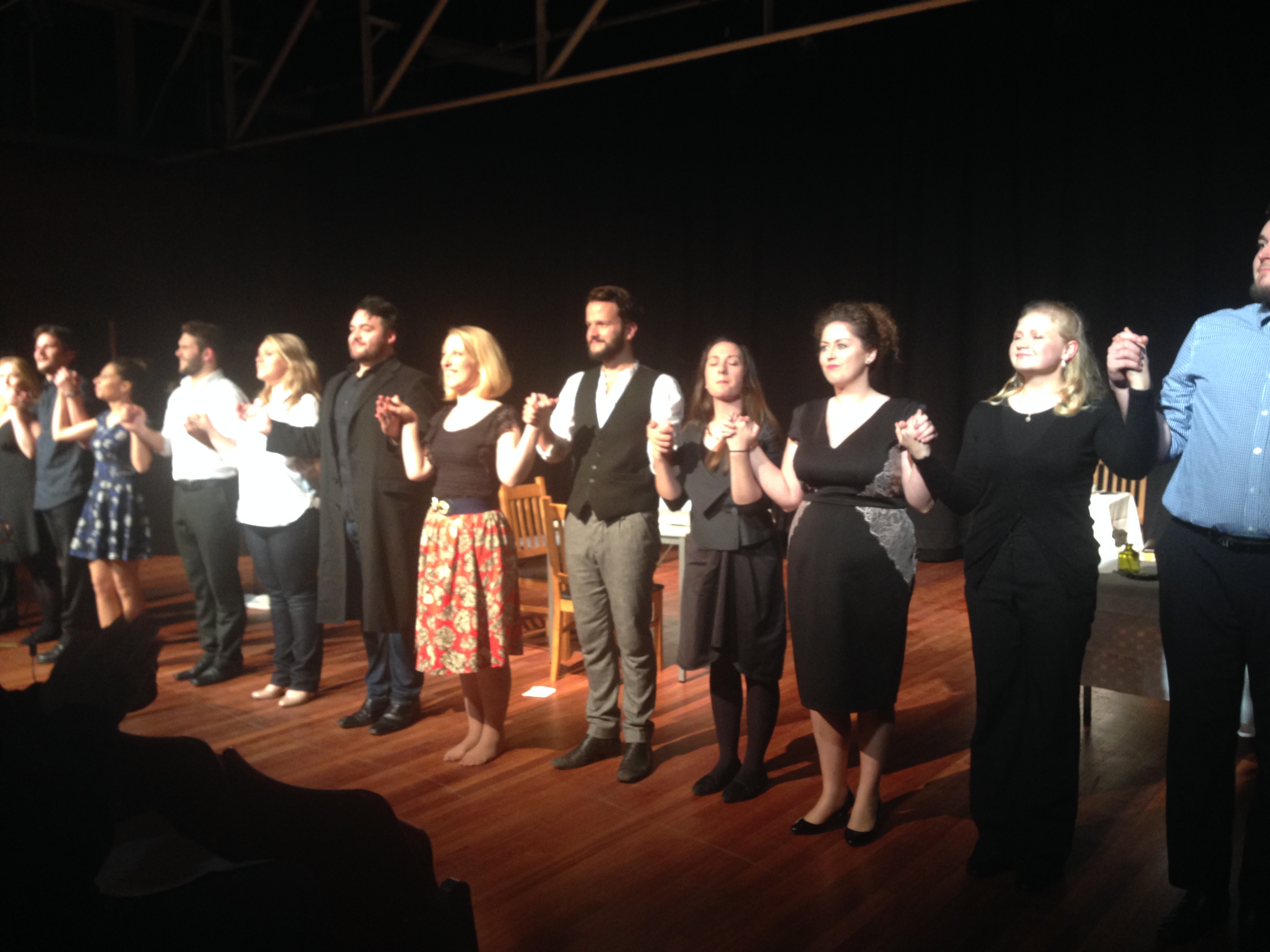
 - On 30th October I went to Burntwood School to see (and hear) the
 students of Wandsworth’s National Opera Studio singing a selection of songs from great operas by Donizetti, Puccini, Mozart, Tchaikovsky and Offenbach. Here is the ensemble taking the final curtain call. If you ever get a chance to hear these students give a free rehearsal then jump at it – they are terrific. The Opera studio gives frequent, free concerts, usually at All Saints Church in Wandsworth High Street. They are magnificent and if you are interested let me know and I will tell you the dates of their next concerts.


My Programme for November
- I will go to the Fireworks Display in Battersea Park on 8th November.
- On 9th and 11th I will be at the Remembrance Day services in St. Mary’s, Battersea, and in Battersea Park.
- On the evening of the 10th November there is the Civic Awards presentation.
- On the 11th I will be part of the appointments panel for the Deputy Director of Education at Wandsworth Council
- The Planning Applications Committee is on the 12th.
- On the 22nd I will be attending the London Summit, which is Mayor Johnson hosted Conference about all the issues facing London.
- On the 24th I will be leading the Labour councillors on the Education and Children’s Services Committee.
- On the 25th I will be visiting Alderbrook primary school.
Did you know Latchmere in 1912? Of course not.
Here is an extract from an Ordnance Map of London, published in 1912. Sorry about the reflected flash light in it – must improve my tech skills! But it does show most obviously that the road pattern has not changed that much except for where the Winstanley and York Road estates are and where Trinity Road has been linked up to Wandsworth Bridge.It also shows the string of industrial plants along the river-front, which made this area such a strong working class area. It also shows the mouth of Battersea Creek, where the Heliport now stands, and the aptly named Creek Street, running into Lavender Road. I hope you find it interesting!
Schools, community and local authorities
I attended Wandsworth’s Education & Standards Group (ESG) last Wednesday (22/10/14). It is an attempt by the Tory Council to maintain some kind of role in our fractured education system. Given the competent, conscientious set of Tory members on the Group, the review seems to be working but I am sure it is an illusion! It is all based on the “magician’s smoke and mirrors”.
Until 1997, the British (actually English and Welsh) education system was a largely coherent, local government controlled system. The Blair Government decided to add to this mix “independent” academies and faith schools, where independent meant funded by national government but run by largely autonomous organisations. But then in 2010 the truly Jacobin Michael Gove became the Secretary of State and he set about introducing academies, faith and free schools as quickly as possible. He made it impossible for local authorities to build new schools, even in areas of fast population growth like London and he forced any school with a poor inspection report out of the state system. This haste was a naked attempt to destroy the traditional structure by the time of the coming 2015 General Election.
But I happen to believe that Wandsworth Tories see the dangers of this policy and are using the ESG (and its similar Free Schools and Academies Commission) to try and mitigate the worst effects of Govian chaos. The Group’s main function is interviewing the Heads and Chairs of Governors, usually of two schools in an evening, in a four yearly cycle. The purpose is to assess the school’s performance and to help schools to improve or to maintain it. The role is, however, largely advisory, since Ofsted clearly makes the inspections and the assessments that really count.
This lack of a formal role may not matter too much with schools operating well, where a few words of encouragement and appreciation from the local authority are all that is required. But what if the school has difficulties? One school we saw last week, according to Ofsted, “requires improvement” and “is not good because”, amongst other things, “teaching across the school requires improvement”. To be fair that assessment was made in 2012 and, since then the school has a new governing board and has been taken over by the Chapel Street Schools – a new group of academies. Nonetheless Wandsworth’s own education officer, and indeed the councillors, were clearly not convinced that the performance is improving sufficiently rapidly to be of much help to the current cohort of school kids.
Chapel Street Schools Trust, according to its website, is linked to the Salvation Army. There are eight such schools although two of them are not due to become Chapel Street Schools until 2015 or 2016 and two others, including the Wandsworth school, have only become Chapel Street schools this year, having been forced out of the local authority structure by the Government. The Trust did not even exist in January, 2012.
Do Chapel Street Schools have any experience in getting a school, required to improve, in fact to improve? Do their seven staff (again apparently and according to their website) have any relevant experience? Well one or two of them have been teachers but that’s about it. As the discussion about the school’s progress developed, I couldn’t help but wonder what the Council’s education officer and his inspector colleague thought of the matter. They after all are only responsible for running 85 schools most of which now achieve Ofsted ratings of “outstanding” or “good”!
What can we do about our concerns? Can we help the school through its difficult patch? Can we help with skilled resources? Apparently not as it is no longer a local authority school. We can, however, ask to go and visit the appropriate Regional Schools Commissioner and tell him our concerns.
Who you might well ask is s/he? Well in Wandsworth’s case it is the South London and South East Commissioner to whom we should turn. He is one Dominic Herrington, who until recently was a senior civil servant and Director of the DFE’s Academies Group. As far as I can tell Mr. Herrington is solely accountable to the Secretary of State. Nothing in the structure has anything remotely to do with the public or elected authorities, except of course that the Secretary of State is an elected MP but appointed to the job by the Prime Minister. Herrington’s appointment was announced, without fanfare, in a Departmental press release in September, 2014.
The Commissioners for the other regions are: two Chief Executive Officers of Academy Trusts; Essex’s Director of Education; the Heads of two grammar schools and of two Academy schools. The trenchant views of the General Secretary of the NUT are worth reading at http://teachers.org.uk/node/21434.
None of these regional commissioners seem to have anything remotely like democratic legitimacy. Yet between them they control, or at least oversee, millions and millions of public money. David Cameron, and his Education Secretary Michael Gove (most of the damage was done prior to the Cabinet re-shuffle), have successfully led an assault on much of local democracy and local accountability.
Academies, faith and free schools are all, of course, overwhelmingly funded by us, the taxpayers yet they are free from any democratic overview except at the rarefied national, Secretary of State level. Will a Labour Government have the courage to restore a coherent, democratic education system? Will the on-the-ground experience of councillors, who regularly visit and oversee schools, be lost from the system, to be replaced by faceless non-elected commissioners?
School Governors & governance.2
Hilary writes to tell me that I am wrong (see blog earlier this month). She tells me that skills are necessary in the modern governing board and that the time of the stakeholder is past. Well I agree on the last point but that is a regret and I need to thank Hilary for forcing me to make my point more clearly.
It is actually worse than I relayed. Now that we are looking for skill sets and not stakeholders we are also handing over most of the appointment process to the Head. The end result is not likely to be people in a very strong position to challenge either head or school.
In my considerable experience as a governor, it was mainly the stakeholders, who had the self-confidence and frankly the clout to challenge the head or the school’s ingrained modus operandi. In future as more and more governors are appointed through school controlled mechanisms there will be, in my submission, less and less, not more and more, challenge.
As once a technician and for a long-time a councillor, I think I know, which was the more likely to be a challenger. Give me the councillor over a financial whizz any day.
School Governance & Governors
A recent Wandsworth Council report blithely announced that governing bodies are being shifted from a stakeholder model to one based on skill sets. There was clearly a presumption that this was not only the Government’s intention but also a “good thing”. Well as a semi-detached governor of some 20/30 years standing, I have a rather different view.
I take it that the stakeholder model refers to school governing bodies dominated by local authority nominees, or local politicians, community representatives, teachers, trade unions and others with a “stakeholder” involvement with the school. I am further assuming that the move towards skill sets refers to knowledge of budgets, of HR skills, and the thousand and one other skills that could be said to make up the requirements of a managing board. I suppose the polite way of describing this is calling it a professionalization of the governing body role.
Could anything be worse! Surely the point of the governing body is not to do the work of the professional staff, or to be unpaid accountants and treasurers, or to stand in for what the local authority once did, or to manipulate spreadsheets, but to make the school part of the community. It is really important that the community should have a say in its local schools, but under this Government schools are becoming independent businesses run by and frequently in the interests of the heads.
Let’s hope that it is not too late for an incoming Government to stop and indeed reverse this trend.
Councillor Tony Belton’s Latchmere October Newsletter (# 65)
September highlights
- I had a Big Local lunch on 11th September – not real business I know,
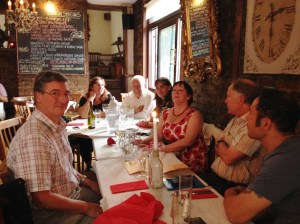 but it does help to keep in touch. Here is a picture of us in Fish in a Tie in Falcon Road, which by the way, if you have never been there, is just about the nicest, cheapest food of its style that you can get in Battersea. Stephen Holsgrove the head of Thames Christian College is on the left and then Sandra Munoz, me, Senia Dedic, my councillor colleague Wendy Speck, Providence House youth club boss Robert Musgrave and Pennethorne resident Andy Beech.
 - In my new role as Labour’s Speaker on education I have had several meetings with senior education staff in an attempt to catch up with the current issues. And one in particular came up at the Education and Children’s Services Committee on 17th September and that was the subject of admissions to primary schools. At the moment admissions are based on proximity to the school but also on siblings, that is whether a child already has a brother or sister at the relevant school. In essence the Council is wondering whether the so-called siblings rule should be scrapped and admissions solely based on proximity to the school. The Council is going out to consultation on the matter. What do you think? Do you think that if a child has a brother or sister at a school s/he should have priority in a schools’ admissions policy or should it just be based on proximity to the school. Let me know what you t
 hink!
hink! - I went to GCSE Success’s Annual General Meeting on 20th September. It was held at York Gardens Library. I do think this is a fascinating voluntary organisation. Set up by a resident of Pennethorne House, Ella Spencer, it is devoted to helping kids on the local estates fulfil their potential at GCSEs and get the best possible exam results. If anyone has a son/daughter who needs volunteer specialist assistance to get through examinations I recommend that you get them to York Gardens Library on a Saturday morning at 10 am!
- On the 25th I went to the Tooting Labour Party’s fund raising dinner, where the guest speaker was Jack Straw. Here is a picture of him giving his after dinner speech. He made a robust defence of the Labour Government’s actions in Iraq, including the current bombing campaign against Isis. I am afraid that I am not convinced and am rather inclined to the view that the west cannot resolve what is clearly a Middle Eastern Civil War. I have seen it compared with Europe’s seventeenth century Thirty Years War between Protestant and Catholic – I rather fear that it is an apt comparison.
- I did not this year go to the Labour Party Conference, which seems not to have been a very exciting occasion! But I rather suspect that the confidence that the Tory Party showed at their conference last week is going to turn out to be misplaced.
- I went on a tour of Wayford Street and Este Road estates on 30th. It was
 pretty uneventful but we came across this piece of graffiti on the wall at the junction between Wayford Street and Candahar Road. Take a careful look. It is a picture of a dove of peace, I guess, holding under its left wing a knife, a pistol, a hand grenade and an AK 47. Is it a cry of pain against the barbarities going on in the Middle East? It certainly is very political.
 - On 17th September the weather was so beautiful that I decided to take the day off and take the train from CJ to Brighton for the day. I came across the Western Pavilion, which I had never seen before. It was built in 1827 by Amon Henry Wilds, an architect who had worked on the famous Pavilion, for a rich client. Below is a picture of it and I am sure many of you can see the similarities between it and the Royal Pavilion. Whilst I was there I also took a picture of the rather sad sight of the West Pier rotting and crumbling into the sea.


My Programme for October.
- I have meetings about the New Covent Garden development on 2nd and 6th
- I am visiting the Holy Ghost primary school in Nightingale Square on 14th.
- There is the now only quarterly Council meeting on 15th October and Planning Applications Committee on 16th.
- I hope to be at the Caius House youth club on the 27th.
Did you see Christ Church in the Guardian on 1st October? 
The picture is by photographer David Levene and is of Christ Church School’s vegetable garden. I don’t know why it found its way into the Guardian’s centre spread but it is a great picture of the children in the garden, which is behind a fence on Fownes Road, squeezed in between the estate and the main railway lines out of Clapham Junction. I was there when the school first took over this spare plot and it is just amazing to see the transformation they have made to what was an overgrown site. Well done, Christ Church.

Western Pavilion, Western Terrace,  and West Pier
Councillor Tony Belton’s Latchmere August Newsletter (# 64)
August highlights
- Let’s face it, I’ve just had the longest August holiday in quite a long time
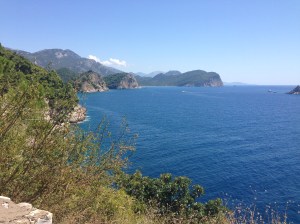 and so there haven’t been many highlights outside of holidaying – though I did get to meet the Deputy Mayor of Sofia, capital of Bulgaria. However I thought I’d share a couple of thoughts about holidaying in the former Yugoslavia and in Bulgaria. First and most obviously the Adriatic coast, of both Montenegro and Croatia where I was, is spectacular. The scenery is staggering, the sea is warm (though I did read last week about Great White Shark attacks in the Adriatic – but after I got back, thank goodness), the wine is good and the food OK. I don’t want to bore with holiday snaps but here is just one of the Montenegro coast.
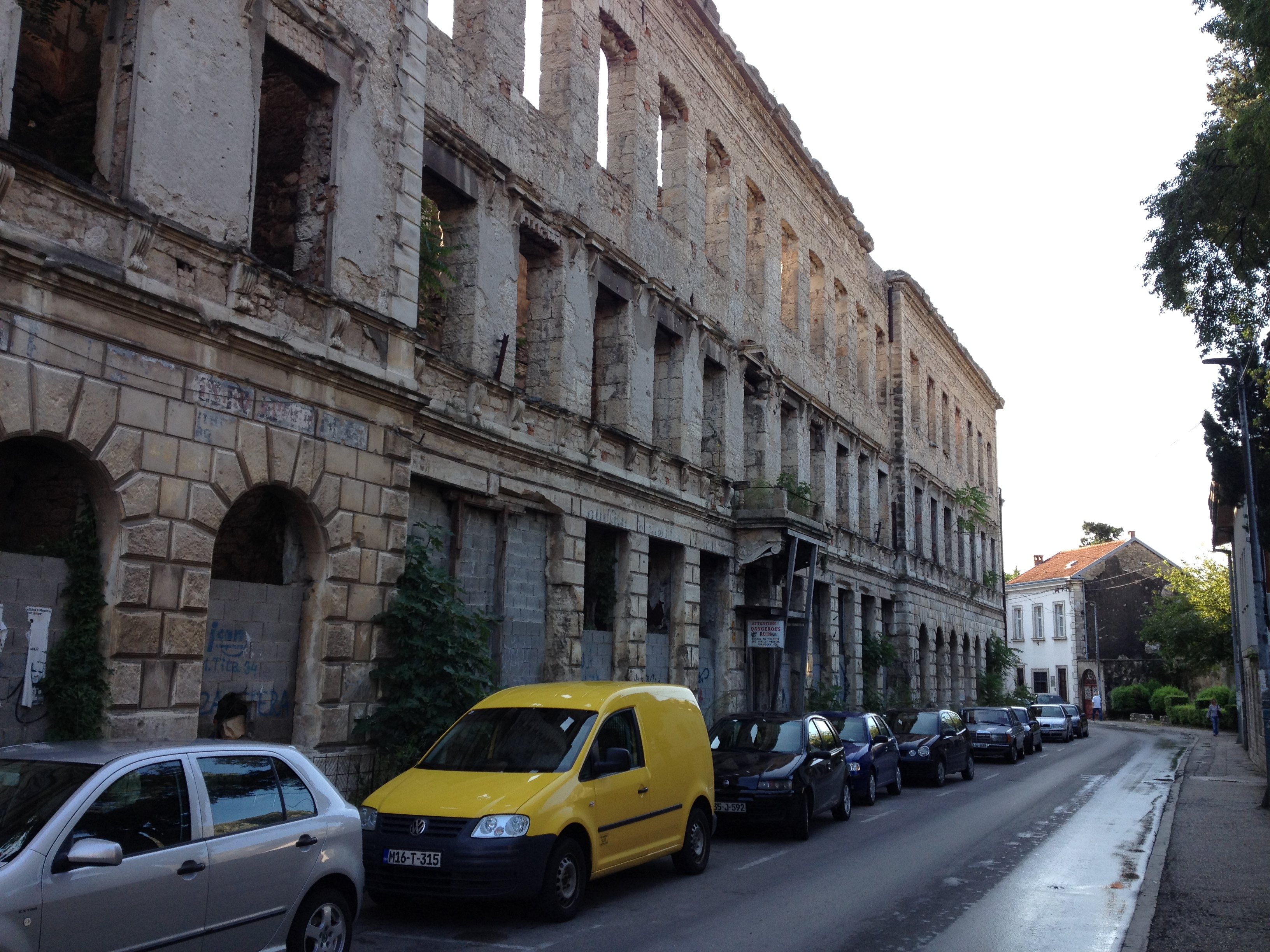
 - Rather more sobering is the realisation that “Yugoslavia” is, or was not that long ago – 1990s, a war zone. The war affected the whole of the Balkans but, as far as I could see, the centre of the war was Bosnia and there the picture is rather less rosy than in Croatia. The bomb sites in the
 centre of town and the bullet and artillery shell holes in the buildings are very noticeable. In the tourist haven of Mostar, the tourist area itself is largely and well re-constructed but just a hundred metres from the tourist sites are empty, derelict houses, flats and businesses. Our B&B host on one night was weeping that she, a Muslim, married to a Catholic, was living happily with her neighbours in the 1980s and then found herself overnight as it were at war with her neighbours. How did it happen and why? She could not understand.
 - It’s perhaps not very clear in this picture but this shelled out building, an empty husk, is a stone’s throw from the tourist hotspots!
- It would be impossible here surely! But then, uncomfortably, temperatures do appear to have risen a little north of the border. We must ensure that bitter feelings are controlled.
- However, the ex-Yugoslavian countries seem fairly vibrant compared to Bulgaria, where the collapse of the old Soviet-style heavy industries seems to have left the country as a complete economic disaster area. Massive industrial complexes stand derelict and empty with much of the rural population left to flee to the capital, Sofia. The Black Sea coastal resorts and, no doubt, the ski resorts are doing well but much of Bulgaria looks like a country with big problems.
- Here in Latchmere, the Council’s Community Safety Team have installed a security camera in Anerley St to assist in issues concerning the theft of mopeds and dangerous driving of the vehicles in the area. Anerley Street is the short link between Dagnall Street and Battersea Park Road and I must say it is encouraging to see the police and the Council co-operating in trying to control the young villains who are largely responsible for this annoying and dangerous vandalism.
- I also heard the good news in August that the South West London Law Centre is going to re-locate in Falcon Road, next to the Mercy Foundation and near to the Prince’s Head. We have not had an appropriate location for the Law Centre for some years now but this new accommodation will be right at the heart of the action and well placed to serve the people who most need its services.

My Programme for September
- I am going to the Labour Party Conference in Manchester, starting on Sunday, 21st.
- The Planning Applications Committee will meet on 15th and the Education & Children’s Services Committee on the 17th.
- I will be at the AGM of GCSE Success, the self-help homework club, at York Gardens Library on 20th.
Did you know? Oh, dear I haven’t got anything to put here this month! Hopefully inspiration will come in time for next month!
Councillor Tony Belton’s Latchmere August Newsletter (# 63)
 July highlights
- On 5th July I went, as every year, to the delightful Poyntz Road Triangle party. I have said it before but will repeat it again, “It is undoubtedly the best street party in the Borough”. Afterwards I dashed off to an Independence Day party. One of my Labour colleagues on the Council has an American wife and every year on the nearest Saturday to 4th July they have a party with spectacular fireworks. On the following Saturday I went to the WOW organised BBQ at Haven Lodge home in the Kambala Estate. Here is a slightly plump me (must do something about that) with WOW Chair Senia Dedic and fellow Councillor Wendy Speck.
- On 9th July councillors went on an organised coach trip around the Nine Elms development area. It certainly is impressive seeing all the buildings springing out of the ground at a rate of knots and perhaps most particularly the US Embassy. But as we were taken round and feted with wine and canapés (who paid for that? I don’t know), I was not the only councillor who thought that not much of this millionaires’ paradise is going to help us solve Wandsworth’s, or even London’s, housing crisis.
- It was, therefore, an ironic contrast on the 15th to go a seminar run in Battersea Rise’s St. Mark’s church on food banks. This phenomenon, pretty well unknown in London since the 1930s, has re-appeared since 2010. I have unfortunately forgotten the metrics but a very large number of food packages have been given to many, many poor people in the Borough with one of the worst affected areas being Latchmere. The three women who gave the presentation had analysed the main causes of the problems families were suffering and it will not surprise many of us to hear that they are largely a consequence of the benefit changes (I refuse to call them reforms) made by this Government – not least of course the Bedroom Tax, which only diehard Tories any longer defend.
- I said last month that the first meeting I had as Children’s Speaker was fascinating – the second was just as odd. It was a meeting of the so-called School Admissions Forum. It has 12 members, three of them councillors, two head teachers, a representative of the Church of England, a couple of parent governors and some non-parent governors. It doesn’t seem to take any decisions or have any votes. All it does, as far as I can see, is act as a consultative forum about primary school entry and the primary/secondary transfer. I find it very strange that this forum does not report to a public committee but what will be of more interest to most of you reading this is the information that 56.9% of children succeeded to get their first choice of secondary school and 94.1% one of their preferences.
- Rather more worrying for Latchmere is that, whilst Graveney School was the first choice for 701 children, Latchmere’s Battersea Park School(BPS) was the first choice for only 29. That does of course mean that everyone who chose Battersea Park succeeded in getting it whilst Graveney could only take 224 of the 701 who chose it. Obviously we hope that BPS does better but we will wait to see whether its new academy status will result in an improvement.
- At the primary school level Belleville and Honeywell were the most popular schools registering 185 and 178 first preferences respectively, whilst Latchmere’s primary schools had 71 first choices (Chesterton), 22 (Christchurch), 30 (Falconbrook) and 65 (Sacred Heart). The absurdity of Michael Gove’s Free Schools programme is well displayed, at least for me, by the Mosaic Jewish Free School, established in Roehampton, because there was allegedly a demand from the Jewish community. But only 5 parents in the Borough put it down as their first chance and so we, the people, have had to pay for a Jewish school that only 5 parents wanted! Indeed of the 30 children “going” to the Jewish school 14 had to be allocated to it, with many parents unhappy about that. Falconbrook also had nearly 40% of its pupils allocated to it rather than choosing it.
- But what is so strange to me is that the end results of this process are reported to the Office of the School Adjudicator, a branch of the civil service. What used to the responsibility of the local authority and of the local councillors, what you used to be able to complain to me about, has effectively been nationalised by Gove and his mates in Westminster.
- The first fully fledged Council Meeting of this newly elected Council was
 on 16th July. It was a slightly emasculated affair, with everyone on best behaviour, because all the new councillors were making maiden speeches. It’s a funny debate as both sides allowed the new councillors to make their speeches in respectful silence. Now I know that most people do not like politicians having a go at each other but let me assure you that there can be little more boring than everyone agreeing with each other and nodding in approval. Having said that, I have to admit the standard of the maiden speeches was excellent – but a bit of heckling would have livened it up a bit!
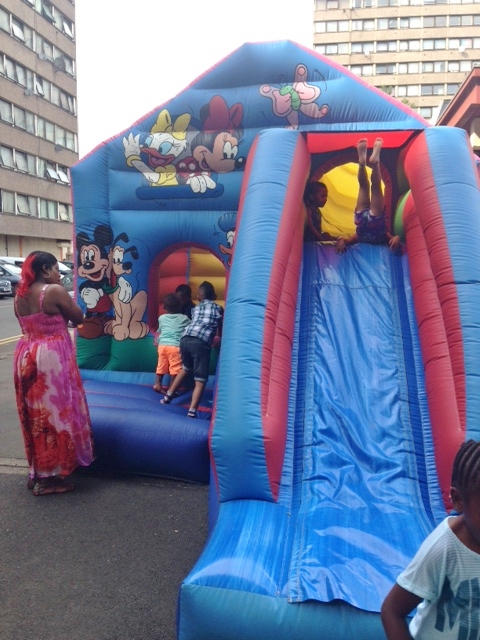
 - On 22nd July I went to the launch of the Battersea Literary Festival. It was, let’s face it, a fun evening high above the Battersea Power Station site with plenty of wine and canapes – one of the few councillor perks I can think of. And on the Saturday, 25th July, I looked in at the Pennethorne Square “street party”. I was rather late but it seemed as though everyone there was having a good time, especially on the Bouncy Castle, well house.
My Programme for August
- I am going to spend most of the month in the Balkans. My partner is going to a Conference in Sofia, Bulgaria, and we will take the opportunity to tour some of the countries around – it should be interesting.
- The Planning Applications Committee will meet on 14th, but I will be away. I will, however, report on any significant plans, if there are any. The officers usually try to keep controversy well away from August.
Do you know about the National Anti-Vivisection Hospital?
Just outside Latchmere ward, on the corner of Albert Bridge Road and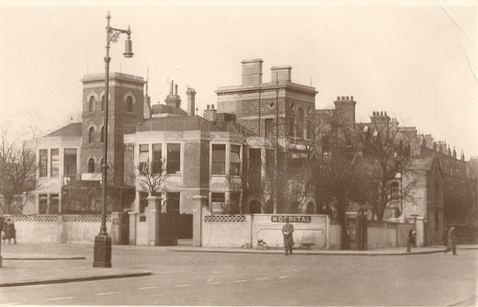 opposite one of the Park’s entrances, are some small blocks of flats, one of them called Joan Bartlett House. But not that long ago it was the site of one of Battersea’s oldest landmarks, the Battersea General Hospital or more famously the Anti-Viv or National Anti-Vivisection Hospital. This hospital was founded at least in principle in 1896 by a Mrs Theodore Munroe, the Honorary Secretary of the Anti-Vivisection Society. The Society was against using animals in medical and scientific experiments, in experimental operations or in the testing of medicines.
In December, 1900, the site was bought for £7,000 and the hospital built and opened in 1902.It was a small charitable hospital, which was incorporated into the National Health Service and closed in 1972. The Anti-Viv, as older residents will have known it, was demolished in 1972. Here is a 1910s photograph, with Prince of Wales Drive to the left and Albert Bridge Road on the right.
Wot? No Fish!!
Went to Battersea Arts Centre (BAC) last Friday (18/7/14) to see Danny Braverman’s one-man show Wot? No Fish!! He and Nick Philippou are working together using this show as a springboard to re-form the Bread & Circuses Theatre Company.
It was a tour de force of story-telling, enhanced, not hindered, as it happens on Friday by a 30 minute break thanks to a rogue fire alarm – an incident which merely enhanced our admiration for Danny’s skill as a “village or clan” story-teller.
Braverman uses pictures drawn on the back of his weekly wage packets, by Abraham Solomons to tell a seemingly simple story of an East End Jewish family. Solomons presented the pictures along with the packets’ contents to his wife every week from the mid-twenties to the mid-fifties and in the course of it told a story of great charm and considerable complexity.
The end result was not a classic theatrical drama but a story, told with great skill and dramatic impact. It was the story of writer/performer Danny Braverman’s own family, and felt like an intimate family history told by an old friend. His quiet conversational voice emphasised the tenderness and warmth of that family.
The pictures were back projected on to a screen, which was the stage back-drop, and were part of a very cleverly constructed show. On the way we explored the nature of Jewish and ethnic identity, of poverty and wealth in society and of family love and togetherness. There were bad times. We see the pain that the couple have faced during their lives together, particularly when an autistic son is institutionalised. That week’s picture showed the middle-aged couple with a wall between them – very poignant and very simple.
The script includes an interesting take on the nature of history: not a simple line, nor regular cycles; more like a spiral of change but touching upon older contact points as it spirals. Indeed the programme notes claim that the show “is the helix as a metaphor for history”.
The performance ends brilliantly, as the final picture is animated: the couple walk up the hill together, with birdsong on the sound-track. On the verge of being schmaltzy but the warmth and humanity triumphs over that unworthy thought. If you get a chance to see it – do NOT miss it.
MH17 – A one-off disaster or an inevitable by-product of modern warfare?
Heard of Iranian Air Lines flight 655? It was a regular daily flight from the Iranian town of Bandar Abbas to Dubai, which on 3rd July 1988 had 290 on board, though maybe significantly only 39 non-Iranians. It was brought down with all 279 passengers and crew killed by a US fired missile from USS Vincennes. Captain Will Rogers III, a career naval officer, was in command of the Vincennes. He was awarded the Congressional Legion of Merit.
Vincennes was a guided missile destroyer of the US navy, whose crew failed to distinguish between a civilian airliner and an expected Iranian attack force. However, a fellow senior officer in the Gulf hinted that having such a gung-ho commander in the field was at the minimum a risk. Despite the “disaster” a couple of years later Rogers was promoted to be commander of the US Naval Tactical Training Group responsible for training officers in handling combat situations.
The United States and President Reagan got away with this incident amazingly scot-free in terms of worldwide condemnation or criticism. In most people’s language this was a war crime and although considerable compensation was paid, as far as I know the US has never apologised. At the UN, the then Vice-President George Bush argued that it had been an accident of war.
And yet in all the comments on the missile attack on MH17, I have not seen a reference to the Vincennes incident. Comparisons have been made with the Soviet destruction of Korean Airlines KAL007 with the loss of 269 lives off Sakhalin in 1983 and the Ukrainian downing of Siberian Airlines flight 1812 in 2001, with the loss of 88 lives, but not the Vincennes. I rather suspect that says something about the soft power of the US as opposed to the “soft (power) weakness” of Russia.
These four “military incidents” alone have claimed 945 civilian lives over the last 26 years. I don’t know how many have died in air crashes, where the military have not been involved, but I wouldn’t mind betting that military incidents are the single most important cause of aircraft disasters. Perhaps we should spend as much time on how to avoid such fatalities as the designers and engineers spend on improving aircraft safety and performance – no flights within 1000 miles of combat zones, higher levels of locking devices on missiles, passenger involvement in flight path choices?
The Tories face a disaster called Europe
There will always be a right of centre party – of course – but every now and then the Tory Party faces a disaster, a cataclysmic event from which it takes them 10 or 20 years to recover. This happens when long-cherished immovable beliefs and policies come into conflict with financial, political or economic reality.
The examples that come to mind are the 1846 Repeal of the Corn Laws and the 1902 struggle over Imperial tariffs – both in effect about trade policy and import tariffs. In 1846 the interests of the English aristocracy and their farming businesses were beginning to come into conflict with those of the new industrial and commercial elite of Victorian Britain. The catalyst for the 1846 Repeal of the Corn Laws was the Irish Famine. Five years of one of the worst famines in recorded history (the Irish population fell from over 8 million to 6.5 million, which is what it still is to this day) forced Sir Robert Peel to repeal the protectionist Corn Laws.
The party split and it was not until one of the rebels opposed to Peel, Benjamin Disraeli, managed to make the Tories relevant to the new might of British Imperialism with his “one nation” Toryism that they again achieved a parliamentary victory. Disraeli’s win in 1874 was their first since 1841.
Half a century later in the early 1900s the Tory party once again tore itself apart over trade protectionism. This time it was fear of the new growing industrial might of Germany and the USA, which posed the political problem. Joseph Chamberlain resigned from the Government in 1903 to lead a campaign for Imperial Preference levies in opposition to the free trade policies pursued by Prime Minister, Balfour. Chamberlain thought that putting a tariff round the Empire would protect British trade, particularly in India, Canada and Australia, from these aggressive, rising competitors. Balfour wished to maintain the free trade essentially created by the 1846 Repeal Act.
The dispute over free trade or protectionism resulted in big victories for the Liberal Party in the 1906 and 1911 elections. Once again it was 20 years later in the totally different post-WW1 1920s before the Tory Party resumed its “normal” role as the party of Government.
And now in 2014-17 I think we face a similar prospect of Tory division and defeat over trade policies, where once again cherished Tory party notions come into conflict with the political realities. This time the Tory notion is the nostalgia for the UK as a great power and our collective failure even today to come to terms with the truth – that we are an important European nation, dependent upon our relationship with the rest of the continent. The external reality, which is posing the issue so starkly, is the EU.
David Cameron, with his tactics over the Juncker/European Commissioner vote, has made himself uniquely unpopular in Europe and put himself into a truly awful negotiating position for the post-Election “reform” of the EU. As a result it is almost inconceivable that he could win terms from European politicians, which would be remotely acceptable to a large number of Tory MPs or with anyone with UKIP tendencies.
Cameron, therefore, now faces a major dilemma over the 2017 Referendum vote. It’s almost inconceivable that Britain’s industrial and commercial elite would accept or fund a Government and party, which wanted to opt out of the EU, but it also beggars belief that the current Tory party would support a pro-EU campaign. Where would that leave Cameron – dependent upon Labour votes?
There is, of course, one way out for Cameron and that would be to lose the May, 2015, General Election. But assuming that is not his plan then his leadership seems to be leading the Tory Party inexorably into a cul-de-sac and another split over trade policy, with the right wing eventually merging with UKIP and becoming a Tory Party devoid of any real electoral prospects for a dozen years or more. Meanwhile do the pro-EU Tories hitch themselves to the by-then surely divided Liberal/Democratic party? It is an intriguing prospect and holds out great prospects for Labour.
 Tony Belton
 Tony Belton