Councillor Tony Belton’s Latchmere October, 2016, Newsletter (# 89)
- Very sadly, my colleague, Councillor Sally-Ann Ephson died on 31st August (born 11th November 1966). I last saw Sally-Ann a month earlier in St. George’s Hospital; she was clearly in considerable pain. She suffered from sickle cell disease and was an important member of the Sickle Cell Society, serving on its management board.
- Sally-Ann was born in Hackney but soon moved to Battersea, where she lived for many years, actually on the Latchmere estate, until moving to Broadwater Road in Tooting. Three years ago she was chosen as one of the Labour candidates for Queenstown ward in the 2014 Borough Election. When she won she became the first Labour Queenstown councillor since 1990.
- Sally-Ann fought hard against considerable difficulties but
 always expressed great concern for her constituents, retained her sense of humour and supported her colleagues. Her death is a sad loss. Sally-Ann’s funeral took place on 29th September and her wake was held at York Gardens Library.
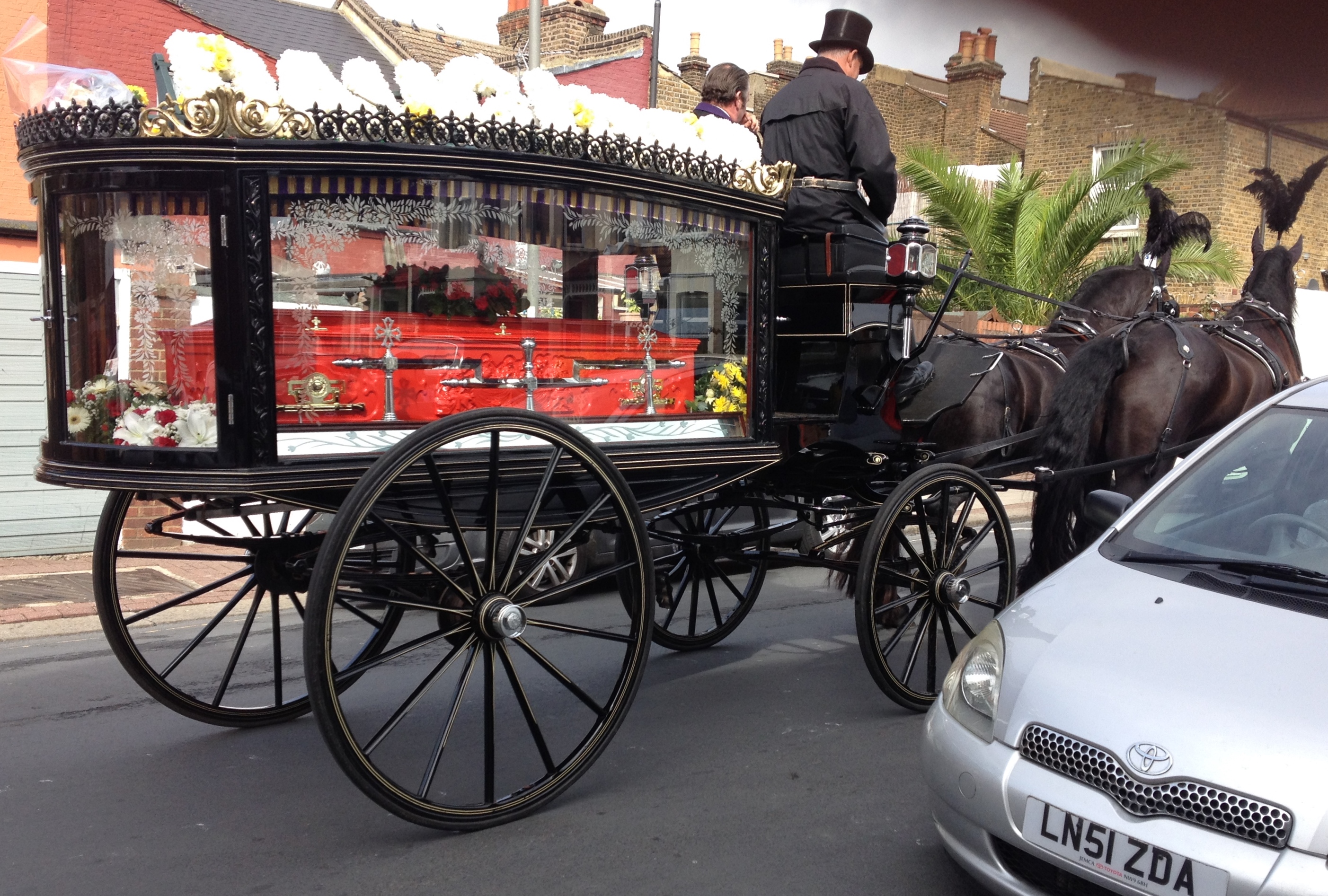
 - Unfortunately my cousin’s funeral was held on the same day and I was unable to be there, but a friend took this picture of the magnificent hearse – not technically the greatest picture you have ever seen but not a common sight on the streets of Battersea, these days.
- As you may remember from my last newsletter, on 23rd
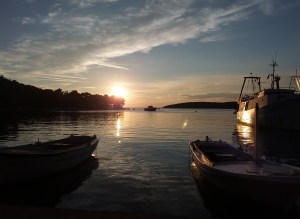 August I went off for a holiday to Florence and then the Croatian coast. We went by train to Florence – beautiful, had a Conference in Florence – sweltering, and then on to the Croatian coast – brilliant.
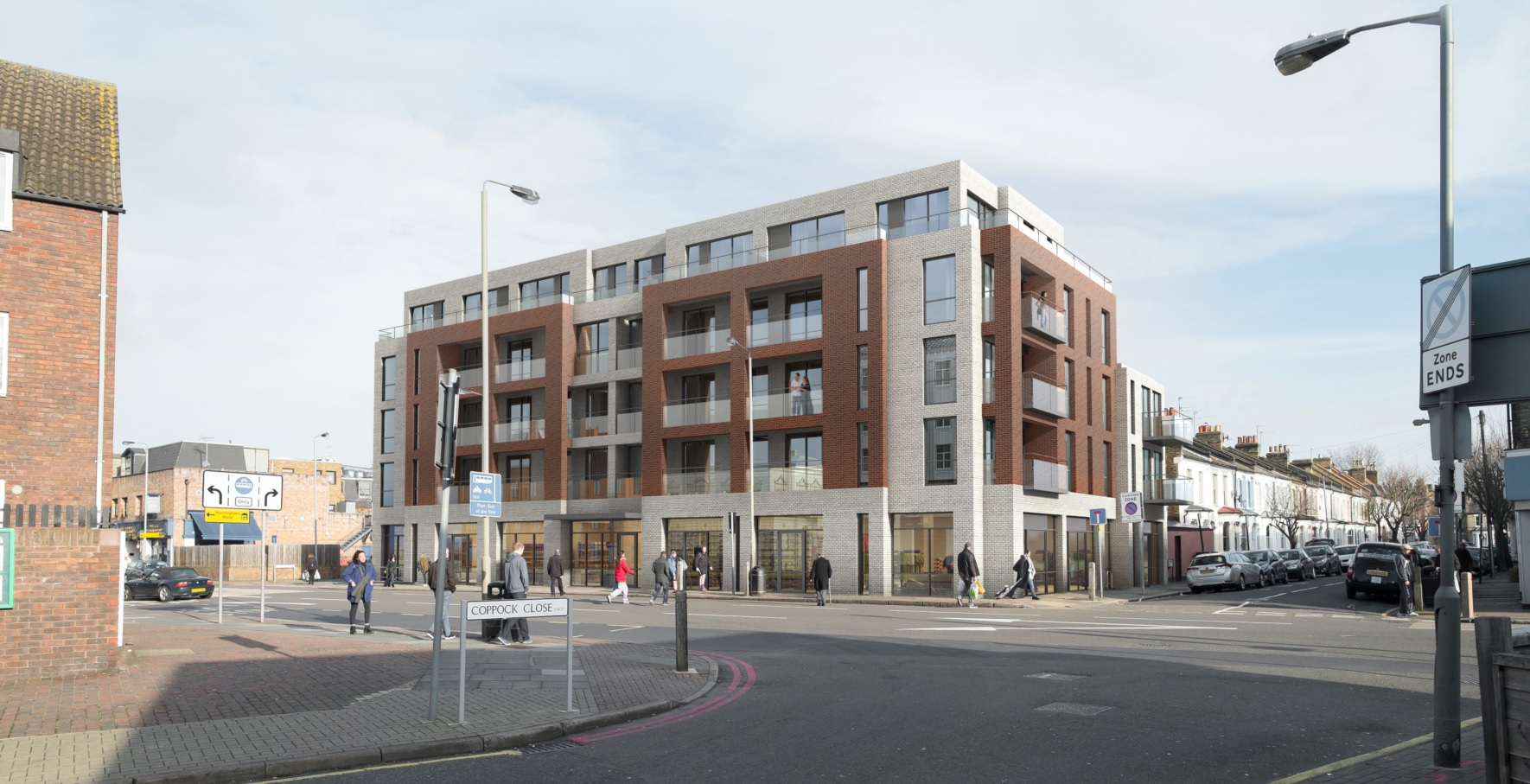
 - I had the Planning Applications Committee on 15th. There were a couple of applications of real interest to parts of Latchmere. First there was an application for 15-27 Falcon Road, the block between Patience and Afghan Roads, for a three to five storey block consisting of shops, offices and 25 flats.
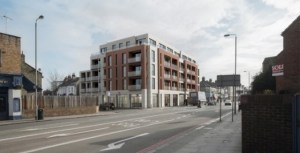 There was local opposition to the height and size of the block, but the application was agreed by a majority of the Committee – I voted against.
 - The second was for a basement in Atherton Street. It was not in itself a big application but it was for a basement conversion and raises questions about the level of planning controls that local authorities have over basements. The answer is, I am afraid not much. I presented the local residents’ objections to the application but it was passed overwhelmingly.
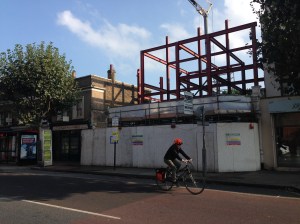
- Other interesting applications were for the re-

Heliport House
construction of The Alchemist – the pub on St. John’s Hill, opposite the Health Centre, “illegally” demolished five years ago. And, as usual, there were applications for yet further large developments in Nine Elms. There was also an application for a very modern, “alternative” design 15 storey block next to the Heliport and pictured here. It looks interesting or mad, depending upon your tastes, but one thing is for sure: I certainly don’t vote against all new development, but I think this one is totally inappropriate: the skyline and nature of Battersea is changing fast, and is under pressure to change future.
- On the 15th I attended the Police’s Latchmere Safer Neighbourhood Team, in the George Shearing Centre, in Este Road. After the long summer break there was not a lot to discuss, but to note the departure of our police PCSO (Police Community Support Officer) Shirley Aitken, who will be much missed by many. She is now off, I am afraid, to pastures new. Good luck to her.
- That week-end I visited someone, who has a quince tree in the garden. Have you ever come across a quince tree and quince fruit? I must confess that I hadn’t previously done so. I brought back 3lbs worth and tried my hand at making quince jelly. Not sure about how successful it is going to be – I am not sure that it has set properly – but it’s a first for me!
- On the 19th September I went to the
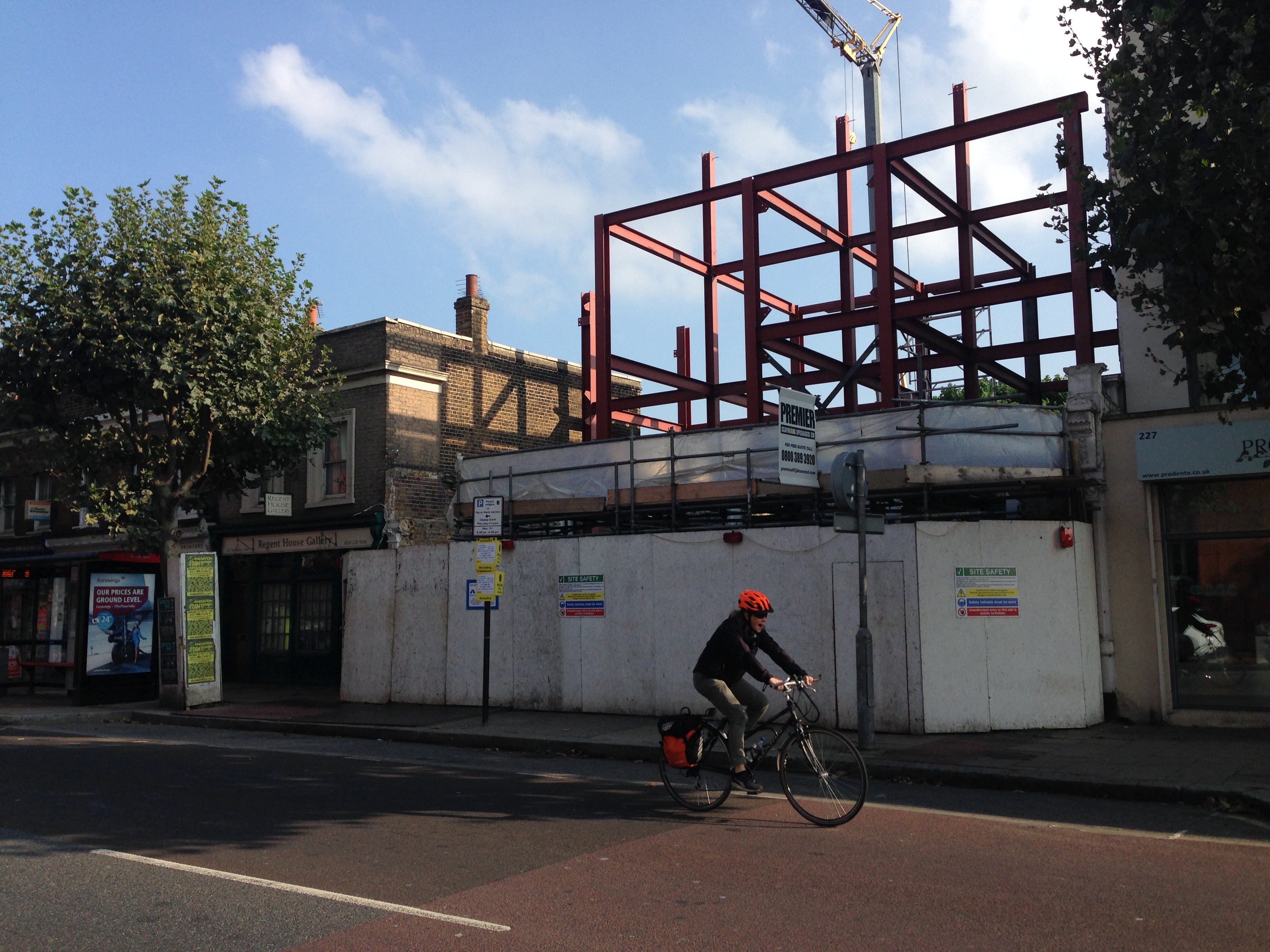
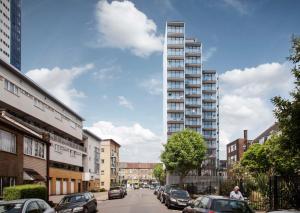 Wandsworth Conservation Advisory Committee. I have had reservations about this committee in the past. It seemed to spend all its time worrying about rather nice houses in rather nice parts of the Borough without worrying too much about places, where the majority of us actually live. However, at this meeting the Committee came out strongly and unanimously against the current proposal for a 14-storey block at Culvert Road, which is to be considered at a future (November, I suspect) Planning Applications Committee – see picture. If you have views on this application then let me know and/or post them on the Council’s website at https://planning.wandsworth.gov.uk/WAM/showCaseFile.do?appType=planning&appNumber=2016/4188 – don’t mind the apparent closure date for consultations; the Council is legally bound to note all observations right up to the moment of decision.
 - The next day I went to the Community Services Committee. This deals with almost everything that is not housing, social services or education, that is everything you see when you walk out of the front door – pavements, street surfaces, trees, litter, parks, street lights, drains, air pollution, noise, etc., etc. Two interesting items were the decision to increase the number of parking spaces and associated chargers devoted to electric cars, and to introduce 50% charging for motor bike parking.
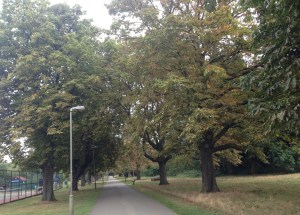
- But on this occasion, the major issue that exercised the
Chestnut Avenue
Committee was the future of an avenue of chestnut trees on Tooting Common! OK, so I know most of you have never been there but take a look at this picture of the avenue: they are splendid, aren’t they?
- The trouble is that many of the trees are diseased and rotting: and the problem is, do you replace a set of mature trees in one clean sweep and have a new avenue, saplings all the same age maturing together, or replace them piecemeal? We decided to take the radical option and replace them all at one swoop!
- And “What about the Labour Party Conference? I hear you say, and quite rightly too. I could hardly be your local Labour representative and ignore what is happening in the Labour Party nationally. First of all, let me say that in the end I decided not to go.
- However, I voted for Jeremy Corbyn, but not because I think he is, or looks like being, a great leader. Unfortunately, I did not think that the alternatives in 2015, or Owen Smith this year, had done better. In my view, Corbyn is more “right” in his opposition to Tory cuts than the other candidates (proved by the speed with which the new Chancellor is ditching Osborne’s policies at the Tory Party Conference). Corbyn is also untainted with any connection to the Iraq War. I confess that at the time I supported the Iraq War but it turns out to have been the most disastrous, and most deadly, foreign policy mistake made by the UK since 1945. (In addition, I think that this year’s attempted coup against Corbyn was desperately badly bungled and has not helped him or the party).
- Incidentally, as a councillor, I have been given early warning of the major works taking place over the next couple of years at Waterloo station. The aim is to lengthen platforms 1-4 so that they can take the new, longer trains, but in the meantime the Channel Tunnel platforms (I suppose platforms 23-27?) will be used with much changing of points and signals and, no doubt, much chaos. Commuting isn’t likely to get easier just yet!





My Programme for October
- Unfortunately, following Councillor Ephson’s death, we will be having a by-election in Queenstown ward. It looks like being on 10th or 17th November so no doubt I will be spending much of my time working on that by-election.
- On 5th October, there is the Katherine Low Settlement’s Annual Meeting, but, as it clashes with other meetings, I am not sure that I will get there.
- There is a Covent Garden Market Reception at lunchtime on 6th October, when we will learn more about the next stages of redevelopment down Nine Elms Lane. And in the evening, I have a meeting of the Labour councilors.
- There is Wandsworth’s Council Meeting on 12th October. On the 19th I have the Planning Applications Committee and on the 20th the Heliport Consultative Committee.
Do you know?

Winstanley Estate
Last month I asked you, Who was the sculptor of the concrete murals on the Winstanley estate? The answer is William Mitchell, who also sculpted an installation on nearby Badric Court. Mitchell was born in 1925 and is a sculptor, artist and designer. He trained in London and is

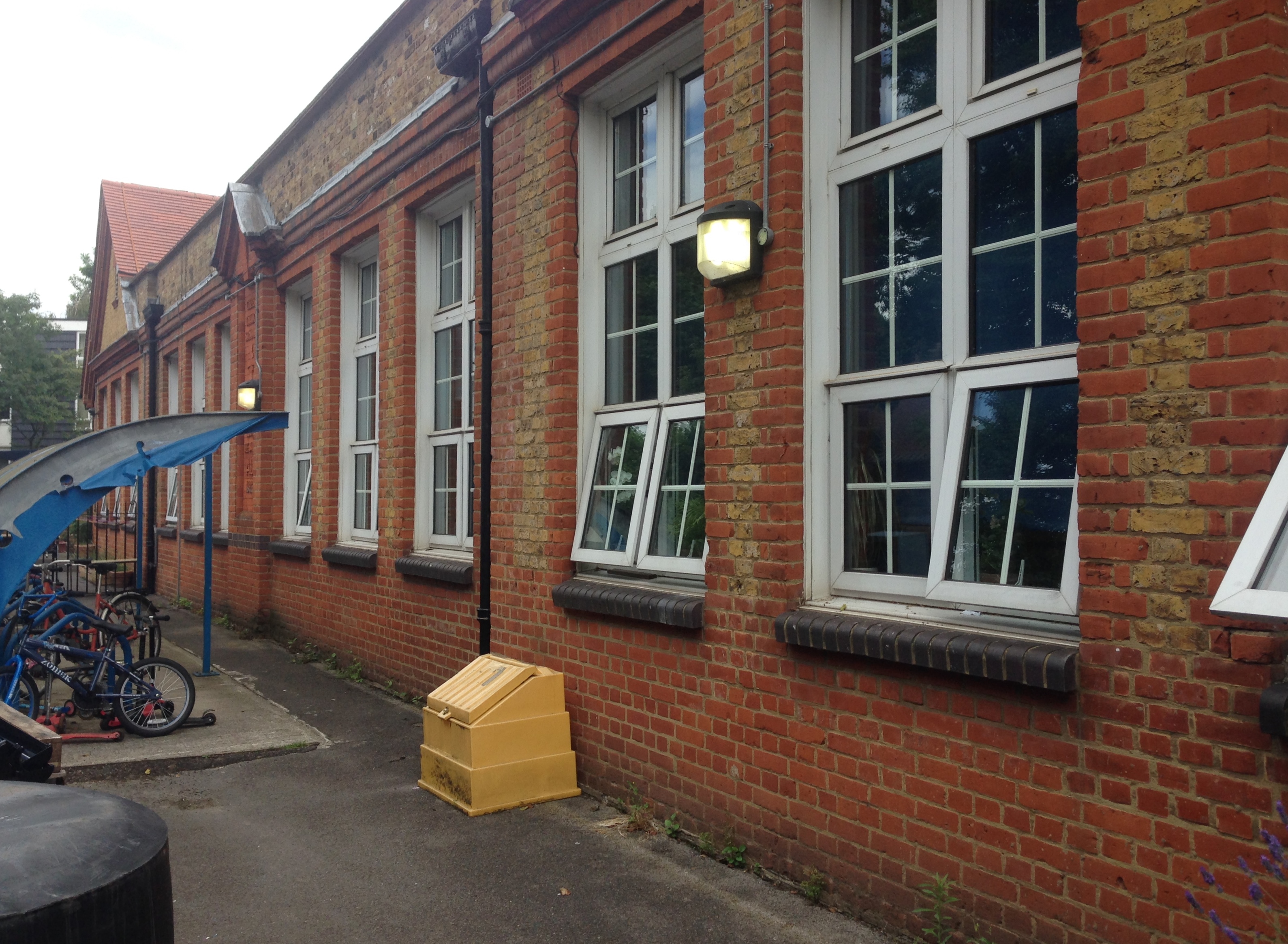
Shillington Old School
known for works at Clifton Cathedral and several London County Council developments: some of the works are listed. He now lives in Cumbria. Having drawn this to the attention of the Town Hall, I think Mitchell may figure in the next “Winstanley News”.
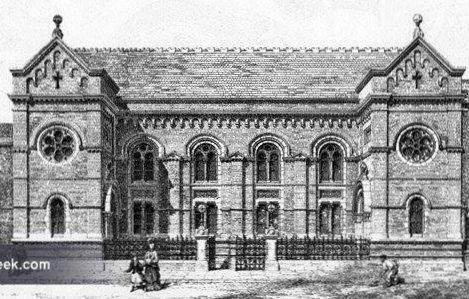
This month, can I ask who knows the connection between , at the end of Este Road, and the nearby Shillington Old School Building, a beacon of light – pictured here? And it isn’t simply that they are neighbours – oh and can you name one famous ex-pupil of Christ Church?
Councillor Tony Belton’s North Battersea, September, 2016, Newsletter (# 88)
| 1. OK, so I know it’s still August but I am off tomorrow and won’t be back until well into September and so here is a very short September Newsletter.
2. I wasn’t really complaining last month, just commenting, that I had received a criticism of the July newsletter, but I would like to thank you for the many very positive responses I got in reply to that criticism. In fact, as a number of you remarked on the scale of Wandsworth Council’s operations, it has given me lots of ideas for my future “Did you know” sections! 3. So what did happen in August? Well, I started, as promised, on August 2nd by reviewing, with members of the Battersea Society, their suggested list of buildings of local historic and/or architectural significance. It was a magnificently eclectic list, ranging from stink pipes (built over Victorian sewers to allow the smell to escape – yes, there are a couple that I know of in Battersea) to Victorian post boxes, from splendid nineteenth-century houses to long sets of granite paving stones. We even decided to ask for the listing of four Winstanley murals – see “Did you know?” below. 4. I had my Council surgery  St. Mary’s RC school, Queenstown in Battersea Reference Library on Saturday, 6th August, and then on 10th August I visited the new St. Mary’s R. C. Primary School in Lockington Road. The site is called Battersea Exchange as a reference to the connection between Battersea Park and Queenstown Road railway stations. It is developing fast, and will contain several hundred flats, as well as the school which will open for some classes this September. It should be noted that a few years ago, the school would have been built by the Council, using taxpayer money, but this school is built as a by-product of private development. Is that a good thing? Saves us all money but possibly only at the cost of allowing bigger, more profitable developments? 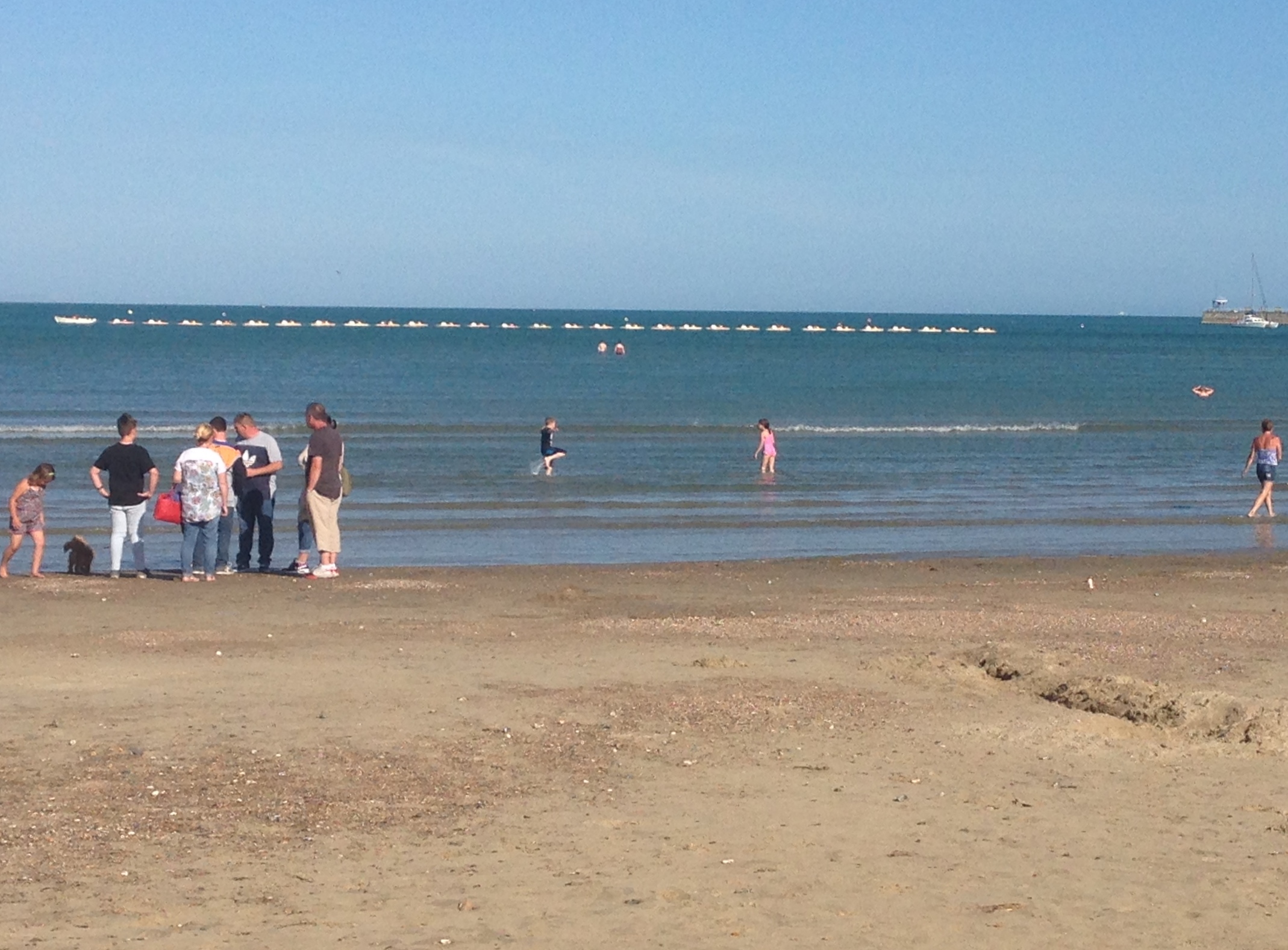 Pedalos on way home 5. On the 7th I, and my partner, decided to go to Weymouth for a day trip from Clapham Junction. It was a great day, very sunny and warm, and a reminder of just how good it is to have CJ on our door-step and, therefore, every south coast resort within a couple of hours from home.  Wandle, Charlie Reed, Turf Project 6. On the 12th I was persuaded to go to an exhibition on the River Wandle: A constant Amid Change Exhibition. It was organised by the Turf Centre, Croydon, which is a non-profit artist-run community project. Actually if you know as much about the River Wandle and its long industrial history as I do, then you would find it disappointing, but as East Croydon is only 10 minutes from CJ it was no great hardship. (The first Council I ever served on (1971-74) started the Wandle Walk alongside the river. It seemed a bit of a joke back then but now it really is a pedestrian and bicycle highway). It was a small exhibition of the paintings by local school teacher Charlie Reed and in themselves they were nice enough. This was my favourite. 7. I had the Planning Applications Committee on 15th. It really was a nothing event with only 7 really minor applications, but the hot news, that has a big impact on  Hope Street Sports Latchmere, is that the Hope Street Sports Centre has been saved for at least a couple more years. This happy reprieve is, perhaps, a completely unexpected result of the Brexit vote, because, instead of proceeding with a private development of luxury properties, just off Shuttleworth Road, the company concerned is selling its stake in the site to Wandsworth Council for council housing. The site will be used to re-house tenants and leaseholders from the Winstanley, during the regeneration. 8. I think that Simon Hogg, Wendy Speck and I can reasonably claim some credit for this outcome as ward councillors. We have kept constant pressure on the Wandsworth administration for a full one:one replacement of social housing being redeveloped on the estate and for the Hope Street Centre to be kept until an adequate replacement is provided as part of the Winstanley regeneration. This new site frees up space for the Council both to provide social housing and keep the Centre open. 9. Another piece of good news is that as well as starting night services on the Northern and Central lines of the underground as from 19th August, Transport for London (TFL) announced an improvement of evening and week-end services for the 344, a bus route, which many of you use. The improvement is an increase in regularity with it becoming a one in 10 minute as opposed to 12-minute service; sounds really small but it is an 18% increase! 10. On the 18th we had the by-election in Tooting ward. Labour’s candidate, Paul White, a close friend, won with a majority of 823, which represents a swing to Labour of over 8%. The turn-out of 20% was, of course, very low as it always was likely to be for an August by-election, but nevertheless it was a welcome victory. 11. On 19th August, we are going to stay with Mary Jay, Douglas Jay’s widow, in Oxfordshire. Most readers will not know either Douglas or Mary, but Douglas was Battersea’s M.P. from 1946-1973 and a member of Harold Wilson’s Cabinet, 1964-67. Douglas was a doughty politician – he campaigned against the inner London motorway box and won (the Box would have obliterated much of modern Battersea, creating a Spaghetti Junction centred on the Latchmere) and against Britain’s entry into what was then the Common Market (and lost). I wonder what he would have said about the Referendum result. I know he would have been very dismissive about the Referendum so-called “debate”. 12. And on Monday, 23rd, I am off for my three-week holiday to Florence and then the Croatian coast. My Programme for September 1. I am at the Planning Applications Committee on the 14th September. 2. And the Met Police’s Special Neighbourhood Team (SNT) meeting at the George Shearing centre on the15th, although I must admit that recently I have missed the SNT rather more than I would have liked. 3. I have the Wandsworth Conservation Area Committee on the 19th September. And on 20th, the Community Services Committee. 4. Then on Saturday 24th September I have the Labour Party Conference in Liverpool. I am not at all sure that I will be going to it, even though it can be great fun. This year though it will be much enlivened, for good or for ill, by the announcement of the result of our big Leadership Election between Jeremy Corbyn and Owen Smith. What price a peaceful week after that? Do you know? Last month I asked which 150th anniversary was being celebrated this year at the Este Road Fire Station. It was in fact the 150th anniversary of the Metropolitan Fire Service. And the Este Road building was said to be a “cut-price” miniature of the Victoria Embankment’s London Fire Brigade Headquarters. Do you see the resemblance? Winstanley Estate I said in paragraph 3 above that we asked for the listing of four murals on the Winstanley estate. Here is one of them in Thomas Baines Road. Had you ever really stopped and looked at it? And can you tell me anything about them, such as the name of the sculptor? |
Why throw money at the Town Halls to resolve the financial crisis?
In my last blog I suggested that the Government should use local authorities to kick start the economy. There are many advantages to using local authorities rather than very large infrastructure schemes like HS2, Hinckley Point nuclear power station, Trident replacement or even the Olympic Games.
Many of these very large capital projects are politically contentious and sometimes very slow to have an impact. Most get bogged down in expensive public enquiries and a proportion probably won’t come off. What is more much of the early expenditure is spent on highly paid staff, such as lawyers, architects and designers and not construction and support staff. An equivalent £1billion spread amongst Britain’s 500 plus local authorities would, on the other hand, have an almost immediate impact.
£10 or £20 million given to my local authority, Wandsworth, could be used to buy every school pupil a laptop or to implement 10 or 20 small, local environmental improvements. I think we would have little problem in spending most of it within a couple of years, with an immediate small but significant local economic impact. Such a nation-wide scheme might, of course, include some silly, vanity projects and some failures but nothing as disastrous and costly as failed and useless mega-projects. What is more such a scheme could easily be targeted to, say, the local authorities in the poorest parts of the country, with the highest unemployment rates or the worst health statistics.
I see William Keegan in the Observer (7th August 2016) agrees with me about using local authorities to kick start the economy, though I must confess I am more one of his disciples than the other way round!
A similar suggestion comes from one of today’s great iconoclasts, Simon Jenkins. He suggests that the simplest solution would be to throw money directly at people. His suggestion reminds me of Alistair Darling’s scrappage scheme, which gave people £2,000 to car owners to scrap their old car and buy a new one. But Jenkins’ idea is more open-ended, in that people could spend on clothing, food or, and here’s the rub, foreign holidays – I have nothing against foreign countries, of course, but, if one is trying to kick start the UK economy then giving it all to Benidorm seems rather pointless.
The problem with Jenkins’ idea is, it seems to me, that it is not targeted to those most in need and there would, I think, be considerable difficulty in targeting, say, the lower paid or the unemployed. It is an interesting idea and gets round Jenkins’ perennial scepticism about bureaucracy. But the time of local democracy has come (again). Think of Joseph Chamberlain in Birmingham in the 1880s or John Burns in Battersea in the 1900s, think of Attlee and McMillan boosting council house building in the 1940s and 1950s.
Boosting the local economy means boosting local democracy and society. Forget quantitative easing, which goes to the banks; forget big vanity projects, over-budget, over-time; think local – NOW.
Austerity in the Town Halls; Recession out there for working people
Today the Bank of England took crisis action by lowering interest rates to 0.25% and throwing money at the business heights of the economy. Will it work? Cutting rates to 0.5% seven years ago didn’t. Nothing, Osborne did, really changed the equation.
What would work immediately, however, would be to take the heat off public expenditure. What do I mean?
Well right now Wandsworth and Richmond-upon-Thames are cutting service levels and reducing the number of jobs right here in south west London under pressure from this Government’s cuts in local government grants; 400 jobs to be precise. And all because the Tory party has an ideological commitment to reducing the size of the state – whatever that means.
The same thing, and worse, is happening in every local authority across the country. Similar cuts are happening in many more public sector organisations.
Meanwhile what do the councillors do? Well, all of us were under great pressure to vote for the jobs cuts. The majority (Tory) party councillors voted for the cuts because they cannot face opposing “their” government and the minority (Labour) councillors are not in a position to defy the government and are “scared” of being accused of voting for an increased Council Tax.
I’ve been around long enough to remember when the Ted Heath Government (1970-74), the Thatcher Government (about 1982-86) and the first Tony Blair Government (1997-2002) faced similar economic crises. What did they do? They threw money at local government with orders to spend, spend, spend in an attempt to kick-start the economy.
The public sector turned out to be far more effective than throwing money at the banks; that was tried in 2009 and it didn’t work.
Just when will Teresa May take the same kind of actions and just how silly will the cuts of 2010-16 look when that happens?
Councillor Tony Belton’s Latchmere August, 2016, Newsletter (# 87)
|




Councillor Tony Belton’s Latchmere July, 2016, Newsletter (# 86)
|


Councillor Tony Belton’s Latchmere June, 2016, Newsletter (# 85)
|




![7 wendy[1]](https://tonybelton.blog/wp-content/uploads/2016/06/7-wendy1.jpg)
Councillor Tony Belton’s Latchmere May, 2016, Newsletter (# 84)
|



Councillor Tony Belton’s Latchmere April, 2016, Newsletter (# 83)
- I am going to start with the last day of the month, 31st March, 2016 – a disaster! I have been well and truly hacked. I was rung by a Microsoft support technician, except that it turned out that he wasn’t. Indeed he was a modern highwayman, a crook. After he had conned me and stripped my computer of all locally held data, including photographs and software, and got into my bank and transferred $5,000 (I can’t at present find the GBP sign on my keyboard!), to a Mr. Cardusi, I was able to get free from him. Fortunately the Bank refused to transfer the money and I have access to the internet
- So I am able to type this newsletter using Mailchimp, with its limited word processing capabilities. I also have all the email addresses that I used in Mailchimp, namely Latchmere constituents, but I have lost many of the rest. How much of the rest of this newsletter I will be able to finish, you will know when I get there. But I think I have lost photographs I intended to put in and maybe have been so hit by this emergency that I miss stories and forget events. But one thing I do say to you is be more rigorous about backing up all your data and filing copies of your software than I have been.
- I will spend much of the next week trying to recover the accounts of two voluntary bodies, of which I am Treasurer; constituent casework, maybe 4,000 photographs, etc., etc. I look forward to a miserable week and I do hate criminal hackers! And now onto the rest of the newsletter – though if any of you are experts on pc recovery then I look forward to hearing from you!
- There was a Council Meeting on 9th The March Council Meeting was traditionally an important debate about the Budget and next year’s Council Tax. But it has rather lost its point since successive governments, of both persuasions, have so limited Council’s capacity to raise, or in effect cut, Council Tax that although we go through the debate and we try and find grounds to vote against each other, in practice there is very little to debate.
- So the main debate was about the Ofsted Report condemning Wandsworth’s performance relating to “children looked after”. The Labour councillors, me included, called AGAIN for the resignations of those local politicians responsible for the “inadequate” services provided for these vulnerable children. Of course the Tory members took no notice.
- The March Planning Applications Committee PAC meeting was on 23rd and had one application of real interest to Latchmere residents and that was for the redevelopment of the Shell Garage in York Road – the one on York Road, right opposite Doris Emmerton House. It involved the demolition of all the existing buildings and the erection of essentially a nine storey building and basement to provide 78 private rented apartments, and a replacement filling station, with a shop.
 York Road, admittedly not the most glamorous of roads, looks like being transformed beyond recognition.
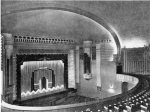
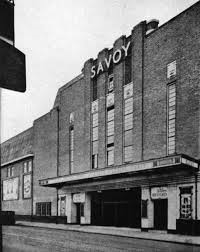
 - By the way, here is just a reminder of what used to stand on the site – the Savoy cinema – I mentioned it in my February, 2014, newsletter. The massive auditorium, built in 1938, sat over 2,000 people and was damaged by a V2 in January, 1945, and was finally demolished in 1960.
- Talking of planning applications, the latest news on that front is that a developer has acquired the site of the old schoolkeeper’s house at Harris Academy, formerly Battersea Park School, and is in talks with the planners about putting a 13/14 storey block on the
 site at the corner of Culvert Road and Battersea Park Road. This might look something like this, with Castlemaine House on the right.
 - A few days earlier, 19thMarch, Wandsworth Labour Parties had a fish ‘n chips fund raising supper at York Gardens Library. There is not really much reason to mention it except that it was to mark International Earth Day, which I dare say you have never heard of. I hadn’t and when you look it up on Google there are conflicting accounts of when it actually is with some saying 22 April and others 21 March. In any event it has been “invented” to salute the earth and all of those environmentalists making efforts to save it! So we ate by candlelight and MP, Hilary Benn, gave his first ever candlelit speech. A bit odd really but very pleasant.
- Where were you during Hurricane Katie? I went down to the Duchess
![_88974872_88974871[1]](https://tonybelton.blog/wp-content/uploads/2016/04/88974872_889748711.jpg?w=300&h=184) in Nine Elms Lane not long after Easter Monday and saw the “blown-out” gable end for myself. This is the best picture I got of it! You can see by the amount of masonry on the road what a mess it would have made of any person or thing (car) below on the road!
in Nine Elms Lane not long after Easter Monday and saw the “blown-out” gable end for myself. This is the best picture I got of it! You can see by the amount of masonry on the road what a mess it would have made of any person or thing (car) below on the road! - Of course, we all know just how perverse the British
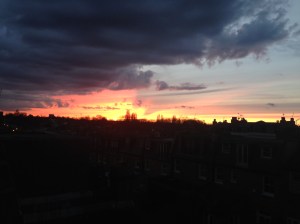 weather can be so it was fun to take this picture from my house at sunset, two days later!
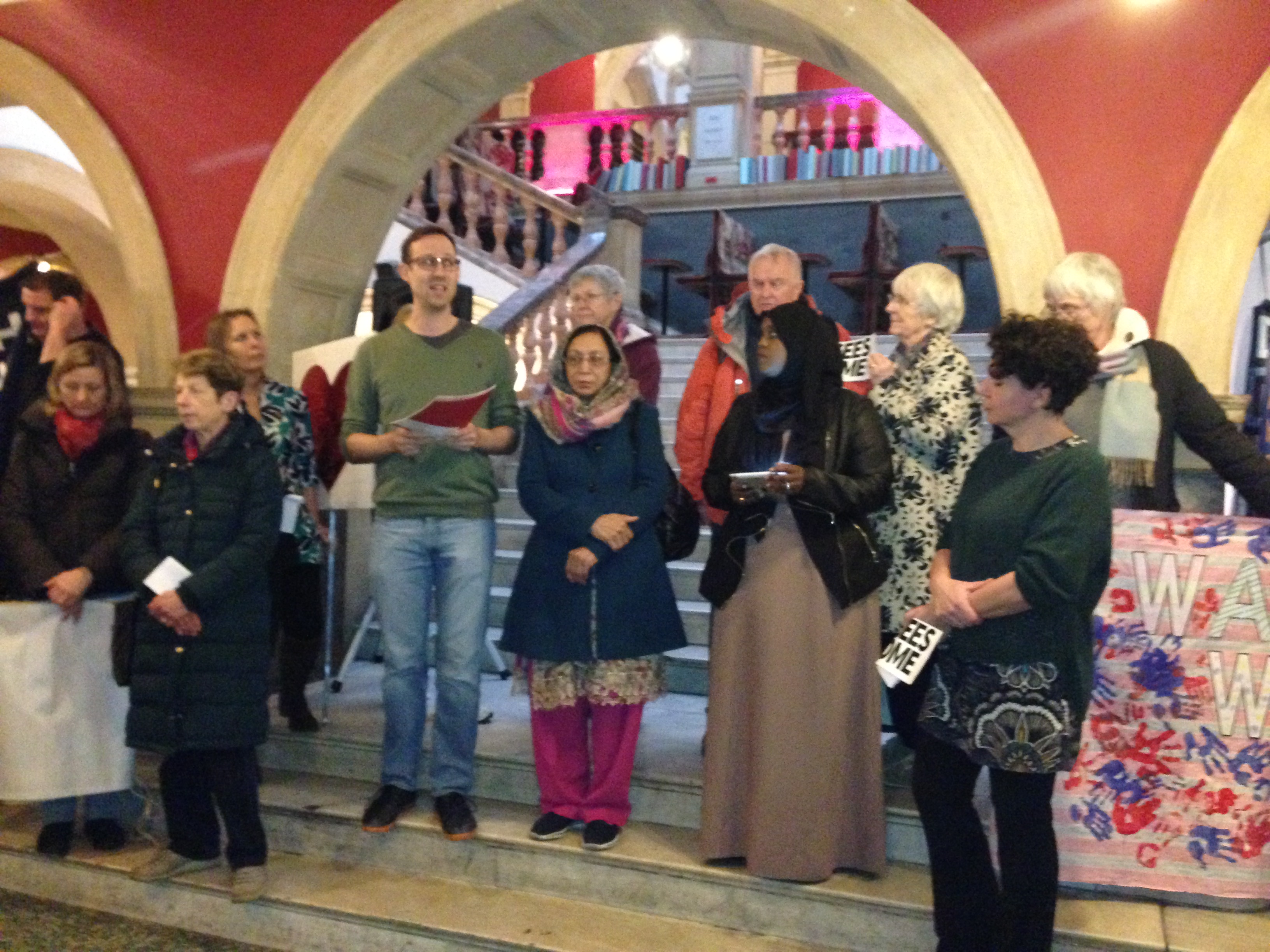
 - On Saturday, 26th March, a number of people staged a “Welcome to Refugees” event at Battersea Arts Centre. Here is
 Aaron Barbour, in the sweater and jeans, of the Katherine Low Settlement welcoming some of the recent arrivals, largely from war-torn Afghanistan and Somalia.


![_88974872_88974871[1]](https://tonybelton.blog/wp-content/uploads/2016/04/88974872_889748711.jpg)

My Programme for April
- First of all, I have to sort out my computing mess. Do I go for Apple? How much of my data can I recreate or recover? Be more thorough about back-ups. Put as much into the sky as possible. Don’t make my mistake!
- On Wednesday, 6th, I will be attending my first Corporate Parenting Panel. I must say I am very dubious about this. I just do not see how the Government can really believe that councillors can take on the almost entirely theoretical role of corporate parents. Just try suggesting that they should legislate for MPs having such a role. MPs would run a mile – in my view – especially the opposition MPS who would be said to have the responsibility but no power to set the agenda or policies.
- I am going to a friend’s new house in Hastings over the 9th/10th week-end for my birthday – just which one I will keep to myself for now!
- The Battersea Society has tasked itself to make a record of all the buildings, terraces, views, memorials, etc. that it believes are of note in Battersea in an attempt to get them all, or as many as possible, listed and protected by the Council. And I and another Battersea Society member are going to spend all day Sunday 24th driving round Battersea listing and photographing them! That should be fun – I am looking forward to that.
- I have the Education and Children’s Services Committee on 12th April, when we will yet again be discussing introduced after the Ofsted Report! But that won’t be all as there will be another committee on 19th and a full Council Meeting on 27th, just devoted to this one matter.
- On the 21st there is the Planning Applications Committee, which will be deciding amongst other things – ring and check the list!
- And all the time the Mayoral Election, Khan vs. Goldsmith, and the Referendum campaigns are going on in a background full of Tories fighting like ferrets in a bag and Labour unable, or is it unwilling, to get its act together. What a turbulent political world.
Did you know? Last month I asked for the connection between the famous playwright, George Bernard Shaw, and Latchmere. Quite a few of you got this right but unfortunately one of my PC losses was my inbox so I don’t know who – It would be really nice if you could resend your answer. The answer was that when John Archer unveiled the statue to the “Little Brown Dog” in Latchmere recreation ground, Shaw was there and was one of the speakers.
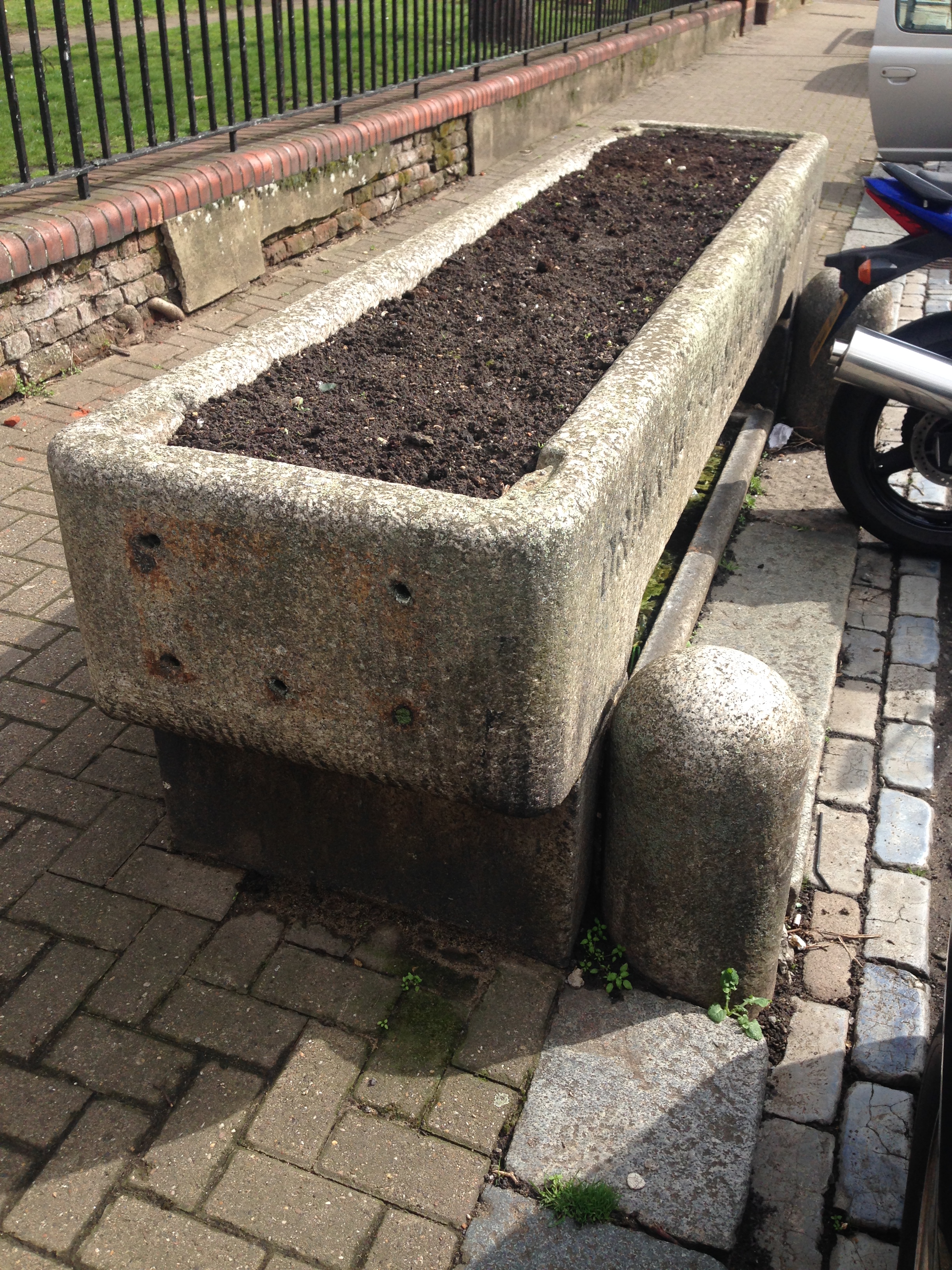
And for this month: There was a horse trough, there were actually quite a few, in York Road, but one in particular had the charming legend engraved in it – Be Merciful to your Animals. It has a new home 30 or so miles away – any idea where?
Two prescient Blogs from 2014
I was just trawling through some old blogs and I came across two, of which I am pretty proud. Just scroll down the right side of this screen to July 14, 2014 and October 7, 2014 and take a look.
The first is titled School Governance and Governors, and it bemoans the demise of local councillor representation on school governing bodies and the rise of the technocrat. I didn’t know it but it presaged last week’s announcement of the “end” of parent governors. After all parents don’t know anything about running schools, their expertise being merely to have kids and local councillors equally don’t know much about running schools – all they know about it is the local community and the need to plan for school provision and school places. Obviously just the kind of people that Cameron/Osborne would want to kick out of school administration: parents and local representatives! The Tory version is, of course, to have technocrats and the private sector under the pseudo-guise of educational charitable institutions.
The second was titled The Tory Party faces a disaster called Europe. The one thing I got wrong in that blog was the date of the crisis, which I had down for 2017. I didn’t know that Cameron was going to plump for June 23, 2016 as the Referendum Day. I predicted Tory division and disaster and potentially its demise for a generation. I hope that I am right. It is beginning to look that way!
And my punt for 2016? Against all the punditry and all the apparent trends, the economic problems and climate change issues demand a collective solution. So my prediction is that 2016 sees the start of the rejuvenation of social democracy.
 Tony Belton
 Tony Belton