Councillor Tony Belton’s Battersea July, 2020, Newsletter (# 133)
- This year continues its most extraordinary progress. Can any government ever have lost public support as rapidly as this one has? My own favourite mark of ineptitude came from Foreign Secretary, Dominic Raab, who told us not once but time and again that “we, the Government, will make the right decisions at the right time”. Have you ever heard of anyone boasting of making the wrong decisions at either the right or wrong time?
- On 4th June, we had our last street
 “clapathon” in honour of the emergency workers. It was followed by a concert, given by 11 local schoolgirls. The picture shows 6, with the harpist hidden by the violinist, the 8th and 9th playing cellos off to the left and two flautists off to the right. All were accompanied by the pianist, the musical mother of the violinist, who arranged the ensemble. They were spectacularly good with the violinist simply outstanding.
- On Friday, 19th June, an old friend, Andy Fearn, led a dozen or so refugees and asylum seekers, all members of Caras Community Centre, a charity based in Tooting, in giving a presentation to Wandsworth councillors. The presentation was a short film, Hold on to your Hope, showcasing their poetry and art. It was put together over 8 weeks during lockdown, with guidance from drama and arts facilitators from the Phosophoros Theatre Company and People’s Palace Projects. Through a series of online workshops, they explored issues around community, identity, challenges, fear, and future hopes. The workshops were part of a wider project called ‘Our Wandsworth’, which is being funded by the Wandsworth Community Fund and the National Lottery and delivered by the charity Protection Approaches. The aim of this project is to prevent prejudice and discrimination and to assist those from marginalised communities in Wandsworth to speak of their experiences to the wider community. The thought-provoking film can be seen at https://www.youtube.com/watch?v=8DEePjbm5MU&feature=youtu.be
- The presentation was done on Zoom. I am conscious that some readers of this newsletter may not be acquainted with Zoom, or with Microsoft’s Teams (almost none of us were pre-lockdown). They are software tools, now used across the world, to run meetings, or to teach children, or for presentations, or to play chess, or bridge or a countless number of other things. If you have not used either of them or something similar get your children to teach you, or if not your children then someone else’s. There will be very few jobs, or possibly even much social life, in future where Zoom is not used.
- Last month, I wrote of the work of volunteer organisations delivering food to those, who need that support. One of those organisations was WNWN (Waste Not Want Not) and, cleverly, they offered to deliver a meal to anyone prepared to pay for a fund-raiser. So, on 20th June, my partner and I settled down for the evening and right on time a meal was delivered by one of the volunteers. It was a scrumptious treat.
- Can I remind you of my last month’s message: If you want to help our community at this difficult time but perhaps can’t for medical/physical reasons of your own then one option is to give at – https://www.justgiving.com/crowdfunding/wastenotwantnot
- On 22nd June, 26 Labour councillors held our annual meeting on Teams. Most of the evening was spent
 on important but totally internal matters but it was also the occasion of our annual election for Leader of the Wandsworth Labour Group. This year, it was contested and the winner, by the narrowest of margins was Leonie Cooper.
 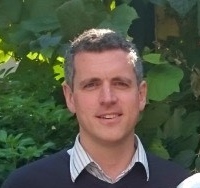 Leonie, who as I am sure some of you will recall, was a Latchmere councillor 2006-10 (she was the one with the dog). Leonie succeeded Simon Hogg who, of course, is and continues to be a Latchmere councillor. Leonie is a highly effective member of the Greater London Assembly, where she represents Merton and Wandsworth, which is clearly a good fit for someone aspiring to be the Leader of Wandsworth Council after the 2022 Borough elections.
- On June 24th we had the third virtual (that is to say conducted remotely via a Teams link) Planning Applications Committee PAC. There were some large, important applications relating to sites in Earlsfield and Putney but the largest single application related to
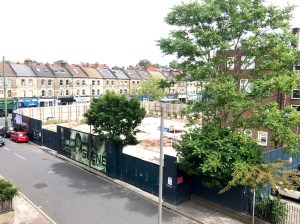 Battersea Power Station. Actually, the application was largely technical, switching the use of two very large (22,000 square metres) buildings from residential to office and vice versa, but leaving the total space for residential and office unchanged. The important sub-text is whether development continues across London, Wandsworth, and in particular Nine Elms, or whether the economy comes to a grinding halt, leaving to the developers by Harris Academy in return for a school gymnasium and associated facilities. As for the gym and facilities: where are they now?
- The PAC meeting had 105 live viewers with 38 later watching the archive “film”. The May meeting had 432 live viewers and has since had 329 views of the archive film. This decline in the ratings could mean that the original novelty of being able to watch the Committee at home has worn off but perhaps more likely it was because the May meeting dealt with more controversial applications. Either way, I think that, although we are not going to challenge Coronation Street in the ratings, there is little doubt that live streaming of Council and committee meetings are a modern fixture.
- Councillor Melanie Hampton, Mary Park, had the fun idea of making videos, from Julia Donaldson’s Gruffalo books. The idea was to provide the videos to schools so that they can show them to children in class and also share them with children, who are homeschooling. The videos will also go to local libraries and will be shared in Brightside with links to YouTube.
- Sandra Evangelista
 , the Wandsworth Council officer tasked with putting this into action, thought it would be a great idea to film the videos in our local green spaces and for them to be distributed to people who are unable to get out and about. She also had the idea of using councillors to do the “acting”. So, on 26th June I went to Battersea Park to play my part in a drama called A Squash and a Squeeze. The picture is of me as the wise old man on the set!
- The first video out on release is The Gruffalo, starring fellow ward councillor Kate Stock and three other councillors. You can see it here at https://youtu.be/Cs8T4INVfOM. I think you will agree that it is a charming film. I just hope that “mine” is half as good.
- Meanwhile, we face a summer of off-and-on lockdown, public disturbances, rising concerns about community:police relations, high levels of unemployment, social distancing in schools, trains and buses, pubs and cafes; and, on top of all that, worries about life through and after Brexit. When a Chinese guru said, many years ago, “May you live in interesting times” he obviously had 2020 in mind!

My Programme for July
- On 6th July I am going to the dentist, having lost a tooth on 6th April – a very minor problem compared with many others. I am intrigued about how that will work in a socially distanced manner. Should be fascinating.
- Once again, in an official sense, July will be a quiet month. There will be a virtual Council Meeting on 14th July and a Planning Applications Committee (PAC) on 23rd We are now quite practised at virtual committee meetings with about a dozen participants but a full, formal Council meeting with 60 participants – that will be a new experience!
Last month I asked whether anyone knew who this woman was?
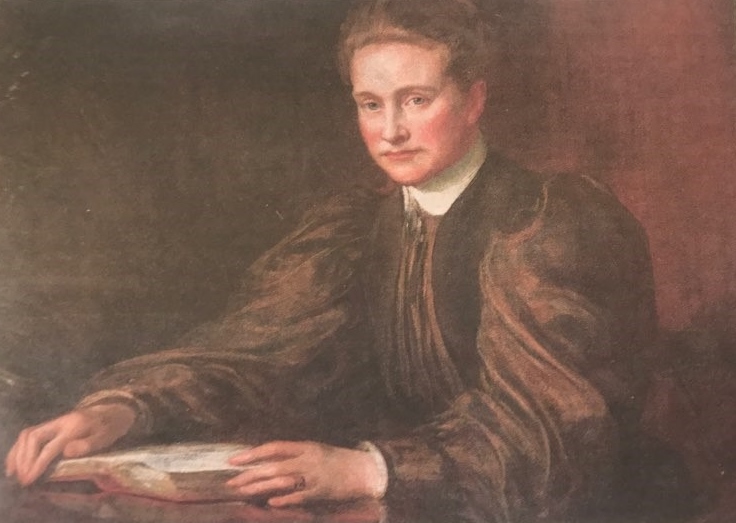
I got a few responses with one person guessing it was Charlotte Despard, the indefatigable campaigner for women’s rights, and many other issues such as Indian and Irish independence. But moments before I finished this newsletter someone gave me the correct answer. It is a picture of Dame Millicent Fawcett (1847–1929), painted by Theodore Wirkman, now hanging in the Royal Holloway College gallery. Fawcett, who gave her name to a road on the Kambala Estate (Fawcett Close, SW11 2LT & 2LU), became the leader of the National Union of Women’s Suffrage Societies in 1897. Her more reformist campaigning methods were possibly more important in winning the vote for women than has been acknowledged, in comparison with Christobel Pankhurst’s more radical Women’s Social

and Political Union.
Millicent Fawcett was also very active in furthering the cause of women’s education. She was a founding member of Cambridge University’s first woman’s college, Newnham College, and of Bedford College, London, later part of Royal Holloway College.
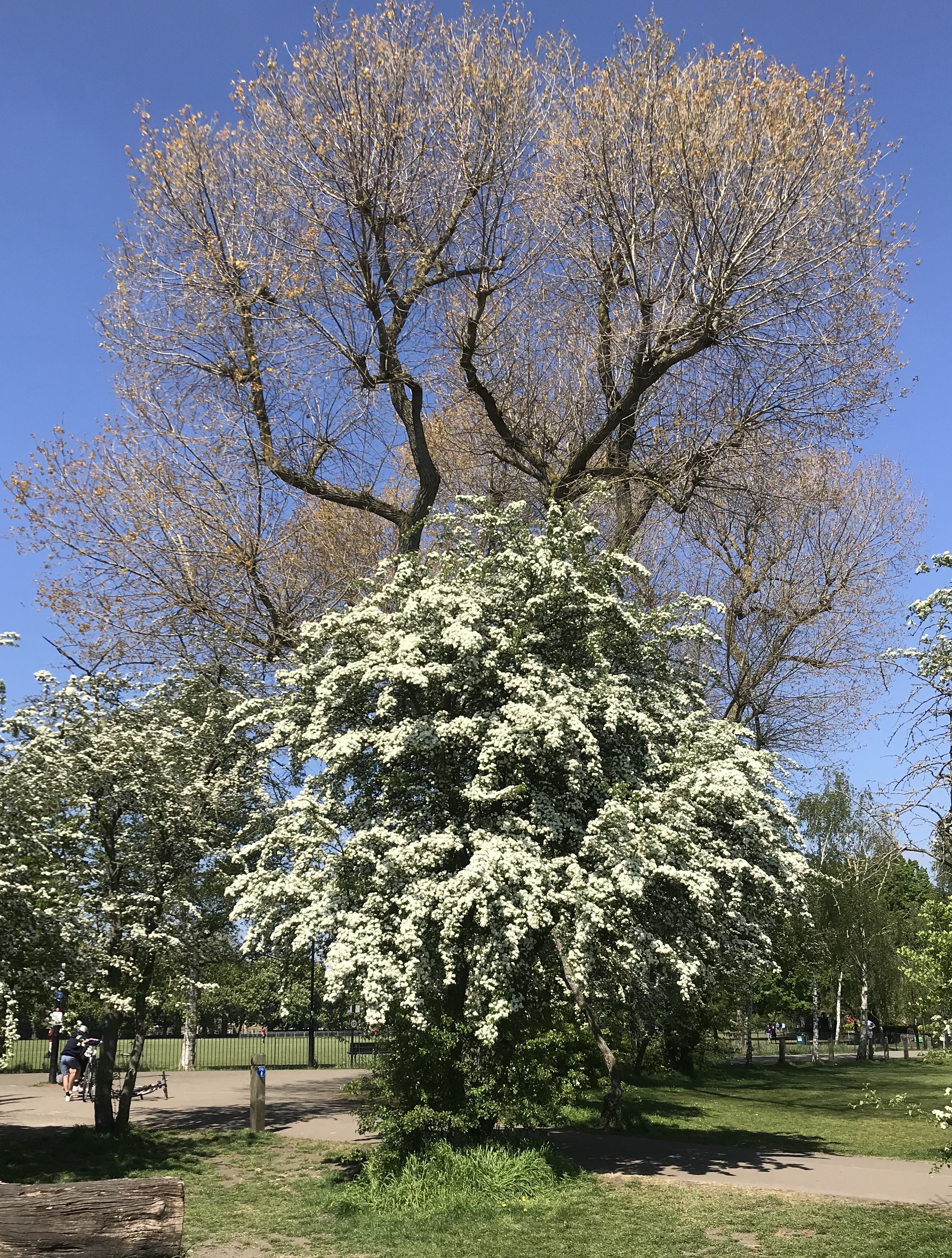
This month let me ask whether you can place my tree of the month? It is a weeping willow in Latchmere ward but where exactly?
Councillor Tony Belton’s Battersea June, 2020, Newsletter (# 132)
- As I said last month, “One extraordinary month follows
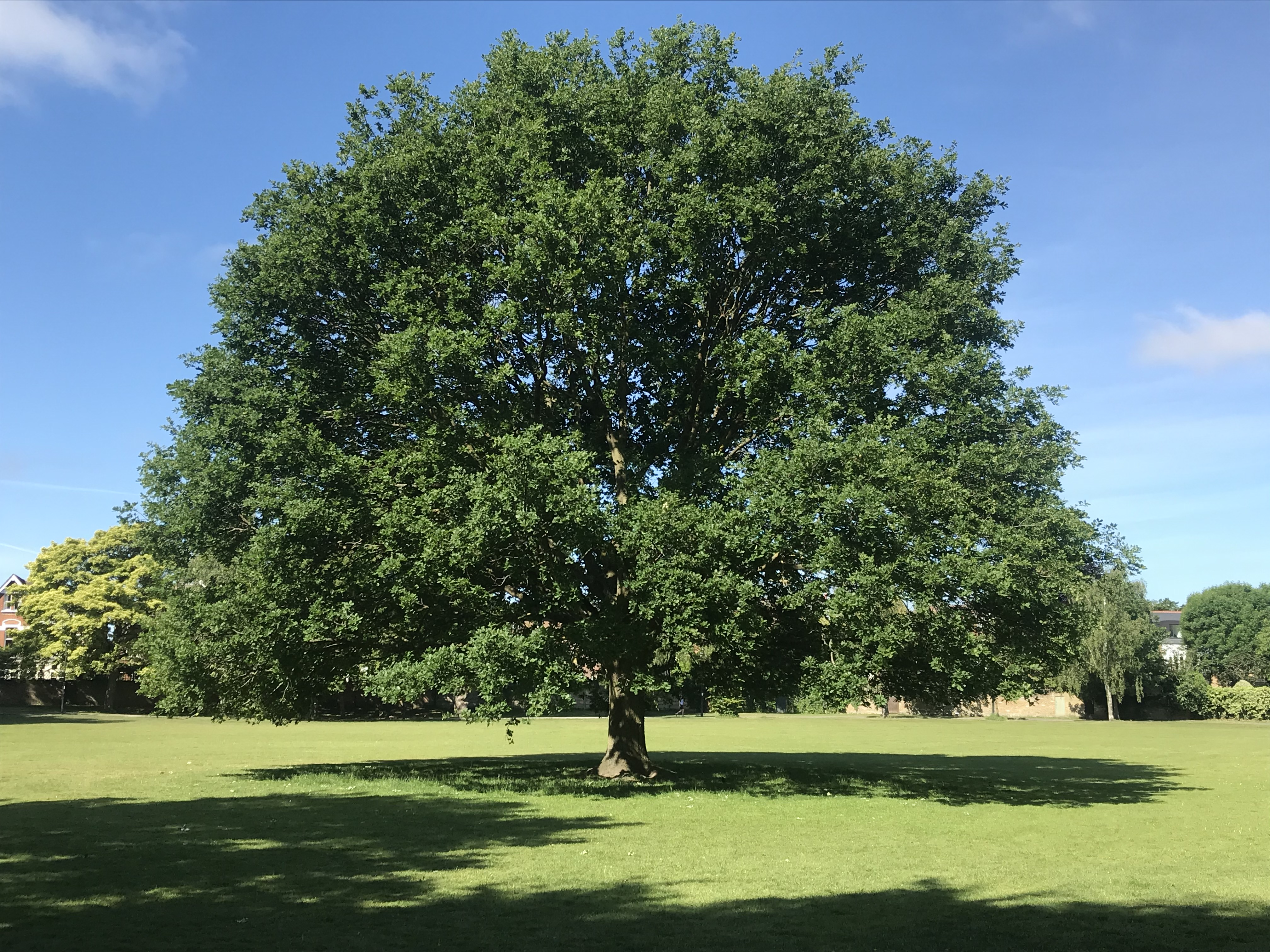
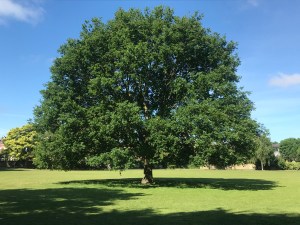 another. Brilliant weather, day after day. The sunniest May on record and probably the warmest and driest. Again, I have sat in the garden for more hours in May, than in some years in the past, and there enjoyed the bird song”. The bluebells and the apple blossom have now gone and, judging from the Park and the Common, we are on the verge of an official drought. Last month I had a picture of May blossom, this time my tree of the month is this magnificent young oak on Wandsworth Common.
- As, shall we say, a “mature councillor” on a local government pension, index proofed against inflation and keeping myself semi-isolated against the worst elements of this awful pandemic, it can be difficult to remember that many, many families and individuals are having a truly horrendous time. One couple of friends were unable to go to their son’s funeral, and another friend in her early seventies is dipping into and out of the Covid 19 infection with painful and harrowing regularity.
- However, the stark reality is that the pandemic is having by far the greatest impact on those, who can least afford it, both physically and financially. This separate life experience in our society between those of us, who are comfortably off, and those less fortunate explains to some degree the heartless arrogance of such policy decisions as the 1989 Poll Tax, the 2012 Bedroom Tax (still, disgracefully, in place), and Theresa May’s “hostile environment” for immigrants, May’s name for our treatment of low paid workers upon whom the economy relies and who are, so often, immigrants.
- For anyone, struggling with keeping themselves
WNWN at work
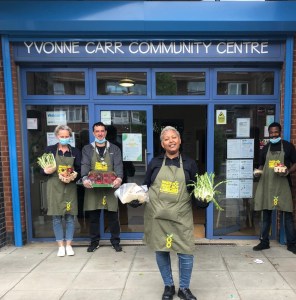
well and doing the shopping, can I recommend this link to Wandsworth Care Alliance, where there are details of organisations, who can help: https: //wandsworthcarealliance.org.uk/coronavirus/wandsworth-organisations-that/ These charitable organisations are using volunteers to do the shopping or deliver food for those in lockdown. Here are a few organisations operating in Latchmere: WOW (Women of Wandsworth), Providence House, KERA (Kambala Estate Residents Association), WNWN (Waste Not Want Not – Latchmere and Queenstown). The picture shows happy volunteers Georgia, Philip, Hadas and Kafui displaying a selection of food at Queenstown’s Yvonne Carr Community Centre.
- If you want to help but perhaps can’t for medical/physical reasons of your own then one option is to give at – https://www.justgiving.com/crowdfunding/wastenotwantnot
- I do try in this newsletter not to be too overtly political, though my political leanings are obvious enough. When I lean over backwards, or so it seems to me, to be fair to the Tories, some of my colleagues think that I am too kind. But I do believe that the last fortnight of May, 2020, breaks all records of Tory arrogance, stupidity, callousness and obstinacy. John Major won a comfortable majority in April, 1992, but almost exactly 5 months later his Government was effectively destroyed by the economic disaster of so-called Black Wednesday. Boris Johnson has equally had 5 months since his election triumph in December, 2019, and now his government is in serious danger of being even more of a wreck thanks – not really to Covid 19 but rather to this government’s incredibly shambolic, hypocritical and chaotic response.
- With Major, we faced the prospect of four and half years of lame government run by a decent man, who was at the very least trying to be a Prime Minister. This time, however, we face four and a half years with a charlatan in charge, a man who, it turns out, only wanted to be PM but had no idea of what to do when he got to Downing Street. What is more he has thrown out of his party almost every Tory politician of integrity and stature. Just imagine being “forced” to tweet or in some other way support Dominic Cummings, as in late May many Cabinet members did. Compare this shambles with the firm way Nicola Sturgeon, in Scotland, and Keir Starmer, in the Labour Party, have managed rather lesser indiscretions from their respective party officers.
- Perhaps, even worse, this country, once respected for a myriad of reasons, is in danger of becoming the laughing stock of Western Europe. I would not be surprised if many economic sectors, which rely on Britain’s generally good name, industries such as insurance, banking, entertainments, Universities and colleges take an unexpected hit from our loss of prestige: it’s a blow to what many economists and commentators describe as the UK’s “soft power”.
- On May 19th I had the second virtual Planning Applications Committee. It can be viewed at: https://richmond.public-i.tv/core/portal/webcast_interactive/486684. 432 people watched from home online.
- It was dominated, in the public mind, by
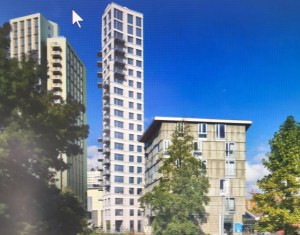 two applications: one a pencil slim tower in the centre of Wandsworth and the other an Astro-turf pitch application on Tooting Common. The tower, between Mapleton Crescent and Garratt Lane is planned to be 20 storeys high and contain 27 flats. It is squeezed between the Wandle River and Garratt Lane on an incredibly small site. As pictured here, the tower looks quite elegant, at least in concept, but I was not persuaded and voted against it. In the long term, I believe the environmental implications of putting so many people in so many tower blocks in central Wandsworth will prove to be a mistake. I, and one other councillor voted against it but 8 others supported it.
- The application to lay an Astro-turf pitch in Tooting Common, where now there is a “gravel” pitch and to re-arrange the nearby changing rooms and boxing club generated massive public interest, mostly in opposition as expressed in a petition signed by 6,000 people. In many ways this proposal is not very different from the new Astro-turf pitch in Falcon Park, but it was complicated by the popularity and significance of the Boxing Club, which was frequented not only by the current MP, Rosena Allin-Khan, but also by her predecessor and now Mayor of London, Sadiq Khan. Personally, I agreed with the majority Committee view that the Astro-turf pitches would be an improvement and that the Boxing Clubs requirements will be safeguarded. I trust that was a correct judgement but it certainly was not very popular on the night!
- On a personal level, I miss, along with many others I am sure, the occasional pint. I have cooked more than at any time in my life: not just the frying standard “bloke’s” stuff like eggs and bacon, steaks and sausages, but also poaching and baking; creating vegetarian curries and interesting starters. I must confess, though this is dangerous territory, that I almost enjoy it! What does surprise me is how stressful cooking can be!
- Finally, the “claparamas” have become quite the social highlight of the week in my road. The highlight has been the 8.10 concert given by two sisters and their talented mother. This week, in June, we are promised a Finale Concert with further contributions from neighbouring children. We could be starting a youth orchestra all of our own!
- STOP PRESS. Then on 25th May George Floyd, an unarmed man of Afro-American heritage was killed by a Minneapolis policeman. BLACK LIVES MATTER. Of course, other lives matter too but it is the black population, which suffers most from the racial prejudice that poisons all our lives. Ensure that BLACK LIVES MATTER in everything that we do and then all other lives will be better too.


My Programme for June
- Once again in an official sense June will be a quiet month. There will be a virtual Strategic Planning and Transportation Committee on 9th June and a Planning Applications Committee (PAC) on 24th And I am sure that other business will arise but when and what, I will have to wait and see!
Do you know the last time elections were postponed?
was the question I asked last month. As many of you guessed I was referring to the five-week postponement of the 2002 General Election from 3rd May until 7th June
because of the outbreak of foot and mouth disease. Over 6 million cows and sheep were slaughtered (and incinerated in mounds on the roadside) that year in a successful but highly contentious response to the disease. As I said then the fact that, 20 years later, it has been almost entirely forgotten is perhaps a good omen for this year’s human outbreak of a viral disease!
This picture appeared in a May edition of the Guardian. One road in Latchmere ward is named after her. Does anyone know who she was and where the road is?
Keep safe! and finally play this tremendous video made by the people of Battersea
Councillor Tony Belton’s Battersea May, 2020, Newsletter (# 131)
- One extraordinary month follows another. I said that about
 March but again “What a month April 2020 turned out to be!”. Brilliant weather, day after day. The sunniest April on record and probably the warmest and driest, even if the last three days made an effort to catch up on the showers front.
- I have sat in the garden for more hours in April, than in some years in the past, and noted what I am sure we have all noted. The birds seem to be singing more loudly every day, especially my local blackbird, who is glorying in not having to compete with the constant scream of jet engines on their way to Heathrow. Our bluebells are out in profusion and the apple blossom is at record levels. The air is as clear as has been seen in London, since, maybe, coal first started being widely used in the mid-eighteenth century.
- At times, it is difficult to remember that for many, many families April 2020 has also been the terrible month when a family member died before his/her time, leaving grieving sons and daughters, grandsons and granddaughters, husbands and wives.
- In my road, there is a weekly clapathon, or is it a clap-in, in honour of our NHS workers, from physicians and nurses, to cleaners and porters. This last week it was completed by a small concert when 6 and 9-year old neighbours played Judy Garland’s Over the Rainbow on a violin and a cello, accompanied by their mother on the piano. The audience of about 50 neighbours hardly had a dry eye between them.
- On April 4th Sir Keir Starmer was elected Leader of the
 Labour Party. He won the vote with 66% support from Party members. He immediately raised the morale of many in the party with his inaugural speech and has since taken immediate action to quash the ant-Semitic issue. His two performances in Prime Minister’s Questions, in neither case against the Prime Minister, have been forensic and “cool”, in exactly the way his critics describe as bloodless and I think of as precise and deadly. Over the months we will discover whether it is effective, though it looks good to me – and to you, I wonder?
- On April 23rd I took part in a virtual Planning Applications Committee. It was “broadcast” online and on the 28th I heard that the committee was viewed by over 550 people, making it probably the most broadly observed committee in Wandsworth history. The Council used Microsoft’s Team software to film the committee. Take a look: https://richmond.public-i.tv/core/portal/webcast_interactive/484556 but remember this, the first broadcast is a little slow to get underway!
- Virtual committees seem to me, on the basis of this experience (and a few other online meetings: Labour Party and Charity), to have both advantages and disadvantages when compared to the “real thing”. The advantages include clearer sound (and picture) as the camera and mike are within a yard of the speaker, whoever he/she may be. But on the other hand, neither participants of the meeting nor the audience can see all the other committee members and so it is more difficult to gauge the mood of the meeting. Some councillors have already predicted the end of formal committee meetings and I suspect that the crisis is inevitably going to result in a re-think of the traditional and now very dated Council Meeting. But I think that Councils, like Parliament, will find it very difficult to operate as in any sense a political forum without some kind of meeting of people, face to face. The political process relies as much on exchanges over a coffee or the bar as it does on formal debate in the chamber.
- As for the Planning Applications Committee’s real, standard business, it was dominated by applications relating to Battersea. As always, there were a number of smallish applications, which were significant, only to the applicants and their immediate neighbours. But one major one raised issues of general interest.
- The major application was for a “collective” living project with rooms for 500 residents, along with a hotel, restaurants and a number of collective facilities such as work space and studios. The developers intend to build this project on two sites, backing on to each other in Mendip and Chatfield Roads. It is undoubtedly an excitingly different style of life from the traditional flat and/or house. However, to my mind, it raised a slew of questions about collective living in a post-Covid times. But I was in a minority of one and the application was passed.

My Programme for May is completely unknown!
- We had all expected to spend much of May fighting in the GLA and Mayoral elections, but as you know they have been postponed for a year. Does that mean that the next Mayoral term will be only three years or will we simply lose a year from the next cycle? I imagine that the legislation was clear on this matter but I don’t know.
- May is usually an important year in the municipal year. It is both the end of the 2019/2020 year and the start of the 2020/2021 year and is, therefore, the month of annual meetings and elections of the Wandsworth Mayor and of the Leaders of the Council and the Opposition. But by general agreement that is all going to be postponed until at least later in the summer. We shall see.
- Most of the committees will also be postponed but having had one virtual Planning Applications Committee (PAC) last month, I am pretty certain that we will have another on 19th May, but apart from PAC, I suspect it will be a pretty quiet month!
Do you know the last time elections were postponed?
Elections were, of course, postponed during the two World Wars, although there were by-elections in the event of the death or resignation of MPs. But an election was postponed on at least one other occasion in my memory. Do you remember when that was and how long the postponement lasted? The fact that it has been almost entirely forgotten is perhaps a good omen for this occasion.
Remember, on this May Day, the International Labour Day all those front-line workers risking their lives to make our lives safer. And finally, look after yourself and your friends and families. Keep safe!
Councillor Tony Belton’s Battersea April, 2020, Newsletter (# 130)
- What a month March 2020 turned out to be! I had “standard” councillor-type meetings on 2nd, 4th, 5th and 10th and then decided to postpone one on the 11th and then nothing, zilch, zero, stop and now the Council’s website says “Due to the current situation with COVID-19, we are urgently reviewing the need for formal Council and Committee meetings at the current time”. But let’s start from the beginning.
- On 2nd March I had a meeting with some local residents, who live near Battersea Park Road. They had legitimate concerns about neighbouring developments and extensions, which in their view were having a harmful impact on their lives and properties. We had a useful if not conclusive discussion, which I later raised with planning officers. Who knows what will happen in the new circumstances, but I will continue to pursue the matter.
- The Council Meeting on the 4th March unanimously agreed the Council Tax for the coming year. The Tory majority did not want to make too much of an issue of it because it did involve an increase. And as Labour councillors did not wish to broadcast the scale of the increase forced on the Council by outside factors, not least by the Mayor of London, the evening passed fairly uncontentiously. The really big news is, or might have been, what happens to local government taxation next year, given that the Government seems to be driving local authorities into a cul-de-sac of bankruptcy EXCEPT that now it is clear that, after the Covid 19 emergency, all predictions about future tax levels are obsolete.
- The following day I had a meeting of the Healthy Streets Forum. This body is devoted to making sure that the streets of Wandsworth are, as clean and environmentally healthy, as they can possibly be. It is a very worthy cause, supported by very committed community activists; but I hope that they do not take it amiss if I say that they need to avoid talking down to councillors and officers, who understand, and in many cases share, their goals and objectives!
- Then on 10th March, I had a fascinating meeting with Wandsworth’s new Assistant Director of Planning. I wanted to get her thoughts on what infrastructure developments would have been important to the Council after 2022. I had quite an impressive check-list and was going to do some work on it. But now infrastructure development will have to be completely re-thought in the coming, new post-Covid 19 world.
- But then on 11th March, I decided to self-isolate!
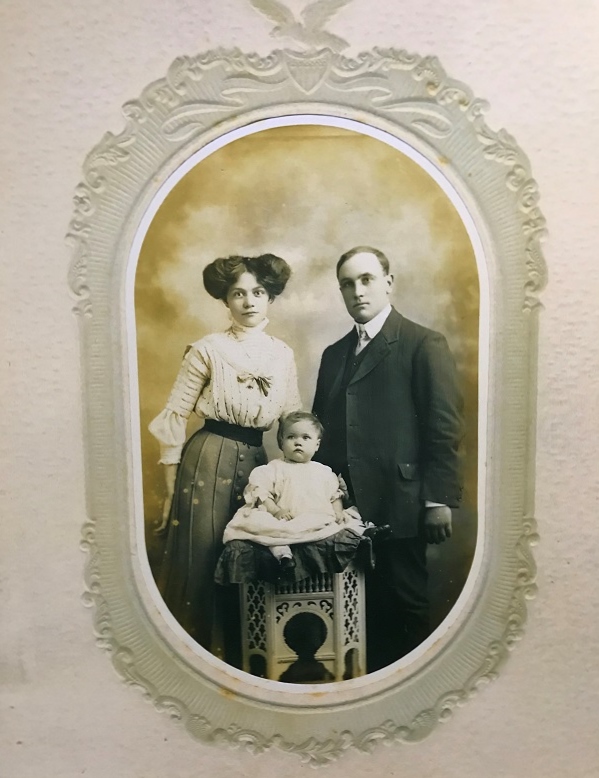
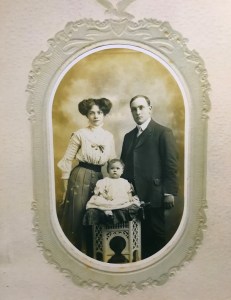 Not because I have the dreaded symptoms but because, according to all the experts, I am in one of the vulnerable groups. Indeed, I am “mature” enough to have almost a “direct connection” with the 1918 “Spanish flu” pandemic. In fact, my grandfather, Ernest Belton, died of the flu in November, 1918. My grandmother was then seven months pregnant with Rose. She had three other children, Nen aged 7, Ernest aged 6, and my father Stanley just 4. Rose was born in January, 1919. The picture is of my grandparents and their eldest, Aunt Nen. My grandmother used to tell me about just how tough life was, as a lone parent, bringing up four children with no welfare state and no income. It’s quite a long story. If you are interested then you can read about it at – https://tonybelton.wordpress.com/2020/03/18/todays-pandemic-and-the-1918-spanish-flu-epidemic/
- Then the pandemic, at which point everything has changed. The Council has largely closed down but is, at the same time, trying to maintain essential services. Voluntary organisations and faith groups are trying to provide food parcels and back-up services. The community has rallied around with a “clapathon” at 8 pm on the 26th in honour and support of our care workers. Many of us have found new ways of working from home, using new technology to have virtual meetings and collaborative working. Many more have found new ways of entertaining each other, using technology to have virtual dinner parties, yoga sessions, dancing parties and chess competitions. As far as I can see, almost everyone is re-communicating with long-lost relatives and old friends. Probably, just a few are getting around to writing the first great twenty-first century novel, play, symphony, thesis.
- I did break my own self-imposed isolation on 14th March to play chess for Surrey vs Middlesex. Lost again, I am afraid but he was much higher ranked than me and I felt my old skills were coming back a bit.
My Programme for April is Covid 19 shaped!
- The Council’s plan is to have a “virtual”, probably Microsoft Teams based Planning Applications Committee in early April. The emergency legislation, passed through the Commons on the last day, allowed for that but as yet there is no plan to enable the public to observe, nor plans for any of the other regular committees to take place other than the Licensing Committee. The interesting question is what happens to democracy in a Covid 19 shutdown?
- The Labour Party is going to announce its new Leader on 4th April. You may have heard rumours that this announcement might be delayed. I desperately hope not. It is important, not only for the Labour Party but also, for the Government to have a functioning and authoritive Opposition.
- Finally, we have an exciting future to
 help shape and map out. We all have criticisms of the world as it was in 2019. I would want it to be fairer and more equal. We have to make it more environmentally friendly. This is our chance to help re-shape our society. It will be exciting!
I don’t suppose that the future will be quite as utopian as C. Alcuin’s City on a Hill, but it’s a thought! © C. Alcuin
Councillor Tony Belton’s Battersea March, 2020, Newsletter (# 129)
- On February 2nd Battersea Labour Party had its occasional Jazz Night at the Bread & Roses pub in Clapham Manor Street. The pub, for those who don’t know it, is run by the Workers’ Beer Company, the financial persona of Battersea and Wandsworth Trades Union Council. You can be sure that the man (sorry re old fashioned sexist jibe) won’t be watering the workers’ beer! It was our first fund-raiser since the General Election and it went very well; but given our current financial situation, we cannot afford it to be the last!
- January and February are difficult months for Labour Party Treasurers, especially when there has been a General Election in December. Current legislation demands that Treasurers have to produce a quarterly return of donations and loans for the Electoral Commissioner. That in itself, is no great problem, but the Electoral Commissioner, the National Labour Party and the constituency party all require full reports on our 2019 activities, but, of course, just to be awkward, they are all in different formats. In addition, I produce an Annual Report on the previous year for approval by the February, Battersea Labour Party Annual General Meeting. The report can be seen at https://tonybelton.wordpress.com/2020/03/03/battersea-labour-partys-2019-annual-report/
- I had the Strategic Planning and Transportation Committee on the 6th February and it was a very strange occasion for me, but perhaps for some others also. After many years fighting the Tory fondness for the car and the motorist, I suddenly find myself caught out by an almost 180° turn by the Committee, which spent the evening approving traffic constraint proposals and being nice to pedestrians and cyclists. For all the snide remarks made by some about Greta Thunberg, and some mandatory scepticism about global warming, it does seem to me that the local Tories know that defeat looms for any party that ignores the Green tide sweeping over current politics.
- The South West London Law Centres held its annual
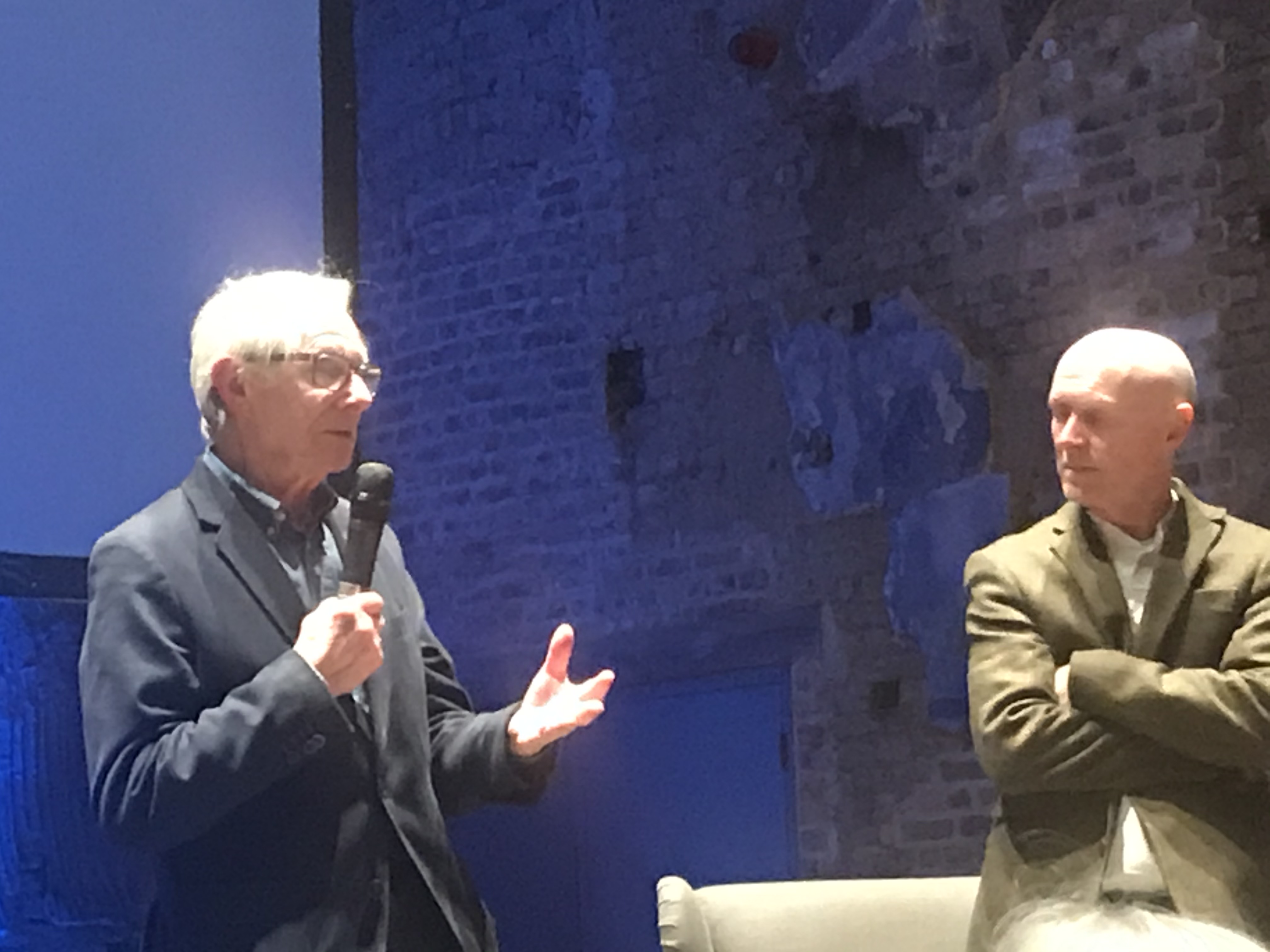
 meeting in the Grand Hall, Battersea Arts Centre on 13th. The evening was introduced by Marsha de Cordova, MP, and featured a visit from Lord Dubs, Battersea’s MP in the late 70s. but here because of his famed work for and on behalf of child refugees. The feature of the evening was, however, Sorry, we missed you, a film by Ken Loach, who is seen here discussing the film with his screenwriter Paul Laverty. The film was a devastating and harrowing account of the gig economy that Britain has now become, where lower paid jobs are endlessly measured, quantified, over-worked and down-graded. Loach and Laverty were fascinating about the technical side of making this brilliant, highly political film, but personally I find Loach’s discussion of political issues rather too simplistic.
- And to think that the gig economy was very considerably inspired by the ruthless programme of radical, right-wing cost cutting introduced into Wandsworth by Tory councillors in the 1980s, on their way to Thatcher’s adoption of her favourite borough and the application of the policies nation-wide. It was, in many ways, a dispiriting occasion to watch this powerful indictment but also to reflect that, as the Labour Opposition Leader for most of those years, however hard I tried, I did not have much success in stopping them – we may have a low Council Tax but we also have people sleeping on the streets.
- On Sunday, 16th February, I was off to Islington’s
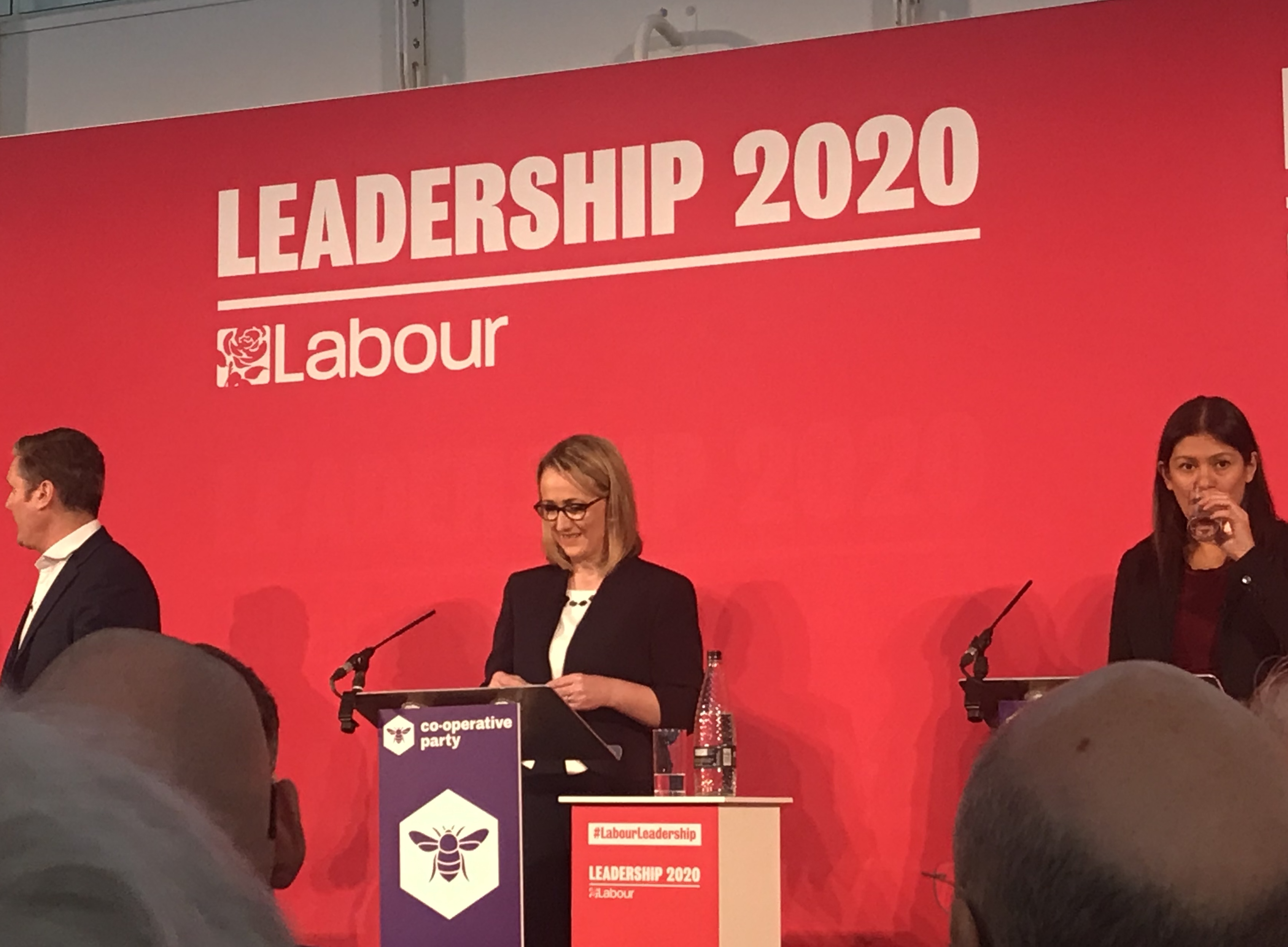
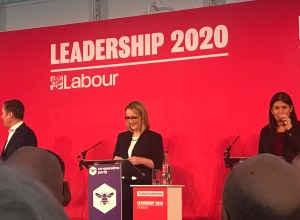 Royal Agricultural Hall for a Co-op Party sponsored hustings for Labour’s candidates for Leader and Deputy Leader. Hustings for both the Leader and the Deputy Leader of the Labour Opposition, on the same day, are something of a constitutional innovation in British politics. I don’t think that they have ever taken place together before. Ed Milliband was the first Labour Leader to be elected in this way, the second of course being Jeremy Corbyn, but the Deputy Leaders were chosen at a different time. The hustings are a bit like the American primary elections taking place right now except that, in the British version, the postal ballot is taken for the whole country in one go and not played out state by state, or in our case county by county, over a period of six months.
- I will be voting for Starmer as Leader, based on his competence and intelligence, though I thought that Nandy came over as very impressive. The Deputy Leader choice was, however, in many ways more interesting, partly because I know
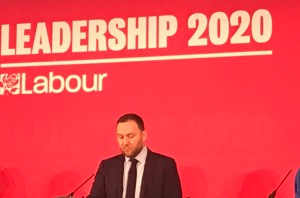 Rosena Allin-Khan very well – she was elected to Wandsworth Council in 2014 – but mainly because I knew nothing at all about Ian Murray, Scotland’s only Labour MP. As it turned out, Murray talked much the most sense of any of the candidates, partly because he knew, as the rank outsider, that he had nothing to lose and everything to gain. I will vote for Murray, because he is such an outsider and the English need to do something to woo the Scots back onside; but my second choice will be Rosena.
- After last month’s massive agenda, which weighed in at 800 or so pages the 20th February, Planning Applications Committee (PAC) agenda was almost a light-weight, at less than 300 pages. Moreover, most of the applications were of only very local interest, but as ever the public gallery was full; it nearly always is for PAC, precisely because for those people directly affected it is of all-consuming interest often affecting the value of their property, the quality of their lives or the success of their business.
- On Saturday, 22nd February, I was off to Cheam to play chess for Surrey against Essex in the U18 competition. That’s not an age qualification (if only) but the under 180 grading. I was really pleased with my play until the 43rd move (and after 3 hours of play), when a false endgame move by me changed a drawn match to a lose! It was the best game I had played since resuming chess, after well over five decades!
- On the 21st, Penny and I went to see the first foreign language winner of the Oscars, the Korean film Parasite. Many of you will have seen the rave reviews of this strange, savage satire of both the short-sighted, silly “stinking” rich and the vicious, calculating, revolting poor, but, for Penny and me, the strangeness became bizarre and the viciousness became gratuitous. And, therefore, despite the congenial political message, we were overall disappointed. However, it did highlight just how the Oscars have been dominated by English-language films: to think that no Jules et Jim, or Fellini film, no Visconti nor Swedish film, nor Bunuel nor Eistenstein film has ever won, is a little astonishing.
- On 25th I was a “jury” member for the Wandsworth Design Awards. Receiving an award is the sole prize; there is no trophy and no cash prizes, simply a piece of paper that architects and designers can put in their CVs and work portfolios. The judges were three councillors and representatives of local amenity groups, architectural and design practices. The awards are broken down by categories such as open space design, new build, conversions and restorations – but in a couple of hours we go through the daunting task of assessing 100 or so entries. This year the entries were dominated by Battersea Arts Centre, which had entries
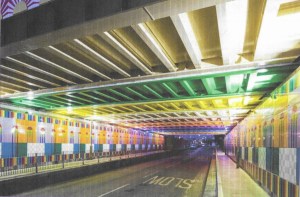 under several headings such as restoration and accessibility (stair-free access, wheelchair friendly doors, etc.), with the magnificent Grand Hall figuring particularly highly. However, the entry that caught my eye, and all the other judges’ too, was the Thessaly Road Bridge designed by artist Yinka Ilori, who developed this design of 16 colours representing 16 types of happiness. The result is ‘Happy Street’. I am afraid that my picture does not do it justice but anyone, who knew Thessaly Road, underpass as it was, will know what an amazing transformation this is.
- We had a very different evening on 28th when we went to see Alan Ayckbourn’s Round and Round the Garden at the OSO Arts Centre, Barnes. Our old friend, and ex-Battersea resident, Robin Miller played one of the central roles with her normal charm, and, indeed, it was largely her presence which led us to go. The play, a comedy, with a gentle bitter flavour, about the angsts and mores of affluent Home Counties folk, was such a contrast to Parasite!

My Programme for March
- There is a Council Meeting on 4th
- And a Healthy Streets Forum on 5th.
- We are having dinner with a former student of Penny’s, who has just completed her magnum opus – a massive, beautifully illustrated and produced nine-volume set of essays on, and diaries of, Mary Hardy, with her husband, an eighteenth-century farmer and brewer – Congratulations Margaret!
- I have a meeting of the North East Surrey Crematorium Board on 10th March and of the Passenger Transport Liaison Committee on the 12
- I am playing chess for Surrey against Middlesex in the U180 league on 14th.
- On the 18th March I will be attending a reception at City Hall given by Leonie Cooper, the Greater London Assembly Member, for Merton and Wandsworth.
- The Battersea Society Annual General Meeting is held in St. Mary’s Church on 19th
- And March’s Planning Application Committee is on 25th.
Battersea Labour Party’s 2019 Annual Report
CHAIR Sara Apps 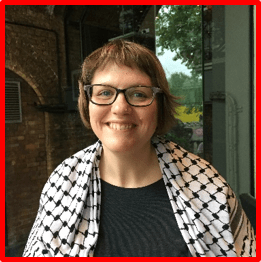
Last year, I stated that: “2019 is forecast to be a very special year …. There are no elections planned!” Well, we all know how that turned out.
Congratulations to Marsha de Cordova, and to Battersea residents for re-electing their Labour MP with a justly increased majority. But commiserations to all of us too, because the country has just elected one of the most virulently right-wing governments we’ve ever seen. It is essential that we all take responsibility for this catastrophic loss and not only elect the best leader possible to help ensure that we win next time, but do everything we can to help ensure a Labour Government is elected.
Of course, Marsha’s victory was due to many factors. The most important was Marsha’s consistent championing of the views of Battersea’s communities in Parliament. But also important was Battersea Labour’s superb campaign, led by Carmel Pollen and Amy Merrigan, with Tony Belton doing much hard work as agent. With the support of all of us, they ran one of the biggest and best constituency campaigns I have ever seen.
We owe a huge debt of gratitude to Amy for leading our campaigns over many years, demonstrating considerable wisdom on such young shoulders. She is now moving to a job in theatre management, where I am sure that she has a great future; but I am sure she will stay in touch with us.
I am very grateful to all of the executive for their efforts, particularly Matteo Tiratelli, who has undertaken all of the (very many, very great) demands of CLP secretary with a full-time job; and to the political education officers who’ve organised brilliant debates at our All Member Meetings. Thank you to all the executive members for their important contributions.
This year we successfully re-selected Sadiq Khan as our mayoral candidate and Leonie Cooper as our constituency London Assembly Member. Now we must ensure that they are re-elected! Sadiq has been an effective and rightly popular mayor, important at a time when London is facing many challenges. Leonie has done an incredible job representing a vast and diverse constituency – and it is vital that we ensure that they are both able to continue their important work for London.
I won’t be around for most of the May election campaign as I will be working in the Highlands of Scotland until the end of October! I will be around to do all I can to help the campaigning outside of those months, but it will be down to my successor, as Chair, to take the lead.
What will be the big decisions this year? Preparing for and winning the London Elections must take centre stage. But there will also be preparing for local government boundary changes and making sure that we have a diverse range of able candidates ready to stand. And thinking about how we ensure we have an effective, working Battersea Labour HQ.
SECRETARY
Matteo Tiratelli
2019 was a year that ended in tragedy with the disastrous General Election result on the 12th of December. Marsha de Cordova did a fantastic job here in Battersea and we should be proud of the amazing campaign we ran. But, the bigger picture is that, after a period of hope around 2017, Labour has now joined the rest of the European and North American centre-left by collapsing in the face of right-wing nationalism. There are no easy answers and precious few examples of successful, modern centre-left parties to draw on for inspiration (maybe Spain’s Socialist-Podemos coalition government?). But the struggle will go on and we have a huge job to do rebuilding over the next five years.
In our local CLP, we had a productive year. Our Chair, Sara, and I, together with the rest of the EC, have continued to try to reshape our local meetings, dropping a lot of the boring procedural nonsense and focusing on political education and member-led discussions (including our own set of ‘Indicative Votes’ about Brexit!). Members continue to express their preference for these kinds of active, participatory meetings and I hope that we will continue in this vein going forward.
Much of my summer was taken up with running the Trigger Ballot Process, which gave all local members a say in who Labour’s candidate for Battersea should be in the next General Election. This current system is a bit of a fudge: members are invited to vote on whether they think the current MP should be automatically re-selected, or if we should move to a full open selection. This makes it impossible to run a positive campaign where multiple candidates can throw their hats in the ring and campaign on their own merits. Instead, you have to campaign negatively, against the incumbent – hardly an attractive proposition. This fudge meant that not a single new candidate was produced through this system (in Battersea not a single vote was cast, anywhere in the CLP, in favour of opening the selection up – a great vote of confidence for our wonderful MP, Marsha). But, given the huge amount of organisational work that goes into running a Trigger Ballot, this makes them seem like a bit of a waste of time. If we are serious about being a member-led party which is open to new talent and new ideas, then this system clearly needs to be reformed. I hope that whoever our next leader is takes this seriously.
VICE-CHAIR FUND-RAISING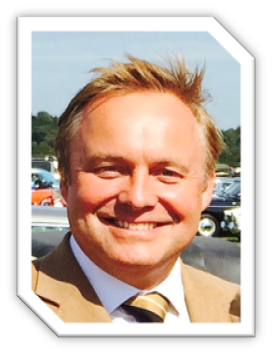
Matt Valentine
2019 was an eventful where the political calendar played havoc with our best laid plans for fundraising. We had some successes though. Battersea Labour sent two teams to work the bars at Glastonbury for Battersea & Wandsworth Trade Union Council. One made up of members and the other from Marsha’s office. This is a brilliant way of raising funds for the party whilst having a great time. It would be excellent if we could get more member involvement in 2020 and hopefully send some more teams. Unfortunately, the European and General Elections meant that a comedy night, Battersea’s Got Talent and a Junction Jazz evening all had to be postponed.
VICE-CHAIR MEMBERSHIP

Faruk Patel
The highlight of 2019 was undoubtedly our MP, Marsha De Cordova, retaining her seat with an increased majority (one of the rare success stories on the night for us as a Party). The campaigning effort locally was nothing short of heroic, as scores of people, from varying backgrounds, braved the cold and rainy weather to communicate the message on the doorsteps and get the vote out. Huge congratulations to everyone that was involved with this, including everyone at HQ who co-ordinated and organised this mammoth effort!
On the membership front we started the year with 1,141 members. For much of the year there was a steady churn, with our lowest level reaching 1,068 in October 2019. Many of the leavers were citing Labour’s perceived ambiguous Brexit position and leadership as being key reasons for their decision. There was a slight uplift in our membership during the GE campaign as we reached 1,089 members on the eve of the election.
However, since the General Election (GE) our membership has increased substantially. At the time of writing, our membership stands at 1,509. This represents a 39% increase since the GE! Many new members (with some being re-joiners) no doubt feel emboldened by the opportunity to vote in the Leadership and Deputy Leadership elections and a chance to play their part in the next chapter of the Labour Party.
Labour Battersea is now one of the largest Constituency Labour Parties nationally and this should be viewed as a welcome challenge. We must continue our efforts from the last couple of years actively to integrate new members to the local scene and to make our events interesting and inclusive. It has been refreshing to see a warm, comradely atmosphere. Long may this continue!
WOMEN’S OFFICERS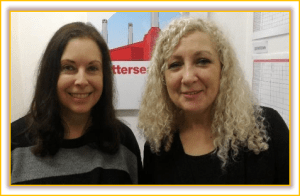
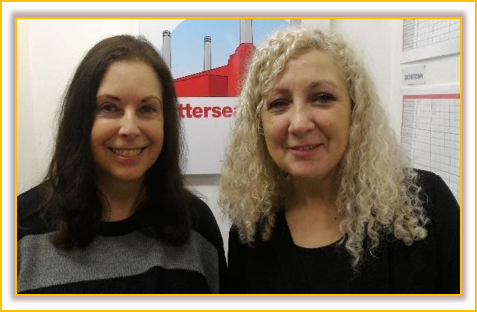
Lynne Jackson & Carole Maddern
We have both been busy throughout the year, supporting Marsha de Cordova, and actively campaigning during both the European and General elections. Two of our main focuses this year have been on the NHS and violence against women. We have attended and supported many events. Here are a few highlights:
A phenomenal NHS defender, Harry Leslie Smith, author of Harry’s last Stand, sadly passed away at the age of 95 – many will remember his passionate speech to Conference in 2014. There was a moving commemoration service honouring Harry at Conway Hall in February, attended by many of the Labour front bench including the leader of the party, Jeremy Corbyn.
To mark International Women’s Day (March 8) we organised a panel of speakers at the House of Commons, on the subject of violence against women. Marsha and her team kindly helped arrange this, and offered a tour of the House of Commons, with special access to St Mary Undercroft and the broom cupboard where Emily Wilding Davison hid, at the time of the 1911 census, in order to declare her residence as the House of Commons.
In the summer, we attended a number of important events. They included a screening of Witchhunt, a documentary about Jackie Walker’s experience of being expelled from the party on accusations of anti-semitism; and a day-long conference in Putney, Wandsworth Transformed which brought together hundreds of people for a huge variety of talks and panels covering everything from austerity to the climate crisis. Carole was on kitchen duty alongside Vennella Boyalla (BAME Officer) – quenching the thirst of the many! In October Black History Month was fittingly marked by a brilliant day of music, speakers and stalls with special guests including Marsha de Cordova and Maurice McLeod – both of whom also featured prominently in a special display at Battersea Library.
Later in the year, women members were invited to a performance of a new play, No Bad Women: Rape on Trial – a powerful piece based on a rape trial which made history in 1991, when, for the first time ever, a rapist was convicted for attacking sex workers. Those of us who saw the play were profoundly moved by the testimony of one of the original complainants and part of the team who took the case to court.
The snap General Election side-lined our plans for a film night and a period poverty/menstruation event in collaboration with our Environment Officers. We hope to hold these in the new year. Amidst the amazing efforts and energies of the election campaign was a visit from sisters in Peckham for a women-only canvass. And, gratifyingly, our hard work as a constituency paid off with the re-election of Marsha with an increased majority – congratulations to her and thanks to everyone who helped.
TREASURER
Tony Belton
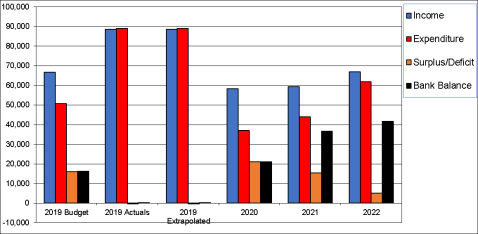
In 2019 BLP income and expenditure almost exactly matched at £89,000. However, we started the year with outstanding debts of £19,000 in the form of loans, which was reduced to £5,000 by year end, despite the un-anticipated General Election spending.
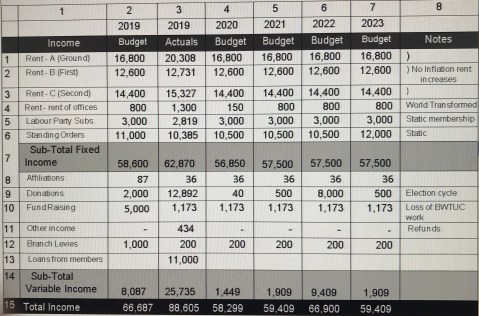
Income (Tab 1, row 15, column 3) was £20,000 above budget, mainly thanks to £13,000 of donations, £11,000 of loans from members compensating for £3,000 less from fundraising activity. The main elements of the income were:
- £47,000 from rental income
- £14,000 from fund raising and donations
- £11,000 loans from members and the Wandsworth Labour Group
- £13,000 from standing orders, ward levies and membership subscriptions.
Expenditure (row 45) exceeded predicted budget by £39,000 – mainly because of expenditure on the General Election (GE) and reducing the debt (£19,000). Extra GE spending included £13,000 on print costs, and £8,000 on various consumables and expenses.
Context of 2020 budget assessment:
Rental income (£42,000) on the three flats at 177 Lavender Hill is, as ever, the core of our funding, with standing order contributions from members between £10-12,000 a year continuing to be our second largest and most secure income. Fund-raising income in 2019 was disappointing at just over £1,000.
But, with tight control of our expenditure prior to the General Election, we have been able to manage with taking only £5,000 in loans from members and the Labour Group.
Consequently, we enter 2020 almost exactly in balance (< £1,000) and with debts of only £5,000, which, all other things being equal, I plan to clear by 31st March 2020.
The budget for the next six months (to 30 June 2020) does NOT allow us to employ an organiser for May’s GLA election. This puts considerable pressure on our volunteers to organise any level of campaign, but current polling suggests that in London the Tories do not pose any great threat to either the Mayor or our GLA member.
My current estimate is that, with tight control over spending this year and no great surprises, we should be in a position to employ an agent/organiser for the twelve months leading up to the Borough Election in May, 2022.
Four Year Projection: BLP will be in the black by
1st April, 2020. The current mode of operation produces a surplus of approximately £25,000 a year; NOT enough to afford a fulltime organiser and the extra expenditure that an organiser tends to generate. We need to boost income or cut expenditure by at least £10,000 p.a. to do that. We can, however, afford a full-time organiser for 2 or 3 years in the normal 4 year-cycle.
Balance Sheet:
The balance sheet shows that BLP has capital assets of over £1.5 million, based almost entirely on Featherstone Leigh’s informal desk top valuation (7th January 2019) of 177 Lavender Hill.
Audit
These figures have been audited by Chris Callaghan and Tony Tuck (auditors).
Recommendations:
- That the AGM approves this report;
- That both income and expenditure remain closely monitored by the EC.
Treasurer’s Report: TABLE 1.
Income & Expenditure 2019 against estimates and four-year projection of budgets from 2020 to 2023
Part 1: Income
Part 2: Expenditure
| 16 | Expenditure | Budget
(2019) |
Actuals (2019) | Budget (2020) | Budget (2021) | Budge (2022) | Budget (2023) |
| 17 | Campaign: Agent | 6,000 | 4,000 | – | 15,000 | 15,000 | – |
| 18 | Campaign: paper, etc. | 1,000 | 5,001 | 2,500 | 500 | 5,000 | 500 |
| 19 | Campaign: Expenses | 1,000 | 4,767 | – | – | 2,000 | – |
| 20 | Campaign: Post | 1,000 | 559 | 700 | – | 500 | 500 |
| 21 | Campaign: Print costs | 1,000 | 13,086 | – | – | 10,000 | – |
| 22 | Campaign: LCF exp | – | – | 3,600 | 600 | 600 | 600 |
| 23 | Campaign: Telephone | 100 | – | – | – | – | – |
| 24 | Campaign: Total | 10,000 | |||||
| 25 | HK: Administrator | – | 4,280 | – | – | – | – |
| 26 | HK: Affiliation | 750 | 20 | 750 | 750 | 750 | 750 |
| 27 | HK: Bank Charge & Fees | 1,000 | 937 | 1,000 | 1,000 | 1,000 | 1,000 |
| 28 | HK: Conference Costs | 1,000 | 1,065 | 1,065 | 1,065 | 1,065 | 1,065 |
| 29 | HK: Fundraising – x’s | 100 | – | 100 | 100 | 100 | 100 |
| 30 | HK: hardware & software | 300 | 2,107 | 300 | 300 | 300 | 300 |
| 31 | HK: Insurance | 833 | 437 | 700 | 700 | 700 | 700 |
| 32 | HK: Repayment of loans | 15,700 | 18,700 | 5,000 | – | – | – |
| 33 | HK: Misc | 800 | 3,742 | 800 | 800 | 800 | 800 |
| 34 | House-Keeping Total | 20,483 | 31,288 | 9,715 | 4,715 | 4,715 | 4,715 |
| 35 | LH: Corporation Tax | 5,000 | 5,653 | 5,653 | 5,653 | 5,653 | 5,653 |
| 36 | LH: General Works | 500 | 985 | 500 | 500 | 500 | 500 |
| 37 | LH: Office, Repair & Mtnc | 500 | 323 | 500 | 500 | 500 | 500 |
| 38 | LH: Rented Agent Fees | 6,000 | 9,117 | 7,000 | 7,000 | 7,000 | 7,000 |
| 39 | LH: Rented Repair & Mtn | 5,000 | 11,716 | 8,000 | 5,000 | 8,000 | 8,000 |
| 40 | Lavender Hill Total | 17,000 | 27,793 | 21,653 | 21,653 | 21,653 | 21,653 |
| 41 | Utils: Gas, Elect & BB | 1,000 | 2,061 | 1,000 | 1,000 | 1,000 | 1,000 |
| 42 | Utils: Rates | 105 | – | – | – | – | – |
| 43 | Utils: Waste & Water | 2,000 | 396 | 396 | 360 | 360 | 360 |
| 44 | Utils Total | 3,105 | 2,457 | 1,360 | 1,360 | 1,360 | 1,360 |
| 45
46 |
TotalExpenditure
Surplus/Deficit |
50,688
20,171 |
88,950
-345 |
40,228
17,190 |
43,927
15,482 |
61,827 5,082 | 65,427
11,460 |
| 47 | Balance b/f | 50,6817 | 88,9362 | 40,2817 | 20,188 | ,35,670 | 40,751 |
| 48 | Balance c/f | 20,188 | 17 | 17,207 | 35,870 | 40,751 | 70,733 |
Note: overall financial assets of the Battersea Labour Party do not merit a formal Balance Sheet; suffice to say that Battersea Labour Party’s assets consist almost entirely of its property, 177 Lavender Hill, SW11 5TE, which was informally valued at £1.5 million some two years ago; the Riso printer, current value maybe £3,000; and of course the immeasurable knowledge and enthusiasm of its members.
ORGANISER Amy Merrigan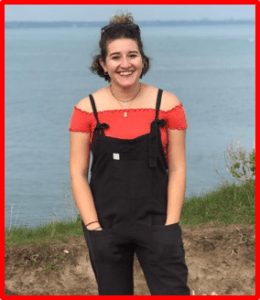
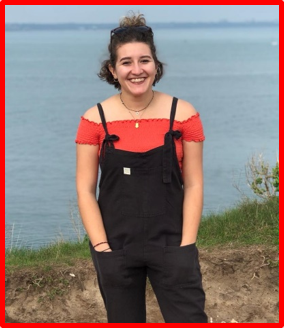
I’ve had more relaxing evenings than the night of the 29th October, the day we knew an election was going to be called. Carmel Pollen, Alba Kapoor and I (with the help of Martin Linton and Sara Apps who kindly hosted us once we were kicked out of the PCS building in the evening) began to put in motion the start of Marsha’s re-election campaign.
The next few days we had an influx of Battersea Labour stalwarts who came to help. Sara started planning canvassing sessions, Kate Stock spent more time on Contact Creator then I care to think about, Pete Lyons and Brian Cairns led the first of what must have amounted to a thousand canvassing teams, Tony Belton and our candidate and sitting MP Marsha de Cordova spent a day making fundraising calls to members, Jane Eades organised and reorganised the office, Alex Wolfers began a relentless campaign of recruiting new members and Joe Shipman and Sharon Palmer gradually decanted the useful campaigning equipment from 177 into our new office space at PCS. Before we knew it, we were set up and running.
Over the 6 weeks campaign, we had around 20,000 doorstep conversations. Hundreds of BLP activists delivered thousands of leaflets and letters. We knocked on virtually every door and leafleted every school and train station.
We received numerous compliments from visiting CLPs about how smoothly our large weekend campaigning sessions ran. Volunteers gave up their Friday night every week to come into PCS and, fuelled by pizza and beer, methodically prepared everything that was needed to make our massive weekend campaign days a success. Each Saturday and Sunday with the help of a number of key BLP members, we marshalled 100s of activists into prepped and briefed canvassing teams.
The long and the short of it all was is that the campaign was driven by the generosity, kindness, knowledge and skills of BLP members. There are too many people to name – but thanks to everyone who helped us achieve a resounding Labour hold with a more than doubled majority.
POLITICAL EDUCATION OFFICERS Thom Corbett & Michael Stone
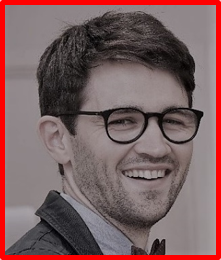
We are grateful to Battersea CLP for electing us to serve a second term as Political Education Officers.
We have sought to be true to the wishes of members expressed in the survey we ran, and in subsequent dialogue, for meetings to encourage discussion of national and local issues in a comradely manner with all views respected; and that meetings should not be dominated by procedural points, which leave most of us disengaged.
 We believe we have played our part in developing the inclusive and welcoming style of AMMs, though we wish also to record our thanks to Sara Apps, who has been a magnificent Chair, and deserves much credit for the friendly tone of AMMs; and the increasing presence of new members who come along to a meeting and feel sufficiently welcomed to come again.
Matters outside of our control like the unexpected Euro Elections, the General Election and the vacancies for the positions of Leader and Deputy Leader of the Labour Party, and subsequent opportunity to nominate our chosen candidates, have restricted our ability to organise the number of discussions we had planned during the year. However, we were pleased to organise:
- An expert appraisal of the Brexit deal from Labour’s Head of International Trade Policy, Jon Hilary, followed by a constructive discussion about Labour’s position on the topic.
- A discussion on Local Housing Policy and the Future of National Policy at which we heard from Councillor Paul White and local activist, Hannah Stanislaus, who told us about the campaign she is involved with to force the Council to address the problems experienced by council home residents in Nightingale Square, whose living conditions are nothing short of a disgrace.
- A discussion on the Climate Change Crisis at which we heard from our Assembly Member, Leonie Cooper, our Co-Environment Officer Dr. Sheila Ochugboju and Tony Hay from Extinction Rebellion, the organisation that has done so much to bring this crisis to public attention.
At each debate, we heard many contributions from members, and many useful thoughts and ideas about how to move forward were generated.
Two meetings we had planned which were postponed due to the various elections that have arisen were on the subject of Taxation – What is the Fairest and Most Electorally Advantageous Means of Raising the Revenue We Need? and Youth Policy – What is Life Like for Young People (Particularly Those Most Disadvantaged Economically) In Tory Britain? If re-elected, we hope to stage both those meetings in the first half of 2020.
Two excellent meetings also took place in the year for which we deserve no credit. John McDonnell spoke to us about Labour’s Economic Policy and showed us all how well-prepared Labour was for Government and what a tragedy it is that he is not Chancellor of the Exchequer today. At another meeting, our Policy Officer, Maha Younes, spoke about working in the NHS and helped shape an excellent resolution to the National Policy Forum. Maha also planned a debate on Palestine, which was postponed due to the election and will, we hope, happen in the next few months.
The local party has agreed that when there is time for a debate, it will last not less than an hour, be the first item on the agenda and involve breaking into small groups after hearing from speakers, to ensure that everyone can feel comfortable expressing a view. We look forward to more stimulating debates in the year ahead.
YOUTH OFFICER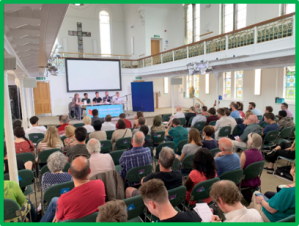
Ben Morgan
writes re Wandsworth Transformed
Given the rise of fake news and political misinformation, it has become increasingly difficult to trust the media that we consume. The need for participatory political education has never been more important, especially for young people. Facing an increasingly partisan media landscape where stories are often fed to us through bite-sized messaging on social media, it is easy to become pessimistic and cynical about the possibility of real change.
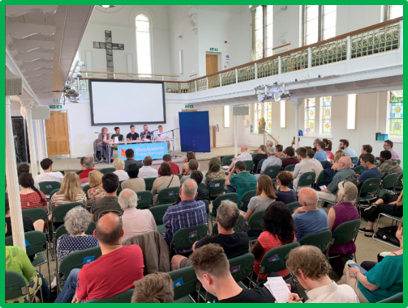
In response, it should be one of our tasks as a local Labour party to provide engaging, interactive and inspiring political education to empower our members. This is why I and a small group of members from Battersea, Tooting and Putney came together to organise the inaugural Wandsworth Transformed event; a day festival of panel discussions, debates and workshops with local people, experts and activists. The event joins a network of other local ‘transformed’ events springing up across the country, modelled on The World Transformed festival which happens alongside Labour Conference each year.
Held at the Community Church Putney, the discussions throughout the day ranged from climate change and the green new deal, the housing crisis, media reform, extreme inequality, racism to precarious and insecure work. The event was a huge success with over 250 people attending, including many young people. One young member at the event who had only recently started getting involved with the Labour party told me that seeing so many committed activists in one place discussing radical ideas to change society had truly inspired them to become more engaged.
Events like Wandsworth Transformed enable us to recognise how many enthusiastic and active people there are in our communities, who share in our socialist principles. We plan to continue Wandsworth Transformed into the future making it an annual event. However, this is not enough. There is much scope for continuing to build transformative political education projects in our party and communities on a much more regular basis and with an emphasis on strategy and collective action. As a party we must provide our members with the skills and tools to become more than an army of canvassers come election time, but to become active organisers in communities and workplaces.
ENVIRONMENT OFFICER
Maureen Cooper
2019 was a significant year for environment actions in Battersea. Internationally the Friday School Strikes inspired by Greta Thunberg and the national mobilisation of Extinction Rebellion. Wandsworth Borough Council took notice when environment groups in the borough, together with the newly appointed shadow spokesperson for the environment Cllr. Paula Walker, presented to a full committee meeting, a demand that a climate emergency be declared. In the face of the numbers of signatures on the petition and the crowd present outside and inside the meeting chamber – the council agreed.
As your officers we and Cllr Walker then formed a working party for organisations in the borough to come together and work to push for swift implementation of actions. The working party, which is cross borough, met at the Town Hall and with the input of Cllrs. Walker, Anderson, Denfield, McKinney and others to identify actions and ways forward. The assistance given by Beth Foster-Ogg, our organiser assigned by the Party, was invaluable. She also facilitated our public meeting at All Saints on Prince of Wales Drive, addressing the topic of Labour’s Green New Deal with Labour’s Shadow Spokesperson.
We attended a workshop at the School of Oriental & African Studies (SOAS) on Financing an Inclusive and Just Transition to a Net Zero Economy, which brought home to us the complexity of what was needed for the massive job which lies ahead to achieve anything like justice in this area. The main focus was on countries in Africa which is Sheila Ochugboju’s specialist field.
Fairfield branch held an environment stall on Garratt Lane opposite Southside on the borders of Tooting and Putney to engage with local people on WBC’s response to the Climate Emergency, and I have continued to work with the energy group CREW in supporting people to get the best value for their energy bill payments through Energy Cafes. All in all, it has been an exhausting but fruitful year.
MEMBER OF PARLIAMENT

Marsha de Cordova
Overview: What a year! One General Election, almost 60 constituency surgeries and drop in events (including one in Latchmere attended by over 60 people), action taken on c.8,000 pieces of casework. and countless Brexit votes. I thank all who made this year possible – the incredible activists who campaigned for me, my fantastic team and the people of Battersea.
In Battersea: Throughout the year I have been proud to work alongside faith organisations, community groups and charities on important local issues. This included holding a Battersea Community Forum, attended by young people, faith and community leaders and the police, following a number of tragic fatalities. I will continue to fight for adequate funding for our police and vital youth services, as well as work with our community to end this crisis.
I visited and spoke at a number of local school assemblies, including at Bolingbroke, Belleville, Ark John Archer (ex-Hearnville) school and St Francis Xavier’s Sixth Form College.
We also had a number of successful local campaigns including our work to save the Route 19 bus service and saving ‘stay and play’ in the York Gardens Children’s Centre. It’s impossible to list everything, suffice to say, but one essential campaign is concerned to ensure better air quality on Battersea Park Road.
Throughout the year, I also worked with trade unions, CWU, GNB and BWTUC, to call for a decent living wage and fairer working terms and conditions for workers – including at McDonalds and for cleaners at a local hospital.
In Parliament: The Brexit crisis dominated over everything. I did all I could to oppose this Government’s damaging and delusional plans, proudly voting against both Theresa May and Boris Johnson’s catastrophic deals.
I made one hundred spoken contributions in Parliament in 2019. I was successful in the draw for three Prime Minister Questions (PMQs) including on the devastating impact of a no-deal Brexit; the failure of Personal Independence Payments (PIP) and slamming the Work and Pensions’ Department’s misleading advertising campaign promoting Universal Credit, which has driven so many constituents to debt and despair.
As Shadow Minister for Disabled People, I asked regular Departmental Questions; and I also replied to Westminster Hall Debates on behalf of the Labour frontbench. Above all, I am proud to support the Labour Party’s Disabled People’s manifesto – Breaking Down Barriers, with its vision for a society that treats disabled people with dignity and respect, according to the United Nations Convention on the Rights of Disabled People (UNCRPD).
The Snap General Election: Thanks to thousands of Labour members and activists, we ran a brilliant campaign in Battersea. In total, we had some 20,000 doorstep conversations; delivered thousands of letters and leaflets; made hundreds of phone calls; and more than doubled our majority in Battersea.
Needless to say, nationally we did not get the result that we wanted. Rest assured that in opposition I will do all that I can to hold this wretched Conservative government to account. And I am sure that MPs and members will work together in unity to deliver a progressive and radical vision, which will promote Labour’s pathway back to power.
GREATER LONDON ASSEMBLY MEMBER
Leonie Cooper
2019 was a year when London, the Mayor and the Assembly took a back seat to Brexit, an unexpected May European election – and an equally unexpected December General Election. As the Greater London Authority Act specifies the number of Mayor’s Question Time and full Assembly plenary session that must be held, the General Election led to the moving of numerous meetings scheduled for November and December, but not their cancellation. This has impeded the ability of the Assembly to hold the Mayor to account during 2019 on progress on his Mayoral Transport Strategy, the Mayoral Environment and Housing Strategies – but has not completely stopped scrutiny.
From January-May 2019, the Examination in Public (EiP) of the draft London Plan took place – this looked in great detail, across many 3-hour sessions, at housing targets, support for town centres and high streets, good growth, healthy neighbourhoods and low emission neighbourhoods, to name but a few areas looked at. The draft London Plan is still draft, but is now there for the Mayor and the City Hall planning team to use when considering larger planning applications. This has already borne fruit in many applications, where the percentage of social rented housing, bicycle parking and solar panels has been increased at City Hall’s insistence.
Setting up the Violence Reduction Unit, to complement the Knife Crime Strategy, has not as yet fully borne fruit. 2019, like 2018, saw a high level of murders across London, unfortunately including, once again, in Battersea. Tory unwillingness properly to fund both the police and Councils has seen crime rise everywhere, although they have taken every opportunity to try and blame the rise in crime in London on the Mayor. The Tories have refused to give the Metropolitan Police the money to cover all the additional responsibilities associated with national demonstrations, protecting Parliament and MPs, plus the Queen and the Royal family, so the Mayoral element of Council Tax has had to rise significantly to cover these unfunded costs.
Senior officers and police stations have been cut to try and keep bobbies on the beat – but police numbers have not really been at the right levels to tackle crime across London. Despite the Prime Minister going on about a further 20,000 police officers, only an extra 1,369 officers have been allocated; and so far there have been no new recruits in Wandsworth.
Crossrail continues to be a huge problem, with delays on its opening now looking to stretch to 2021, not 2020.
However, 2019 did see the launch of the Ultra-Low Emission Zone in April – this has built on the T-Charge, and is already being attacked by the Tories, despite the current 9,000 deaths a year caused by air pollution. As it is the poorest Londoners, who are worst affected by poor air quality, it would seem the Tories usual callous approach extends to their lack of interest in improving Londoners’ health – and attacks on progress in this area continue. However, compliance has been excellent and London’s air quality is much improved. More still needs to be done to clean up London’s air, so the re-election of a Labour Mayor and Labour-dominated Assembly in 2020 is essential.
WANDSWORTH LABOUR COUNCILLORS
Simon Hogg, Leader
Together, your Labour councillors:
* Helped to elect three great Labour MPs in Battersea, Putney and Tooting
* Declared a Climate Emergency and committed the Council to be carbon neutral by 2030
* Ran excellent campaigns that have improved lives – on children’s centres, recycling, private renters, school cuts, car free day, Living Wage, adult care, food poverty, air pollution, Black History Month, sprinklers, Brexit, cycle hangars, Taxicards, homelessness and much more.
* Secured Sadiq Khan’s support for our vision of improved estate regeneration with more council homes
* Got a set of boundaries that are fair to Labour from the Boundary Review process
* Supported workers when they were badly treated – from traffic wardens and SEND drivers to staff at St George’s Hospital. We worked closely with trade unions to secure a good pay deal for all Wandsworth staff – finally ending senior staff bonuses and Dickensian sick pay practices
None of this would have been possible without Battersea Labour Party members’, your, commitment and passion. We can be proud of what we’ve achieved in 2019, and I know our councillors have enjoyed working alongside local volunteers through the highs and lows.
We’ve come a long way since 2010. Wandsworth Labour started the decade with just 9 councillors and one MP – we ended it with 26 councillors and 3 MPs. Our best is yet to come. So it’s on to the continuing challenges and new opportunities: to make a difference, to help local people, and to create a fairer Wandsworth.
LATCHMERE COUNCILLORS
Tony Belton, Simon Hogg & Kate Stock
Tony writes: Latchmere ward might very well disappear from the map very shortly. It was created in 1964 when Wandsworth and Battersea Metropolitan Councils were merged into the one London Borough of Wandsworth. Labour has held it at every election ever fought here, which I think is a record for any ward or any party in the Borough.
Simon Hogg has spent many house working to ensure that the new boundaries, due to be implemented in 2022, create a fairer distribution of seats. There have been two occasions, in 1986 and 2018, when Labour won more votes than the Tories but still had fewer councillors, and thus did not win control of the Council. The end-result of his work, along with others, appears in the Boundary Commissioners Report, which clearly states that many of its recommendations were based on the Labour Councillors’ (means Simon’s, really) submission.
The outcome will split Latchmere essentially into the new wards of Falconbrook and Battersea Park, with a small section going into Shaftesbury. So here is a proud historical record of all Labour councillors who have represented the ward since 1964: Brian Prichard; John Dunning; Les Goodwin; Alex McLaughlin; Fred Shaw; Bernard Dwyer; Maurice Lawson; Elsie Hoadley; Fred Wells; Michael Barley; Alan McGarvey; Christine Cox; Maurice Johnson; Tony Tuck; Samantha Heath; Bhavna Joshi; Leonie Cooper; Wendy Speck; Simon Hogg; Kate Stock; and Tony Belton.
QUEENSTOWN COUNCILLORS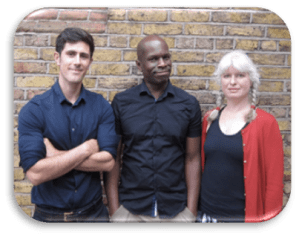
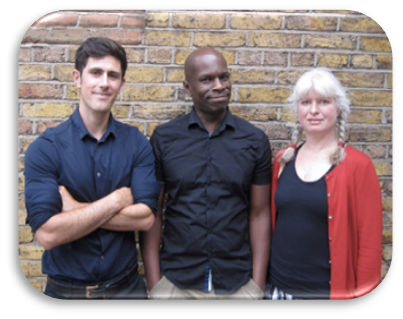
Aydin Dikerdem, Maurice McLeod & Paula Walker
In May, tragedy struck the Doddington Estate, yet again as Brazilian delivery driver, Iderval da Silva, was murdered by youths trying to steal his motorbike.
The murder happened very close to where Ian Tomlins was killed just a few months earlier and residents were understandably upset. Queenstown Councillors were on the scene within hours of the murder to help police and reassure residents and we conducted a door-to-door canvas the next weekend to give residents an opportunity to share their concerns.
Following conversations with residents in the wake of Mr da Silva’s death, we embarked on a campaign to encourage the Council to put more community space on to the estate. There are a lot of young people on the estate who seem to have nowhere to go. The old community space under Arthur Court has been closed for years, following a series of leaks and the Queenstown Councillors are arguing that this space or something similar should be invested in and opened up for the benefit of the estate.
In the summer we held a listening exercise with residents, Labour Party members and community groups. This culminated in a fantastic event at All Saint’s Church to share ideas on how to improve our environment in Battersea, in line with Labour’s Green New Deal policy. These ideas have been incorporated in Labour’s participation in the Climate Emergency declaration and resulting action plan in Wandsworth.
In July, the Council opened a new building on the Savona Estate. Edward Foster Court was opened to great fanfare and will provide desperately needed social homes. Unfortunately, however, this property was still sitting empty at the end of the year. Only one family moved in just after Christmas and there had been some vandalism. Queenstown Councillors have been pursuing the Council for answers as to why it has taken so long to provide this much needed housing.
In August, all residents of Cromwell House had to be evacuated in the middle of the night after the contractors used the wrong paint! Queenstown Cllrs were on the scene the next day to help residents and support community volunteers, residents and council staff. We then demanded answers from the Council about the incident.
Following a campaign by Labour Cllrs and Marsha de Cordova, Black History Month came back to Wandsworth in October. The Council rebranded it as ‘Diversity Month’ but Labour argued that this diluted the focus on black communities. Battersea Labour held a very successful event in Broomwood Methodist Church with live performances, talks from Marsha de Cordova, cultural stalls and a panel of expert speakers.
In 2017, Wandsworth Council decided to install sprinklers in all of its tall buildings. The move would have seen the Council retrofit the sprinklers in a blanket approach and the borough’s 2600 leaseholders, including many on the Doddington Estate, would have picked up a £4k bill. Wandsworth Councillors supported residents in coming together to oppose these charges and to find legal representation. Just after Christmas after more than a year of legal wrangles, the First Tier Tribunal struck out the Council’s case. This has been a massive waste of residents’ time and money.
ST. MARY PARK COUNCILLOR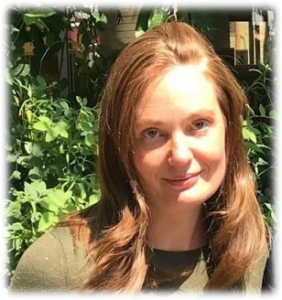
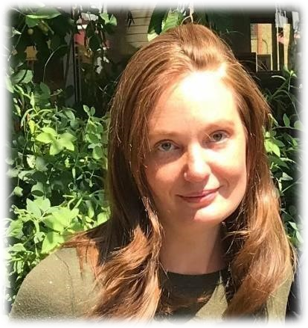
Emily Wintle
Battersea Election 2019 Analysis
After a hard-fought battle, and one of the best campaigns in the country, despite a sad night for Labour, we were thrilled with the Battersea result. As well as the overall result, sampling at the count gives us a huge amount of data about how people voted across the constituency. These insights are incredibly helpful in understanding where the labour vote is and help shape future campaigning. A big
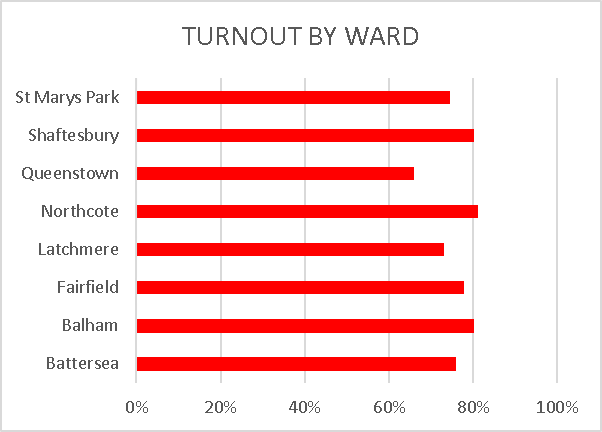
Turnout caveat is that this is “sampling” data and, while it is likely to be pretty accurate, it is not official data and therefore needs to be used with usual caution.
Overall, this was a high turnout election compared to 2017, with overall turnout at 76% compared to 71%. Projected turnout shows highest turnout in Northcote and Balham with lowest turnout in our Labour wards of Latchmere and Queenstown.
Result
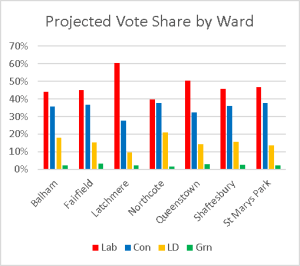
Labour share was 46% of the overall vote and Conservative was 36%. Labour votes share was also 46% in 2017 and Conservative was 42%. Labour held on to its vote share with Conservatives losing votes to Lib Dem and Green.
Projected Result by Ward
Sampling data suggests that we won every ward, with the biggest majorities in our core Labour Wards of Latchmere and Queenstown, and with the slimmest win in Northcote. (The editor adds: Emily Wintle sat analysing the data during the count on the night of 12/12/19 and was asked to produce this overview report especially for Battersea Labour – and she has done a great job).
ANNUAL CONFERENCE
Brighton
Sarah Apps, Lynne Jackson, Carole Maddern and Sonya Davis
Carole Maddern writes: Labour Conference is surprisingly gripping. There is no gentle snoozing. Even when the motions are sure to be passed overwhelmingly, the speeches are really interesting – from delegates across the UK, with all accents imaginable. There is a real feeling that people are talking from, often painful or inspiring, personal experience. So, speeches from rank-and-file trade union delegates bring home the reality of working-class life in Tory Britain.
Conference is fantastically diverse, with women in particular playing a central role in every debate. And the atmosphere is buzzing.
Sadly, the Deputy Leader’s speech had to be cancelled to make way for the Leader’s speech so that he could return to London and deal with the legal judgement against Parliament’s prorogation, which was announced in the middle of the Conference. In these circumstances, Jeremy Corbyn’s speech was inspiring, as ever.
Battersea’s motion – integrate private schools: Carole found it “a real privilege” to present Battersea’s motion – though when she agreed to do this, she had “no idea that she would be presenting to the whole conference ….”
The motion was wrongly presented in the media as a proposal to abolish private schools. In fact, however, it was actually to amalgamate private schools with state schools, pooling resources, and providing equal access for education to all children and young people.
Clause Four: The National Executive Committee proposed a review process of the aims and objectives of the Party (i.e. Clause 4 on membership cards). On that basis, the attempt to restore the old Clause Four was defeated, although about 60% of the Constituency Labour Party delegates supported this move.
National Constitutional Committee membership: the Battersea delegates voted for Stephen Marks, Gary Heather, and Jabran Hussain. All three were successful. Conference Arrangements Committee (Disabled Members Rep) – the Battersea delegates voted for Andy Thompson, who was sadly unsuccessful, defeated by Katrina Murray (nominated by USDAW and UNISON)
Democracy review: All the new detailed regulations for these sections were passed convincingly by conference. They should now be implemented in each CLP this year.
Brexit: From the vantage point of delegates in the hall, Composite 13, which sought to commit the Party to a “remain” position (i.e. even against a deal Labour had negotiated) was clearly lost on a show of hands. In fact, a card vote would have been wise on such a contentious issue, but that is all history now. The Battersea delegation voted for the NEC policy statement and Composite 14, both of which were overwhelmingly carried.
Green New Deal: All the media pundits were feverishly predicting splits and trade union backwardness but they were all disappointed as the motion on the Socialist Green New Deal was passed overwhelmingly by both CLP and Trade Union delegates. It commits the party to net zero carbon emissions by 2030 and a range of exciting policies to achieve these urgent priorities.
Immigration: The “controversial” motion on immigration, which promised to “maintain and extend free movement rights” and “Close all detention centres”, was in the event passed overwhelmingly by CLPs and Unions alike.
National Policy Forum document and references back: Some members may have witnessed the humiliating, televised chaos of the first voting session on various references back of sections of the NPF document as presented to Conference. Some CLPs are now really taking this right very seriously. Indeed, one CLP, Brighton Kemptown, moved dozens of them. Some references back from various branches were on substantive points of policy, while others were much more suggestions of improved drafting and emphasis.
On that first day, delegates were asked to vote on references back on individual paragraphs of a huge document, which had not been seen. It was all very confusing and the chair was as confused as were the delegates. It was all avoidable, moreover, as the next day the Conference Arrangements Committee document contained all the wordings of that day’s references back, allowing delegates to vote in a sensible fashion. This issue needs to be urgently looked at, as it eats up a huge amount of conference time. In fact, the whole National Policy Forum concept needs root-and-branch reform.
Trail, mail, water renationalisation; £1.8 billion for battery production factories; and the Green New Deal. Finally, Conference agreed on Labour’s strategy for stopping a no-deal Brexit – a policy that is now obsolete.
Obituaries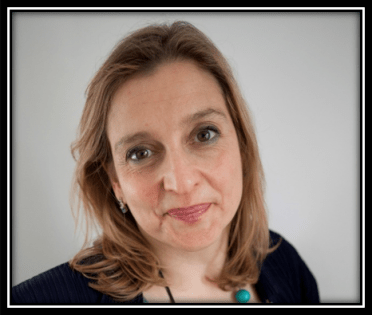
Samantha Louise Heath
6 June 1960 – 28 March 2019
By Sara Apps
Samantha Heath never reached five feet tall, but she was tall for her height and her impact on the environment immediately around her and for the whole of London was and is profound.
Samantha trained as a Civil Engineer at Heriot-Watt University – then as now a rare choice for a woman. After graduation, she worked for 10 years for Robert McAlpine Ltd and lectured at Greenwich University from 1992.
Alongside her University role, she developed her political career and her involvement in environmental issues. She was elected as a Wandsworth Councillor in 1994 and in 2000 was elected as one of 25 London Assembly Members.
Samantha played a significant role as both the Deputy Chair of the Assembly 2003-04 and also as the first Chair of the London Assembly Environment Committee 2000-04, pushing forward many of the strategies to deal with urgent issues with which London and other global cities are still grappling today.
Samantha also worked hard on ensuring that an Energy Strategy was developed that focused on renewable energy. She was instrumental in getting the London Energy Partnership off the ground – a body which brought together a range of private, public and academic representatives. She became its first chair when it was launched in 2004; and welded it into a dynamic force.
Samantha also chaired the London Sustainable Development Commission, where she was the Mayor’s representative on its Energy Taskforce. Here she was successful in seeing the GLA adopt a Carbon Emission Reduction Target, making London one of the first cities to adopt such a target.
Subsequently, Samantha became the Chief Executive of the London Sustainability Exchange, where she worked until 2018. LSx works with many local groups, particularly on air quality Citizen Science projects, leading local groups to demand further improvements in cleaning up London’s air.
Living with cancer for a number of years, Samantha was determined to get every last ounce out of life. Most people with secondary cancer would not dream of standing for the local council, but in 2018 Samantha threw everything she had at it and very nearly won.
To mark our admiration of Samantha, Battersea Labour Party donated two trees presented to her family at the moving memorial event, held at Battersea Arts Centre.
We continue to be inspired by Samantha, who set high standards for herself and for the Labour Party that she loved. We send our love to her son, Eliot; her partner David; her father Harvey Heath; her brothers and sister; and the wider family.
Samantha is much missed and cherished.
Peter Taylor
4 February 1980 – 14 September 2019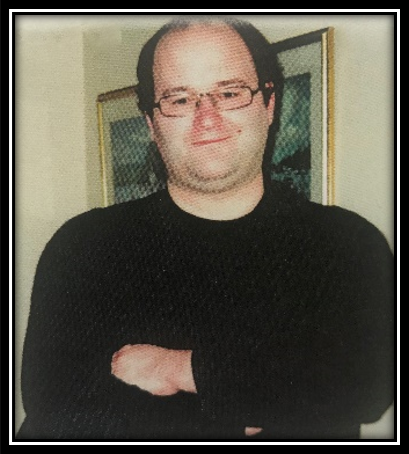
By Martin Linton
We were all shocked and saddened to hear of the death of former Battersea Labour Party secretary Peter Taylor, at the age of 39. He held various positions in Battersea and Wandsworth Labour parties. He was chair of the Wandsworth Local Campaigns Forum. He missed becoming a Wandsworth councillor by just 62 votes in Queenstown in 2014 – the year when we finally regained our first seat there.
But that doesn’t really do justice to the role Peter played in Battersea. Every party has one or two members who are dedicated but naively idealistic and totally unrealistic. As a counterweight every party needs someone like Peter who is deeply sceptical, almost to the point of cynicism, and brutally realistic. Peter was all of these, but was always able to clothe differences of opinion in a cocoon of humour. He had good political judgment, never carried away in fits of enthusiasm. He kept all our feet on the ground.
Rising rents in Battersea and missing out in the elections forced Peter to move to Croydon – like so many activists before him – which was a tragedy for us as well as for him as he could have (and in time would have) been an excellent councillor and given great service to his community.
At his funeral, there was a brilliant eulogy given by his contemporary Nigel Fletcher, now a Tory councillor in Greenwich, with whom he maintained a life-long friendship. It ranged across all of Peter’s many interests, debating, cricket, classical music, London Zoo, Australian politics and many more.
He was brought up on Hayling Island, near Portsmouth, and studied at the London School of Economics, where he was heavily engaged in student politics, serving for a time on the National Union of Students executive, leading on to a career as a student union and university administrator, working for an eclectic range of organisations from Battersea’s Royal Academy of Dance to the General Dental Council.
I passed on written tributes from people who could not attend. “He had such a brilliant, and thoughtful, sense of humour,” – Rex Osborn. “A wryly witty person of great kindness. We’ll miss his jokes and his commitment.” – Penny Corfield. “Peter was a giant of a man – intellectual, interesting and incredibly thoughtful – held back, in the 15 years I knew him, by health issues and money worries. He was the best councillor (and indeed, council leader) we never had.” – Will Martindale. (The editor adds: And Peter was an efficient Secretary of Battersea Labour Party.)
These tributes would be echoed by the many councillors and party members from Battersea and other parts of Wandsworth who came to Portsmouth for the funeral
Danny Truell
Born 1963 – d. 29 September 2019
By Will Martindale
A Labour member throughout his life, including many years here in Battersea, Danny Truell died in September 2019, aged 55.
Some would say that Danny was atypical for a Labour activist. Danny was a former managing director of Goldman Sachs, Chief Investment Officer of the Wellcome Trust, and the founder of a multi-billion dollar insurance fund.
But even if Danny did see the contradiction, he didn’t care. He wanted good, efficient, radical Labour government. “Go digital”, Danny said at a Labour meeting in the basement office of 177 Lavender Hill. “Be the first fully digital council”. This was in 2006, years before councils did indeed go digital.
That’s not to say that Danny would shy away from who he was. A rich banker, with a privileged upbringing. But Labour was his party. And when the Party asked for his help, Danny would say yes (and very generously, Ed.).
Danny wasn’t flash. His ground-floor flat in Clapham Junction was nice, but not extraordinary. He enjoyed the sunshine, sitting in his south west-facing garden, with a glass of wine, a strong cigar, and a point to make.
Later in his life, the glass of wine would be balanced precariously in an increasingly shaking hand. As his health deteriorated, Danny coasted through the living room holding table to chair to door handle in the manner of a child learning to walk. He was fragile. Diminutive even. But once seated, his mind would whir, with talk of closed-door meetings with Cameron or Putin. Danny chaired the powerful B20 investment group, the business equivalent to the G20.
Danny was not just good at his job, but the best. Danny was a winner. And he wanted his party – the Labour Party – to win too.
DONATIONS IN 2019:
Finally, Battersea Labour Party expresses warm thanks to all members for their subscriptions and to the following for their additional financial support: Joseph Afrane, Samuel Albert Amoako, Sara Apps, Elizabeth Barnard, Susan Barty, Tony Belton, Diana Birkett, Brian Cairns, Chris Callaghan, Elizabeth Carboni, Richard Card, Alan Cooper, Penelope Corfield, Emma Cornish, the estate of Priscilla Cornwall-Jones, John Cox, Aydin Dickerdem, Maureen Docherty, Ed Elliott, David Fairbairn, Deidre Feehan, David Franklin, Andy Gibbons, Richard Hatfield, Susan Hayday, Harvey Heath, Jon Hilary, Simon Hogg, Peter Holland, Lynne Jackson, Ian Jewesbury, Monash Kessler, Belinda & Sandy Kirby, Tom Kirk, Mr. Lewis, Martin Linton, David Lovell, Rob Lugg, John Lyons, Maurice McCleod, Sally Manders, P Marsh, Will McDonald, Brendan McMullen, Mark Mildred, A. P. Munsie, Toby Naish, Cynthia Newman, Wendy Nicolson, Sue Nye, Stoby Orotayo, John Oughton, Jenny Pardington, Fred Ponsonby, Margaret Post, Aaron Quinn, Sarah Rackham, David Rathbone, Gery Roberts, S Rossi, Donald Roy, Jenny Sheridan, Jonathan Smith, Kate Stock, Basil Strong, Derek Sutton, Rachel Trim, Tony Tuck, Unite, Barrie Vince, Paula Walker, Susan Watt, Prunella West, Timothy West, Cynthia Willis, Emily Wintle, Steve Worrall, Eleftherios Yannoulopoulus, Gulay Yurdal-Michaels, and, of course, Putney Labour Party.
MAKE A DONATION – EVERY LITTLE (OR LARGE) HELPS:
All financial help given directly to Battersea Labour Party gives us invaluable extra scope for local campaigning.
Did you know that your annual Membership fees go the national Labour Party, which sends only 5% of the income back to the Battersea constituency. We are very dependent upon the 100 or so members, who contribute an average of £10 per month, on top of their membership fee. Our income from these quite small standing orders amounts to over £10,000 a year.
The snap election that took place in December, 2019, stretched our finances to the limits and we start the New Year in debt, by a few thousand pounds. We are hardly in a position to fight the GLA and the London Mayoral elections this coming May. Those elections will probably cost us £10,000 on top of our normal costs.
We really need to add to our income from standing orders. One hundred £10 per month contributions would transform our finances.
Please, go online NOW and start a monthly standing order to Co-operative Bank:-
Account Name: BLP Fundraising Account
Sort Code: 08-90-34
Account no: 50448065
Reference: Surname, initial
Or for hard copy of standing-order form, contact Treasurer: Tony Belton:
tonybelton99@gmail.com
Annual Report Editor (2019) Tony Belton Copyright © Battersea Labour Party
Councillor Tony Belton’s Battersea February, 2020, Newsletter (# 128)
- The General Election dominated my January just as much as it dominated December. In many ways the main chore for the agent (I was Marsha de Cordova’s election agent once again) is to do the expense returns and to do them by January 16th. Miss that date and you could be fined; get the expenses wrong then you have to explain why. It is not a fun job and I, like many, leave it to the last minute. I was getting worried that week, only to be told by the Electoral Registration Officer, when I eventually handed ours in, that I was one of the first to do so! Those sleepless nights!
- One interesting piece of analysis showed just how well Labour had done in Battersea. I am indebted to Councillor Emily Wintle, St. Mary Park ward, for the stats, which she was busily producing whilst the rest of us “invigilated” at the count.
- First of all, a note on the methodology: the ballot is of course secret but the ballot boxes are numbered and the Town Hall produces a list of numbers per ward. So, for example, ballot papers for residents in polling district LMA in Latchmere ward votes were in, say, boxes 201 and 202. Party observers, all parties, stand behind the counters (as you have probably seen on TV) and count as many votes for each party as they can. Hence if out of 200 votes seen, one can see that the Labour candidate had 83 votes and the Tory candidate 76 votes then the Latchmere sample would suggest Labour has 42.5% of the vote to the Tory’s 38%. Rough and ready perhaps but fairly accurate.
- Emily’s first conclusion was that Turnout was
 high overall at 76% compared to 71% in 2017. It seems that the projected turnout was highest in Balham, Northcote and Shaftesbury at just over 80%. However, in Queenstown only just over 65% made the effort. There are, of course, other factors. Queenstown almost certainly has a more transitory electorate than Northcote and because of that instability Queenstown’s register is probably less accurate – in other words the 15% differential in turnout is half technical, because the register is less accurate, and half demographic, because the population is less locally committed, younger and less established than Northcote’s.
- The actual result was, as shown in this pie chart.
 Labour’s share was 46% of the overall vote and the Conservative share 36%. Labour’s vote share was also 46% in 2017 but the Tory vote was 42%. So, this indicates that Labour held on to its vote share, but the Tories lost votes to both the Lib Dem and Green.
- The sampling suggested that Labour won
 every ward, with the biggest majorities in the core Labour ward of Latchmere and with the slimmest win in traditionally the safest Tory ward in Battersea: Northcote.
- The rest of the month was, in political terms, very quiet – even to the extent that not one constituent turned up to my Council surgery on the 18th Actually, I doubt the value of council surgeries. It is an iron law of representative politics that elected MPs and councillors should hold surgeries, but it is an iron law from an earlier age. Today, most constituents have readier access to a phone or emails than to weekly councillor surgeries and there is no question that the vast majority of cases come through the phone or email. So, when I go to my surgery, I make sure that I have plenty to read!
- The only other big event of my month was the Planning Applications Committee on 28th January – and this was a “biggy”. The agenda was a brutal 796 pages long, or should it be thick? Obviously, there was very little chance of all 796 pages being read, analysed and understood by all the committee members in the five days we had the papers. But that’s not the total point. The paperwork demonstrates all the issues that had been considered and the conclusions that planning officers had drawn before making their recommendations to the Committee. The paperwork is, itself, a public and legal justification for the recommendation in the event of a judicial challenge.
- By far the largest application this month was about the Winstanley Estate Regeneration. That really is a misnomer as it includes the total demolition of the York Road 2 Estate and only relatively few of the Winstanley Estate blocks. In outline, the development envisages the demolition of 759 residential units, a school and a chapel, and their replacement by 2,550 new units. In addition, there is to be a new swimming pool, a gym, a library and new healthcare facilities. The new housing units will be in a combination of new tower blocks and of quadrangles of mansions, designed to complement the mansion blocks surrounding Battersea Park. The new housing will be a mix of council housing, shared equity, affordable rent, shared ownership and private units.
- The Labour councillors have for many
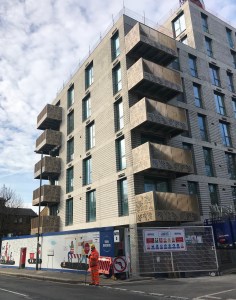 years been in negotiation with the Tory councillors, who are formally and constitutionally in control of the Council, about the mix of social and private housing. There are nowhere enough social housing units in this development to satisfy our demands, but on the other hand there are not as may private units as Tory councillors initially wanted. There will also be scope to vary the mix in the
  future. Personally, I think that the tall blocks are excessive – one has 35 storeys – and, I am sure that relocating
York Gardens itself a few yards to the east (nearer Falcon Road) will have its problems. But I, and I am sure most of the residents, will be pleased that at last the project is really getting underway.
- The new externally completed block at the corner of Grant and Plough Roads as seen here is, I think, an encouraging sign of the design quality that is being introduced, with the balconies referencing the Winstanley’s famous William Mitchell’s concrete sculptures.
- There were also two applications for 23 storey blocks in the Nine Elms Lane area, which included residential units and “affordable” office accommodation, and another for a 16-storey development opposite Caius House and what used to be the Chopper pub. This latter item was deferred as councillors were not convinced by recent design changes, which reduced the amount of housing provided simply because social housing providers are NOT prepared to use the same entrances and exits as private residents. This complication is not a reverse snobbery but instead a justified fear about high service charges.
- The end result of the evening was yet more tower blocks in north Battersea,
 which, if nothing else, has revolutionised the townscape. I doubt whether this change is very popular with the public at large, but given the rapid expansion in London’s population and the kind of developments the London Mayor and the Government are prepared to accept, the trend seems inexorable.
- Finally, on 31st I went to hear Keir Starmer give a “Labour leadership bid” speech in Westminster Abbey hall. He doesn’t give ribaldly funny speeches, laced with jokes about Boris Johnson, or passionate, “to die for” speeches as Michael Foot used to deliver. But he does give very considered, comprehensive speeches and, when he answers questions, he does actually answer the question asked and not the one that allows him the flashiest answer.
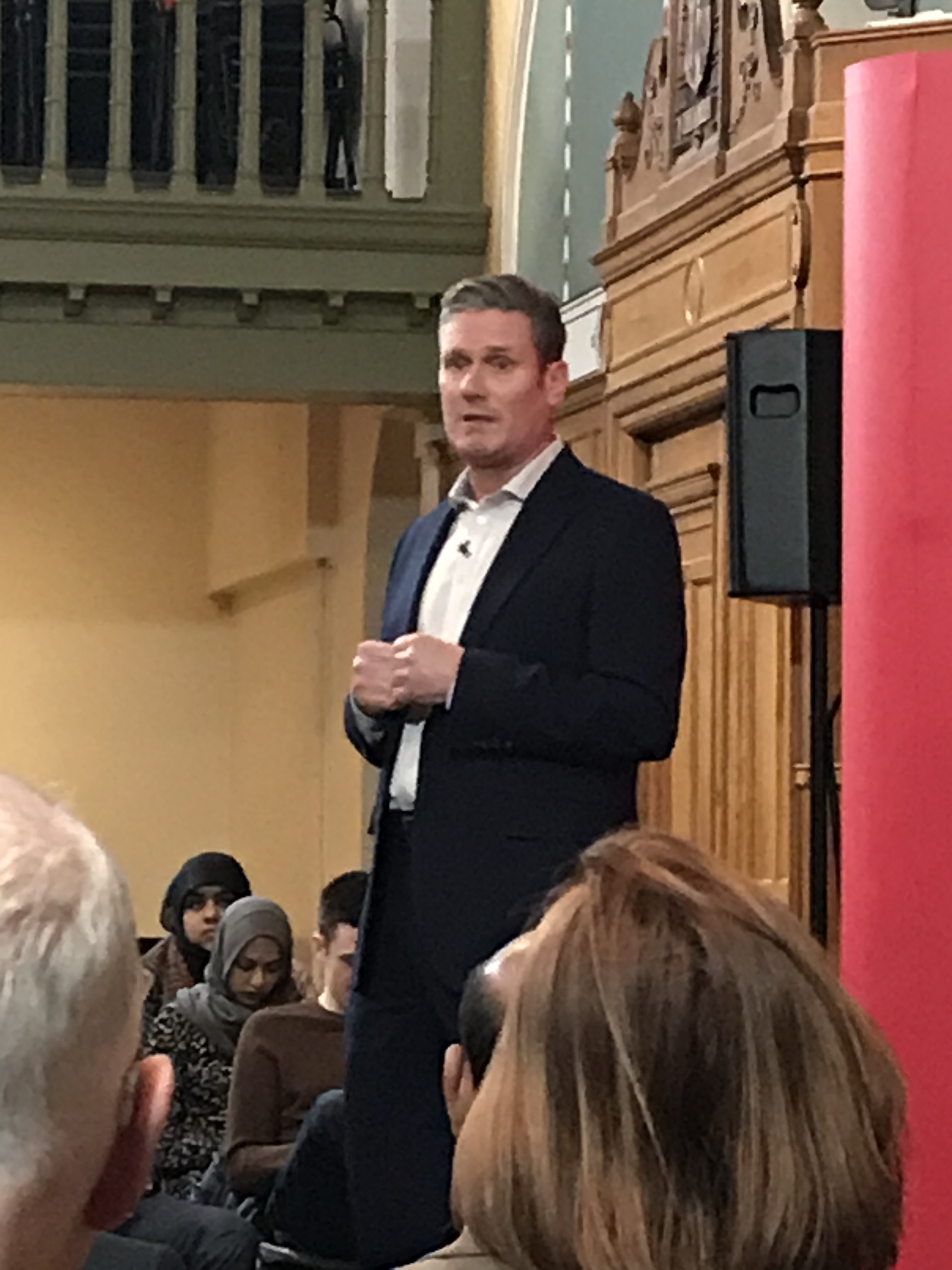
My Programme for February
- Battersea Labour Party had a fund-raising evening on the 2nd.
- There was a Council Meeting on 5th
- And a Strategic Planning and Transport Overview and Scrutiny Committee on 6th.
- I have a Wandsworth Foodbank event on 13th February, centred around a film by Ken Loach, which is bound to be both brilliant and agonising.
- I will be going to a hustings event in Central London on 16th February to hear the candidates for both Leader and Deputy Leader of the Labour Party. Younger readers might be surprised to hear that this procedure is a very, very recent innovation into British politics. It has a functional similarity to the American Primary Elections, even if we do them in a rather different way. But because it emphasises the Leader, in rather the same way as the Americans emphasise the President and his principal opponent, as opposed to the collective of MPs, I can’t help feeling that in the long-term this trend will have constitutional implications not yet understood.
- February’s Planning Application Committee is on 20th.
- I may be playing chess for Surrey on 22nd.
- And finally, on the 25th February there is a presentation on the Tideway Tunnel, which appears to be a large-scale infrastructure improvement in London, which is both on time and on budget. It is due to be completed in 2024 and only just in time judging by the increasingly variable weather!
Councillor Tony Belton’s Battersea January, 2020, Newsletter (# 127)
- December was, of course, dominated by
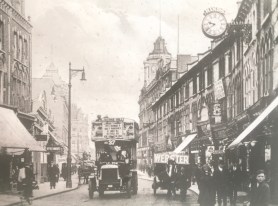 the General Election. But first, on the 4th, I went with Labour’s candidate, Marsha de Cordova, for Xmas lunch at Haven Lodge, Kambala Estate. It was a lovely but quiet event and as such a fairly standard campaigning occasion. But what was new to me was the Lodge’s spectacular set of photographs of Battersea in the early
 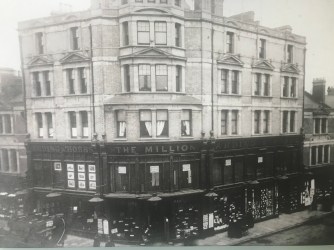 twentieth century. I only have room for two here but I hope that you enjoy them. The first has an open-topped 37 bus in St. John’s Road, heading for Herne Hill via Brixton, according to its head-board, passing a horse-drawn coal-lorry, the same route as the 37 follows even to this day! You can clearly distinguish the clock on Hinds, the jewellers, with the “new” Arding and Hobbs tower behind. Hence this picture almost certainly dates from1910-1914. And the second is the old Arding and Hobbs, before the 1909 fire destroyed the shop leading to the building, which we all know today.
- And so, to the 12th, and the disastrous
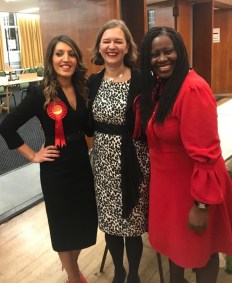
(as far as I am concerned) election result. I would, however, like to share with you some fairly random thoughts, that may or may not surprise depending upon how closely you follow these things. But first the locally great news of a big win for Labour in Wandsworth with our three MPs, (from the left) Tooting’s Rosena Allin-Khan, Putney’s Fleur Anderson and Battersea’s Marsha de Cordova, seen here immediately after the count.
- With a 6% swing to Labour, Putney was the only true Labour gain in the country (I say “true” because all the other so-called gains were in seats such as Streatham, where Labour simply recaptured one lost to defections, such as Chuka Umunna). But Battersea also had a 2.5% swing to Labour as did Canterbury. I haven’t found a simple table comparing swings across the country, but these three were probably Labour’s stars of the night. (Neighbouring Tooting had a small 1% swing to the Tories.)
- Putney’s large swing makes Battersea, probably for the first time, the most marginal Labour seat in the borough, even if by only the tiniest margin. If Marsha had about another 80 votes then Putney would re-take this somewhat unwanted title!
- This election gave a better indication than usual about the impact of, so-called, third-party interventions, especially perhaps when neither “main” party was exactly popular. For example, in the “safe” third-party seat of
 Brighton Pavilion, Caroline Lucas, the popular Green pictured here, achieved a 4.4% swing from Labour and a 3.3% one from the Tories. Meanwhile in neighbouring Richmond Park, perhaps the least surprising gain of the night, the swings to the Lib/Dem’s Sarah Olney from both Labour and Tory were identical at 6%. It appears in both cases, that the Green/Lib/Dem candidate was taking an almost identical number of votes from both Tory and Labour. In Kensington, where Labour lost by a mere 150 votes, this seemed to be confirmed and yet decisive, with the Liberals registering a 6.5% swing from the Tories and a 6.7% swing from Labour.
- The moral of the story being? I’m not sure except that the British first-past-the-post electoral system is so strong that, where the previous election was essentially a two-horse race, then it was almost certainly a wasted vote supporting third party candidates. So, for example, the Lib/Dems may have looked a tempting prospect in many parts of the country but they barely got anywhere near winning, except where they were already in first or second place; just as Labour also got nowhere near winning anywhere in the country, unless Labour was already in first or second place.
- The rise of the Scots NP from third-party obscurity to apparently total dominance, is the major exception to this rule. But I think we can all agree that Scotland is just possibly that oddity “the exception that proves the rule”.
- Ironically, of the four current councillors, from Wandsworth, one of the strongest Tory local authorities in the country, who stood in the General Election, the three Tories lost and the one Labour councillor, namely Fleur Anderson, won. That must be some kind of a record! By the way, to my knowledge, there are now seven ex-Wandsworth councillors currently serving as M.P.s. They are the Tories Lucy Allan, Paul Beresford, Christopher Chope, Charles Walker and Nadhim Zahawi, and Labour’s Rosena Allin-Khan and (now) Fleur Anderson.
- This was the 14th General Election, in which I played an active role, as well as 14 Council elections, half a dozen GLC elections, 5 GLA ones, three Referendums and a few European elections – a total of well over 40. It started with a great victory when I was the Labour organiser in St. Mary Park in 1968 (and a ghastly defeat in 1970’s General Election). By the way, in case you hadn’t noticed, this time I was Marsha de Cordova’s agent and hence on any printed matter you received from her you will have seen a
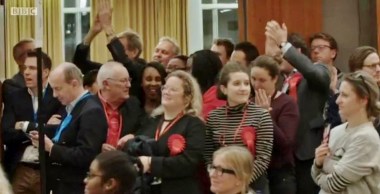 small imprint saying “Promoted by Tony Belton”. That’s not exactly a great adrenalin buzz but elections continue to thrill and agonise me in almost equal measure. This picture shows our core team of Carmel Pollen (centre), Amy Merrigan (also with the rosette) and me at the count.
- Most notably, not one of the recent rebels, such as Labour’s Mike Gapes and Chuka Umunna, or the Tories Dominic Grieve and Anna Soubry, won or retained their seats despite registering variable swings of 8% to 20% in their favour.
- The three Wandsworth M.P.s are all women, of whom the most senior, Rosena Allin-Khan, has been an M.P. for all of three and a half years. This must be a first in terms of both gender and experience. It is not true, however, as some have said, that it is a first for all three to be from the one party. All three Wandsworth MPs were Labour from 1964-1979 (Hugh Jenkins, Douglas Jay/Ernie Perry/Alf Dubs and Tom Cox) and from 1997-2005 (Tony Colman, Martin Linton and Tom Cox), whereas they have never all been Tory.
- Historic footnote. Actually from
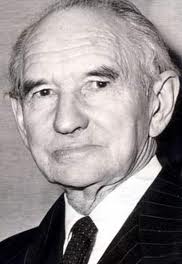 1964-1983, there were four Wandsworth seats, with the miniscule Battersea North (essentially the current St. Mary Park, Latchmere and Queenstown) being merged into Battersea South in the 1983 Parliamentary re-distribution. Douglas Jay, pictured, was Battersea North MP and a member of Harold Wilson’s Cabinet, 1964-70.
- My friend Mike has done some research on the age profile of the UK electorate and he tells me that of the 100 constituencies with the fewest number of older constituents (voters 65+ years old) Labour now holds 99. The odd one out is Brighton Pavilion, held by the Green, Caroline Lucas.
- Equally of the 100 constituencies with the largest 18-34 year-old electorate, Labour now holds 84, the Tories 13, and the LibDems, Plaid and Green one each. It really does appear that in 2019 age was a more significant indicator of political leaning than class, education, socio-economic standing or, in England at least, region. (Scotland and Northern Ireland are clearly different, but I suspect Wales is more likely to be like England). Unfortunately, it is difficult to tell whether this evidence means that the UK is bound in time to fall to Labour or simply that as people get older/more mature they get more conservative/cautious!
- On a personal note, we went to Winchester (family) and Bath over Christmas itself, including a visit to the Recreation Ground, where we were entertained by Bath’s 16 – 14 victory over the Sale Sharks. But although it was keenly fought, I remain to be convinced that Rugby Union is really a spectator sport. On a dark, murky afternoon most of the action at the other end of the pitch was indecipherable, so at one point I was convinced that the Sharks had scored a try when in fact it was a Bath defensive touch-down.
- Whilst in Bath we went to the
 delightful Theatre Royal to see a great pantomime performance of Beauty and the Beast, which featured, perhaps I should say starred, a great take-off of Boris Johnson, by the classic “Dame”, Nick Wilton, pictured here. If the audience in Bath can be helpless with laughter at the lampooning of the “oven-ready” Prime Minster, then not everything will be gloomy in 2020!
- Returning to London, I stopped at the
 “Duchess of Somerset Hospital (1695)” on the A4. Many of you may have driven past it, just a couple of miles west of Hungerford and wondered what it was. I stopped and discovered inside it an exquisite estate of very large (for 1695) almshouses provided for retired clergymen and their widows. It was well worth the stop, especially for historians of the 17th and 18th centuries!
My Programme for January
- I am not finished with the General Election as I have to complete the Labour Party election expenses return for Battersea by 17th And if they are wrong then although the MP, Marsha de Cordova, would no doubt be under fire, I am the one who would go to jail! So, no pressure there, then.
- I am due to take part in an estate inspection of Wayford Street and Este Road on 13th January, and on the 15th the Power Station people are inviting councillors and others to an update on progress on the Power Station and the Northern Line Extension to Battersea Park.
- Meanwhile the chess season starts in earnest on 14th January and I have my first surgery of the year on 18th
- On 28th January I have the Planning Applications Committee.
- My political scene will, however, be dominated by two issues, one being the election of a new Labour Leader to succeed Jeremy Corbyn and the other the response of many to Brexit on 31st January. More than three quarters of the Battersea population voted to remain in the EU but, in the Prime Minister’s view, Brexit will be done by the end of the month. It probably will be in a headline grabbing sense, but it won’t be over in the real negotiating sense until at least the end of the year. One so-called Grass Roots Conference will be held on this subject on 25th January; I will be there to take part.
- If you have views on the future leadership and/or Britain and the EU, I would be happy to hear them and discuss, including passing them on to the MP.
Review of A Day in the Death of Joe Egg
On Friday, 29/11/19, we went to see a revival of A Day in the Death of Joe Egg. This iconic play of the 1970s was written by Peter Nichols, one of the lesser-known so-called “kitchen sink” dramatists. The synopsis, telling of a marriage under strain as husband and wife struggled to bring up a disabled adolescent daughter, was hardly encouraging – it didn’t look like the stuff of a great evening out. How wrong can you be?
Sensational acting from Toby Stephens and Claire Skinner lit up a hugely sympathetic, humane and understanding work. The dialogue was very funny despite, or was it because of, the totally unsentimental script. It was not surprising to discover that the content was partly autobiographical.
Bri, played by Stephens, was racked with frustration and guilt over his inadequacies as a father. Predictably the male lead was pre-occupied, though understandably, in essentially egotistical concerns; the female lead, as so often in life, was pre-occupied with keeping life tolerable and even livable, even whilst stoking her husband’s jealousy about the time and concern she lavished on Joe.
The two well-meaning friends were hopelessly adrift in a sea of emotions quite beyond their life experiences and, in truth, they were less well-written or liked by both the author and the audience.
The staging was simple and effective, the directing sharp and precise. It was, we agreed, the most moving and commanding performance we had seen since Arthur Miller’s Death of a Salesman.
Councillor Tony Belton’s Battersea October, 2019, Newsletter (#124)
- I didn’t get back from Croatia until 8th September, but in the event
 it was a quiet month, at least as far as the Council was concerned. My first “Council engagement” was the following Sunday, 15th September, when Wandsworth’s Labour councillors had an “away day” in Roehampton. It was a busy day even if this picture of my fellow councillors, from the left, Paula Walker (Queenstown), Jo Rigby (Earlsfield) and Sue McKinney (Roehampton) at a tea break, suggests otherwise. Our aim was to focus on self-improvement, as councillors and as a group.
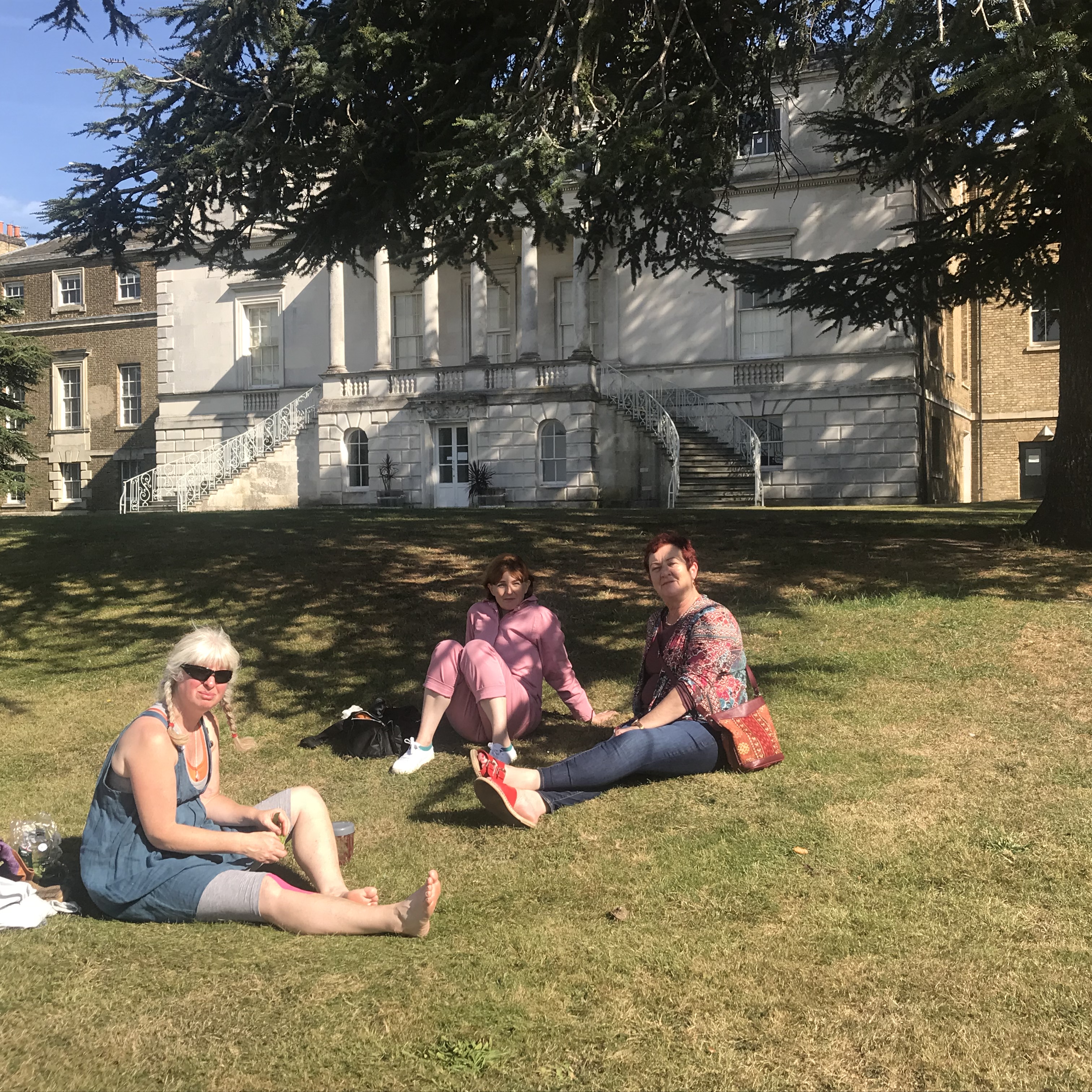
- On the 16th September I attended a public meeting at the Alma pub, in Old York Road, Wandsworth, along with about 50 local residents. The meeting was focused on Waltham Forest’s exciting road and traffic planning initiatives, called simply Low Traffic Neighbourhoods. The presentation was given by Waltham Forest resident, Paul Gasson, and reminded me very much of a similar scheme Wandsworth Council implemented in Balham and Northcote in 1978. There was, however, one very, very big difference. In May, 1978, there was a Borough Election and immediately after they won the Council, the Tories scrapped the scheme. The Waltham Forest scheme seems to have got off to an excellent start; I hope that it gets well established before the next Borough election and that it becomes an example followed elsewhere.
- The following Tuesday, 17th September I had the Planning Applications Committee (PAC). There was only one application of any real significance and that related to the semi-permanent, so-called, British Genius site in Battersea Park. The Committee agreed to allow the “temporary” structure even though the application was for a building 2 metres higher than the current one and for a longer, four-year, period. I am afraid that I am going to make myself unpopular with a few of my friends, who live very close to the Park, by saying that I think it is about time that we dropped the fiction of the structure being temporary. It has now been there for a long time and I rather doubt that any future PAC is going to refuse it permission. What is more I very, very much doubt that anyone could defend a refusal at an appeal hearing. Moreover, the sooner that the Genius site is accepted as an established part of the Park, then the more we can address the serious issue of landscaping the area around it appropriately.
- On 24th September, I was at the Strategic Planning and Transportation Committee. There were some items about long-term planning issues, which, although very important for the future of the Borough, get a little lost in the technicalities and will not have much affect for many years. Hence they are difficult to describe. Of more immediate interest to lots of people were two items about cycling, which could have an effect in almost every street. First was the Council’s decision to have an e-bike contract. Let me confess, I don’t fully understand the system, whereby armed only with a membership card, anyone can use an e-bike from anywhere to anywhere. What happens as regards repairs, or returning the bikes to some base, any base? Are there insurance issues? None of these questions were considered and they certainly weren’t answered. We were simply re-assured that the company given the contract was willing to take all the risks and that there would be no cost to the Council. It was not, I think, a brilliant moment for the Committee, for which I take some responsibility as the lead on the Labour side – but my excuse is that the Tories have sucked all the life-blood out of the committee structure, which is now totally inadequate as a democratic constraint. As I have already noted, the committees are now restricted in time; worse debate and discussion are discouraged – overview and scrutiny is bound to suffer in the longer term.
- The second item on cycling referred to cycle parking and
 the fraught question of cycling security. As someone who has lost four (4) bicycles to theft and had a saddle and endless numbers of lights stolen from my bikes, I have something of an interest on this issue – if you are worried about car theft, you should spare a thought for the poor cyclists, who face far greater problems. So, to the good news: the Council has agreed to the provision of lockable bike hangars in our streets subject to demand and consultation. Paul Ellis, the councillor in charge, says he hopes for 40 such hangars to be in place in the course of the next year. The picture shows a bike hangar in Southwark.
- Meanwhile, of course, all hell has broken loose at a national level. Every news bulletin has brought shocks, horrors and total surprises. We have a Prime Minister, who, as of now, has lost every single one of seven (7) votes in Parliament and who has had a unanimous decision of the Supreme Court going against him. We have four weeks left before we leave the European Union OR stay in against the Prime Minister’s wishes. In four weeks time, we may or may not have trading agreements with our major customers and suppliers.
- The country’s governing Tory Party, or maybe I should say parties, with the Democratic Unionist Party playing second fiddle, seems to be on a different stage from everyone else. And yet the opposition parties seem incapable of getting their acts together to promote a more orderly politics. It looks like being a turbulent month with a ghastly prognosis! If we leave, the signs are that “Project Fear” was simply not pessimistic enough about what leaving the EU would do to our economy and our status. If we remain, then many of the 17.4 million who voted leave will be embittered, maybe for life.
- For my money, it becomes clearer, day by day, that, even if the thought is horrific, the only way out of this is for another Referendum, pitching a Leave package vs Remain but with the advantage that this time we would know more about what it means.
- On 15th September, my partner and I hosted an evening’s discussion with our M.P., Marsha de Cordova, and twenty or so local residents. These friends of ours are concerned that the Labour Party is not 100% Remain, because of Jeremy Corbyn’s policy not to alienate those who voted Leave and his efforts to try and hold all parts of the party together. For many of them, the simplicity of the Lib/Dems position seems attractive. However, if I may, say about the Lib/Dems position: If Swinson and her colleagues do deny Jeremy Corbyn the dubious distinction of being Prime Minister for a limited and specifically prescribed period, with the sole purpose of organising and seeing through a Referendum, then, I think, they are likely to pay a heavy electoral price.
- Meanwhile, on a completely different theme, can I draw your attention to my partner, Penny Corfield’s, blog for this month? Her messages are usually aimed at her academic colleagues but this month’s is very much about the desperate need for all cities world-wide to go as thoroughly green as they possibly can! See: penelopejcorfield.com/monthly-blogs/106
My Programme for October
- On 1st October I gave a presentation to the Big Local AGM on Battersea, 1801-2019, A Social History, at Providence House, Falcon Road.
- The next day I had the Katherine Low Settlement AGM.
- On 4th October I attended the funeral of Peter Martin Taylor, a young (39) colleague of mine, who was a Labour Party candidate for Queenstown Ward in 2014.
- On 9th October I have the Corporate Parenting Panel, of which more next month.
- On 11th I am off to Stockholm for the week-end accompanying my partner, who is giving the keynote lecture at a Swedish Conference on social history.
- There is a Council Meeting on 16th October
- The Planning Applications Committee, “the committee that never stops”, is on 24th
- On the 30th I will be, at the Town Hall, attending the what I think will be the first Healthy Streets Forum – an interesting new Council initiative?
Do you know?
Last month I asked whether you knew, after dissolving Parliament, how long Charles I managed before inviting it to sit again? And do you know how long Parliament took (after that) to try him for High Treason and have him executed? And do you know why, in the end, he invited the argumentative MPs back?
The answers:
- Charles I dissolved Parliament in 1629 and re-called it in 1640;
- he was executed in 1649, so nine years;
- it was money of course. He needed money in 1640 to fight a battle about religious policy in Scotland.
This month my question is Do you know
- Where was the Portsmouth and Southampton railway’s first London terminus?
- When was Waterloo station opened as a replacement for the first terminal? and
- When did the last steam train puff its way out of Clapham Junction?
 Tony Belton
