My Country: a work in progress
We went to see this “play” at the National Theaatre on, ironically, St. Patrick’s Day. I say ironically, because we saw a play about the lack of clarity about what it means to be British on a day associated with the very established and internationally recognized identity of one of our constituent “parts”, the Irish.
I am sure that I could find some definition of “a play”, which My Country did not fulfill. In some sense, there were no personal relationships portrayed; there was no action; there was no plot; there was no drama. Yet, in another way, what could be more dramatic than the possible internal collapse of a great country? How could that story not be a plot? Who could say that Brexit and the state of the UK does not constitute action? And whatever happens in these most unpredictable times, the aftermath of Referendum Day will continue to have a massive impact on the relationships of nearly 70 million people.
The play is an anthology of quotes from Britons about the build up to and the fall-out from Referendum Day, 23 June 2016. Quotes from the great and the good, bad and the ugly (Cameron, May, Corbyn, Johnson, Gove and many more starred) and quotes from the people, the people from London-Derry, Edinburgh and Glasgow, the North-East, Leicester, Gloucester, Salisbury and Merthyr are masterfully crafted by Poet Laureate Carol Ann Duffy into a passionate cry for something, but what? Sanity, cohesion, belief, faith, rationality?
I have seen it said of this work that it demonstrates mean, unpleasant, nations(s) retreating into a pessimistic dystopia. I don’t think that’s right. Its rather about a people flailing around blind and lost, without common purpose or direction. That at least was my impression. There was no commonality in almost anything debated, and a lot was at least mentioned. On the other hand there was plenty of wit, humour and nostalgia, but overall there was no sense of purpose or unity; in that sense the play was extremely depressing.
Is it possible that in a lifetime, as it happens almost exactly my lifetime, the UK could go from a nation that will forever be remembered for its finest hour to one totally lost in a world, rapidly gravitating towards continental entities built around smaller regional units? Or is it that Duffy had a peculiar ability to extract from the evidence a story that corroborated her feelings and attitudes, whilst another author could equally assemble a positive, clear picture of where we are going and how, say a picture of close relations with the EU, even the restoration of our role in the EU, and a renewal of a United Kingdom?
This was a confusing evening, stimulating a myriad of thoughts and emotions, not a restful, comforting one. I highly recommend it – if you wish to be provoked. The last show at the National Theatre is tomorrow, 22nd March, but then it goes on tour throughout the UK, returning to Stratford in the east end. For details see: http://www.nationaltheatre.org.uk/shows/my-country-uk-tour
Just who are the real cynics?
One great unmentionable about politics is the cynicism and venality of the electorate as opposed to the politician. I have been in the game for so long that I really don’t have anything much to lose by being honest about it but most of my younger colleagues daren’t actually say what they really think.
How many times have I been abused on the doorstep? “All politicians are corrupt, liars and cheats”, “Oh, not you”, they speedily retort when I protest that they are saying I am corrupt, a liar and a cheat.
Yet, they continue, “Politicians don’t give straight answers. They change their minds according to circumstances. They are only in it for their own ends.” The litany is never ending, especially if it is “them, politicians” that are being criticised. Jo and equally Joanna Public back off slightly when actual names are mentioned.
The reality of my experience is that in 44 years of seeing and meeting hundreds of councillors of all parties, the overwhelming impression is of people who want to do “good” and want to make a difference. It is true that I can’t abide the ruinously destructive nature of some Tory policies; and there are, or certainly have been ,Tory councillors I didn’t much like – it was probably mutual. But even the most grotesquely right-wing act, on the whole, out of a sincere belief in the “rightness” of what they are doing.
This observation is actually not so surprising. Just who would want to spend dark winter evenings tramping the streets canvassing, being abused by some and having doors slammed in one’s face, merely to end up as a candidate in a no-hope Council seat – the kind of seat that your party has never won. Or, if you were a bit lucky (though some come to think of it as unlucky!), in a winnable seat when you then become a back-bencher sitting through endless boring evenings, which would drive most ordinary people to distraction.
I haven’t met and known so many MPs but I’m certainly on terms with quite a large number, past and present. And they are the same! I am not sure that I have ever met one who didn’t at least start with the intention of doing the “right thing”.
Again this is not so surprising. Both MPS and councillors expose themselves on a daily basis to abuse, ridicule, and contempt as well occasionally as respect, admiration and just possibly but very rarely genuine affection. You have to be pretty tough to do that and it would be even tougher if you really were a cynic as well. Why would one bother unless driven by a desire to make things better? Not for the money, that’s for sure.
No, the really shocking thing, as a politician, is just how cynical the electorate often appears to be. Not of course that the electorate is one person and consistent. It is rather a hydra-headed monster. It wants brilliant services but not to pay taxes. It is too busy to read campaign material or watch party political broadcasts or heavyweight political programmes but then it complains that the rights and wrongs of the Eurozone, the EU, western foreign policy and economics have not been explained to them. The public wants easy solutions to inherently complex questions but it most particularly doesn’t want to think about the issues on its own account.
And the most damning thing that Jo and Joanna Public say is that “You are all the same!” Particularly when in the same breath Jo accuses politicians of “playing party politics”. Why, they say, don’t you just talk together and agree what is in the best interests of the country, when over a pint they themselves can’t even agree on who is England’s best centre-forward.
Oh, my. The electorate can teach any politician I have ever known an awful lot about cynicism and negativity. I think the problem is that it is us, the politicians, who are the gullible ones naively hoping that at least some of the public will think about and empathise with just some of what we have to say and what we promise.
Do I have a solution to this conundrum? I am not sure that I do but if you believe that the electorate gets the politicians that they deserve and that equally the politician gets the electorate that s/he deserves, then all you can do is to put the case as honestly and as persuasively as one can. And hope to win – in the long run.
Suffragette
Went to see Suffragette (dir. Sarah Gavron, 2015) at the Brixton Ritzy on Friday, 6th November; not sure exactly what my expectations were but I was hugely impressed by this factional (fiction based on fact) story about woman’s struggle for the vote in the years immediately prior to the First World War. From the off (1912), the street scenes in Bethnal Green and in Westminster were very convincing and the pace of the action suggested a director in total control of her material.
Not too sure, as memory tricks me, but I think that I was taught at school that the suffragette movement had indeed succeeded in raising the profile of women’s suffrage as an important political issue but it was really the War that brought them the suffrage in 1918. With women working in the munitions factories, in nursing and catering, in the transport and many other industries, it had become almost irrational not to grant them the vote. It was, I think, a history written from a male, patronising perspective. Men had at last decided to be fair and decent.
This film is an excellent counter to that complacent perspective. It tells of bitter, intimate (husband v wife) and local (neighbour v neighbour), conflict. Surely victory was as much delayed by War, as speeded on by it. The story is told with a light touch. A young mother, Maud Watt, played exquisitely by Carey Mulligan, drifts almost accidentally into being a curious spectator. Then the dynamics of her situation, the attentions of her sleazy supervisor, the peer pressures of her workmates and her neighbours’ push-and-pull her slowly but inevitably into activism – and the loss of her marriage and her son.
The story cleverly weaves Maud into the events that led to Emily Davison’s death under the hooves of Anmer, King George V’s horse in the 1913 Derby. The screenplay by Abi Morgan is sensitive throughout and the whole film has a superb historical feel, even if there are some arguments about the political detail – it is doubtful that Emily Davison intended to die and also unlikely that a Cabinet member’s wife would have behaved as displayed.
There was a personal appeal for me, because it reminded me so much of stories from my paternal grandmother. She was a seamstress from inner north-east London, who walked to work in Oxford Street. She had four children, was widowed in 1918, and was proud of her vote in the 1919 General Election. Her loathing of Winston Churchill, Home Secretary in the Asquith Government; her politics (and just maybe mine) is illuminated by this film.
It is almost redundant to talk of other great performances, notably that by Helen Bonham-Carter’s and a guest appearance by Meryl Streep as Mrs. Pankhurst; or of the gruesome nature of forced feeding. The film also has a lot to say about the nature of opposition. When does “illegal” action become justifiable? Is violence ever justified? How responsible does opposition have to be? Go and see it, if you haven’t done so already.
Drone Warfare: Ban it now before it is too late
Recently, we have heard of USAF drone strikes operated from Nevada and in the past we have heard of our “pilots” based in a Lincolnshire airfield conducting warfare in Pakistan . Forget for a minute the rather obscene joke of operating “precision strikes” on Medicin Sans Frontiers hospitals, or as so often on Afghan wedding parties, and the “lads” then going down to Vegas and placing bets on the results; and just stop and think.
Maybe it’s the impact of coming back from a weekend visiting the cemeteries on the Western Front but it seemed an appropriate time to take up the issue.
Does distance from blood and carnage remove all sensibilities? Does it strip us bare of moral scruples?
War by drone largely by-passes war correspondents and war photos. It largely obliterates moral choice. It is all very well when responsible powers, that is “our” side, have the power but what if, and when, rogue states or even ISIS obtain the finances and power to fight by drone? There are prudential as well as moral considerations to cause us concern.
It seems to me that the sooner truly responsible politicians and powers campaign for banning the use of drone technology for offensive purposes, the better for us all. In the meantime we should strenuously oppose their use by “our” military. It is just too easy to argue that other countries use them so we will have to or that it is a safer way for us to exercise our power than by putting boots on the ground.
But no! The world has to negotiate battlefield bans on the use of drone technology just as earlier generations agreed to ban poison gas. That ban may not always work but it is effective more often than not and it does make its users vulnerable to charges of being war criminals.
In reality using drones says, “with our money we can kill your young men (and increasingly women) with impunity. We won’t bother to try persuasion, or winning the argument – that’s far too difficult”.
Public accountability vs commercial confidentiality
The case for and against E-Racing in Battersea Park
Amidst all the political events of 2015, the General Election, the impending demise (or is it revival? and actually probably neither) of the Labour Party and the build-up to the London Mayoral elections, one local event stands out for displaying political and even moral issues with extraordinary clarity. That event was the final race of the inaugural season of Formula E racing.
The race took place on 28th June in Battersea Park. The winner, appropriately enough, was local Wandsworth boy Sam Bird. Look him up on Google and, until you refine the search a bit, you get nothing, nada, zilch. This tends to justify those, and there were plenty, who described the race as a trivial event for Dinky toys, with none of the speed, noise and glamour of the real thing – Formula 1.
But the top three racers, crowned in Battersea Park as 2015 World Champions, were Nelson Piquet Jnr., Sebastien Buemi and Lucas di Grassi, all of whom have been involved at the very top of motor racing and must be described as top rate drivers. In addition, the location of the season’s races reads like a compendium of some of the top world destinations. They were, in sequence, Beijing, Putrejaya (a suburb of Kuala Lumpur), Punta del Este (a Uruguayan seaside resort), Buenos Aires, Miami, Long Beach, Monaco, Berlin, Moscow and London’s Battersea Park.
To state the obvious motor racing is trying to expand into a new area, perhaps merely just a new commercial opportunity but maybe just possibly the “petrolheads” recognise that they need to present a more ecological image and a more family focused, less “macho” image. It doesn’t take much imagination to see that London Mayor, Boris Johnson, and Wandsworth Tory Council might want to jump on that bandwagon.
Well, maybe, you might say but what has that got to do with using a major public park over a long week-end in high summer, more or less to the exclusion of all other park users? Indeed, it was more than the week-end, with barriers and lorries, minor road works and “offensive” security staff getting in the way of normal park users for much of June.
Local opinion is clearly divided, but, not surprisingly, the nearer you get to the Park the greater the majority against the use of it for such purposes, and the further away the less the opposition. Indeed, there was quite a large number of supporters for the race in some of the major estates a mile or so away from the Park.
However, the most interesting arguments about the race centre on the issue of what people perceive to be appropriate uses for a public park.
There is a substantial core of people, who argue that a publicly provided facility, such as a park, should never be used for private profit, even to the extent of excluding ice cream vendors or park cafés. I imagine that municipally run ice cream vans and cafés might be acceptable to this minority, but this seems to be complicating the argument rather in today’s climate (of privatisation and private provision of services)!
But once the absolute principle is breached then it becomes, as so often, a case of drawing lines. In Battersea Park, for example, there is a privately run café; ice cream vendors do ply their trade; there is a privately run Children’s Zoo; and more contentiously there is a big tent, where beer festivals, art fairs, commercial and charitable entertainments are frequent occurrences. None of this would happen, however, if these events were not fulfilling a need, or responding to a demand.
But there is no doubt that the Formula E-race, and the threat of 5 more years of such racing is more than just a step change from the other examples. Let’s assume, as is clearly the organisers intention, that the disturbance to the Park will not be on the same scale in future years – they have learnt lessons about the barriers and the staffing. Nevertheless, for at least 2 and probably 3 or 4 days in high summer, use of the Park will be severely curtailed. Should it be allowed?
My argument is that it is a matter of degree, a matter of drawing lines. Should we or should we not allow Formula E a 5 year extension in Battersea Park? As a Wandsworth councillor I will be one of 60 making that decision. But there is a problem! I know, or can easily find out, how much the café business pays for the benefit of using the café building. I know the income that the Council gets from the other operations and, more importantly, I can tell my constituents and the public at large what that income is and why I think that justifies use of the Park for those operations.
I don’t know the income from Formula E, or more honestly I am constrained from telling the public because of “commercial confidentiality”. In other words, I am (and 59 other councillors are) saying to the public it is my (our) judgement that use of the Park for 3 or 4 days is (or is not) worth, say, £1 million. Now I don’t mind making that call. I was elected, I believe, to take such decisions. But what is problematic is that the public is not really in a position to judge my (or our) decision because the public is not allowed to know whether we are talking about an income of £1million or £10million. Or to make the same point a different way, whether we are talking about £1million or £10million’s worth fewer cuts in other Council services – that being the reality of local government finance today.
It is a matter of “commercial sensitivity”, because the Council bureaucracy has said it is. Indeed, I have received the following eloquent response from the Town Hall. “The reasoning that we are using and quoting is that disclosure into the public domain would be deemed prejudicial to the commercial interests of both the Council and Formula E. If the Council decides to continue with the event, it is likely that there will be competition to provide a site for Formula E after five years, and at that point (subject to experience of the first five years) the Council may want to bid against other interested parties to continue to host the event, and so the sum agreed would be of interest to commercial competitors. Equally, Formula E would not want their other venue hosts, world-wide, to know details of the financial deal with the Council. It’s therefore our view that there is a greater public interest in maximising the Council’s ability to compete for the right to host the event beyond the current contract (if such is decided)” than [my phrasing] for councillors to be able to justify their decision to the public.
So the argument is posed: is the perceived “commercial sensitivity” of this decision more important or not than the accountability of councillors to their electorate? Should the electorate simply take their elected representatives’ judgement on trust? Or should they have all the information so that, whether or not they agree with the councillors’ judgement, they can at least see the case and the grounds for the decision.
Two recently Tory but now independent councillors, Cllrs Cousins and Grimston, have made their position clear and voted against the use of the Park for E-Racing. But actually is their position any more defensible than any others of us. Without knowing how much money they are prepared to forego for the sake of keeping the Park untouched, how can we/they argue the rights and wrongs of their case?
I suspect that there will always be conflicts between the demands for “commercial confidentiality” and democratic accountability, and once again it will be a matter of drawing lines, or of making judgements. But surely, in the last analysis, democratic accountability has to have priority over “commercial confidentiality”?
Getting Thatcher’s children to love the state – or at least trust it!
Alaina said to me, “That’s the difference between you and me. You trust the bureaucracy and I don’t”. I thought nothing of it at the time but it struck a chord. Just why do I so often feel uncomfortable with some of the attitudes of my younger Labour colleagues? And do I really trust governmental bureaucracy? Do I really think that the ‘the man in Whitehall knows best’?
Well, in obvious ways, I do not. For a start I would never think that Whitehall knows better than the Town Hall, and, for a second reason, after many years of experience, whether of cock-ups or stitch-ups, I am not that gullible. But nonetheless there is a clear and distinct difference between my attitude and what I consider to be the cynicism and negativity, at least as regards civic institutions, that many of my younger Labour colleagues feel. Why is there such a difference?
In The Socialist Case in 1937 Douglas Jay, later the Battersea MP, who I got to know quite well in the 1970’s, wrote: ‘in the case of nutrition and health, just as in the case of education, the gentleman in Whitehall really does know better what is good for people than the people know themselves.’ For someone born four years later and who benefited from the most balanced, and rationed, diet ever fed to a generation of Brits, this did not, and does not, seem such a strange dictum.
Moreover, growing up being looked after by the NHS, educated by the 1944 Education Act-framed school system, graduating with the benefit of total state support (no fee charges then) and a local authority maintenance grant, I was, with the rest of my generation, a major beneficiary of the state.
It was a state fired in the cauldron of war, a state with the common purpose of defeating Germany and creating a better world. Fired by the collective will of a nation shaped by the greatest existential threat in its history, the public had a belief in a better future and in the state’s ability to be the agent of that better future.
“Homes fit for Heroes” may have been a First World War slogan, but it was equally strongly felt in 1945, by the heroes of WW2. The Beveridge Report, largely written by civil servants, under the chairmanship of William Beveridge, an academic and a civil servant, sold half a million copies in its first week of publication in 1942. It was a publishing sensation. And still to this day, an overwhelming majority of my generation believes that the Welfare State is the greatest achievement of twentieth-century Britain. Unsurprisingly, we tend to trust state mechanisms and state agents.
A later generation shaped, consciously or not, by the Thatcherite revolution mocked Douglas Jay for saying ‘the man in Whitehall knows best’, which was, as Jay often protested, a quote taken out of context. They also mocked the idea that the state could possibly be as effective as the market; they frequently mocked the idealism of their elders; indeed some clearly despise the objectives to which my generation aspired. One of the most astounding, to me, experiences is listening to the younger Tory councillors, apparently genuinely, asking why we should care about inequality, or even worse, ever-widening inequality. They clearly do not come from the same starting point as I do.
Gordon Gekko – Oliver Stone and Michael Douglas’s brilliant fictional creation for the 1987 film Wall Street – may have been a harder, sharper American version of the type but there is a British version too (and there was also Bernard Mandeville, an eighteenth-century Anglo-Dutch model of Gekko). Their attitudes have also, no doubt, been helped by many classic failures of the state from the 1940s East African groundnut scheme to the modern Mid-Staffs Hospital scandal.
Surely it is time to re-discover some of that war-time optimism and reforming zeal. How otherwise do we tackle the destructive tendencies of the unbridled market-place? How else can we fight off the privatised, divided society that Cameron and Osborne are so keen to promote? The Welfare State we have known in the past will not do for the future but it is only the state that can control and civilise the market and it must do that for the good and the welfare of all its citizens.
Councillor Tony Belton’s Latchmere June Newsletter (# 73)
May highlights
- To state the obvious, the May 7th General Election was a great disappointment for me and the Labour Party. I know that Will Martindale would have made an assiduous MP but that was not to be. Clearly the electorate was not convinced by the thought of Ed Miliband as Prime Minister – he obviously had a bad press, though possibly demonstrated in the TV debates that he didn’t really deserve it. Again, the electorate also clearly believes the Tory story about the blame for our current economic difficulties. I think that story is nonsense (clearly Labour didn’t cause the US sub-prime markets to crash), but one can’t deny that the Tories won the publicity argument.
- Although I wish things were different, I have to admit that Jane Ellison is an effective MP – so congratulations, Jane. In the longer term Labour appears to have a tough task winning back the Battersea constituency. On a national level, it does rather concern me that so few eligible voters voted for a Tory Government and yet the Tories have a strong hand in Parliament. It can’t be right that only 25% of the electorate voted Tory, but they have more than half our MPs.
- The first past the post system has worked very, very well for the Tory party and, ironically, for the SNP. Both the Greens and UKIP had over 1 million and 3 million votes, respectively, and yet have only one MP each. It is a good system for the Tories but is it doing British democracy any favours? I rather think not. My worst fear is that, with Scotland and Wales going as they are and the south east outside of London going the way it is, with Labour strengthening its position in London, even if not in Battersea, that we are becoming a very divided nation, indeed.
- One of the delights of campaigning is discovering little
 gems, such as this inscription at the corner of Broughton and St. Philip Streets, which reads, “For what shall it profit a man if he shall gain the world and lose his own soul” Gospel according to St. Mark. I must have passed it a thousand times but never noticed it before! Have you noticed it? It is at the corner, just as one turns left coming down Silverthorne Road towards Queenstown Road.
 - The Annual Council Meeting took place on 13th May. That is the occasion when the new Mayor is elected. This time it was Queenstown ward’s Nicola Nardelli. It is an occasion when the Mayor has as much time as she wishes to take saying whatever she wants to and is, of course, unchallenged. My word what a biased account she gave of the changes in Battersea over the last 40 years. She appeared to have no knowledge of, or at least little sympathy with, that very different Battersea, the Battersea of heavy industry, the Battersea which I talked about in the history walk that I led on 24th May – see picture of the people who came on it with me. If anyone is interested on coming on my next walk, just let me know and I’ll add you to my list.
- The Planning Applications Committee met on the 21st May. The two biggest applications were again in Battersea and were both approved. The first was what I think of as a pile of plates awaiting washing up, except that it is for a 28 storey block, which given the size of the first floor is more like 30. It would, not long ago, have been the highest building in Battersea (apart from Battersea Power Station and the giant gasometer next to Battersea Park station), higher even than Sporle Court. But now higher blocks are going up in Nine Elms and Wandsworth Town Centre, all within the Battersea constituency. I opposed this particular application on the grounds it included so little affordable housing. (Affordable housing is a strange description of property designed for people on earnings of £70,000 a year).
- The second was a giant development just where the large gasometer was a couple of months back. It included 839 residential units, including affordable housing; approximately 5,700sqm of flexible commercial floorspace including retail, financial and professional services, cafe/restaurant, offices, education, community and leisure uses within buildings ranging from 2 to 26 storeys high; together with landscaped private amenity space and public realm, including publicly accessible routes through the site; an energy centre; basement car parking; basement and ground level cycle parking; refuse storage and servicing and provision for vehicular access. You might be surprised that I supported this application, but actually, if there is anywhere in Battersea that can support 26 storey buildings, then this site, between the railway lines and flush up against the Power Station, is it.
- By the way, if you want to see how the gasometer was demolished go on to BBC’s iPlayer and look up a BBC2 programme called the Wrecking Crew. It’s really good TV about a very local subject and can be seen at http://www.bbc.co.uk/iplayer/episode/b05x1f6c/demolition-the-wrecking-crew-episode-2. It’s only there until about 20 June, so don’t put off watching it!
- Here is the gasometer in all its glory – and the pile of washing up!
- Last month I asked you to forgive my cynicism, as I suspected that Tory councillors did not want to agree contentious applications shortly before the General Election. My cynicism promises to be put to the test in the next couple of months with more very large applications coming forward on 2 sites within yards of each other on York Road. These plans already have a mass of negative reaction from local residents but I don’t expect that to cut much ice. Nevertheless, if you object, please put in an objection – local voices can and do make a difference.
- On Saturday, 30th May, I was interviewed for Wandsworth Radio’s Sunday morning show. As it happens the show had a technical glitch and I believe that the 15 minute interview will be heard on 7th June. If you want to hear this internet programme then all you need to do is go to http://www.wandsworthradio.com/. Indeed let me recommend that you pay the station a visit anyway and see what it is like.

My Programme for June
- On 11th June I have the Education and Children’s Services Committee and on the 18th the Planning Applications Committee.
- On June 18th from 10am – 4pm, Big Local SW11 will be hosting a jobs, training & opportunity day to signpost local provision at Providence House. The aim is to encourage people to come along and explore current job opportunities, meet industry & training professionals, get 1:1 advice, try new skills and enjoy workshops and training sessions. Workshops available on the day will cover ICT in the workplace, interview skills, CV building, confidence building, recruitment best practice as well as more practical skills-based tasters. Big Local SW11, you will recall, is a resident-led group that has been awarded £1 million from the Big Lottery fund to spend in the SW11 area over the next 10 years. The website is http://www.biglocalsw11.co.uk/. Along with Big Local SW11 helping us to make it a great day are South Thames College, Wandsworth Workmatch, Providence House, Wandsworth Lifelong Learning, WOW Mums enterprise club, STORM, Generate, Well-kneaded, SPEAR, Generate and others. Please, do come and join us. Big Local SW11 is also looking for mentors so to sign up for workshops please visit www.biglocalsw11.org.uk.
- This week-end I am off to Dorset for a couple of days with the grandchildren, aged 1 and 2 (with their parents to do the nappies, etc.). Penny and I are looking forward to that.
- I have written a couple of times about the plans for the all-weather astro-turf pitch in Falcon Park. There has been a lot of public disquiet about this possibility, so much indeed that the Town Hall planners have taken the plans back for re-consideration. I doubt whether the idea is dead and buried but public consultation has at least forced a re-consideration. I have been assured now that there will be no planning application before September. Watch this space for further updates.
Did you know?
 Only two of you replied to my question last month about the tower block named after Douglas Jay, M.P., and I am afraid that Peter’s answer was wrong. It was not Park Court on the Doddington estate, as my respondent suggested, but rather Park South, sitting on Battersea Park Road – well done, Kathleen. Here it is and here also is a famous incident from 1829, which took place in Battersea Park,
 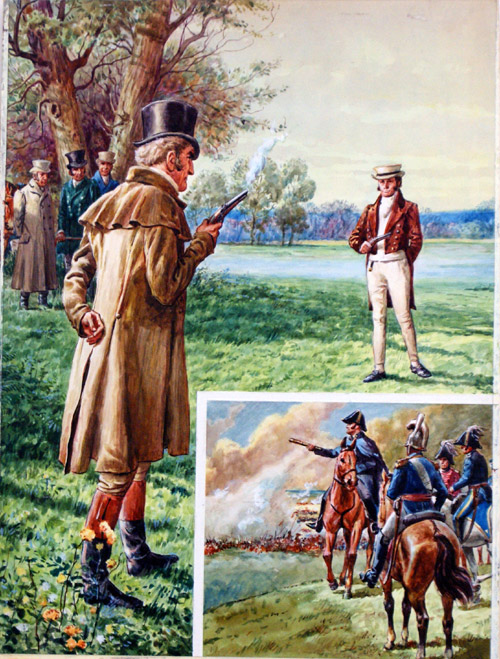 or rather what used to be called Battersea Fields, before it became the park. It is a duel between a serving British Prime Minister and a political rival. It features in my history walk. Can anyone tell me who the Prime Minister and his opponent were and what were they fighting about? (The clue is in the inset picture).
School Governance & Governors
A recent Wandsworth Council report blithely announced that governing bodies are being shifted from a stakeholder model to one based on skill sets. There was clearly a presumption that this was not only the Government’s intention but also a “good thing”. Well as a semi-detached governor of some 20/30 years standing, I have a rather different view.
I take it that the stakeholder model refers to school governing bodies dominated by local authority nominees, or local politicians, community representatives, teachers, trade unions and others with a “stakeholder” involvement with the school. I am further assuming that the move towards skill sets refers to knowledge of budgets, of HR skills, and the thousand and one other skills that could be said to make up the requirements of a managing board. I suppose the polite way of describing this is calling it a professionalization of the governing body role.
Could anything be worse! Surely the point of the governing body is not to do the work of the professional staff, or to be unpaid accountants and treasurers, or to stand in for what the local authority once did, or to manipulate spreadsheets, but to make the school part of the community. It is really important that the community should have a say in its local schools, but under this Government schools are becoming independent businesses run by and frequently in the interests of the heads.
Let’s hope that it is not too late for an incoming Government to stop and indeed reverse this trend.
Councillor Tony Belton’s Latchmere July Newsletter (# 62)
June highlights
- The first month of a new Council was an odd experience for me on several counts! For starters, it is the first time since 1971 (Yes, 1971!) when I haven’t been in some kind of leadership role either in office or in opposition during the first month of the new Council– so I only hear second-hand what has being decided! Secondly, the Labour leadership, in its wisdom, have decided to give me the lead role on the Education and Children’s Services Committee – schools and school children but also quite a lot more, and a new experience for me. I continue to be on the Planning Applications Committee.
- Under financial pressures from the Government, the Council has decided that the Council and most Committees are to meet only 4 times a year instead of 6 and that there should be fewer councillors on each committee. This might seem like sensible financial efficiencies to those of you with a very business-related background but to me it seems like dangerous under-mining of the democratic process. I find it difficult to see just how councillors can build up a level of expertise and common understanding – call it teamwork if you will – on the basis of meeting and talking to each other so infrequently. Why does that matter? Well in my mind I think that is a sure-fire recipe for leaving the paid officers in charge and removing the elected members, and in the end, you the electorate, out of the process. It also will result, I think, in further centralisation of the already over-centralised British governmental system. Officers will never, ever be able to resist the threats and bullying tactics that Governments, Labour as well as Tory and Coalition, use on local authorities. Not that we councillors always did but at least we stood a fighting chance! What does that mean for me? Well I will do my best to be a voice for a more democratic and slightly more rebellious (perhaps “questioning” would be a better word) role for councillors.
- My first meeting as Children’s Speaker was fascinating. It was a meeting of the so-called Academies and Free School Commission. “What on earth is that?”, I can hear you cry – well a jolly good question. The Commission is a Wandsworth Council special, a Tory joke, a bureaucratic piece of hypocrisy and/or a jolly good idea – take your pick.
- Let me try and explain. Michael Gove came into Government with a more or less explicit plan to get rid of local education authorities (LEAs) – he doesn’t want local councillors involved in running schools. His argument is let’s leave running the schools to the Heads (oh, and of course, Michael Gove).To achieve his objective Gove has forced schools to become academies, as he is currently doing with Battersea Park School which is due to become a Harris (Carpet and also Tory funding grandee) Academy; he has also ruled that all new schools have to be either so-called Free Schools or Academies – as in the Jewish Mosaic school set-up in Putney.
- However Wandsworth Council actually thinks it is doing quite a good job as an LEA and also doesn’t want one of its main functions stripped from it. So it has appointed this Commission, in order to advise the Government on which organisations should be allowed to run schools and/or start up new ones.
- Funnily enough, I think it probably does quite a good job and, by the way, it is a model being recommended by Government for other LEAs to follow, despite it being set up precisely to thwart the Government’s objective of keeping councillors out of the process. The ironies are endless! We had Church of England representatives at the Commission arguing that they were NOT at all like faith schools – they don’t want to be caught up in the backlash against Muslim faith schools which is now embroiling Birmingham. The Commission is chaired by a Baroness Perry, a stalwart of the education establishment who says on Google that “My biggest mistake was underestimating how awful the Inner London Education Authority could be,” but interestingly enough never seems to have been elected to anything in her quango-studded life. She actually didn’t get the irony about the Church of England.
- Unfortunately, from the Tories point of view, they have to have a minority party member on this commission. I am not usually as political as this in my newsletter but the Commission is an absolutely fantastic example of making decision-making the province of the great and the good, and of course by definition Tory, and keeping everyone else out of it
- My second meeting was a far less contentious visit to Allfarthing School– don’t know what the kids made of it but I enjoyed it! Though I do wonder a bit what these visits of supposed bigwigs actually accomplishes – an interesting occasion for us (there were some half a dozen councillors) but to what end? Well, one thing that strikes a relative newcomer to the world of primary schools is just how female dominated they are. Is this one reason why boys are falling further and further behind girls in school performance and if so what can we do about it?
- As for the Education and Children’s Services Overview and Scrutiny Committee itself on 25th June, I hardly know what to say. There was a presentation from young people on the work of the Youth Council in Wandsworth. It was all very nice and interesting and said a lot about what the Youth Council do but I am not at all clear that it had anything to do with the meat of local politics. Another interesting paper was one about the re-tendering out of the Leaving Care Services. This is a really important service, which is responsible for mentoring, almost parenting, children in care when at the age of 16 or so they have to move out of Council care and into the wide world as independent people. For those of us with a well parented background, the thought of being out on your own at the age of 16 seems horrifying, or perhaps terrifying. So it really is an important service but there doesn’t seem anything for councillors to decide about it, other than to proceed with the tendering! It seemed to me important to ensure that the service would not be threatened by the tendering process – but that was all.
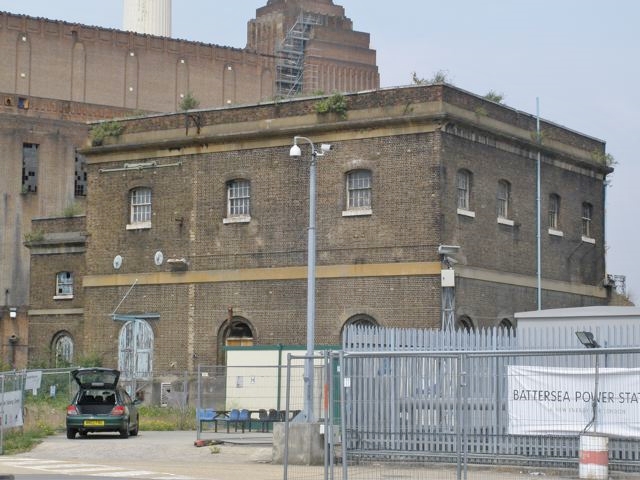
- On the 17th June there was the Planning Applications Committee. There were lots of applications but none of them very significant except for the three Council applications for the expansion of Albemarle, Hillbrook and Allfarthing primary schools and another for the demolition of the Battersea Power Station’s Pumping Station. The primary school expansions are a sign of the population explosion happening in the Borough and most particularly in the central and western parts. It is ironic that the Council closed some dozen schools and sold off the sites in the late 1990s and early 2000s and is now desperately trying to expand many of the ones that remain.
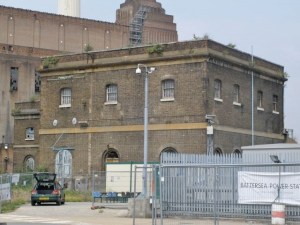
- As for the Pumping Station, there was quite a campaign to refuse this application to demolish the station with many people confusing its demolition with concerns about the demolition of the Power Station. In my view the campaigners were deliberately trying to confuse – surely there cannot be too many people concerned about a building that is almost totally unknown to Battersea residents and whose continuing existence, the developers claim, was merely delaying the day when the Power Station is at last re-opened.
- By the way, the south west chimney of the Power Station will be demolished in the next few months with re-building said to be completed by 2016, by which time work will have started on the other three chimneys.
- On a personal level, I and partner, Penny, went to Spain for a week with
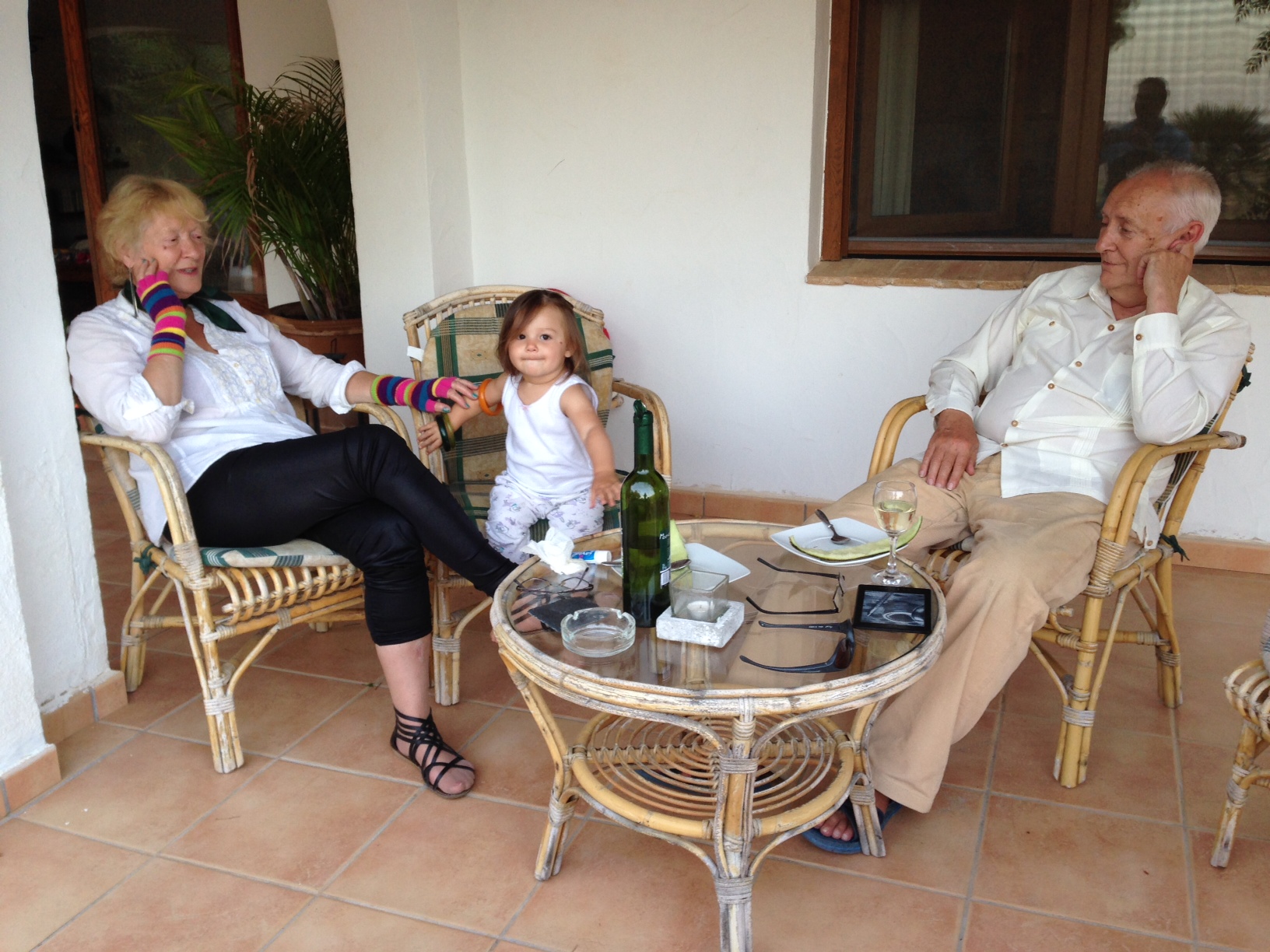
 the grandchildren and their parents. The excuse was a friend’s 60th birthday party in a small Spanish town called Jesus Pobre, which also had its annual fiesta. Plenty of bulls (not one killed – Spain is changing), flamenco, Rioja and rather tragically for our hosts Spain’s 5-1 defeat to Holland in the World Cup! Here is Scarlett, with Penny and me!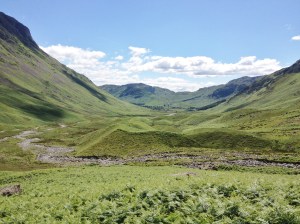
- And a week later, I went to the Lake District to scatter the ashes of my old friend and fellow Labour councillor Peter Ackhurst from the top of Bowfell. The picture gives an idea of the beauty of the Lake District for those who don’t know it.
- And on the last day of June, ex-Council Leader Edward Lister, now Deputy Mayor of London, announced the plan to introduce a Formula-E race in Battersea Park in the summer of 2015. Formula-E is motoring racing’s response to criticism of Formula 1 as a non-green sport, designed to burn up more carbon fuels in 2 hours than any other sport. Formula-E, as I understand it, would focus on electronic-powered racing cars and might just become the model of motor racing in the 21st century. If successful it would presumably be the first of many annual grand prix events and would bring massive crowds to Battersea Park and possibly disturb/ruin Battersea Park for the best part of a whole summer month. Just what do you think we should do in response – welcome the idea with open arms or resist the plan to the end?

My Programme for July
- On 2nd July I have an Education and Standards Group, which investigates school performance – on this occasion Allfarthing School and Latchmere’s own Sacred Heart Primary School.
- July is always the height of the summer social scene. One of my favourite parties is the Knowsley Street Triangle party on Saturday, 5th July. Then on 10th there is the Battersea Society summer social in the grounds at St. Mary’s – always a splendid occasion – if the weather is good. And on 12th Women of Wandsworth (WoW) are having a BBQ for the elderly at Haven Lodge.
- On the 16th there will be the first Meeting of the new Council. This is always an interesting occasion as one weighs up the strengths and weaknesses of the new councillors but is, of course, almost unknown to you the electorate. If any of you fancy coming then do get in touch with me and I will ensure that you get a tour of the Council Chamber and a ring side seat at a Council Meeting.
- The Planning Applications Committee, which will meet on 17th.
Do you know about Ron Elam’s Battersea photo collection?
My friend Ron Elam has been collecting photographs and postcards of Battersea for the best part of 40 years! He has something in the range of 40,000 of them stored in a large shed in his back garden. He used to run a market stall, occasionally in Northcote Road and more frequently in Bellevue Road. Well he has now published a book “Battersea Through Time”, with his colleague Simon McNeill-Ritchie, and included in it many photographs from the past but with every picture from the past alongside its modern equivalent.
Everywhere from Clapham Junction to Lavender Hill, Nine Elms and Battersea Park is featured.
Here is a sample from the east end of Battersea Park Road in 1920 and today.![batt pk rd 2014[1]](https://tonybelton.blog/wp-content/uploads/2014/07/batt-pk-rd-20141.jpg)
![batt pk rd 1920[1]](https://tonybelton.blog/wp-content/uploads/2014/07/batt-pk-rd-19201.jpg)
The book is priced at £14.99 but for the next month it can be obtained for £12 if you mention the Wandsworth Guardian by contacting Mr Elam on 0208 874 8544 or by emailing ron@localyesterdays.demon.co.uk.
Councillor Tony Belton’s Latchmere October Newsletter (# 53)
August & September highlights (or was it lowlights?)
1. Funny that in August I should have written about the 65th birthday of the NHS, because for the last two months the NHS has been at the centre of my life! At the beginning of September I was in Holland just about to come home and write up my September newsletter when I got streptococcal poisoning! A month later having spent much of the time in St. George’s, I am on the path to recovery!
Streptococcus is a form of bacteria, which we all apparently have, usually lying around dormant in various parts of the body. Streptococcal infections are also fairly common and usually pass without much comment, especially in babies. However, when it gets infectious and rampant, as it did with me then the quacks (and me) get really worried. As soon as they diagnosed it, I was under the knife faster than you can say Jack Robinson.
In my case it was the left knee that was infected and, let me tell you, I can’t use the proper adjectives in a family newsletter to describe the pain! Anyway I am now on 6 painkillers, 3 anti-inflammatories and 6 antibiotics a day and will be for another month – I am also hobbling round on a pair of crutches!
How did it happen? I don’t know and the medics don’t seem to know either. It could be an external infection but there was no break in the skin or anything like that. It could have been a jolt – well I did jolt to a halt on one occasion. But it’s not true (contrary to some reports) that I was knocked off my bike or hit by a car or lorry.
Anyway that is my excuse for breaking my sequence of monthly newsletters and not producing one in September!
2. Oh, and the holiday? Well it was great and I attach a photograph of me cycling in Delft main square (and most of the time the weather was better than that day) but there was one other unfortunate incident! Two days before the streptococcal started my partner and I had our bicycles stolen in Amsterdam! OK, sounds like a holiday from hell, but it wasn’t really and if anyone fancies cycling in Holland it is terrific! There are miles of cycle routes along the coast, where you do not see cars at all. On roundabouts bicycles have priority and so you don’t have to stop peddling and losing all that energy and except in Amsterdam it appears largely theft and vandal free! I thoroughly recommend it for an active but not over-taxing holiday.
3. Meanwhile back to the day job! Battersea Park School, as you may have heard by now, had exceptionally good results this year. But neither Ofsted nor Gove’s people look like changing their mind and the odds on the school being made an Academy sponsored by Harris (the carpet people, owned by a personal friend and sponsor of both the Tory Party and David Cameron) are shortening. In my view Harris intend to take over the site from the Council and then make many millions (well over £10 million) by building flats on much of the site, and, to be fair, using some of the money to re-build a modern school.
It goes without saying that all parties in the debate claim to be doing what is best for the students. But some parties, and specifically the Tories, believe that means taking schools out of local democratic control and making them sponsored academies or free schools or whatever Mr. Gove’s fad this week happens to be. I, on the other hand, believe that local education authority run schools have served us pretty well since instituted in 1944. If Battersea Park is handed over to Harris carpets I rather doubt that they will have me as a governor!
4. There were two Planning Applications Committees on August 6th and September 10th. There were quite a number of interesting applications at these meetings although you will understand I was not at the second and would have been drugged to the eyeballs if I had been! Not that any were specific to Latchmere, but nearby the Committee gave approval for the redevelopment of Salesian College and the now nearly completed Caius youth club and residential development just across York Road behind Badric Court. There were also quite a few approvals related to the Battersea Power Station development, which looks very likely really to go ahead after goodness knows how many false starts.
5. At an important but much less grand scale I am told by friends and constituents that the bus-stop at the junction of Beechmore and Battersea Park Road, which I incorrectly trumpeted ahead of time is now, at last, really in place!
6. Meanwhile there has been the usual array of Committee meetings but as I missed them all and have not really caught up with them I won’t bore you with details EXCEPT to say that on October 3rd there was a special Finance Committee, where the Tories hacked several £millions out of the budget. The damage to services is now becoming so great that in this week’s South London Press, even high-ranking Tory Councillor Guy Senior is quoted attacking the Government for the severity of the cuts.
7. These cuts will be considered further at the 16th October Council meeting by which time I hope to be able to make a fuller contribution and report back next month.
8. On 5th October I looked in on the public consultation at York Gardens Library about the £100 million regeneration. I didn’t feel so good and didn’t stay long but I think we need many more before any real decisions can be taken about which blocks might be demolished, which refurbished, etc.
My Programme for October
1. Primarily I hope to get back to normal! That means as ever the Planning Applications Committee on the 8th, but also the Council Meeting on 16th and the usual round of other committees and visits – however, I have a sneaking feeling that I might miss rather more than usual. I hope you forgive me!
Did you know that 100 years ago London’s biggest transport problem was where to keep the horses?
And what to do with the manure? It was a particular problem in North Battersea because of the scale of the Mansion blocks built round Battersea Park. There was a huge demand for horses both for pleasure (riding in the Park) and for work and they had to be kept somewhere. The answer was the development of Mews, hundreds of them all over London. And now only 100 years later there are almost none left.
Kersley Mews, pictured here and very little known but only 100 yards from the Latchmere pub, is the only traditional mews left in Battersea – at least to my knowledge. Do you know any others? There are a couple in Lambeth/Clapham off Cedar’s Road behind the large mansion flats on the edge of the Common but are there any others in Battersea?
Hope you all keep well, or at least better than me!
 Tony Belton
 Tony Belton