Peter Ackhurst
- Peter by Brenda Holtam, 2011
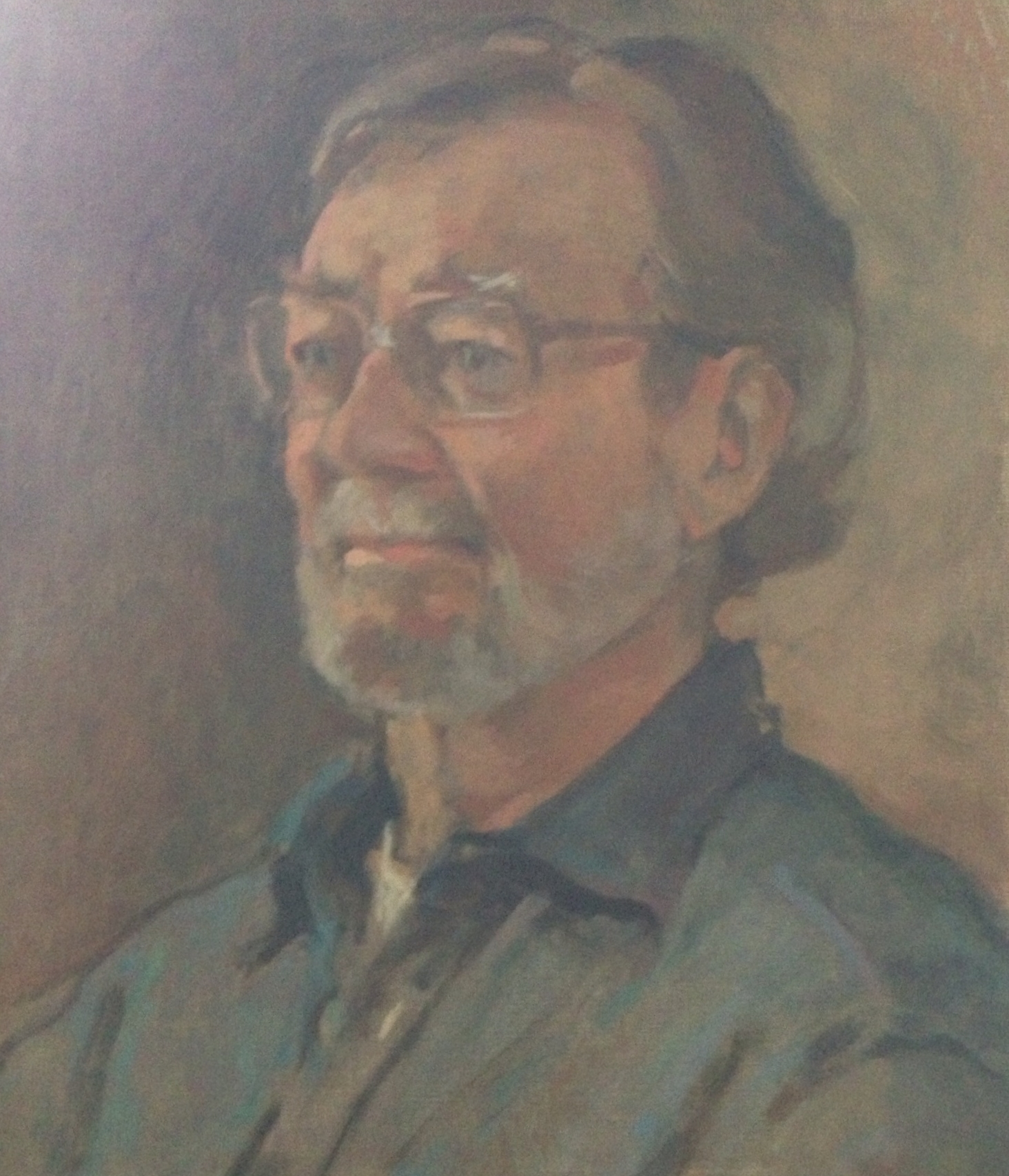
Peter Ackhurst (7th March 1935 – 4th June 2013) died peacefully in his sleep on 4th June. Peter was born in Louis Trichardt township, Limpopo, South Africa on 7th March 1935. His early life was spent in the more hard-line Apartheid provinces of South Africa, the Orange Free State and the Transvaal but when he went to Rhodes University in the Eastern Cape his rather more liberal tendencies came to the fore, so that by the end of his student days he was the national secretary of NUSAS, the National Union of South African Students. This was not like being the Secretary of GB’s NUS. NUSAS was in conflict with Boss, the Bureau of State Security, the powerful, one might say thuggish paramilitary wing of state apparatus. Peter as the General Secretary of a students’ union was under suspicion and observation; he felt he had to get out but for a time he could not get a passport, but eventually the regime relented and Peter came to UK in 1955.
I knew a couple of white, anglophile SA students, who escaped from South Africa at about this time. Some had seen enough of politics and never raised another political fight of any kind but not Peter (or his near contemporary, also Putney resident, Peter Hain). He joined the Putney Labour Party (PLP) in 1963. It was good timing. The constituency had been Conservative since it was created in 1918 and it was part of the old Metropolitan Borough of Wandsworth, which had again been Conservative since its creation in 1900.
But then Hugh Jenkins won the Parliamentary seat in 1964 and a year later the Borough was merged with industrial, working class Battersea and for the first time Putney had both a Labour MP and a Labour Council. Seven years later Peter stood for the Council in the then fairly safe Labour ward of Fairfield. He was part of a team of young Labour Party activists, led by Putney agent and sitting councillor Ian McGarry, who not only worked to find seats for themselves in winnable wards, but together as a team to make sure that their friends and political allies were equally likely to get elected.
In May, 1971, Labour had a massive victory winning 54 of the 60 Council seats. And so began a very exciting and turbulent seven years, when the Motorway Box was defeated, a massive programme of housing construction was maintained, Wandsworth got a modern social services system and some semblance of a planning system. The Thames and Wandle walkways were begun; parks were built; the Battersea Arts Centre was created and many other bold initiatives taken.
But there was also the battle over Ted Heath’s Housing Finance Act, when Labour councils took on the Government over the ultimate control of council housing. The Government was bound to win. Labour Councils made the great mistake of taking on superior forces on a battlefield of the Government’s choosing. The radicals lost, resigned their posts, took them back again within a year, but had lost their enthusiastic innocence – and the balance between local and national government was destroyed, possibly never to be regained.
During this time Peter was Deputy Leader of the Council, 1972-75, Chair of the Highways Committee 1971-72 and Chair of Policy and Finance 1975-78. Putney parking schemes were for ever etched on his mind as an unwinnable fight.
Peter was a man of great charm with a lovely voice – he was always a delight at any social gathering, with a story or an argument for every occasion. He could be irascible and bad tempered but had the wit never to remember an argument the following day. His deafness became a bit of a social handicap in later life. He was a terrific and inventive cook and never seemed so much at home as when cooking for friends and an extended family in a Lake District cottage or his large kitchen diner in Holmbush Road.
One of his greatest gifts was his extended family. His wife’s first husband is as concerned about Peter’s kids as he, Peter, is for Annie’s children by her first husband. They all play and occasionally work together and there is no doubt that Peter has been the pivot of that family network.
Peter was a keen and gifted amateur artist; professionally an architect; a much loved boss who finished his career as a Director of (was it?) the Housing and Development Department of Hammersmith and Fulham Borough Council. He was full of plans, but usually found life too absorbing and full of diversions to give him enough time to convert them into reality.
He was a personal friend, and a holiday companion a dozen times when we played appallingly bad golf together and fought over bird sightings and then talked of the day over bibulous suppers and a cigar – or two.
I will miss him as will his wife Annie and children, Stephen and Gillian, and all of Annie’s family – and many others.
 Tony Belton
 Tony Belton