Councillor Tony Belton’s Battersea January 2021, Newsletter (# 139)
- This year (or more accurately “last year”), we can all use the same clichés and understand exactly what we all mean, such as “I have never known a Christmas like this one”, “the world will never be the same again”, “working life/the high street/the entertainment world will never be the same” and my own current, personal favourite “it is what it is”. But the fact that we all know the clichés doesn’t stop them from being true. Covid-19 is a disaster and nothing ever will be quite the same again, though chances are they will not be quite as different as some think.
- No doubt as more and more of us are vaccinated, there will be a return to some semblance of normality, whatever that may be. But that might not be as simple as it may appear thanks to the growth of the “anti-vaxxers” lunacy. It beggars belief that otherwise apparently rational people can campaign against vaccination. That this triumph of immunology, originally of Chinese medicine, brought to Europe through Turkey and developed by the eighteenth-century Englishman, Edward Jenner, and successfully used to conquer smallpox, polio, diptheria and many other diseases, should be challenged by such “know-nothings” is a tragedy of modern life. We all have a duty to deride and defeat such irrationality, even if it is not quite the threat here that it appears to be in the USA.
-
If the anti-vaccination movement becomes a genuine threat to public health, then politicians will have to face questions about compulsion or “liberty”; individual rights and duties; communal values. As we don’t allow people to choose which side of the road they want to drive on, right or left, I don’t really see why we should allow people to choose whether to be vaccinated or not; after all compulsory vaccination against smallpox has been standard since 1853. If compulsion seems harsh to some, then perhaps we should use extreme “nudge theory” like charging an NHS premium on all, who refuse vaccination.
- On 8th December, we had our second monthly Battersea Labour Party meeting. The mechanics of it worked quite well – clearly, a high proportion of members are well used to operating Zoom or Teams in their working lives and virtual meetings are becoming an inevitable, even desirable feature of daily life. Amazing, that an almost unknown technology should become a mundane, everyday event in no more than 10 months: in that sense, 2020 has certainly been different.
- On Wednesday 16th December, we had the Wandsworth Council Meeting – very strange! Council meetings are, in my view, meant to be about policy-making and review, about debating current issues and opinions, and holding the administration, whether political or practical, to account. But Covid has put a stop to all that. What we are left with, rather like in Parliament, is a Tory-controlled administration informing us of what is happening and how well they are handling everything – could they have done anything else? And a Labour opposition replying that the Tories are not doing well – but could Labour have done anything else? It leaves us with a form of politics, a confrontational politics, that gives parties a bad name.
- Personally, I would have liked the Council to have demanded of Government that local authorities should take over the national Covid test-and-trace programme. The Government itself has made “a Horlicks” of the programme, in a display of incredible incompetence, whilst simultaneously playing fast and loose with recognised procurement procedures. The fact that local authorities and the NHS have well-tried, successful test-and-trace programmes for other contagious illnesses seems to have escaped the Government’s notice. This Government’s contempt for local authorities has cost some innocent lives. I trust that the post mortem on this crisis considers all the evidence and really holds those responsible to account!
- The following day 17th December, I was back to the
 very practical discussions of the Planning Applications Committee (PAC). Unusually, this PAC meeting was dominated by relatively small applications, mainly in Tooting. The one exception was an application for 480 residential units in 8-17 storey blocks between Wandsworth Town Station and Swandon Way. The buck had already been effectively sold on this, because it had “prior approval” from Sadiq Khan, Mayor of London. Nonetheless, I and one other councillor voted against the scheme, because of its mass and density, which we thought inappropriate for the location. The proposed
 development also made no concession to the possible or probable post-Covid environment of decreased demand for office space and more particularly for office commuters. Apologies for the poor reproduction but here are graphics of the Swandon Way development from Swandon Way and from Old York Road.
- The run-up to Christmas was, you will recall,
 exceptionally wet. That did, however, have its occasional compensations. On December 23rd, for example, this spectacular rainbow could be seen over Battersea. Meanwhile, on a personal basis it was a challenging month. My partner and I have had Garry installing a new kitchen, at the same time as we have struggled with an ailing boiler and an extremely temperamental shower. But on Christmas Eve the kitchen was superbly finished and a new boiler installed, and everything is now wonderful. We spent Christmas Day cooking and having hot showers!
- Meanwhile, I have been reading a book by my friend, Liam Kennedy, called Who was Responsible for the Troubles? Liam is a historian based in Queen’s Belfast and happens to be from a rural, Catholic, Irish background (Tipperary). He has one thing in common with me. He was for a period a Belfast city councillor – but there the similarity ends. I recall that we were once having dinner with him and his wife when the phone rang. Liam excused himself to return a couple of hours later. He had been called out on that Saturday evening to attend to one of his constituents, who had been the victim of a “knee-capping”. Thankfully being a Latchmere councillor has not, so far, produced such drama.
- The book documents the detail of much of the Troubles; Liam’s personal knowledge of many of the players in Northern Ireland’s troubles gives his book depth and granularity. His conclusions about the events are not conventional but deserve consideration. It has taken courage to write and to have it published. It will be an essential and sombre reference work about the Troubles.
- On December 30th, Parliament voted to accept the deal the Prime Minister made with the European Union on Christmas Eve. In my view, the deal joins the short-list of the greatest self-imposed disasters that any country has ever made – it will be a year or two before that is proved right or wrong but nonetheless on the 30th December Labour had to decide whether to vote for or against the deal, or to abstain. Clearly, this decision was a difficult one for Labour MPs and, I know well, it has pre-occupied Battersea’s MP, Marsha de Cordova.
- Anyone with a passing acquaintance with the real world of politics will know that voting for a poor “Tory” deal, negotiated by a despised Prime Minister, is, as they say, a “big ask”. However, voting against it was never going to be more than a gesture, which would have left Labour open to the accusation that, in effect, it had supported leaving the EU with no deal. I am pleased that Keir Starmer supported the deal, even a bad Tory engineered deal is a better choice than no deal at all.
My Programme for January
- On 4th January I have a Wandsworth Conservation Advisory Committee.
- On Twelfth Night, the Battersea Society is running a Zoom Poetry Reading event – what an inspiration for the depths of this, particularly grim winter.
- The Planning Applications Committee is on 27th January and NOT on 19th as advertised in the Council diary – unsurprisingly, it looks like a quiet month.
Did you Know:
Last month I asked two easy questions but did not get one response!
They were Q1: Can you date the two occasions since WWII, when one party won the UK’s popular vote but lost the election and name the two lucky men who subsequently walked into 10 Downing Street?
Answer 1: The first occasion was 1951 when Labour won the popular vote but not the majority of constituencies and Tory Winston Churchill became Prime Minister for the second time. The other occasion was February 1974, when the Tories won the popular vote but ended up with fewer MPs than Labour. Labour’s Harold Wilson subsequently became PM.
Q2 What is the hidden physical connection between Streatham Hill and Battersea Reach?
Answer 2: The Falconbrook River, which has its source on Streatham Hill and eventually flows under Northcote Road and Falcon Road, and ends in the Thames at Battersea Reach. It is nowadays culverted all, or nearly all, the way.
And for this month:
In December, I went for a walk on Tooting Common, which I don’t know very well. And there I came across what I suggest is the oldest object in Wandsworth – and I mean seriously old, millions of years old. Do you know what it is?
Councillor Tony Belton’s Battersea December, 2020, Newsletter (# 138)
- Like everyone else, my partner and I are getting a tad bored with
 lockdowns and their implications, so on 1st November, we escaped for a beautiful walk in Richmond Park. As often before we headed for Pen Ponds but instead of our normal walks to the ponds, and then s
 outh or west we went north, where we came across my rather tragic tree of the month – majestic and doleful and rather appropriate for “Lockdown November”. We also discovered the Royal Ballet School and its beautiful home. It isn’t (I don’t think) the same building as in the film, Billy Elliott (2000), but it obviously inspired the set for the film.
- On the 3rd November, the Boundary
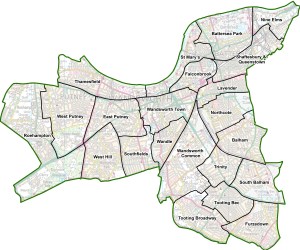 Commissioners produced their latest and last report on the proposed ward boundaries from 2022, which will apply for the next 20 or 30 years. The report was published coincidentally and ironically on the day of the American Presidential election. In the Biden:Trump election, the distribution of the popular vote and the Electoral College vote was so different that Biden’s popular majority of over six million was by no means certain to deliver him victory in the Electoral College. The British Boundary Commissioners’ job is to distribute the vote between constituencies so as to ensure that confusion like that does not happen in the UK.
- On the whole, over the years, the Commission has been fairly successful in that aim BUT not always. (There have been two occasions since the Second World War, when the party that won the most votes lost the Election, once with the Tories losing out and once when Labour did.) Here, in Wandsworth, the Tories have won the last 12 Council elections but not always the popular vote. In both 1986 and 2018, Labour won more votes. The 1986 win gifted the Tories with control for the year of the Zero Council Tax, which created favourable conditions for them for several subsequent elections. It is arguable that their “accidental” victory in 1986 secured for the Tories control of Wandsworth for many years.
- On a day-to-day basis, the ward boundaries make little practical difference, but some old ward names will disappear (Latchmere, Fairfield) and some new ones will appear (Lavender, Battersea Park, Falconbrook). Some will be familiar but in a different format as in Mary’s and not St. Mary Park or the “combined” ward of Shaftesbury and Queenstown. But, from my experience, the worst feature of the review is the change from 20 wards with 3 councillors each making a total Council of 60 councillors to a mix of 14 three-councillor wards and 8 two-councillor wards, making a Council of 58. From my experience, when the Borough last had two-councillor wards prior to 2002, the smaller wards packed less clout than the larger wards and, when it came to the inevitable horse-trading of priorities and budgets, the smaller wards suffered. That problem was solved by making the wards a standard size.
- On 10th November, Battersea Labour Party had a Zoom meeting, where the major item under discussion was Jeremy Corbyn’s position in the party. The debate was calm and considered, which, given the feelings of some members, was in itself quite a good result. Nevertheless, honesty compels me to admit that I was disappointed in our failure to move on to the important issues facing the country as we draw nearer to Brexit, whilst struggling with the consequences of the pandemic!
- On 18th November the Mayor, Sadiq Khan, announced the good news that he has agreed to the Winstanley Regeneration plan. We can now get on with replacing the old, worn-out stock of Council homes, with super, high-quality new homes as well as adding some 150 extra bedrooms for all those families suffering over-crowding on the estate. But in addition, we will add hundreds of new homes, a new library and swimming pool and a re-designed York Gardens. These changes will, of course, take time but at least the decks are now clear. Some tenants will be moving into their new homes in the next couple of months and all will have the promise of better living conditions.
- The Planning Applications Committee (PAC) was on 25th November; on this occasion, it was watched live by 274 viewers,
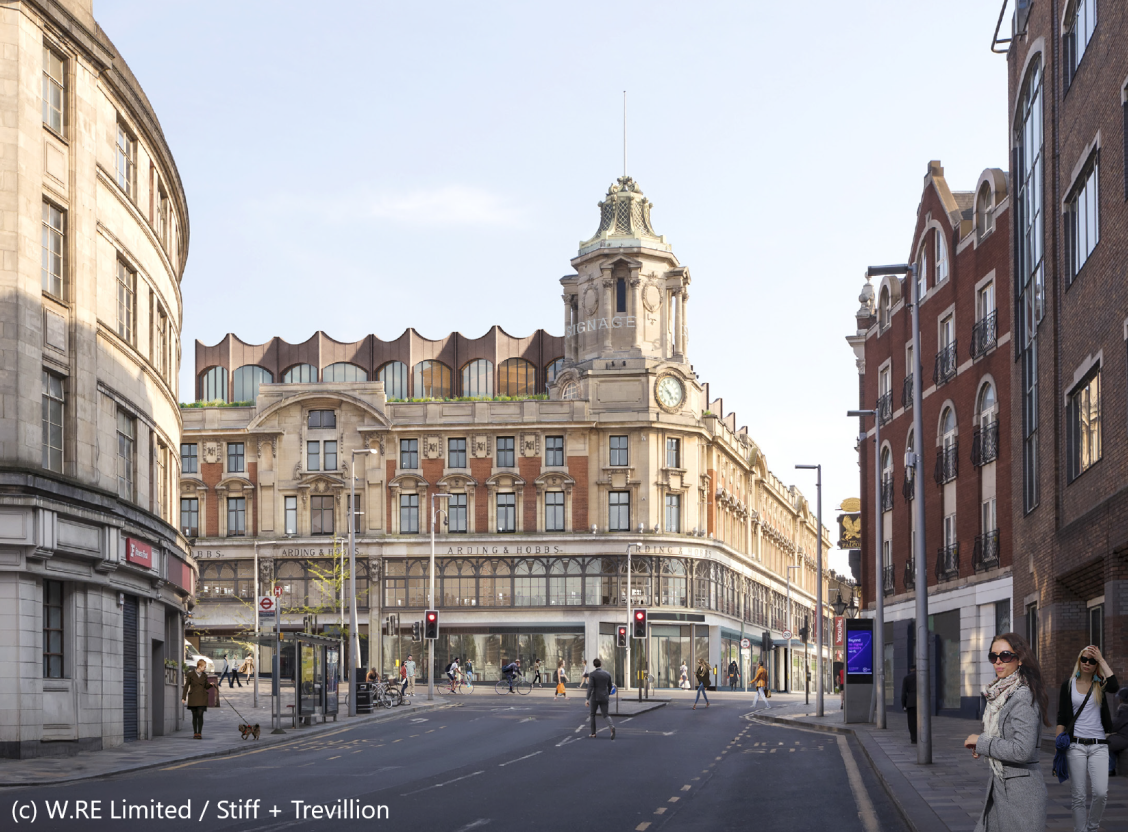
 most of whom I guess were watching progress with the Arding & Hobbs I rather liked the design solution proposed by the architects; it retains the early twentieth century features of the original and adds a slightly Arabic, but restrained roof extension. The contentious element, however, is that the developer obviously does not think that the future of retail in the modern, online world is bright enough to utilise a building the size of the old department store. Instead, he has gone for small, quality office units, arguing essentially that in the post-Covid world, more offices will be located in significant hubs around the city centre – and what hub could be better situated for Gatwick and Heathrow and the UK’s rail system than Clapham Junction? Note that there is no longer a link with Debenham’s or a vulnerability to its bankruptcy.
- There were several other major applications of real interest to Battersea, most of which were approved. One was the development in Battersea Square of Thomas’s Preparatory School with a substantial secondary school addition. Thomas’s is likely to become one of the most expensive and exclusive public schools in Britain – with all that entails. Another was the development of three tower blocks, up to 16 storeys, on the Palmerston Court site, opposite the entrance to the Dogs’ Home. This complex is designed for more than 850 student residents, from King’s College London, along with a substantial volume of offices and a new pub to replace the current Flanagan’s. And a third development is for 50+ flats on the Patmore estate, attached to and very much in tune with Marsh House.
- The fourth application I would like to highlight is on a totally different scale but perhaps just as significant for residents of the Borough. It was an application to build a small bar, ancillary to what is now Clapham Common Westside’s Bowling Green. The intention is to provide a commercial refreshment facility to complement a new Putt in the Park complex in place of the bowling green. There are similar facilities in both Battersea and Wandsworth Parks. Incredibly, to me, there is no “statutory” protection for bowling greens (and I dare say neither crown bowling greens nor croquet lawns). There is protection for other sports pitches, such as soccer, hockey and rugby, which attract younger client groups. So the omission of greens seems discriminatory on both age and gender grounds. Bowls and croquet are energetic, inclusive games, which deserve support and not oblivion. I am pleased to say that the committee rejected this application! It would be such a shame to lose the quiet and gentle sight of the local bowling green on a summer’s afternoon.
- One other “minor” piece of news may have escaped your attention. Because of the state of Hammersmith Bridge
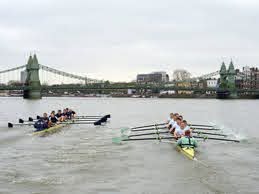 (seen here in the distance), and NOT because of Covid, the decision has been taken to move The 2021 Boat Race from the Thames to Cambridge. Because there is no sign yet that Hammersmith Bridge will ever be repaired and best estimates are that it would take seven years anyway, one wonders whether this traditional race, now over 160 years old, will ever be seen again. There are all kinds of things that are anachronistic about it – it excludes hundreds of other colleges; it is an oddity, rather like the marathon only not even an Olympic event; it is not metric; it’s very long; it’s on the tideway when almost all other rowing events are on lakes. We may have seen our last ever Boat Race!



My Programme for December
- On 8th December we have a Zoom meeting of Battersea Labour Party members.
- On 10th December there is a virtual meeting of the Labour councillors, the first for what seems like months.
- The Council Meeting is on 16th December, but what exactly that will be like is difficult to say at the moment!
- That is followed the next day by the Planning Applications Committee.
Last month I asked, “Where is the Battersea Welsh Presbyterian Chapel?”
On this occasion, I was surprised at just how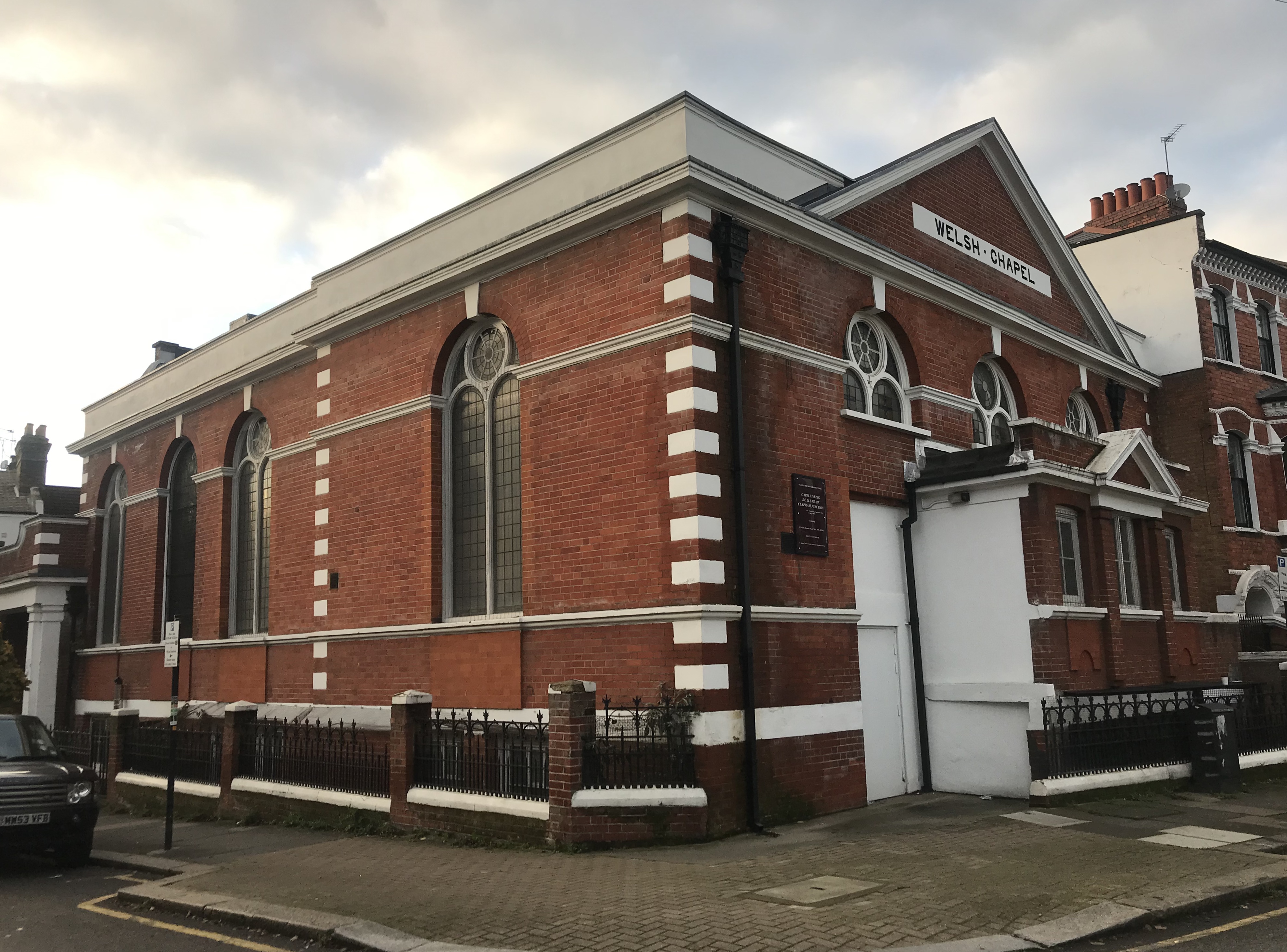 many people did know that the Chapel, pictured here, stands in Beauchamp Road on the right-hand corner halfway along the road. But readers also told me that David Lloyd George worshipped there, when he lived in Routh Road, and that Huw Edwards, the newscaster, is a key figure in the chapel’s life.
The Eglwys Bresbyteraidd Cymru Or the Presbyterian Church of Wales
And this month two easy questions and one notice:
Q1. In Paragraph 3 above I mentioned that, on two occasions since WWII, one party won the UK’s popular vote but lost the election. Can you date these occasions and name the two lucky men who subsequently walked into 10 Downing Street?
Q2. What is the hidden physical connection between Streatham Hill and Battersea Reach?
On December 2nd Clare Graham’s booklet Discovering Battersea’s Open Spaces goes on sale at Waterstones or via the Battersea Society website. The booklet takes you on six delightful walks across and around the old Battersea parish.
 Tony Belton
 Tony Belton