Councillor Tony Belton’s Latchmere January Newsletter (# 56)
 December and 2013 highlights
1. There really wasn’t much to say about December except that I went to the Xmas socials/parties/fairs of the Falcon Road and Kambala residents, the Big Local organisation, Battersea Arts Centre and of constituents Vicky and Jacob – thanks to all. There was also nothing of any great interest at the December Planning Applications Committee, and so with nothing much to say about December I thought I’d pull out my highlights of 2013 as recorded in the newsletters. And here they are.
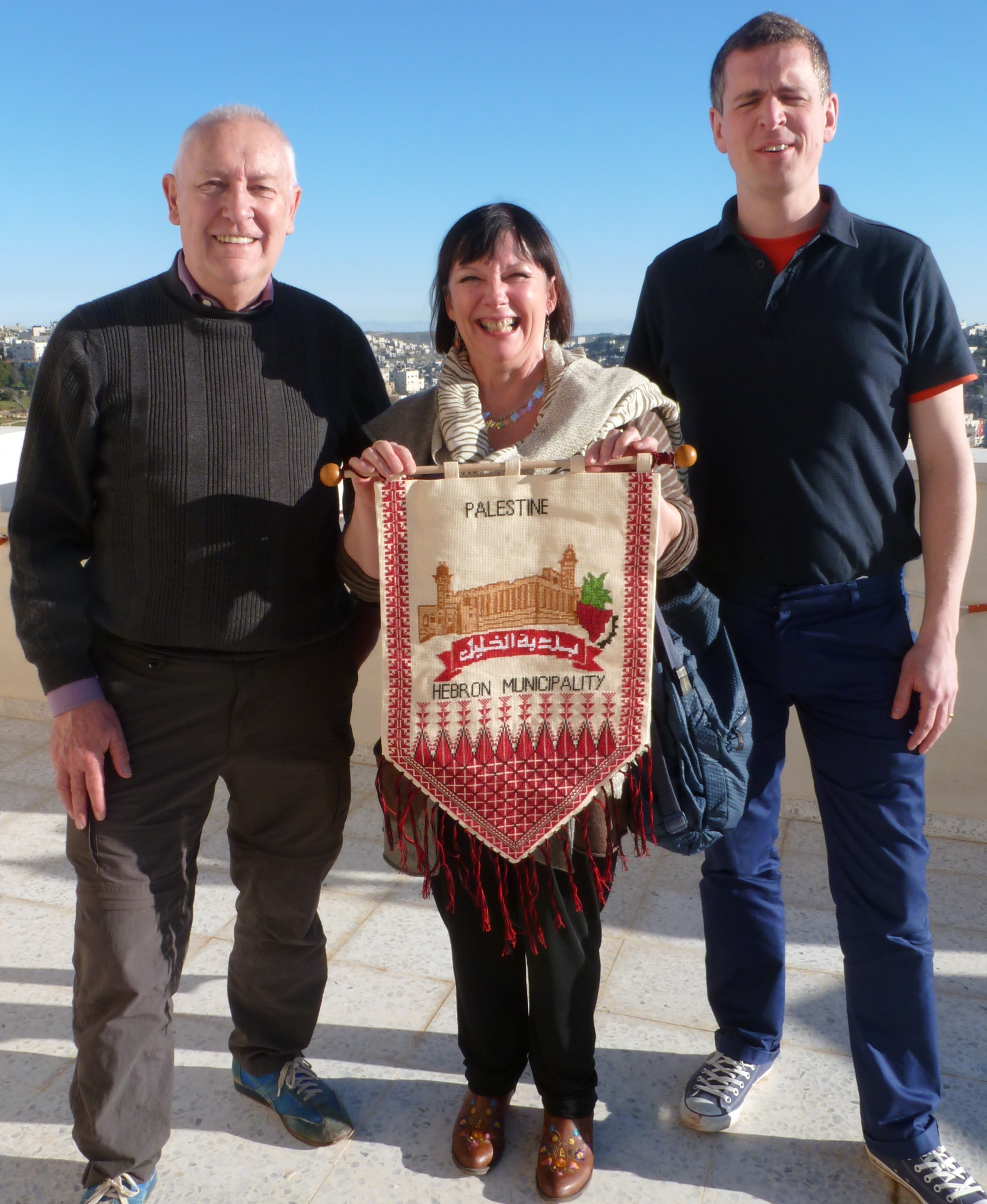
2. No. 1 for me has to be the trip that we three Latchmere councillors, Wendy Speck, Simon Hogg and myself, made to Palestine in February. This, of course, had nothing to do with Latchmere, Battersea or Wandsworth (!) but your three Labour councillors went on this fact-finding trip, purely for interest – and it was certainly packed with interest. Here is a picture of the three of us with a banner given to us by the Mayor of Hebron. (As I said then, before any cynics out there think otherwise, it was all paid for out of our own pockets and had nothing to do with the Cou ncil!).
The trip did give me a chance to take my picture of the year, and here it is – a cactus caught by the flash-light in the Judean desert at sunset, high above Bethlehem – and my was it cold.
3. The most significant ward issues of the year were the Council’s decision to spend up to £100 million on the regeneration of Latchmere and Roehampton wards, of which our share could be about £60 million, the development of the Big Local project in the Winstanley Estate area and the Mosque planning application. The regeneration project is at the stage where major decisions are soon to be taken about the extent of demolition and new build and the Big Local is also at a crucial consultation 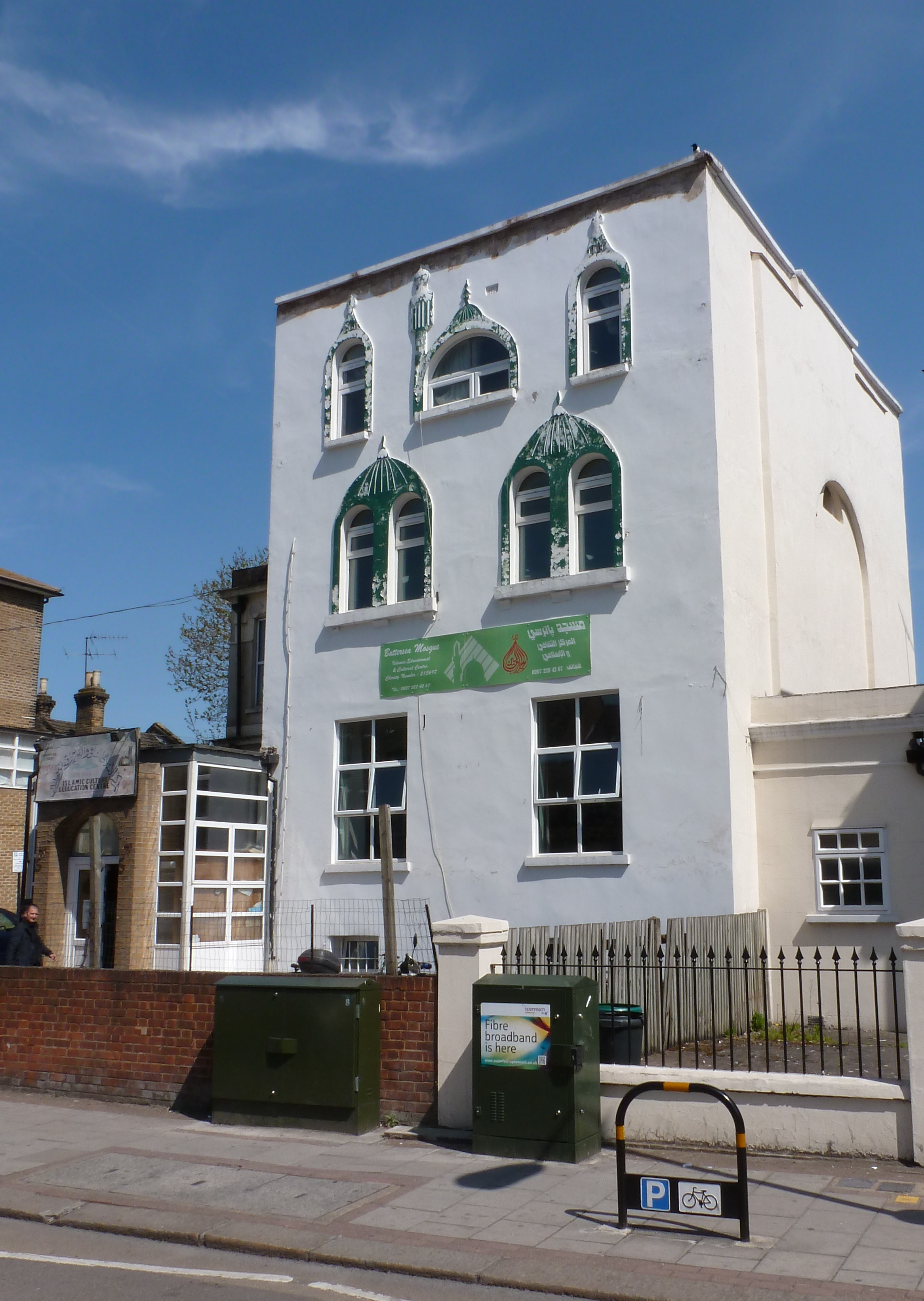 stage. I think we will know much more about the regeneration programme later in January. For some of the problems as well as the potential in the regeneration project, see Tony Belton, ‘All Change North of the Junction’, Battersea Matters: Newsletter of the Battersea Society (Winter, 2013), pp. 4-5.
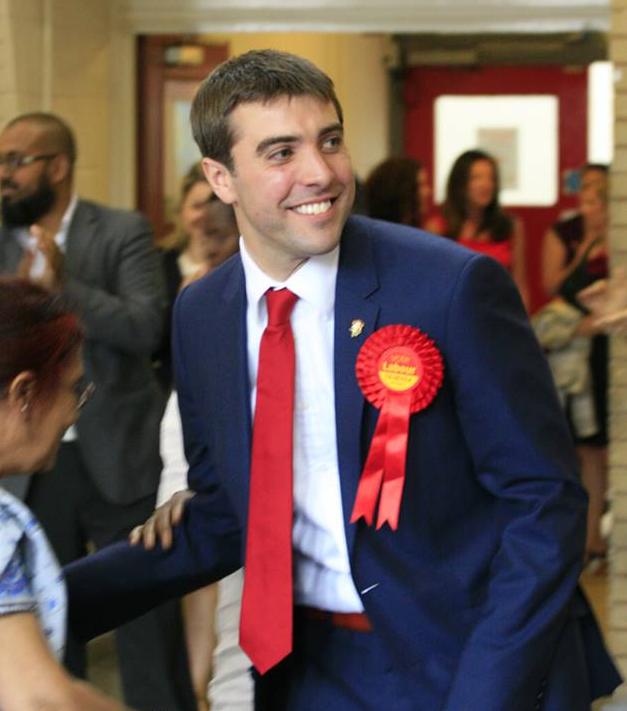
4. In May I was delighted to report that Wendy Speck, Simon Hogg and I were re-selected as Labour’s candidates for the Council elections this coming May 22nd. Two months later my friend and colleague, Will Martindale, was also selected as Labour’s Parliamentary candidate at the General Election in 2015. Here he is pictured after the selection.
5. I was very pleased to take 30 or so local kids to meet the Mayor and to learn something about the Council and its functions. Here they are with the Mayor, and their mentor Victoria Rodney of the Mercy Foundation, on the “marble staircase” in the Town Hall.
6. A sad feature of the year – for me at any rate was the Government’s decision to take Battersea Park School out of the Borough’s control and make it a Harris Academy. As a consequence of this decision I resigned as Vice-Chair of the Governors after more than a dozen years. Rather more important the Head, Gale Keller, also decided to resign as of 31st December.
7. On a very practical level, with considerable support from many of you, I have fought off an idea from Network Rail to close the Grant Road exit from CJ at an earlier time of night; I have got the bus-stop replaced opposite the end of Culvert Road; addressed the Ahmadiyya Muslim Community Eid Celebration in York Gardens Library; dealt with pr obably a couple of hundred cases to do with housing, planning, transport and jobs. I also attended probably about 40 Council and Committee meetings and another 20/30 resident meetings. Wendy Speck and Simon Hogg are equally active in different and complementary ways. Wendy is the Chair of Chesterton Governors and does a tremendous amount in and about the school as well as being a very conscientious councillor. Simon is a policy man and very active in the Committees as well as being very involved in the Winstanley Estate regeneration.
8. And of course my review of 2013 would not be complete without a brief mention of the dreaded streptococcal G poisoning; what a pain, literally, but it is at last showing mild signs of recovery!
9. Finally my Did You Know sections last year were about the Katherine Low Settlement, the Latchmere Estate, Maureen Larkin, Senia Dedic, Darius Knight, Elizabeth Braund, the London, Chatham and Dover Railway Tavern, London’s major transport problem 100 years ago – horse manure; Caius House, Caroline Ganley and John Archer.
My Programme for January
1. On the 9th January I had the Borough Residents Forum, which is actually a bit of a misnomer as by residents is meant Council tenants and leaseholders, and in the week beginning 13th January I have the Passenger Transport Liaison Committee, a Winstanley Estate Steering Group and the Met Police’s Special Neighbourhood Team.
2. The Planning Applications Committee this month is on the 20th and that is followed by the Strategic Planning and Transport and Housing Committees on the 22nd and 23rd.
3. There is also an important Big Local consultation meeting on the 25th at the Wilditch Centre.
Did you know the connection between Maysoule Road and the Victoria Embankment Gardens?
You may remember that in my December Newsletter I had a picture of 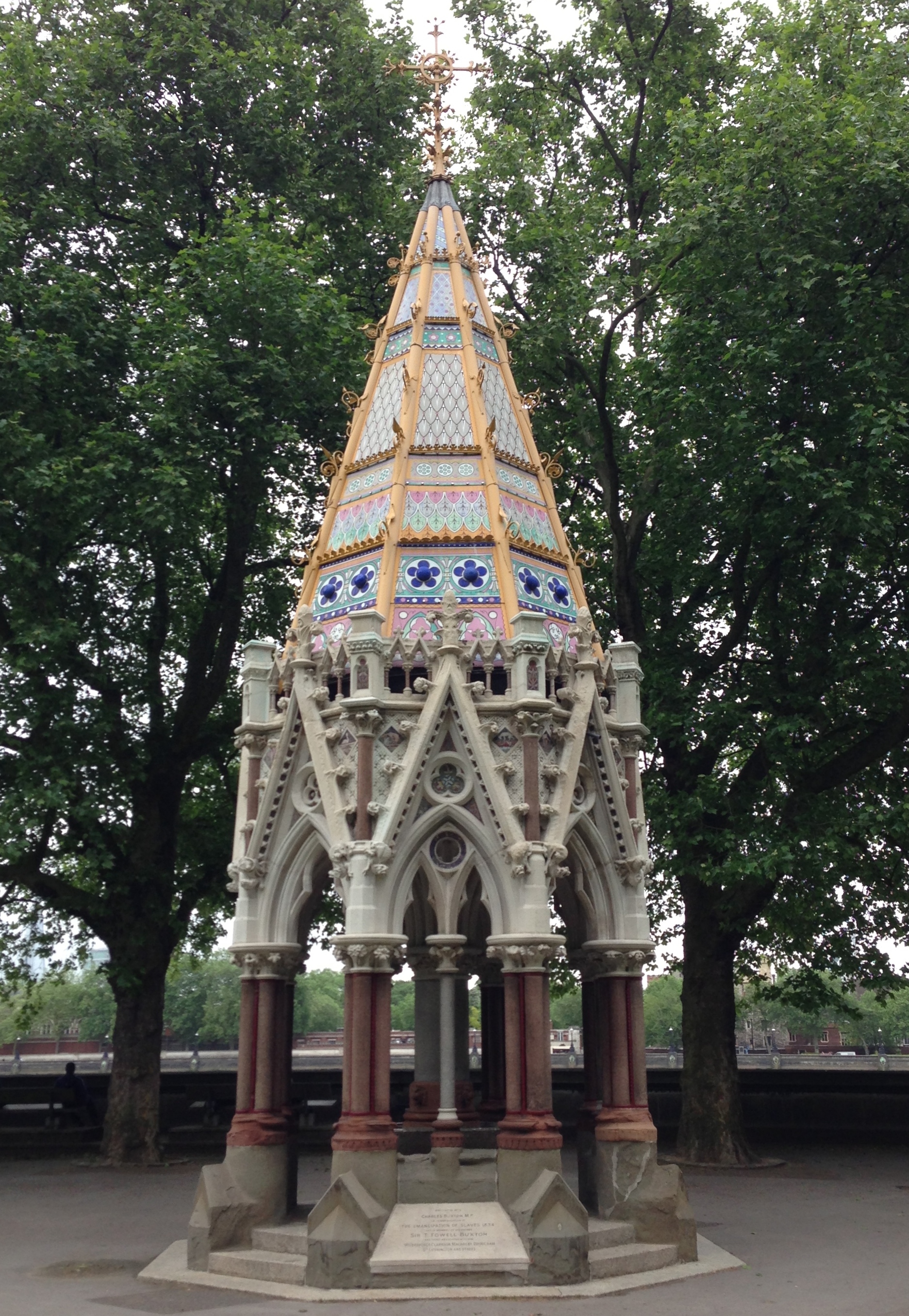 Hyacinth Stone of Buxton House at the John Archer plaque unveiling and that I promised that I would tell her about the connection between Buxton House, Maysoule Road, and Victoria Embankment Gardens. Well here it is.
Not long ago I was early for a meeting in Westminster and so I went for a short walk in Victoria Embankment Gardens. When there I had a look at a monument I had seen before but never particularly noted. Here it is with its inscription. Imagine my surprise to discover that it was a monument to one of the early campaigners against the slavery and below is the inscription.
And of course all the blocks in Maysoule Road are named after many of the men responsible for the abolition of slavery in the British Empire, as it was then. Buxton House is almost certainly named after T Fowell Buxton, who took over the leadership of the anti-slavery cause in the House of Commons in 1825 after Wilberforce retired. Wilberforce, who of course has another Council block on York Road named after him, had succeeded in getting the slave trade abolished in 1807.
But that was the trade in slaves from Africa to the New World. The abolition of slavery in the  British Empire had to wait until 1834 and was achieved under Buxton’s leadership. Charles Buxton was his Liberal (i.e. radical, as there was no Labour Party then) MP son, who had the monument built.
The monument is in easy view for any passenger on the 87 bus into Westminster, on the right immediately after Lambeth Bridge. And you will note the names include Clarkson, after whom another block in Maysoule Road is named.
Twelve Angry Men – The Garrick Theatre
Why would you wish to see this very faithful production of a classic film? Partly, of course, for the bravura ensemble acting, but also, in this cynical age, for its statement of faith in the American (and hence the British) legal system and the implicit trust and belief in the democratic system. The play, an undoubted minor masterpiece by Reginald Rose, a journeyman 1950s TV writer, is a beautifully crafted story of a jury’s deliberations on the guilt or otherwise of an 18 year-old accused of killing his father in a fit of rage and impotence.
For those of us, who have been fortunate enough to have been jurymen (or women) in interesting cases, there will be references, which relate to our own experiences. Some of us may even have felt that we played the part of Juror 8, played exquisitely at the West End’s Garrick Theatre by Martin Shaw and in the film by Henry Fonda. For me Fonda’s film character comes over as a rather pompous, almost saintly figure. Shaw is a much more convincing and far less sanctified and hence a more human character.
The play is, of course, dated. There are no women or ethnic minorities in the jury. The closest approximation is an Eastern European, probably a Jewish emigrant from 1930s fascism, who is both a vehicle for the most explicit pro-democracy speeches and the butt of the most virulently bigoted and prejudiced comments from the “know-nothing”, hard-liner “hang ’em and flog ’em” brigade.
The dominance of white men expresses a truth about the time. Rose wrote the play following his own experience in a 1954 New York jury. But in his play, originally called Thunder on Sycamore Street, the story was about a black family. However, to appease the powers that were on 1950s Broadway, it was changed to what I guess was meant to be a Puerto Rican family (the play is not explicit on this point).
The scene is set in the sweltering heat of a New York summer afternoon. The claustrophobic atmosphere is heightened by the coming storm, after which the play was first named.A big baseball game is dues to start in a couple of hours. At least one juryman has a ticket and so there are time pressures to add to the climatic ones.
The action unfolds with the bigotry and indolence of some jurors, plus a fair amount of apathy, slowly but surely losing out to the voice of reason expressed by others “led” by the Shaw/Fonda character. But it is a close struggle. The message is not exactly hidden, or perhaps even subtle, but it is a peaon of praise for democratic values, whilst at the same time sharply observing how dependent they are upon the importance of “taking part”, of standing up for individual rights and for defending individual liberties. It should be compulsory viewing for anyone intending to take part in political or civil processes – my fellow councillors (not to mention MPs), please take note and go.
Rose is rightly dismissive of one juror, who wants a quick decision so that he can get to the game, and of another, who gets bored with the argument and will go whichever way brings a quick result regardless of whether an innocent man gets sent to the electric chair or a murderer goes free. Rose is not, however, without compassion for the troubled juror 3, who has covered up his own inadequate parenting, by holding out to the last for a guilty verdict. And, for my money, Lee J Cobb in the film and Jeff Fahey at the Garrick take the acting prize. In towering performances they display arrogant prejudice, gradually collapsing and leading to personal, political and moral disintegration.
Finally, it was interesting to note that this classic film, known and seen by millions, had by West End standards a relatively young audience, who gave it a storming curtain call. Rose clearly has a message which many of today’s audience believe still to be highly relevant. And they are right.
30/12/13
 Tony Belton
 Tony Belton