Thatcher and her Jewel in the Crown
One or two Tory friends have asked me for my thoughts on Mrs Thatcher particularly in the context of me being Leader of the Opposition in Wandsworth, the proclaimed Jewel in the Crown, when she became PM and for most of her time in office. So you can blame this piece – which obviously concentrates on a Wandsworth perspective and not the national one being covered in a million other places – on them.
First here is a short story about the 1982 Borough Election. Although 1986 was statistically the closest Wandsworth Borough Election (Labour won more votes, by a couple of hundred or so, but the Tories squeaked in by 31 seats to 30) for me 1982 was the real turning point. A month before Election Day a Labour victory was a certainty. Mrs Thatcher was as unpopular across the country as was “Chopper” Chris Chope, the Tory Leader of Wandsworth. And then in classic manner her two most famous enemies – the trade unions and Argentinian General Galtieri – jumped in to rescue Wandsworth’s Tories.
Wandsworth Tories had been struggling with the unions over improving refuse collection, which was riven by cronyism and archaic working practises. But there was no real will on the unions’ part to negotiate and so the Tories decided in late March 1982 to gamble on the then innovative policy of putting it out to tender. It might now seem to be a “no brainer” but at the time it was a bold step to take.
My heart sank a few days later when two local union bosses came to see me to announce, with obvious delighted self-satisfaction, that they were calling a strike in time for the election. They were a little taken aback by my negative reaction but not sufficiently to change their minds.
Then on 2nd April Argentina invaded the Falklands; on 2nd May the Argentinian light cruiser Belgrano was sunk by the British Navy and on the 4th HMS Sheffield was sunk by an Exocet missile. On the 6th May Wandsworth went to the polls and although the Tories lost a couple of seats they were back in by 33 seats to 27 with 1 Lib/Dem. In five weeks Mrs. Thatcher’s political career was forged, and you could say mine destroyed, as any hope of Labour winning in Wandsworth had gone with the wind.
This story captures two features of Mrs Thatcher’s career. First, it has to be acknowledged, her boldness and second the luck she had with her enemies, whether Scargill and Foot or Galtieri – these two features were not lacking in Wandsworth either.
Wandsworth’s Tories were bold to take on the unions, who in their turn were crass in their failure to recognise the limits both of their power and of their support. The unions still flush with their “success” in the 1970s did not understand that the public were prepared not to have their bins collected for a week or so if the Council was able to tough things out and to win the conflict.
The Tories were also bold to take on the GLC and the ILEA, though whether for good or ill is of course another matter. Although it is a very different animal, there was no opposition to Tony Blair’s decision to restore some form of city-wide Assembly, now the Mayor and the GLA. No, lack of courage is not a criticism that I would ever have made against Wandsworth’s Tories in the 1980s.
The Labour Party (me?) also made our mistakes, most particularly about council house sales (RTB). Labour councillor Nigel Morgan and I argued that straight opposition to sales was never going to work. We foresaw the consequential modern disaster of the lack of social housing and, therefore, argued that capital receipts should be used to build replacements. But this was a sophisticated position, which got lost in the ferocious and noisy national battle over the issue. Ironically our position is now accepted even by the current Cameron Government – Nigel, if you ever read this, get in touch. We were right and everyone else wrong!
The impact of RTB in Wandsworth has been dramatic. I would argue that it is a major feature in pushing Wandsworth up the wealth leagues of London Boroughs to the considerable benefit of some of the population and at a far greater cost to many of the others. Wandsworth is now one of the most harshly divided of all Boroughs with levels of deprivation in a few areas alongside some of the richest parts of the country.
Populist but heartless, bold and assertive but bullying and overbearing, are descriptions that are almost inter-changeable for Thatcher and Chope and the Wandsworth Tories in the 1980s.
Much of the national coverage focusses on the apparently inevitable long-term impacts of Mrs T. How she put the Gr8 back into Britain – you know the argument. It is the Tory line in Wandsworth too. I guess they would say that it is commanding the narrative. Hence Wandsworth was, in their mythology, sinking in the mire of the winter of discontent until they arrived to rescue it and make it the “Brighter Borough”. Wandsworth even has, in its way, its own Ted Heath: he was Dennis Mallam, Tory Leader through the 1970s and then dropped as soon as decently possible just prior to the Thatcher victory of ’79. Poor old Dennis! He was really wet. He wanted to build more council houses than Labour had done!
Well you don’t have to be very much on the left to have a very different narrative. One that concentrates on community and abhors the individualised “Loadsamoney” culture that is so publicly associated with Thatcherism. And again this division between communal values and rampant individualism is mirrored in Wandsworth, perhaps especially in Battersea where everyone knows how different life is depending upon which side of the tracks you happen to be – the mainline from Waterloo to the south west. Is it a complete coincidence that one of the worst scenes of violence in the riots of August, 2011, the Clapham Junction riots, happened on the very border between great wealth and great poverty?
There are other interesting parallels between Wandsworth and the country, which reflect the impact of both Thatcher and the Wandsworth Tories. Mrs T brought in “Big Bang”, hence liberating the City to become the bloated, dangerously over-powerful driver of the British economy. And, funnily enough, one of the biggest residential concentrations of bankers in the country is right here in Wandsworth, attracted by the once cheap housing that used to be the homes of industrial workers and the low rates/Community Charge/Council Tax. For the wastelands of the industrial north read the very large but completely obliterated industrial area of Wandsworth’s riverside – all now given over to expensive and rather barren flats, many of which are owned or rented not by Londoners and are left empty for long periods of the week and of the year.
So my Tory friends, what in summary is my reaction to the news of her death? To the fact of death – nothing much – but to her heritage. In 1979 GB was the most egalitarian it has ever been and now 33 years later we are at levels of inequality not seen since 1913. In 1979 we had a trade union movement that was clearly out of control but now we have one so palpably weak it is becoming a danger the other way, with the Tory right arguing for yet more “business friendly” rules and leading moves not to a high wage, high skill economy but to a dog-eat-dog, low pay and low skills economy.
In 1979 you Tories feared that we were the sick man of Europe (which we never were, of course) and had lost the respect, which you think other countries should show us. In 2013 we are the tax haven of choice for everyone from Russian pluto/kleptocrats to foot-loose business money. And yet, the mood and moment of the 2012 Olympics, so different and so unThatcherite, has gone far to show that their is another way – success through harmony.
For sure it is a complex heritage and clearly you, Tory friends, do not understand why not everyone does not see it your way. But until you do you will not even see the terrible damage she did to many regions of the country and to many people in all the regions.
Councillor Tony Belton’s Latchmere April Newsletter (# 48)
March highlights
1. There was a Council meeting on Wednesday, 6th March. The headline debate was on the Council Tax but I guess that most will know that there has been a small increase, an increase which Labour opposed. I think more important was a further debate about the next round of cuts, which look like causing mayhem with Council services. I am sorry to say that in my view we, Wandsworth Labour councillors, have been a bit supine in accepting the pressures on the Council. We all know that national government holds all the cards and that a Labour Council would have to be cutting almost as savagely as the Tories, but I do think we should be making a noise about it all.
David Cameron and George Osborne have got the economy seriously wrong and everyone, except those blinded by Tory publicity, is beginning to realise it. Wandsworth Tories have little alternative but to support their government but Labour should be shouting from the rooftops that these cuts are damaging the country and destroying the economy both nationally and locally. The bedroom tax alone will take £3million a year out of the Wandsworth economy.
2. I went to the Big Local meeting at Providence House on the 7th and a couple of Battersea Park School governor meetings but on the whole I have had a fairly quiet month a little handicapped not only by the appalling weather but also by a bit of poor health, happily now on the mend.
3. There was not much to excite at the Planning Applications Committee on 12th March, although we did see the first reaction to the invasion of Boris Bike docking stations. An application for a docking station in Lavender Gardens was due to be considered but I put a spoke in the wheels and got the application deferred. We will see in April just what the Committee decide to do but public opposition is mounting.
I realise that some of my cycling friends will be a little peeved with me for this but I have no regrets. I think that TfL are going very much OTT (over the top) on Boris bikes. We will see whether I am right or not but a large bike docking station every 300 yards might well be appropriate for central London but it seems a bit much here in Wandsworth.
4. On 4th March there was a small celebration of Clapham Junction’s 150th birthday as a major station. I know some constituents were keen to be there. My real regrets are that I was not feeling well enough to get there!
5. On 25th March I went to a small “arts theatre” in Camden to see a play called,“The Briefcase”.  Here is a picture of it, why? Because it is mine and was centre stage! The play was written by Timothy Turner, who is the son of my fellow Labour councillor, Billi Randall from Tooting. I won’t fill this newsletter with the details but you can see a review of the play in my blog at https://tonybelton.wordpress.com/.
6. I noticed one day in late March that the mock Tudor gatehouse to the Peabody Estate had disappeared, that is the one at the corner of Boutflower Road and Strath Terrace. The demolition of the Peabody Estate had begun. I decided to visit that afternoon and take some photographs of the old estate before it was just a fading memory. I know it was not much to write home about but it is amazing how quickly memories fade and so here is a quick selection of photographs of the Peabody.

Three views of the Peabody, including the Eckstein Road gatehouse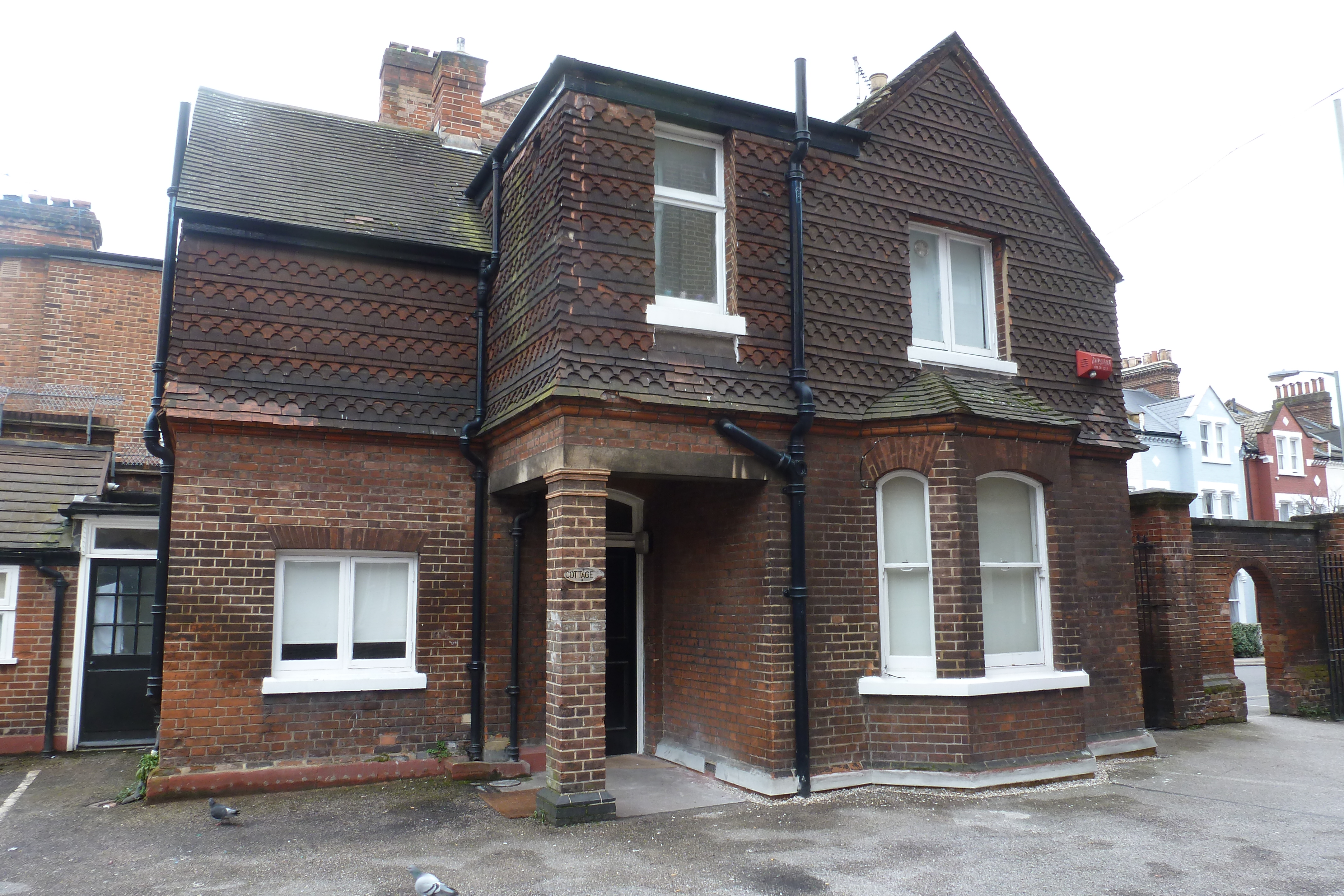
My Programme for April
1. There is a Planning Applications Committee on the 11th April, on the same day as the police Special Neighbourhood Team.
2. I am going to a guest lecture from the poet laureate at Roehampton University on the 12th.
3. On the 23rd I have the Strategic Planning and Transportation Committee followed on the 25th by the Housing Committee.
4. On the 30th all councillors are having a teach-in about Children Looked After. This very important session is, I guess, almost unknown to most constituents. It is about councillors personal and collective responsibility for children looked after by the Council. Ever since the dreadful case of Baby P, when you may remember a small boy died through hopeless parenting and inadequate social service support, the Government has made it clear that in principle councillors are in loco parentis, i.e. we are in the position of being parents and have their legal responsibilities. What a responsibility!
Do you know?
Senia Dedic? I first met Senia as Secretary of the Falcon Road estate residents association (FERA – the little known estate behind Falcon Road on the opposite side from Grant road). It was obvious that she was a special person with a very special history, so I decided to interview her for my newsletter.
Senia was born in Sarajevo, then in Sarajevo but now the capital of Bosnia. Do you recall the Yugoslav wars and the bombing of Sarajevo in the early 1990s? Well Senia was there. She tells me, “It was devastating to hear the Soviet built MIGs flying overhead. I remember being in a basement cellar hearing the bombs explode above us. In one night I counted 586, before I stopped counting. My fiancé (now husband) was in the newly formed Bosnian army and to my despair went to the front line.”
“Then water, electricity, telephone and food ran out. Bread queues were bombed and thousands of hungry people were killed every day. I spent 4 months in the local communal basement with my parents and our neighbours and Mum and Dad were begging me to leave the city and the bloodshed. I left the city on the last available bus to the Croatian border. From there I had to hitchhike to Zagreb and get the train to Zurich where my sister lived. After further adventures I decided to come to London and settle in Battersea. These 20 years here are the longest, most stable period of my life”.
Five generations of her family lived under five regimes in Sarajevo, from old empires, to the Soviet Block, to today. The family history is a microcosm of the turbulence and warfare that swept through the Balkans in the 20th century.
Here in Wandsworth, with her family pictured, Senia founded the Women of Wandsworth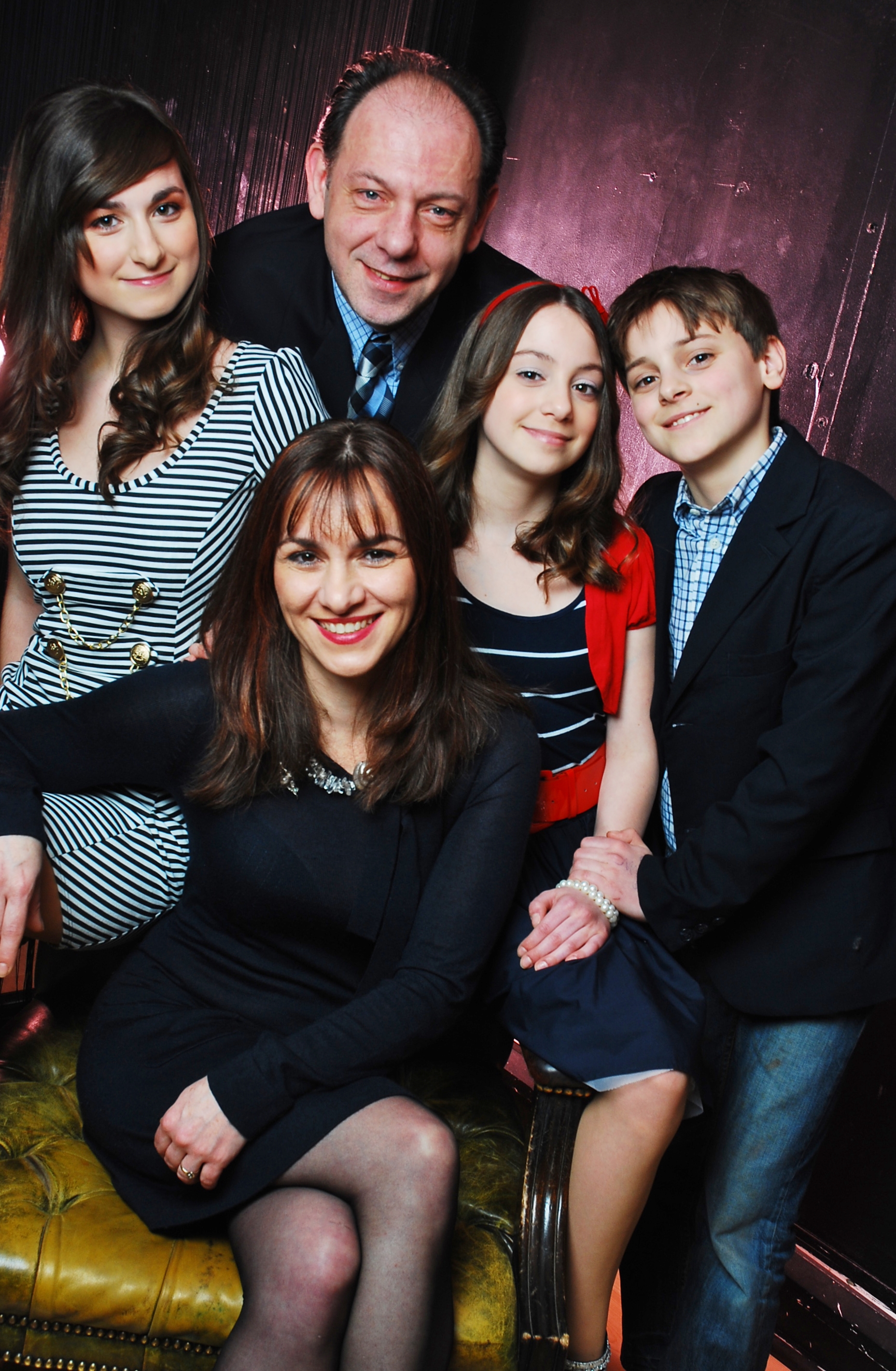 (WoW), and the Parents’ Forum, a drop-in centre where parents bring their issues and worries.
WoW also formed a voluntary community organisation called SpaceMax to tackle overcrowding in Wandsworth by helping people make shelves, fold down desks and beds, help with de-cluttering homes, making partition walls, etc.
WoW runs an intergenerational project and a Kids project, which organises educational and residential trips for urban children to a working farm in Devon.
Senia is a Governor at Christ Church School, a Katherine Low Settlement Trustee; and a member of Battersea Rotary Club. She started the PTA and was a founder of Positive Parent Action, representing the voice of parents with disabled children. (One of her own children is a patient in Great Ormond Street, where Senia is a Member of the Hospital Trust).
Appropriate, I think, that Senia was awarded the Mayor’s Team Award for her outstanding contribution to improving London and the quality of life for Londoners.
This House – a new play by James Graham, reviewed by Tony Belton & Penny Corfield
This House, written by James Graham and playing at the National, is a must for any lefty of a certain age. A saga of the Wilson/Callaghan governments of the 1970s it is set in the Commons, but almost exclusively in those unknown jungles, known as the whips’ offices. A mention of the dark arts of politics recalls the jocular asides of rugby front row forwards; like the prop forwards, the whips appear to have more in common with their opponents than their so-called allies; like the front rows, they maintain their own club and its rules against all-comers, particularly their subjects, the lobby fodder of the backbenches.
The play is beautifully and wittily staged with some lucky members of the audience seated on the green Commons benches as serried ranks of silent MPs during scenes in the Commons. But when the scene moves to the whips office, the benches swing round to create theatre in the round. The script is funny and clever with Hal Miller, MP for Bromsgrove and Redditch, complaining that in the home of the needle industry he could not find a haystack.
The script and the action is, as Americans might say, designed for the Beltway audience. Not quite simply for those immersed in the Westminster Bubble, since there would be many, living well outside London, who would enjoy the play. However, the author undeniably demands considerable knowledge of the political intricacies of the period.
Graham has immersed himself in the history of this incident-packed five years, starting in the late days of the Heath Government and finishing after Thatcher’s ’79 election victory. He has clearly done a lot of research with particular assistance from Joe Ashton, one of Labour’s whips. It is not surprising that some of Graham’s sources claimed that this particular Parliament was the most dramatic in their various long and eventful parliamentary careers.
One fascinating theme that emerges is the mutual respect that grows between the two rival Deputy Whips. On Labour’s side was Walter Harrison, MP for Wakefield, admirably played by Reece Dinsdale, and on the Tories side Bernard (Jack) Weatherill, MP for Croydon NE, impeccably suited and played by Charles Edwards. A minor running joke refers to Weatherill’s career in his family’s bespoke tailoring business. MPs from all sides comment on his smart appearance or make some reference to tailoring. One cheeky Labour Whip even requests his help to repair his own scruffy suit. To which Weatherill delivers a superb put-down: ‘I don’t deal in man-made fibres’.
But, joking aside, the class and political differences between the two parties are shown not to cloud the growing personal respect between the two Deputy Whips. The most dramaticmoment of the play indeed occurs between the two of them, alone in the Tory Whips office – near the end of the play. Harrison needs a controversial pairing of MPs, to save the Labour majority. Weatherill after due consideration accepts, offering to be the pair himself – knowing that it will make him hated by his own party. After a very long pause, Harrison declines the offer. Politics move on.
The Callaghan government fell to a vote of no-confidence in 1979. There were many reasons for its fall and this unrecorded and imagined scene may or may not have been critical. The play, however, highlights this moment of drama between the two Whips. Thus, ultimately, the playwright endorses the essential value of personal integrity, even amidst the storm of political battle.
The Thatcher victory arguably marked the beginning of the end of the post-war consensus about the welfare state. Now as this play is premiered in the third year of a Cameron Government we are seeing the end of not just that consensus but also the demolition of the tools of the state that made it possible – a professional civil service, a powerful and independent local government, professional and independent public servants in the health, education and judicial services.
Some of our contemporaries told us that they were in tears of laughter for most of the play and tears of regret for the last 20 minutes. The laughter was, of course, testament to the writing but the regret was about the loss of a romantic, idealised memory of our lost youth spent in a welfare state that gave us good health, a better education than any of our forefathers, jobs for life and good occupational pensions. But the tears were also for the tragedy, as it appeared, of Labour’s failure and of lost opportunity.
But for us, the emotion was more of sadness than anguish. The period, as Graham sees it, was rather too mundane to be tragic. The scale of Labour’s ambition and vision seemed limited to the maintenance of power not to the achievement of any great ends. Even the first steps towards national devolution were inspired by the necessity of maintaining a majority and not out of any real political commitment. This, of course, made it all the more appropriate that the whips’ office was right at the centre of the action and of this play.
Should others go to see this play? Yes, it’s part of everyone’s civic education. But be prepared to be indignant as well as amused – and who knows, you might be moved to join the battle for more meaningful politics and a revived, even if different, Welfare State.
 Tony Belton
 Tony Belton